
One of the largest structures of CMS's future High Granularity Calorimeter (HGCAL) has successfully completed a demanding series of cold tests, marking an important milestone on the road to the High-Luminosity LHC and the next era of particle physics research. HGCAL will replace the existing endcap calorimeters of the CMS experiment, allowing unprecedented detail for the reconstruction of particle showers despite the challenging conditions expected.
The ‘Cold Tests’ on the main structure of the HGCAL went smoothly, with no overheating of the exterior panels, condensation, or leaks recorded!
A giant, highly controlled freezer: the inside of the structure must be kept at -35°C while the outside should remain close to room temperature. The HGCAL active elements, called cassettes, will be slotted into the large stainless steel absorber structures and will need this much colder temperature to function optimally throughout the detector's lifetime of more than a decade. This is the first of the two absorber structures to undergo these rigorous temperature tests.
“I’m a little tired and a little stressed but super excited,” says engineer Karol Rapacz during the testing. “The system is extremely complex, but I’m confident it will work!”
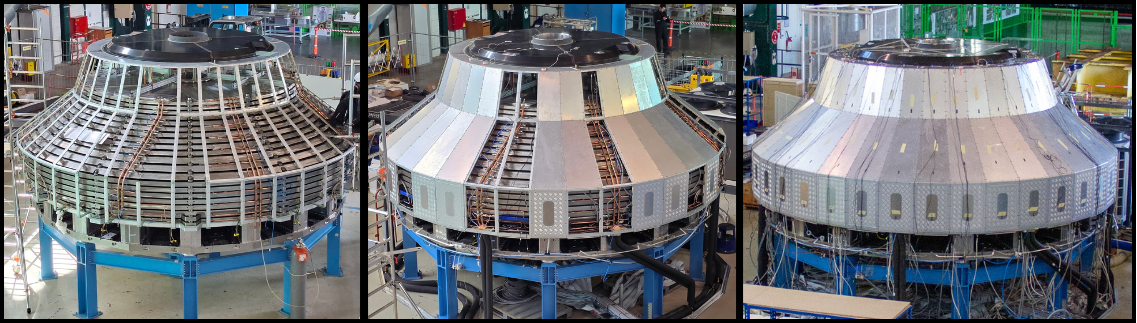
ABOVE: HGCAL before, during, and after installing the thermal screen panels. (K. Rapacz & S. Hurst | CERN)
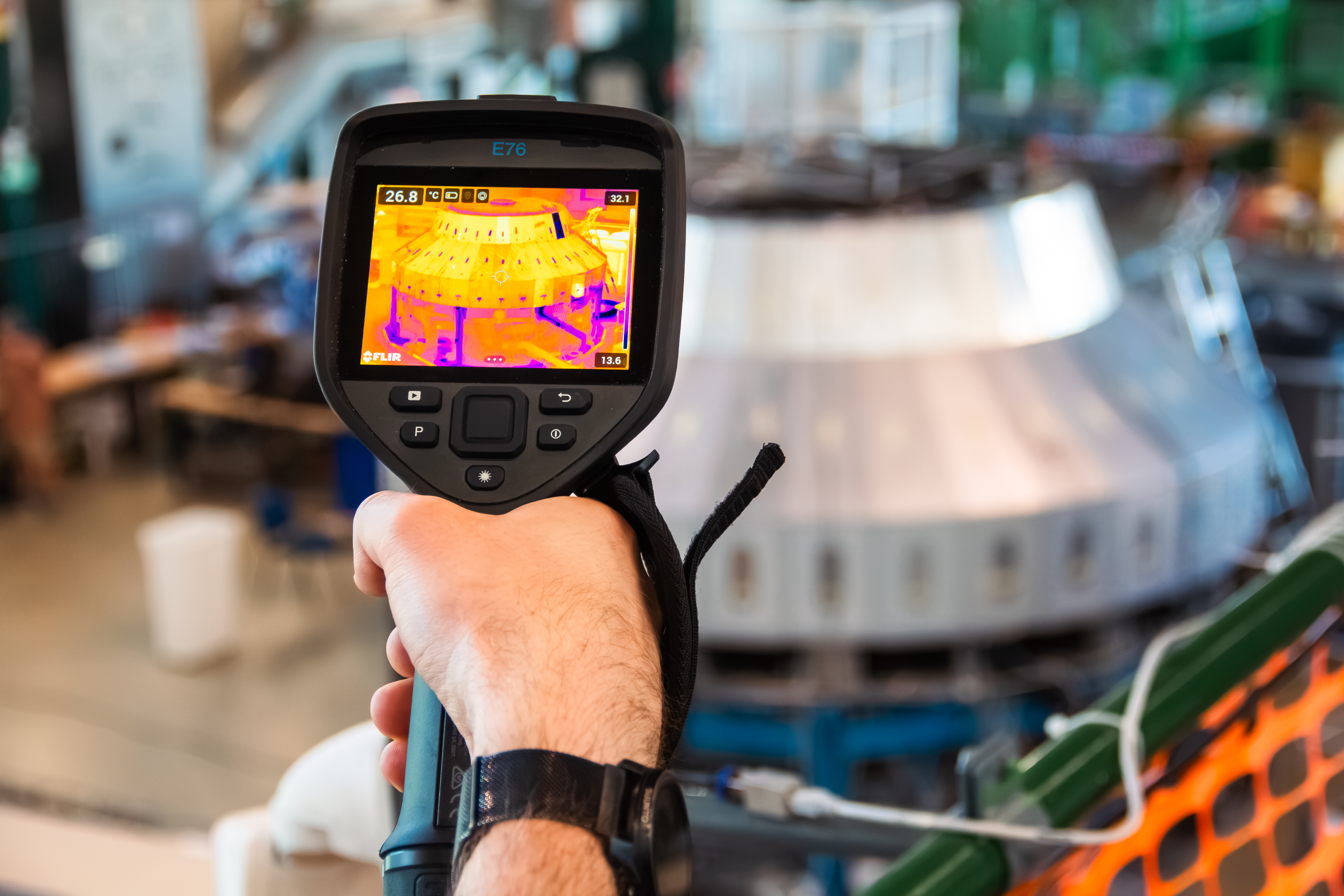
To tackle the challenge of localised temperature requirements, the exterior of the structure is covered with 408 thermal screen panels, each individually regulated. For the tests, the structure was then covered with sensors for both temperature and humidity to check the panels functioned properly, and the structure cooled down evenly.
Cooling 170 tonnes of steel to -35°C is no small task- the process took just over four days and was achieved with a coolant circulating in specially-made aluminium plates inserted between the steel plates. The thermal panels consist of aluminium plates, carbon fibre sheets, and heating foils. While the structure is cooled, the teams controlled and monitored the panels to analyse whether they behaved as planned. After all panels and the structure were evaluated, the absorber was slowly warmed up again.
To prevent condensation forming inside the detector, the structure is continuously flushed with very dry air. This keeps humidity low enough that moisture cannot form, protecting the sensitive detector electronics.
22 members of the team took turns running the test and closely monitoring the results. The measurements collected during the test will now be compared with detailed computer simulations of the detector. Confirming that reality matches the models gives the team confidence that HGCAL will perform as expected.
“This is a very nice project where you see physicists, electrical and mechanical engineers, and technicians, work towards one goal, and without all of us it would not be possible,” Lazar Cokic, electrical engineer from CMS Technical Coordination.
"Originally conceived nearly five years ago, this test has now become a successful reality. It is another example of how effective coordination and the combined expertise of many teams can turn an ambitious concept into a major engineering milestone for the HGCAL Project,” Stefano Moccia, HGCAL Technical Coordinator.

Further Links:
See photos from the cold tests here
See interviews with the HGCAL team - coming soon.