
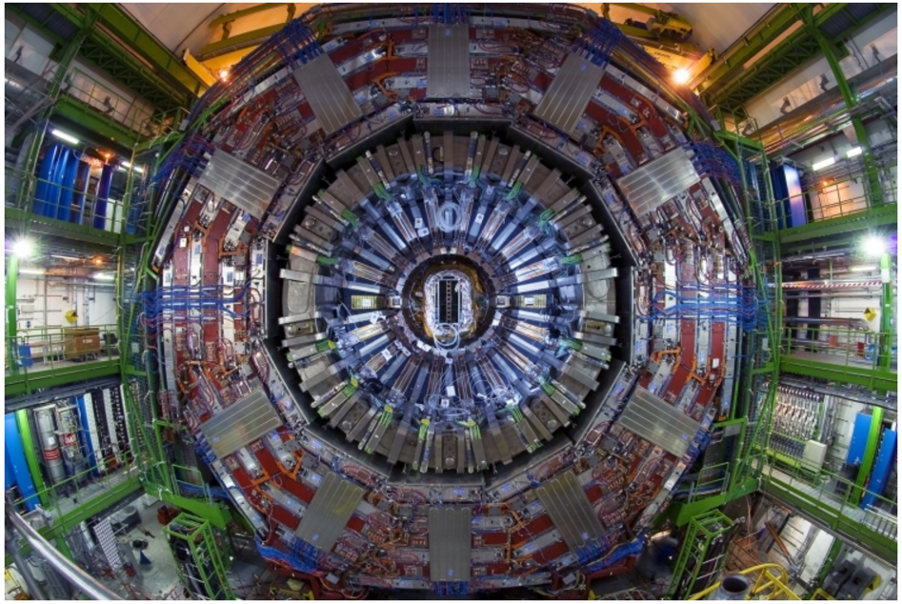
29th of June 2026 saw the end of the LHC Run 3, and the end of the LHC as we know it! The next time CMS records particle collisions, it will be in 2030, provided by the HL-LHC, and from a very different detector to what we have today.
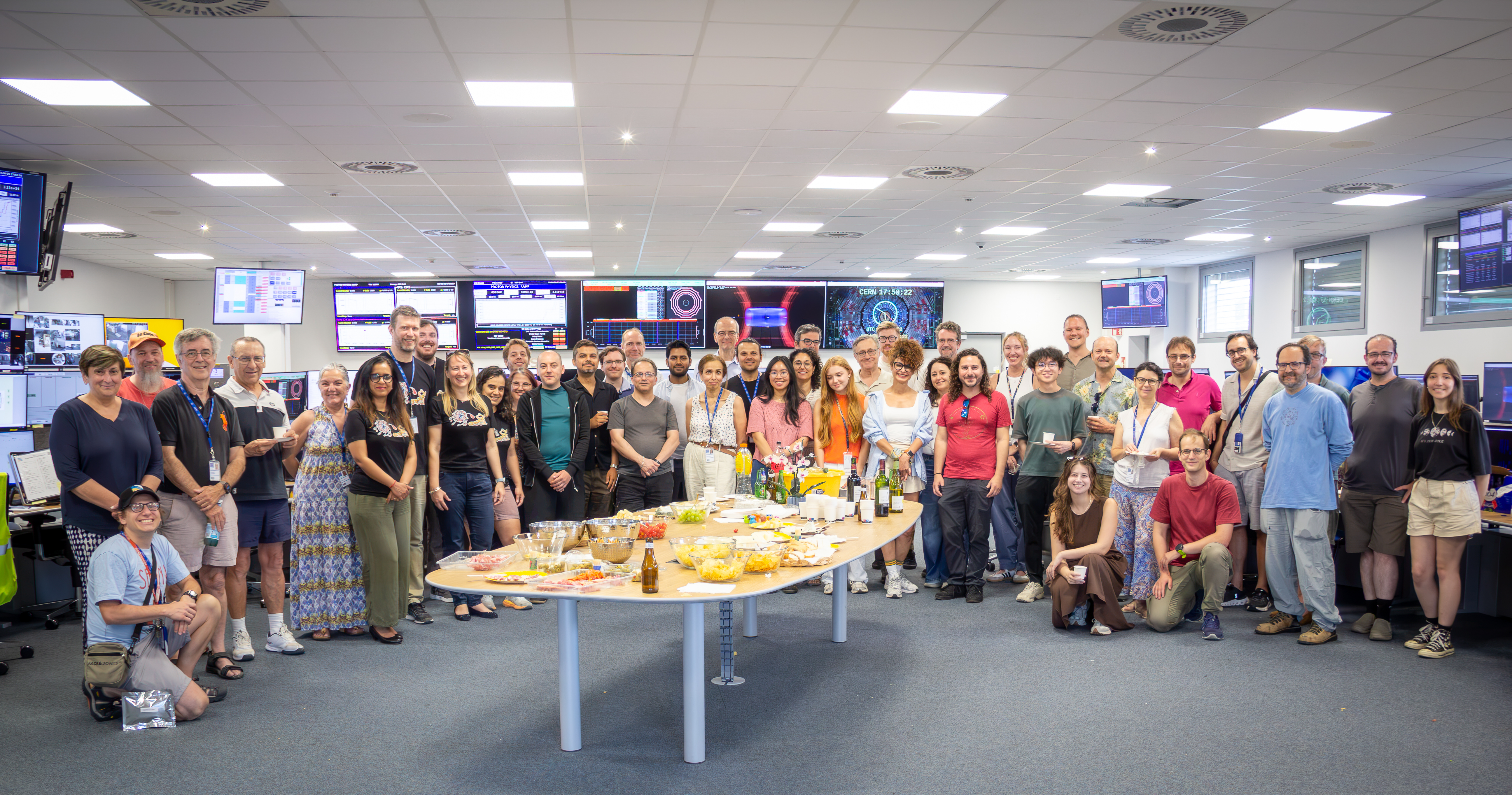
CMSers gathered in the control room to celebrate the end of Run operations and the start of the Long Shutdown 3 (LS3). For CMS, Run 3 was a real success, with more collision data than ever before (355 fb-1) delivered to the experiment, with a recording efficiency of 92%. This data will continue to be studied and analysed by CMS physicists over the LS3.
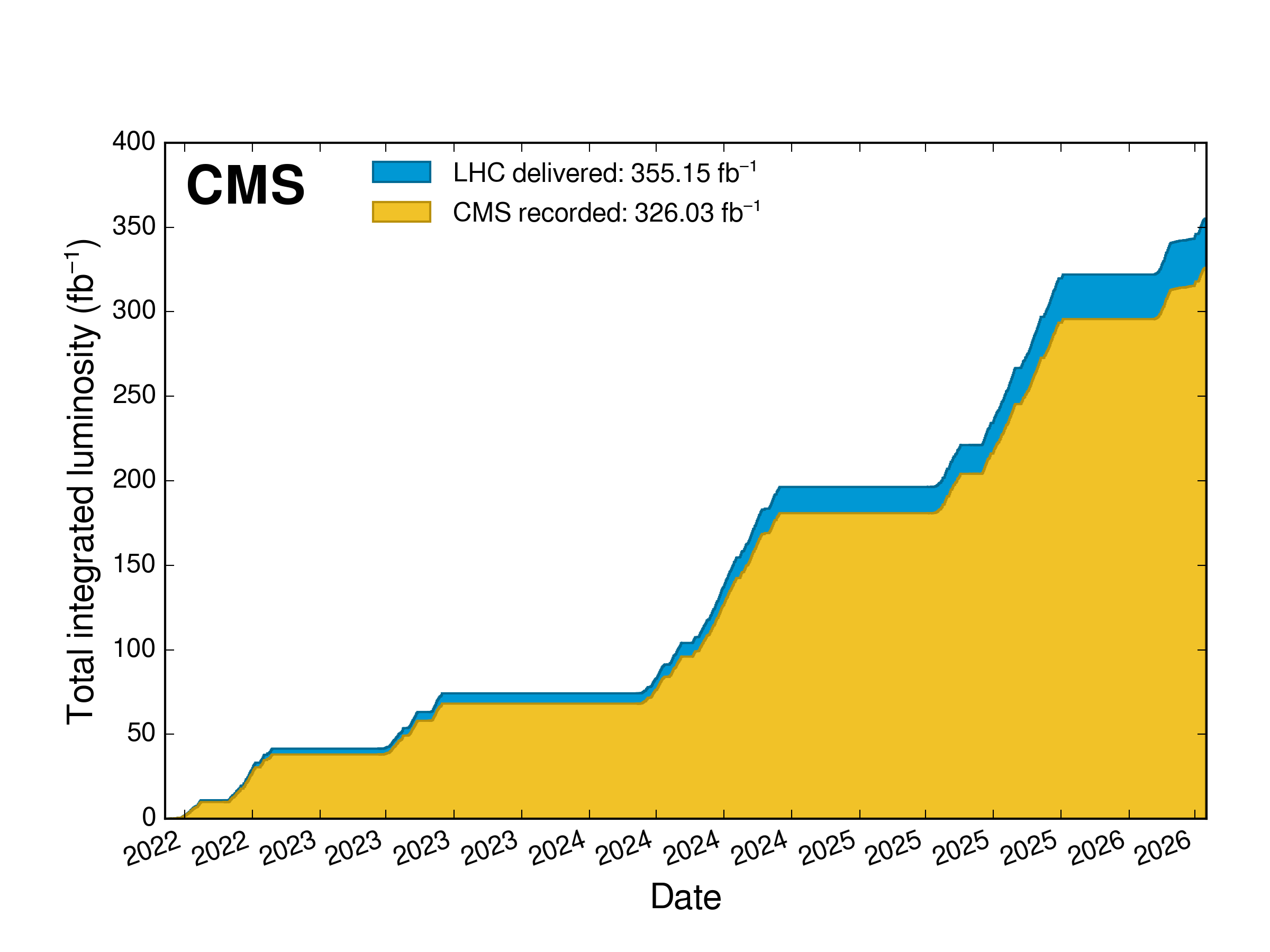
ABOVE: Total integrated luminosity over Run 3
Keeping a detector running takes a lot of work from many many people, especially as parts of the CMS detector were being asked to keep functioning past their original planned requirements.
“This was only possible because a lot of people are full of enthusiasm, full of motivation, day and night. People come to the CMS site at a moment’s notice - they do it because they are an important part of the running of this experiment.” - Filip Moortgat, CMS Run Coordinator.

Included in the success of the Run, was the best set of ion collisions ever for CMS. Mostly, the LHC produced proton collisions, but for short periods of time, ions of various elements are also studied - most notably lead, but also neon and oxygen in 2025.
It's quite amazing if you look at this as what humans can accomplish if they work together. I think we're one of the good examples. - Filip Moortgat, CMS Run Coordinator.
During the celebrations, the Run Coordinators thanked all the volunteers and on-call experts from around the globe who carried out vital shifts so that the CMS detector could keep functioning. A special thank you went to people who will retire before the start of Run 4, but who worked tirelessly to make Run 3 exceed expectations.
For the next few years, focus will fully shift to refitting and in some cases building completely new sections of the CMS detector ready for the High Luminosity era. In parallel, the LHC will also be transformed into the High Luminosity LHC. When it starts up for Run 4, it will see the beginning of a new phase in particle physics.
“It was really a pleasure to work with all of you, despite any difficulties we faced, we made it really successfully right up until the end. So thank you very much, and I’m looking forward to working with you again through Run Four!” - Giulia Negro, CMS Run Coordinator, addressing members of the collaboration who were vital in making sure the experiment took as much good data as possible!

Until then, we will be covering all the CMS milestones during this Long Shutdown, so make sure to check back for news, and follow us across socials for more.
Further Links