
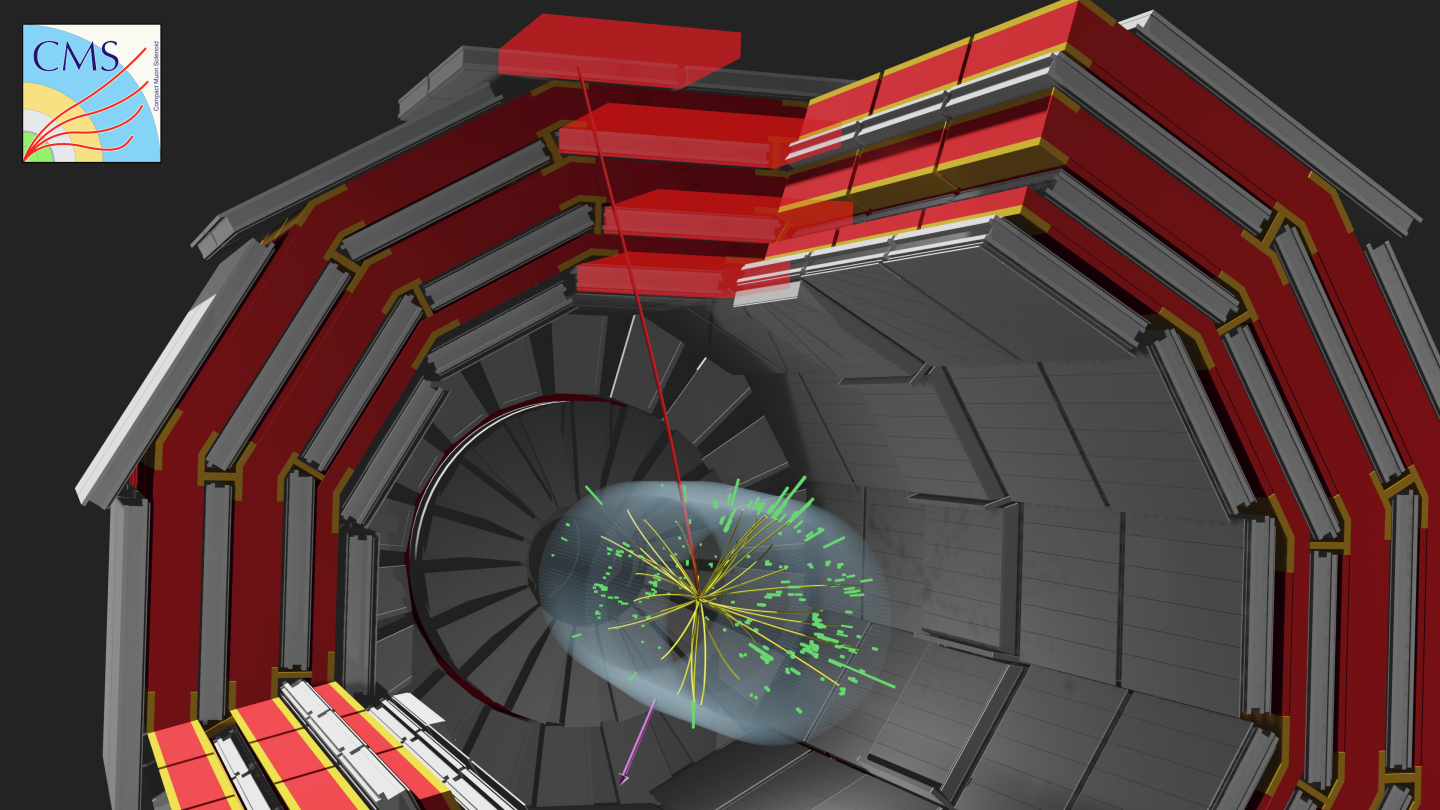
CMS’ measurement of the mass of the W boson has been almost a decade in the making. Here you will find articles about the measurement and complementary resources.
High-precision measurement of the W boson mass with the CMS experiment
Nature Paper
In the standard model of particle physics, the masses of the W and Z bosons, the carriers of the weak interaction, are uniquely related. A precise determination of their masses is important because quantum loops of heavy, undiscovered particles could modify this relationship. Although the Z mass is known to the remarkable precision of 22 parts per million (2.0 MeV), the W mass is known much less precisely. A global fit to measured electroweak observables predicts the W mass with 6 MeV uncertainty1,2,3. Reaching a comparable experimental precision would be a sensitive and fundamental test of the standard model, made even more urgent by a recent challenge to the global fit prediction by a measurement from the CDF Collaboration at the Fermilab Tevatron collider4. Here we report the measurement of the W mass by the CMS Collaboration at the CERN Large Hadron Collider, based on a large data sample of W → μν events collected in 2016 at the proton–proton collision energy of 13 TeV. The measurement exploits a high-granularity maximum likelihood fit to the kinematic properties of muons produced in W decays. By combining an accurate determination of experimental effects with marked in situ constraints of theoretical inputs, we reach a precise measurement of the W mass, of 80,360.2 ± 9.9 MeV, in agreement with the standard model prediction.
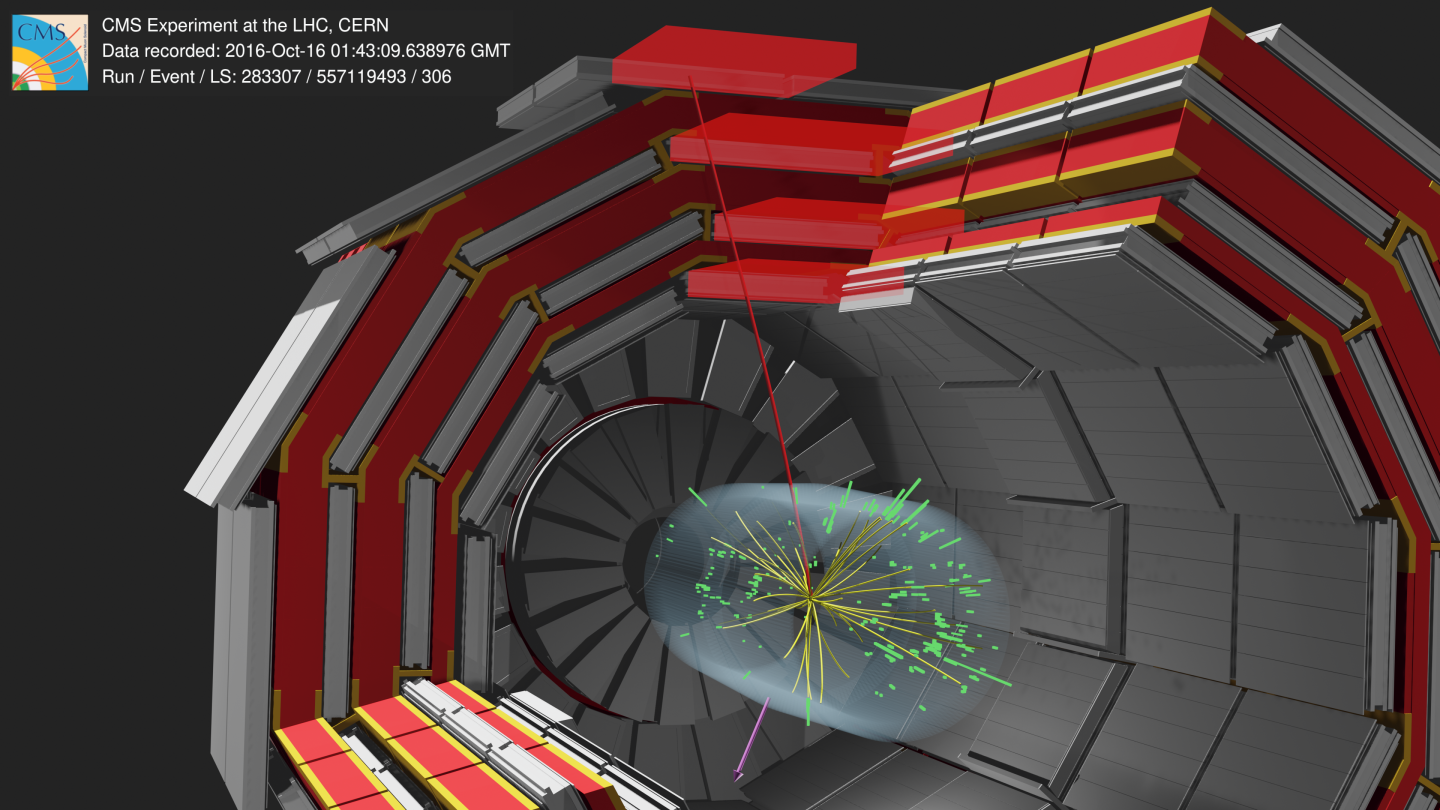
CMS experiment at CERN weighs in on the W boson mass
CERN Press Release
The eagerly awaited result is the most precise measurement of the W mass made at the LHC so far, and is in line with the prediction from the Standard Model of particle physics
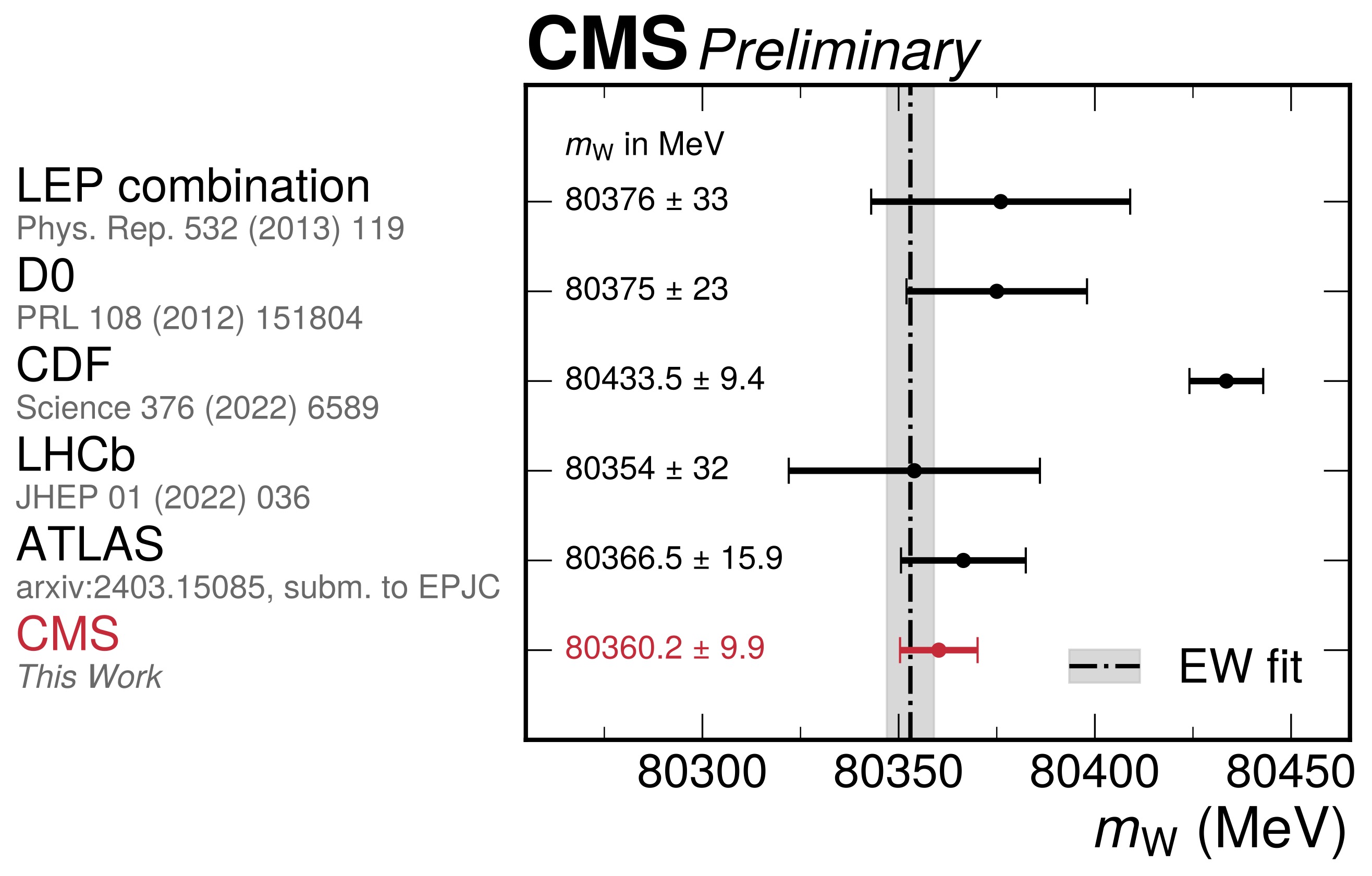
CMS delivers the best-precision measurement of the W boson mass at the LHC
Physics Briefing by CMS
In an extraordinary feat of precision physics, CMS measures the mass of the W boson, and finds it to be in good agreement with the prediction by the Standard Model of particle physics.
Working on the W-Mass - this is no sprint: it is a marathon
How the teams behind the measurement of the W-boson mass at the CMS experiment found working on this result, almost a decade in the making.
Watch one of the researchers present the measurement:
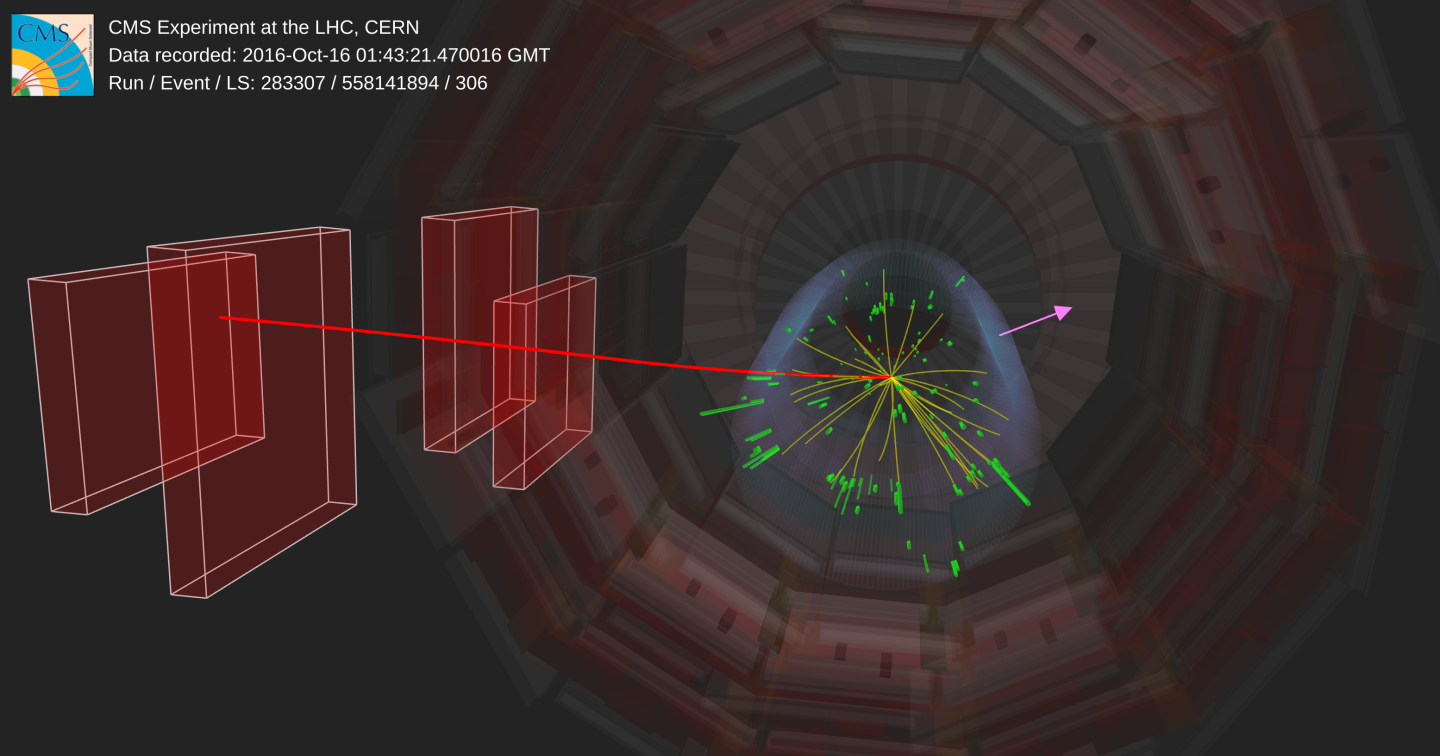 Measurement of the W boson mass in proton-proton collisions at √s= 13 TeV (SMP-23-002)
CMS Preliminary Result (PAS)
The W boson mass is measured using a sample of W→μν events via a highly granular maximum likelihood fit to the kinematical distributions of the daughter muons, separated by electric charge...

‘The standard model is not dead’: ultra-precise particle measurement thrills physicists
Article from Nature.com
CERN’s calculation of the W boson’s mass agrees with theory, contradicting a previous anomaly that had raised the possibility of new physics.

New results from the CMS experiment put W boson mass mystery to rest
Fermilab Press Release
This new measurement, which is a first for the CMS experiment, uses a new technique that makes it the most elaborate investigation of the W boson’s mass to date. Following nearly a decade of analysis, CMS has found that the W boson’s mass is consistent with predictions, finally putting a multi-year long mystery to rest...

CMS PRESENTA LA MISURA PIÙ PRECISA DELLA MASSA DEL BOSONE W A LHC
INFN Press Release
È la misura più precisa che sia mai stata ottenuta all’acceleratore Large Hadron Collider (LHC) del CERN della massa del bosone W, e ne determina il valore in 80360,2 MeV con un’incertezza di 9,9 MeV...
DESY Press Release
CMS-Experiment am CERN liefert mit neuer DESY-geführter Methode die genaueste Messung der Masse des W-Bosons...