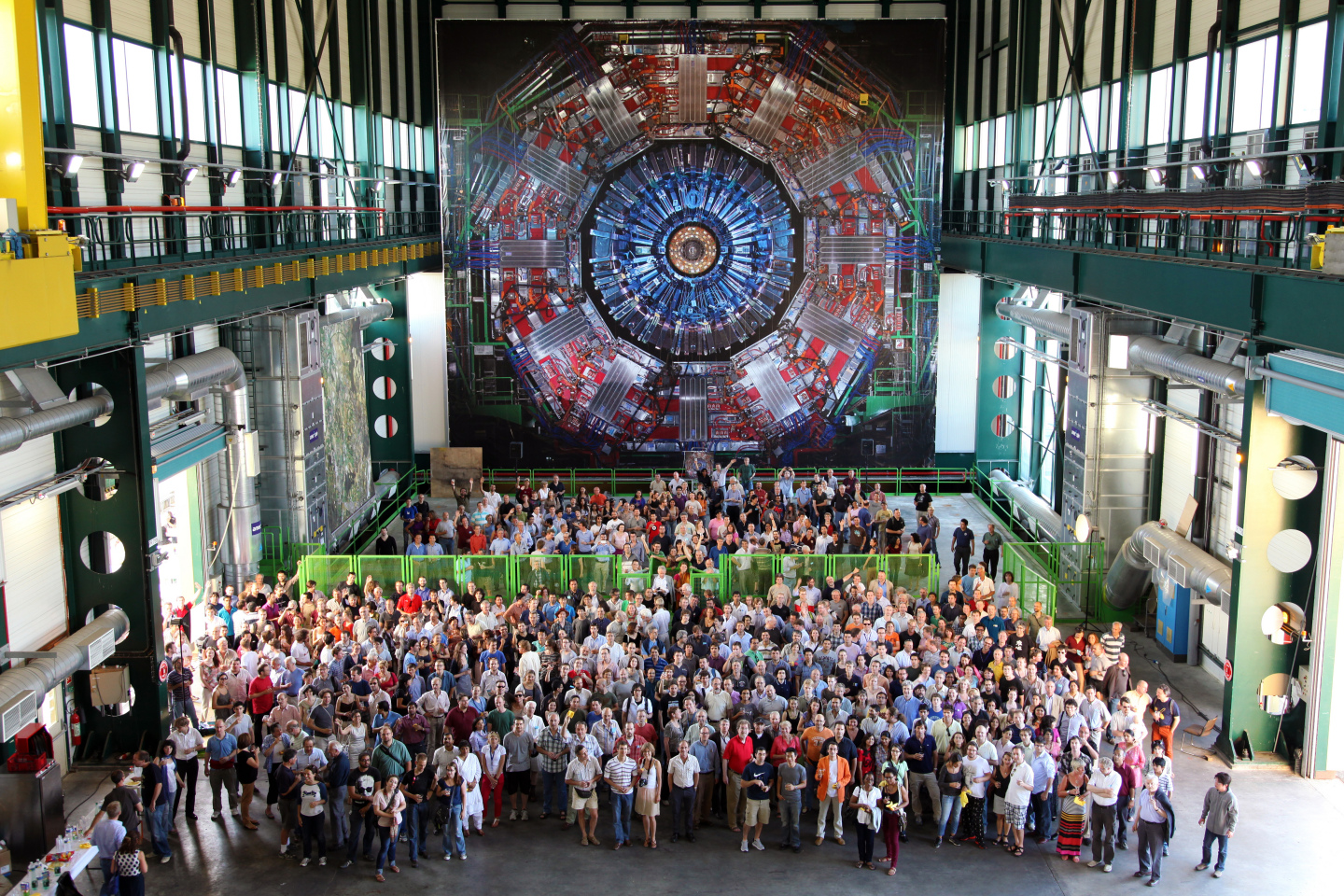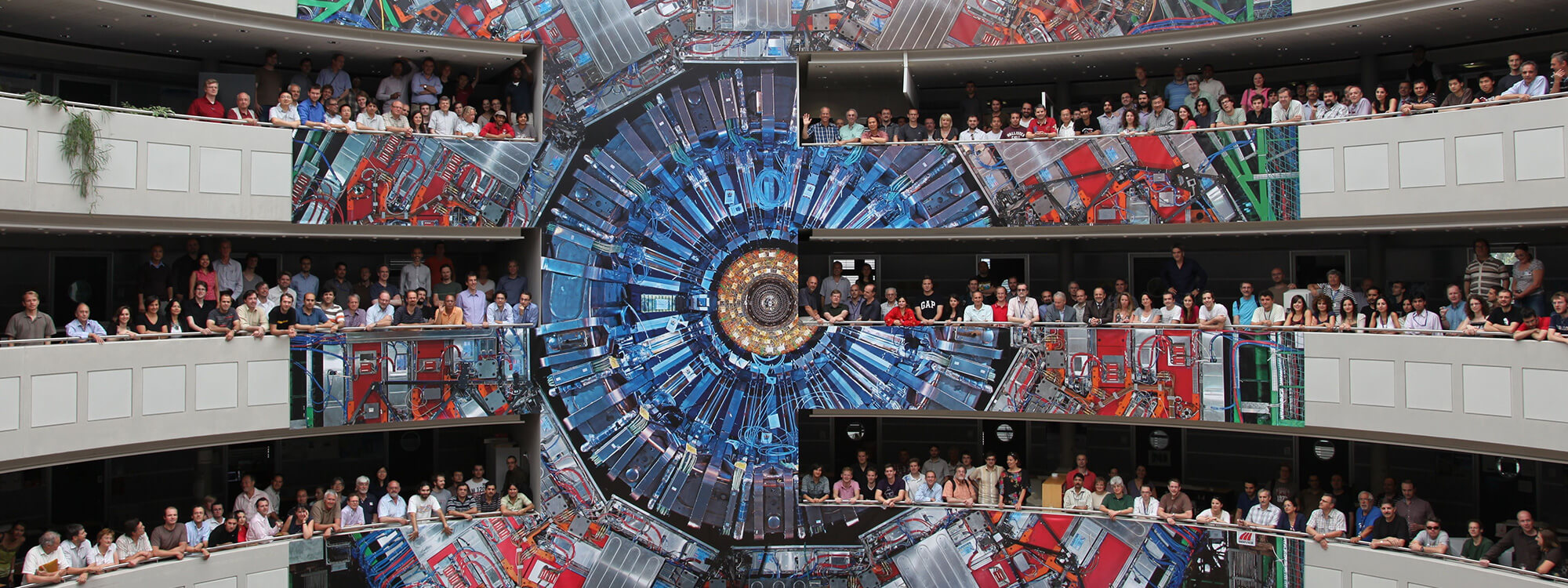
The CMS Collaboration brings together members of the particle physics community from across the globe in a quest to advance humanity’s understanding of the fundamental laws of our Universe . CMS has over 6000 particle physicists, engineers, computer scientists, technicians, and students from 286 institutes and universities from more than 60 countries.
The collaboration operates and collects data from the Compact Muon Solenoid (CMS), one of the general-purpose particle detectors at CERN’s Large Hadron Collider (LHC). Collaborators from around the world helped design and fabricate detector components, which were brought to CERN for final assembly. After taking data from 2009 to 2026, the LHC will resume as the High-Luminosity LHC (HL-LHC), which from 2030 will deliver far higher collision rates and a much larger dataset. To operate in these conditions, collaborators across the world are once again designing and building components — this time to upgrade the detector for the new phase. Data collected by CMS are shared with several computing centres via the Worldwide LHC Computing Grid. From there, they are distributed to CMS institutions in over forty countries for physics analysis.
In keeping with CERN’s commitment to open access for high-energy physics, the scientific results from CMS are shared openly with the world.