Detector
A giant of technology
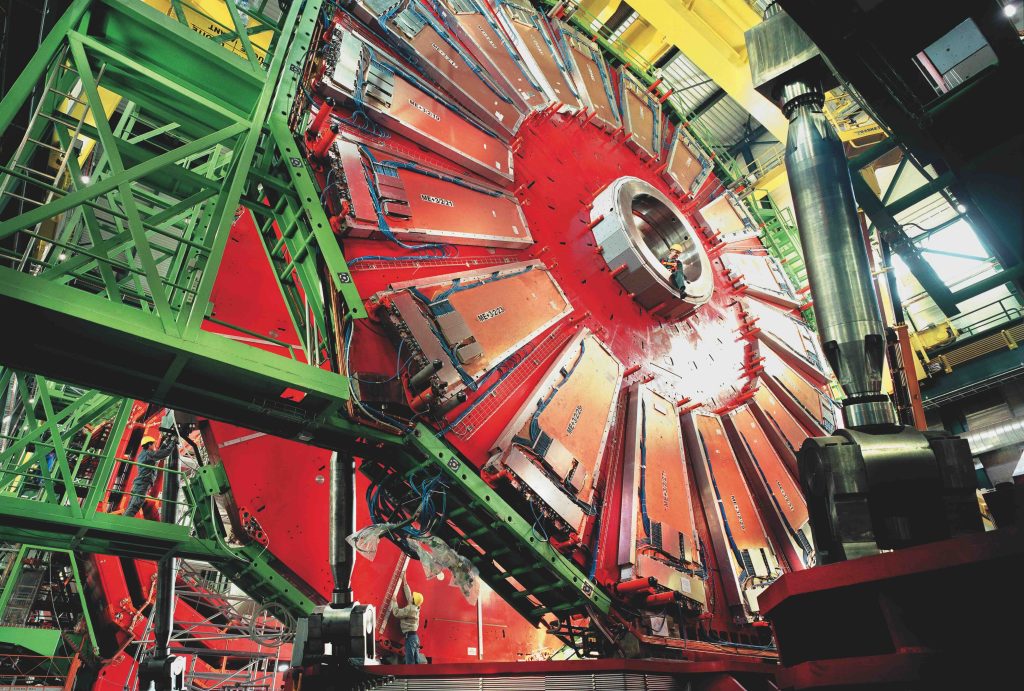
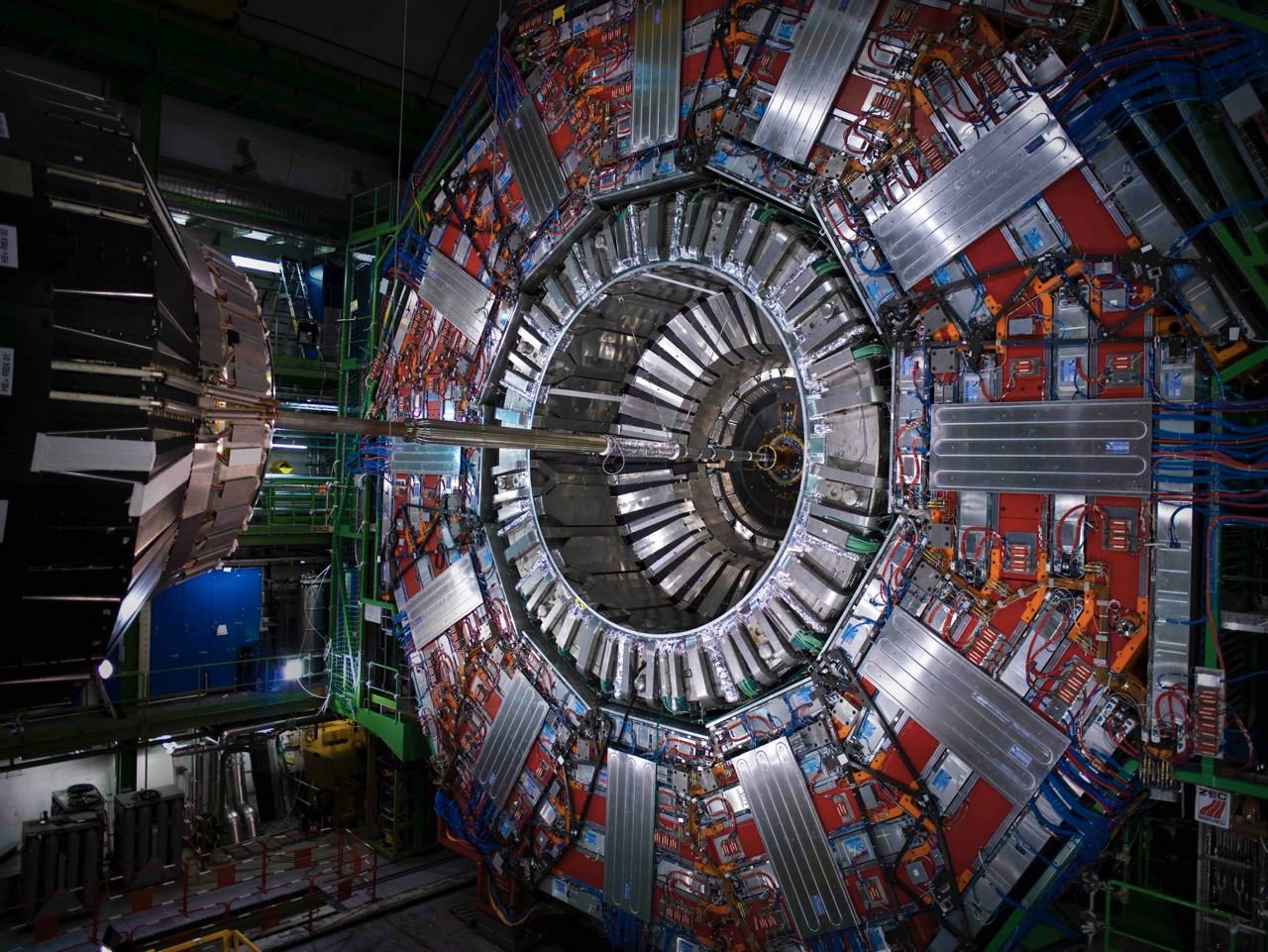
The CMS detector is like a giant camera for the subatomic world. Like a massive cylindrical onion, each layer reveals a different aspect of the particles produced during the LHC’s collisions.
By measuring their momenta, trajectories, and energies, CMS scientists can search for patterns that could point towards rare or new physics. A feat of engineering from the very first sketch to the final assembly, to the HiLumi build, the different parts of the detector are created and tested all across the globe, and come together at CERN. Teams of dedicated experts operate and continually assess the detector’s performance 24/7 to keep it running.

14 000T
1.4x heavier than the Eiffel tower
15m
in diameter and 21m long
40M
“photographs” of collisions taken each second
How CMS detects
particle properties
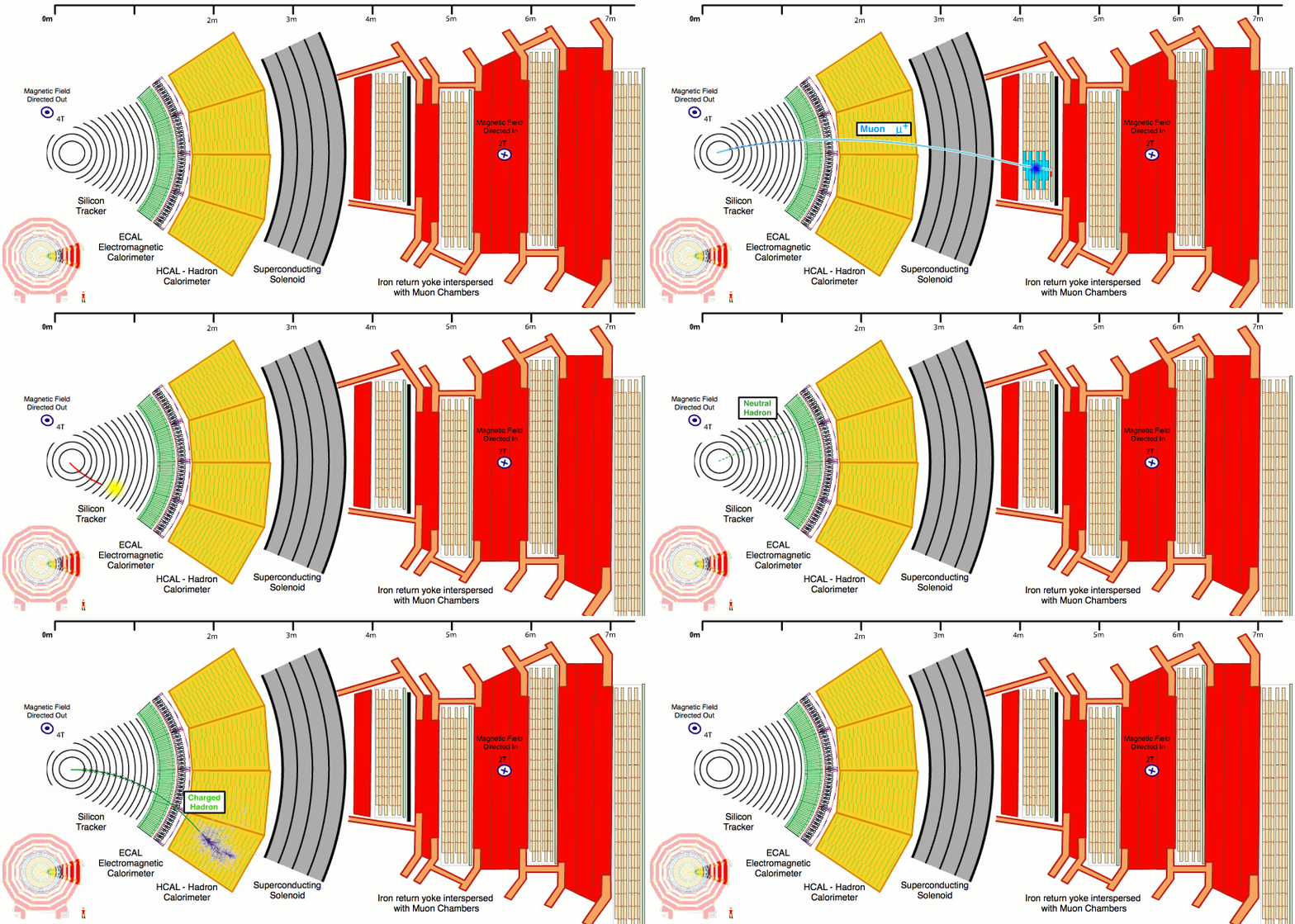
CMS measures the paths, momenta, energies and charges of particles to reveal what they are and how they behave.

01
SUPERCONDUCTING MAGNET
Measuring momentum
CMS uses a giant magnet of 4 teslas to bend the trajectories of charged particles as they fly through the detector. The less these particles bend, the higher their momentum – and the highest-momentum particles can be really interesting!


02
TRACKER SYSTEM
Identifying tracks
The tracker calculates the momenta and polarity of charged particles by measuring their positions at a number of points on their paths and joining the dots.
03
CALORIMETERS
Measuring energy
The CMS calorimeters measure particle energies at specific locations by gradually slowing them down until they stop.


04
MUON SYSTEM
Detecting muons
The muon system identifies muons and measures their momenta and trajectories. Muons are similar to electrons, but 200 times heavier, and can only arise from the decay of even heavier particles. Detecting muons immediately tells us that something intriguing was created in the collision!


05
MIP TIMING DETECTOR (from 2030)
Measuring time
In the HiLumi-LHC era, the number of simultaneous collisions will be so high that identifying the interesting collisions requires a brand new detector to add a fourth dimension: time!
06
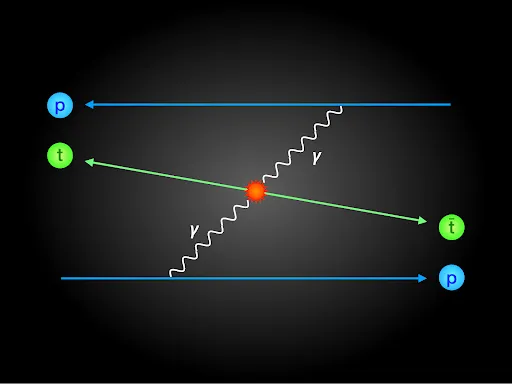
PRECISION PROTON SPECTROMETER
Tagging protons from near-miss collisions
Sometimes protons only graze each other and meander off course. The Precision Proton Spectrometer (PPS) catches these wayward protons far from the collision point, revealing rare interactions involving photons and gluons.

How CMS monitors collisions
To understand what they see inside the CMS detector, scientists need to know what is happening inside the LHC.
The Beam Radiation, Instrumentation and Luminosity system (BRIL) tracks luminosity – a measure of the number of particle collisions per second – and beam conditions in real time.


Data taking
Not all collisions are good enough to keep. The trigger and data acquisition systems decide in real time which events are worth saving, and which can be discarded – a high-stakes process as discarded collisions are lost forever. We have to select the best ones!

Infrastructure
Behind every measurement is a vast network of services, such as cryogenics for the magnet, hundreds of kilowatts of power for the electronics, cooling for the detectors and electronics, and a massive fibre-optic network for control, triggering and data readout.

Building HiLumi CMS
CMS has recorded only about 10% of the total amount of data it expects to take through its lifetime. Thousands of scientists, engineers, and technicians across institutes worldwide are building the next generation of CMS to enable us to explore deeper and further than ever before.


See it for yourself
Go 100 metres underground at our experimental site in Cessy, France, or during one of our live virtual visits.