The biggest jigsaw puzzle I’ve ever done
A new calorimeter will give the CMS Experiment at CERN a far more detailed picture of particle showers. But getting there means fitting together 30,000 hexagons.
Guest post by Joe Pastika
Originally posted on Beyond Standard
When I was a kid, my sister had this crazy 5,000-piece Coca-Cola Holiday Bears puzzle and convinced me to do it with her. There was so much red. I’m not really a “puzzle guy” and only do them with my family over Christmas. And yet two decades later, I am now working on one of the most complicated puzzles in modern science: A new particle detector made from 30,000 hexagonal silicon sensors and 4,000 scintillating modules. But this time, it’s not me and my sister. It’s me and thousands of colleagues on the CMS experiment at CERN.
Right now, the CMS experiment is undergoing a massive upgrade to prepare it for the High Luminosity Large Hadron Collider, which will give us 8 billion proton-proton collisions every second. Each collision presents an opportunity to find rare or undiscovered physics. But this intense collision rate also means that our detector will live in one of the most intense radiation environments in our solar system.
This is why we are replacing parts of the CMS detector with new-and-improved radiation hard upgrades. The subdetector I am working on is called the High Granularity Calorimeter (HGCAL). This detector will sit at either end of the collision point, which is one of the most radiation-intense regions, and precisely measure the energy of the particles created by the LHC.
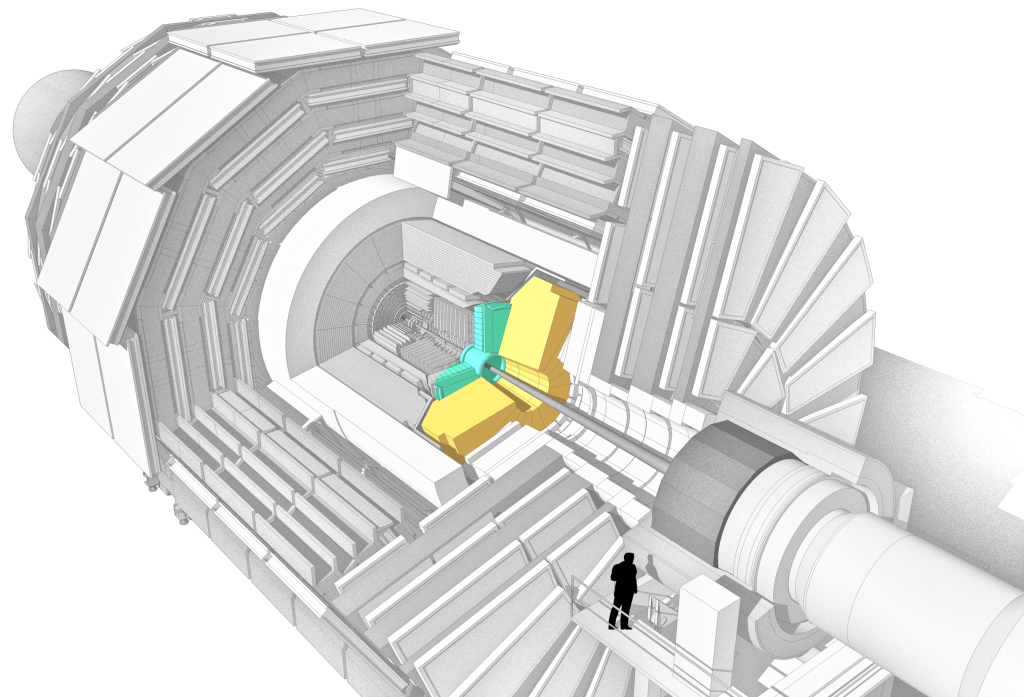
The HGCAL works by interweaving dense material with silicon sensors to gradually slow down and measure particles showering into our detector. By recording how much energy these particles lose as they pass, we can reconstruct how much energy they started with. This is important because very energetic particles often come from a heavy parent, such as short-lived Higgs bosons.
The hard part is that the HiLumi LHC’s 8 billion collisions a second will not be evenly spread in time, but arrive in pulses; giving us bursts of ~200 near-simultaneous collisions every 25 nanoseconds. These simultaneous collisions only happen over about 10 centimeters, which makes it hard to determine which particles came from which collision.
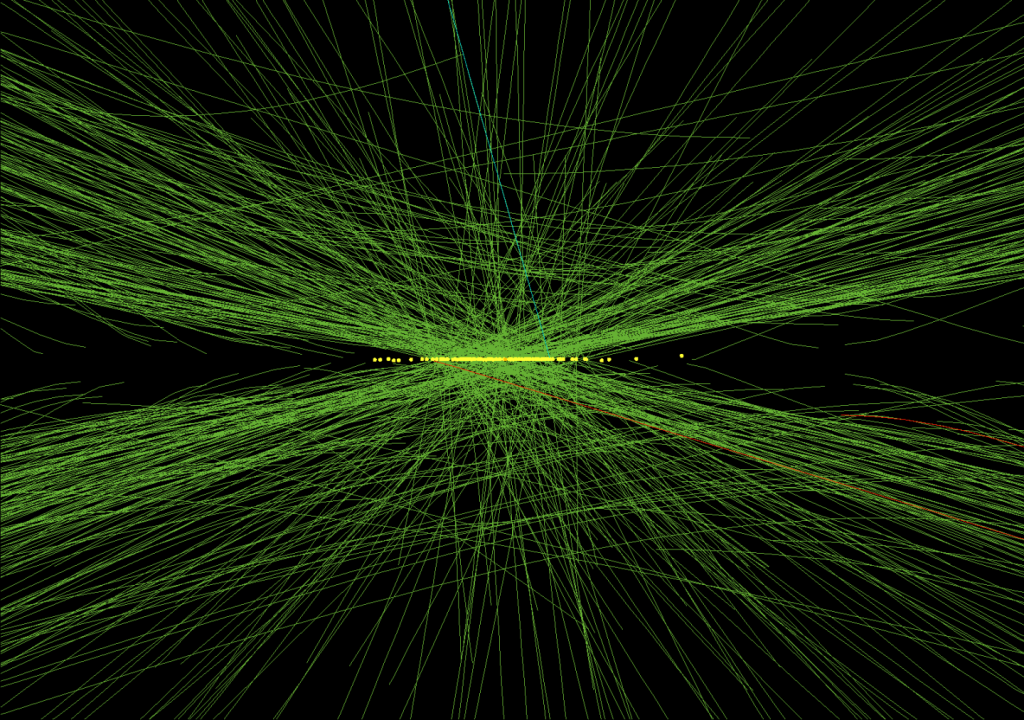
In addition to its radiation hardness (which comes from the choice to use silicon sensors), this new calorimeter will have 200 times as many channels as the detector it is replacing. (The old calorimeter had 30,000 channels; the HGCAL has 6 million.) This means the image we get will be 200 times more detailed. For a physicist, this is like going from a map that shows only the major highways to one that includes all the neighborhood streets. This level of granularity will allow us to precisely follow individual particle showers as they move through our detector and separate the multitude of overlapping events.
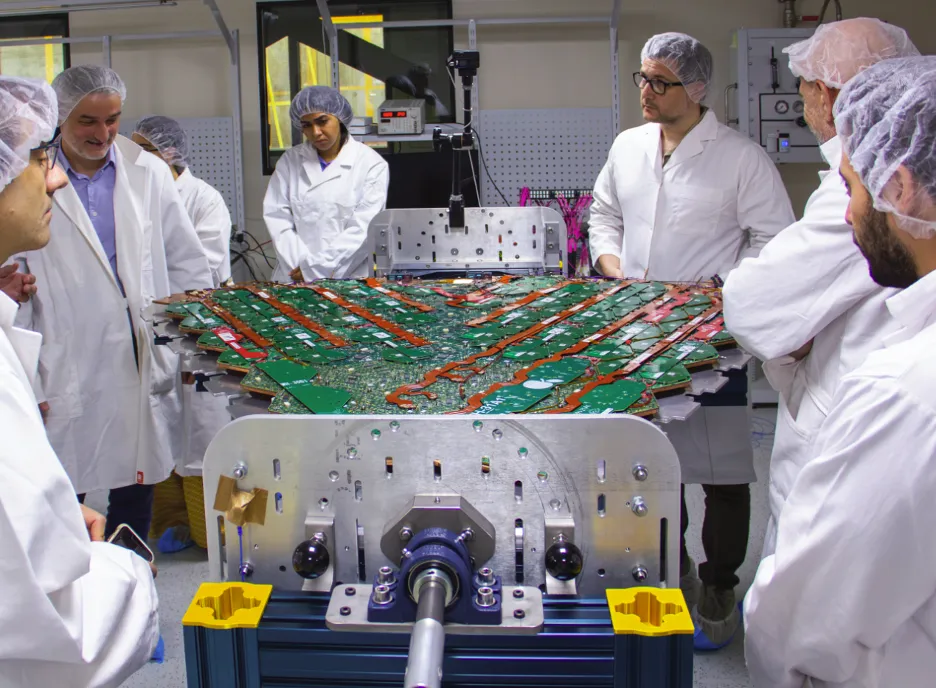
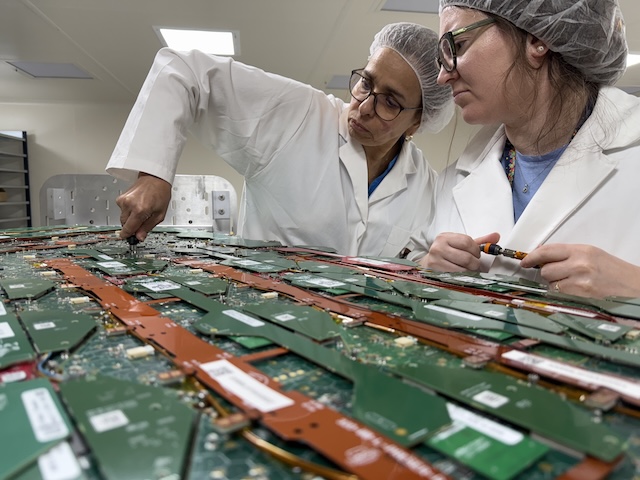
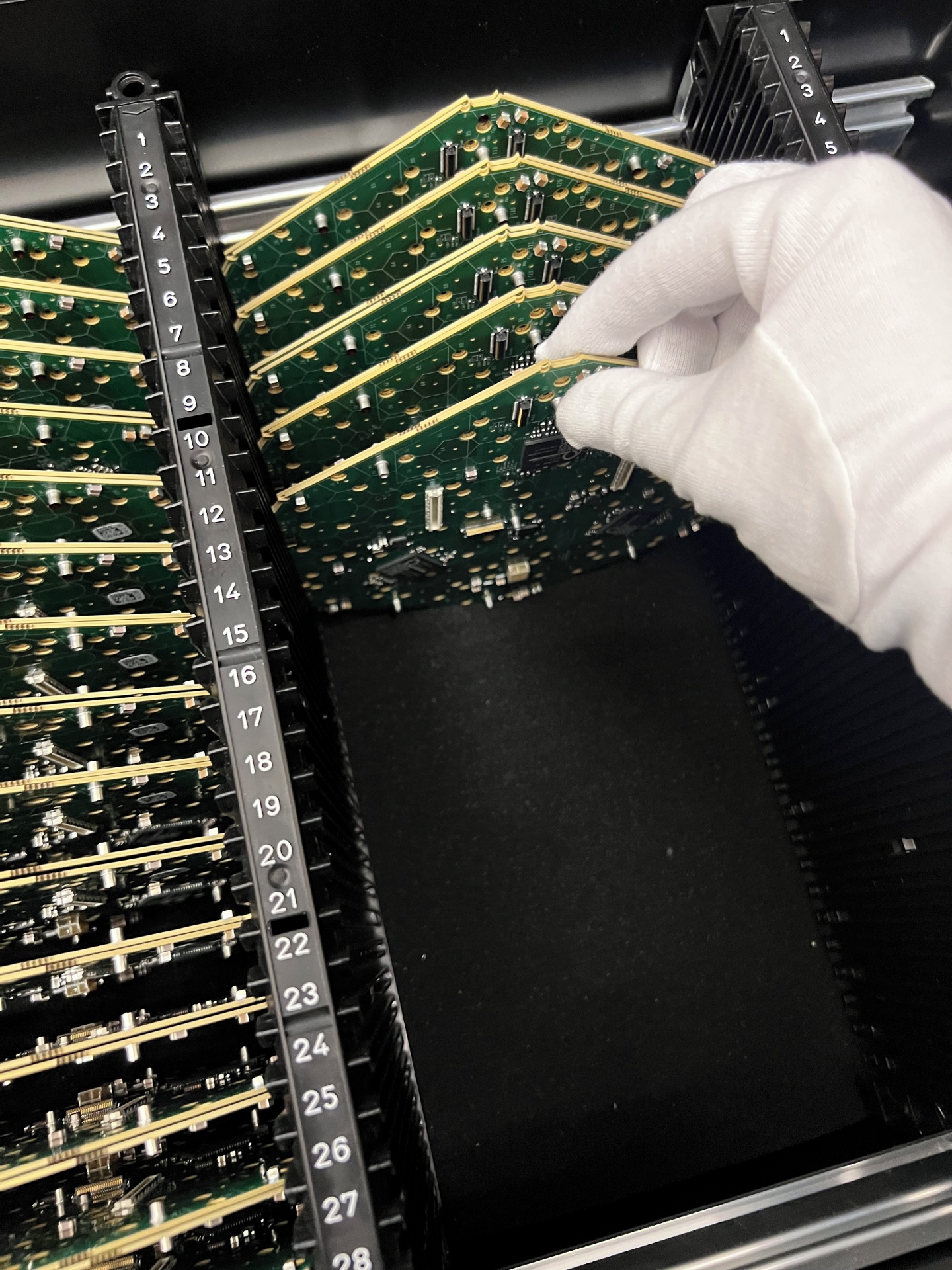
But with great precision comes great complexity. First, silicon is expensive. The sensors arrive as 8-inch circular wafers, and cutting these circles into squares wastes a lot of our precious silicon. So we decided to cut the circles into hexagons. But it turns out, hexagons (and all the weird partial hexagons we need around the edges) are much more complicated to work with. Instead of simply tiling squares, it’s like a 30,000-piece jigsaw puzzle. The pieces can look similar, but have different properties or positions, and each must go in the right place.
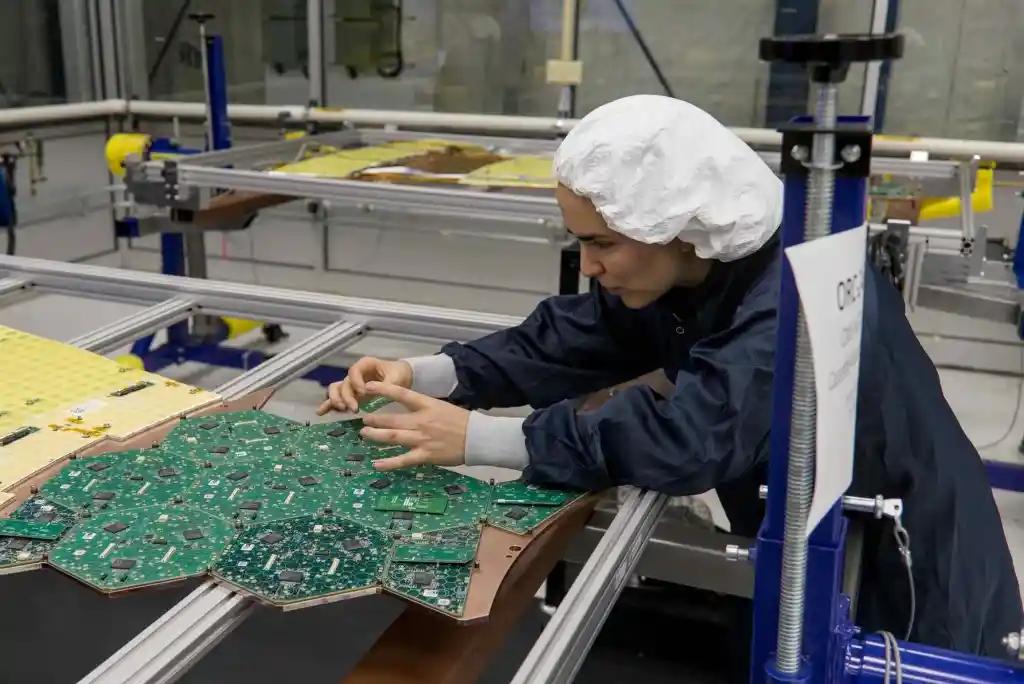
In addition, these sensors sit on cooling plates and must connect with power, readout boards and optical fibers. So instead of just one jigsaw puzzle, we also have all these secondary interconnected puzzles layered on top that all need careful alignment.
And compared to other types of detector materials (like scintillating crystals), silicon is delicate, and the electronics need protection from dust. This means that the assembly takes place in a clean room, and everything requires precise handling.
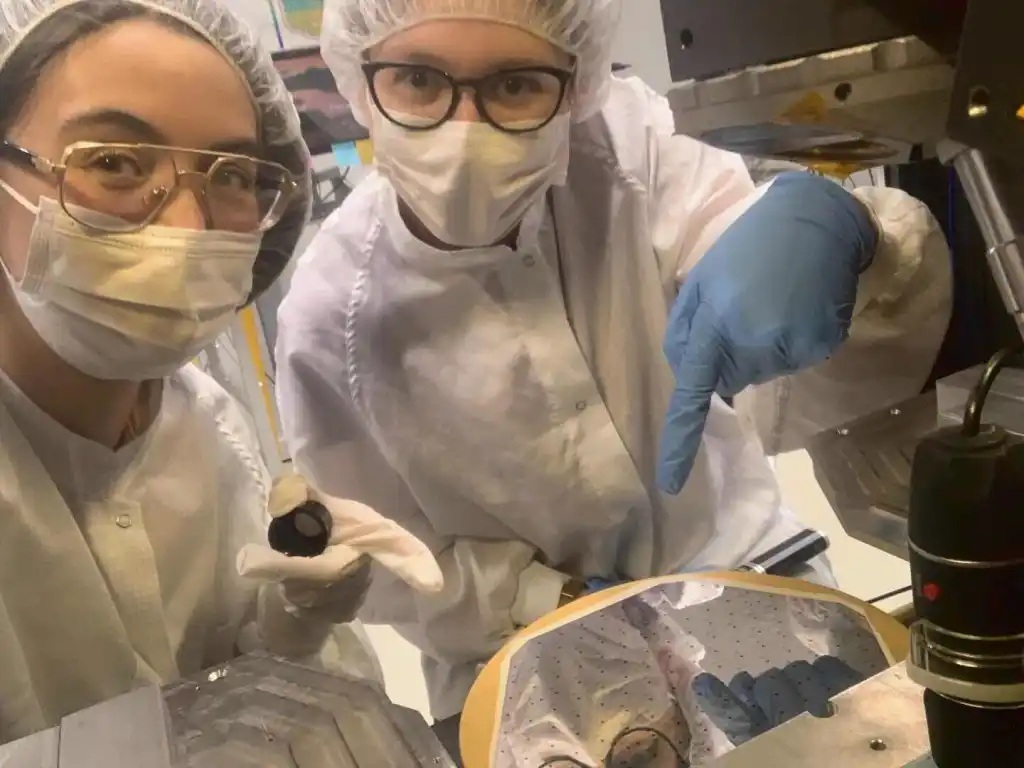
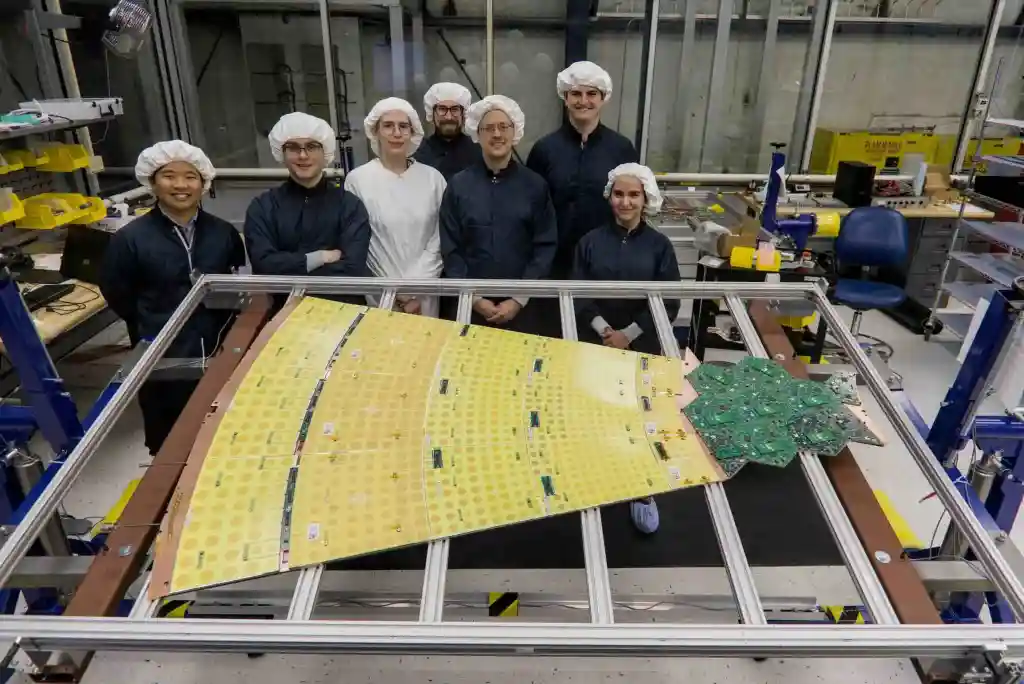
As I said before, I’m not really a puzzle guy. And the task in front of us can feel incredibly daunting, especially considering that me and my colleagues at Fermilab are responsible for building half of the HGCAL. This is why I feel lucky that we are not working on this alone, but with our colleagues at numerous institutions around the world. Together, we will fundamentally transform our detector into something that is much more detailed and powerful, which will give a view of the subatomic world humanity has never seen.
Disclaimer: The views expressed in CMS blogs are personal views of the author and do not necessarily represent official views of the CMS collaboration.