
Author: CMS Collaboration
-
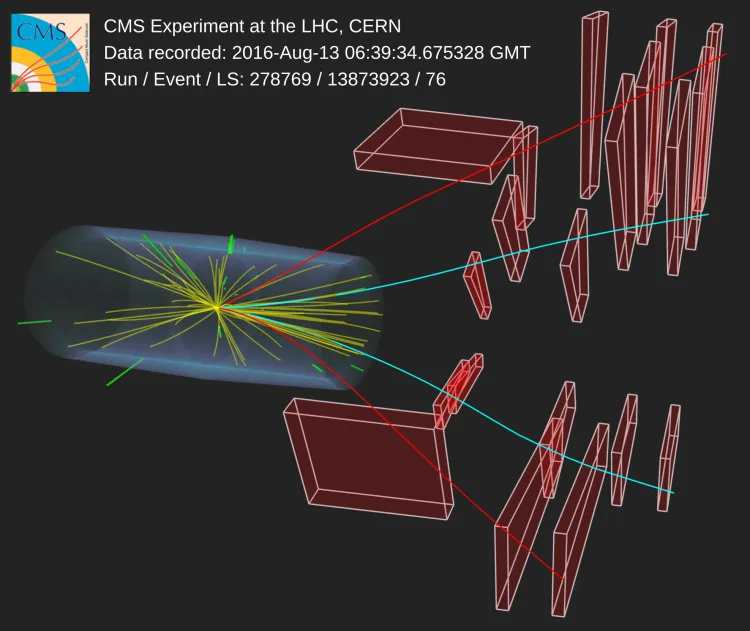
CMS observes a potential family of tetra-quark states composed only of charm quarks
For over two millennia, people have wondered about the diversity of the material world, asking questions like “what are things made of?”.
-
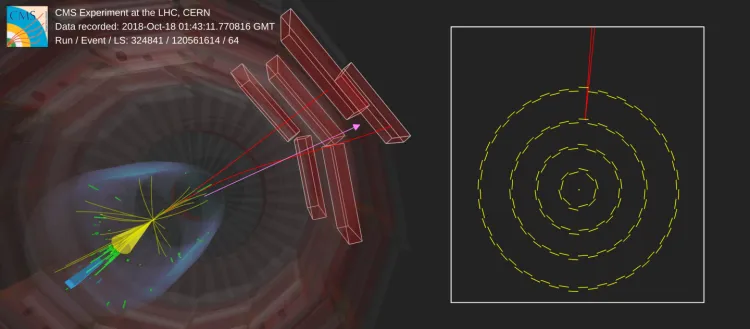
Fishing for dark matter using displaced muons
Dark matter is mysterious.
-
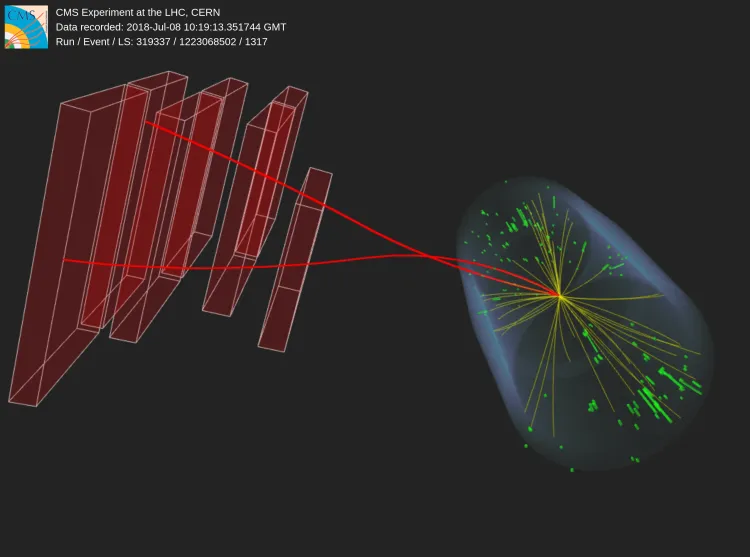
Looking for the invisible, literally!
Experimental particle physics is like a game of hide and seek.
-
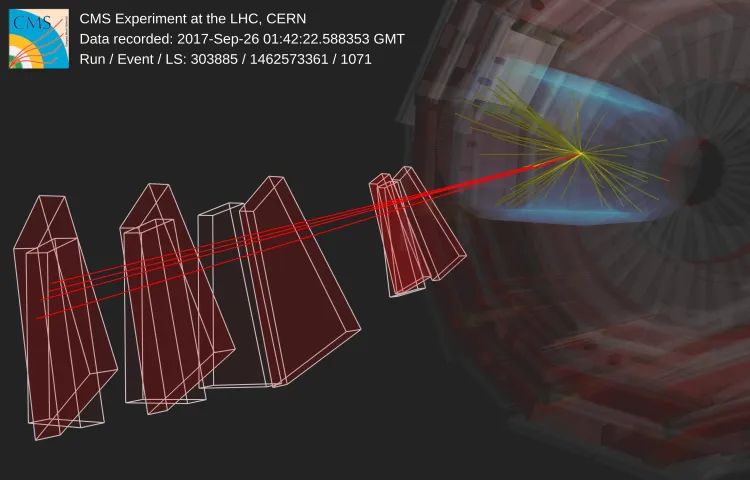
What the eta meson does when no one’s looking
The amount of data that CMS has collected so far is truly astounding, thanks to the very large number of proton-proton collisions that the LHC has provided, over more than a decade, and to the large rate of events that CMS can record.
-
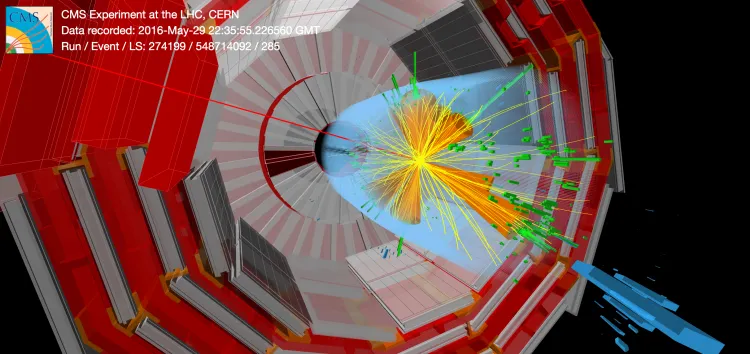
A new way to produce top quarks
The CMS collaboration has seen evidence of a rare mechanism to produce four top quarks.
-
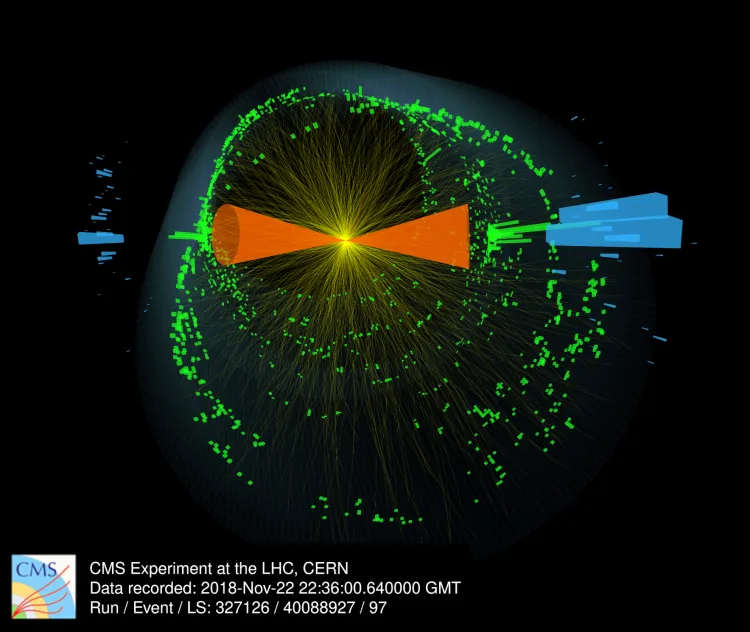
Exit through the microscopic gift shop
Imagine you are at a museum.
-
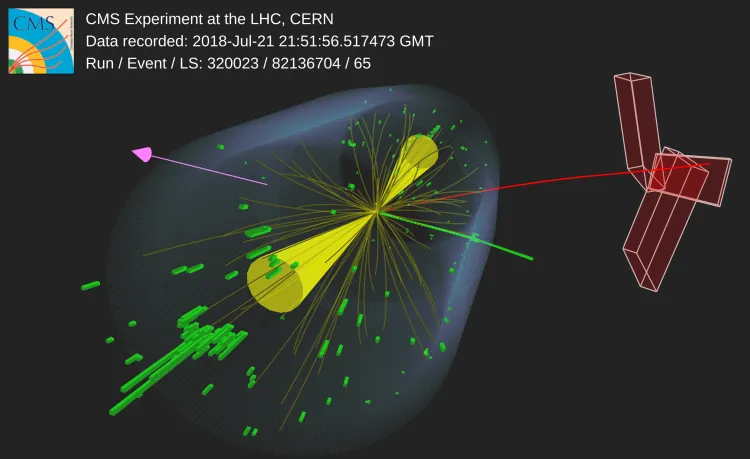
Measuring the Higgs boson decay to WW is 90% physics. The other half is teamwork!
It was a bit more than 10 years ago that together with our colleagues from the ATLAS experiment, we at CMS announced the discovery of this new (and quite amazing) particle.
-
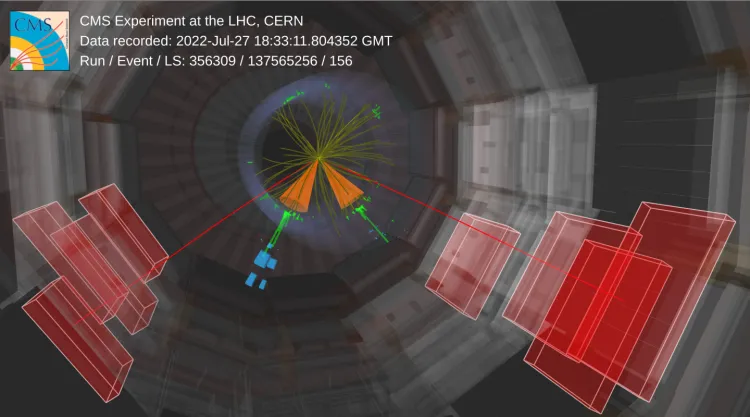
Top quarks fast to arrive at new energy frontier
On 5 July 2022, the LHC surpassed the previous energy limits of experimental particle physics, breaking its own record by achieving stable proton-proton collisions at a center-of-mass energy of √s = 13.6 TeV.
-
Searching for top squarks with CMS data
What is the Universe made of?
-
Using AI to Measure What Was Once Thought Impossible
While experimental results at the LHC continue to show good agreement with the standard model (SM), which is currently the best theory of fundamental particle interactions, the CMS physicists continue to turn up the heat on the SM.