
Author: CMS Collaboration
-
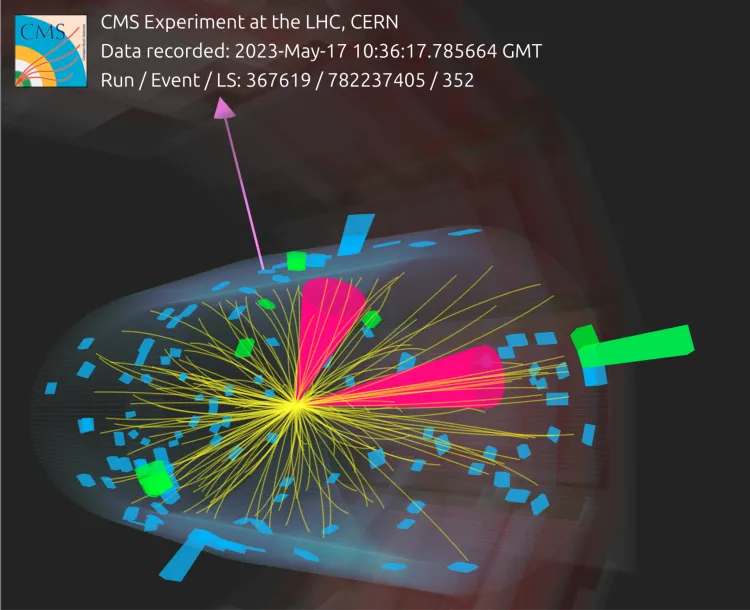
Does the Higgs look a little odd lately?
The CMS experiment has performed a new search for Charge-Parity violation in Higgs boson decays to tau leptons, shedding light on the origin of matter.
-
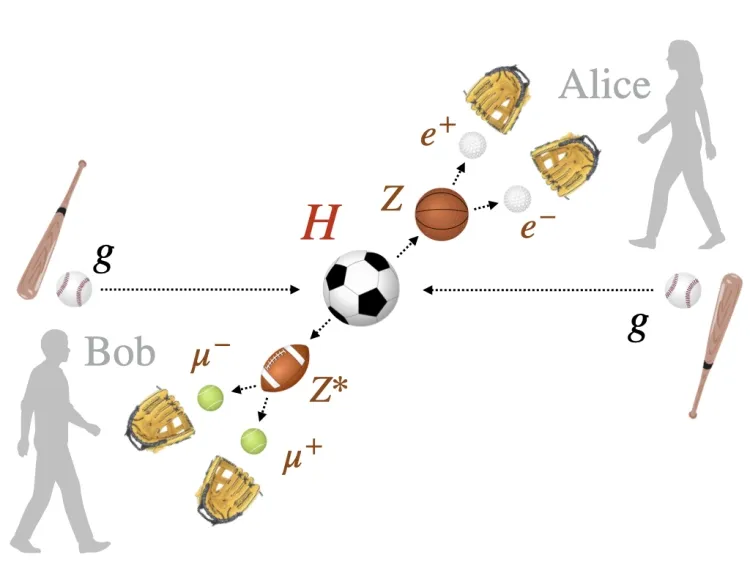
The tangled dance of Higgs boson decays
For the first time, the CMS experiment probes quantum entanglement in Higgs boson decays to a pair of Z bosons.
-
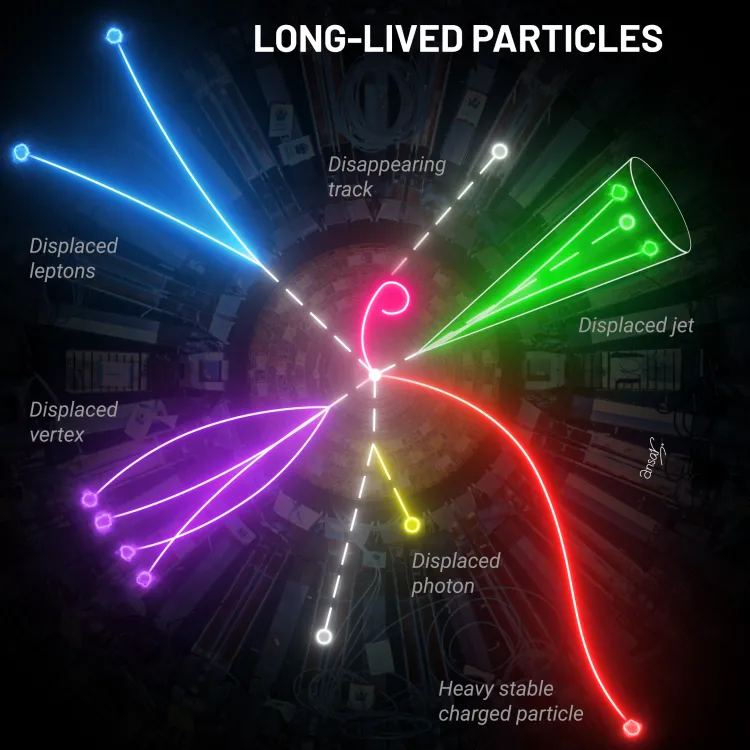
Unlocking the vault of new physics
In Run 3, CMS expanded its trigger program to enhance capturing long-lived particles that decay far away from the point of collision – broadening the search for physics beyond the Standard Model.
-
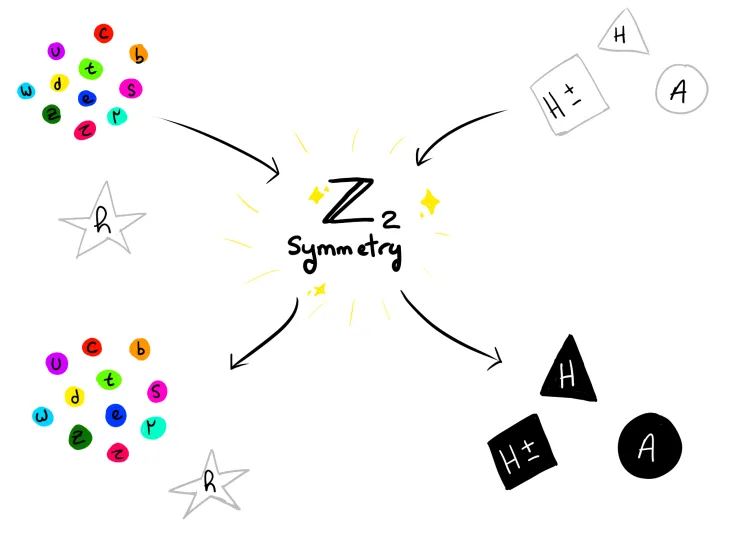
Double the doublet, shake well, break one, and keep the other intact: welcome, dark scalars!
For the first time ever, the CMS experiment has designed a dedicated analysis using parametrised machine learning to look for new dark particles that don’t socialize with Standard Model fermions, one of them being a favourite candidate in the search for dark matter.
-
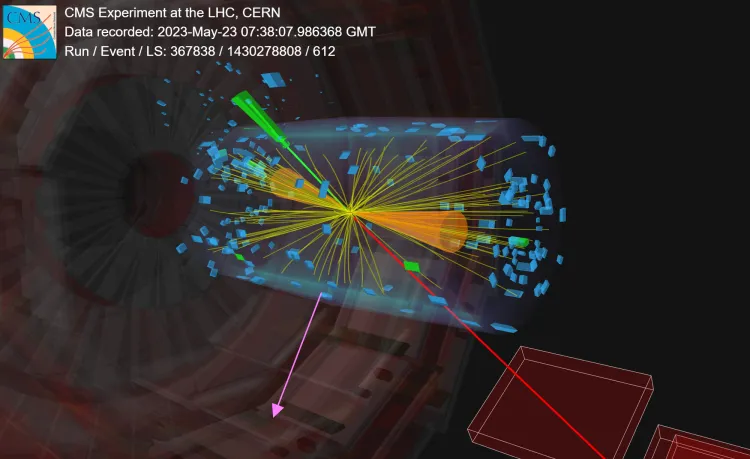
First measurements of vector boson scattering at 13.6 TeV
The CMS Collaboration reports the first measurements of the production of same-sign WW and WZ boson pairs in association with two jets at 13.6 TeV, using data collected during 2022–2024. One of the most powerful probes of the Higgs mechanism and the electroweak force is a rare process known as vector boson scattering (VBS).
-
CMS at Moriond 2026
The CMS Collaboration announces 38 new results for Moriond 2026. Here are the highlights of what we have presented so far.
-
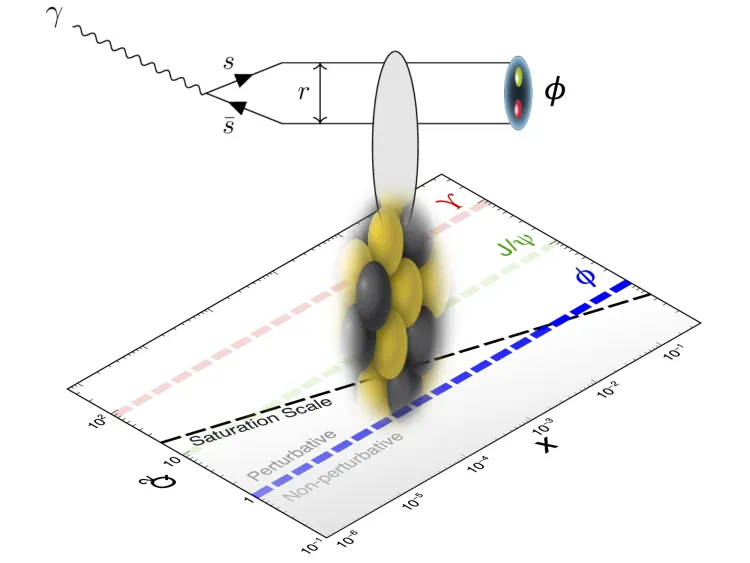
Examining the fringes of gluon densities in highly energetic nuclei
The CMS Collaboration reports the first measurement of coherent ϕ meson photoproduction, establishing a powerful new tool to explore the dense nuclear matter in the transition regime from perturbative to nonperturbative QCD.
-
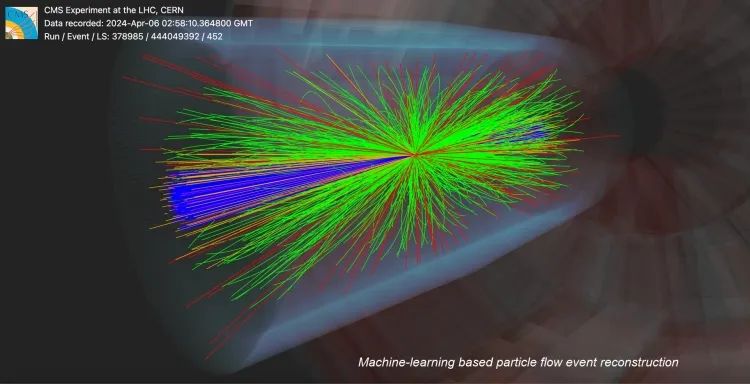
Teaching CMS to trace particles
An interactive version of the above event display can be found at this page.
-
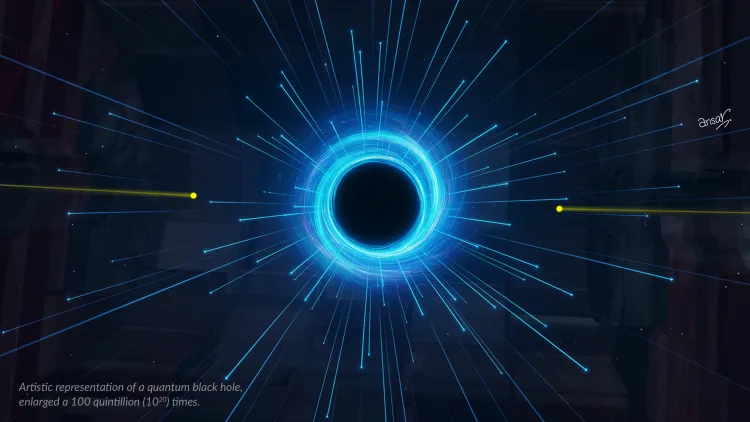
Are there quantum black holes that evaporate instantly?
The CMS experiment utilises cutting-edge machine learning techniques to search for microscopic, quantum black holes and other exotic objects that evaporate in an instant.
-
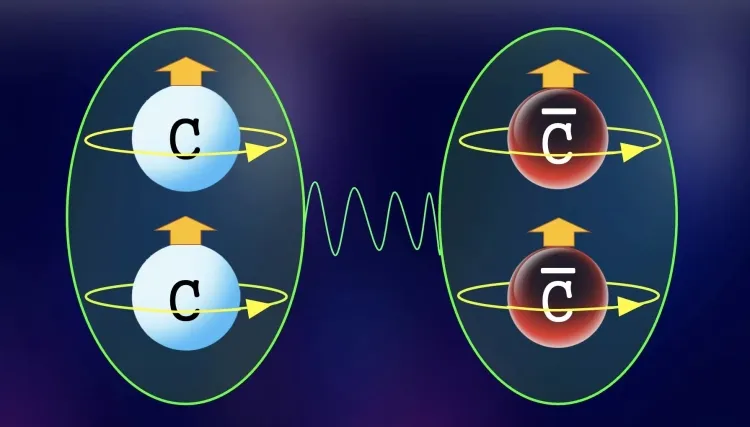
CMS gets acquainted with a family of all-charm tetraquarks
Upon close inspection, the tetraquark family members are consistent with tightly bound diquark pairs The CMS Collaboration has identified three extremely rare same-flavor teraquark states and determined, based on their spin-parity configuration, that they are consistent with a diquark-antidiquark model.