
Category: Article
-
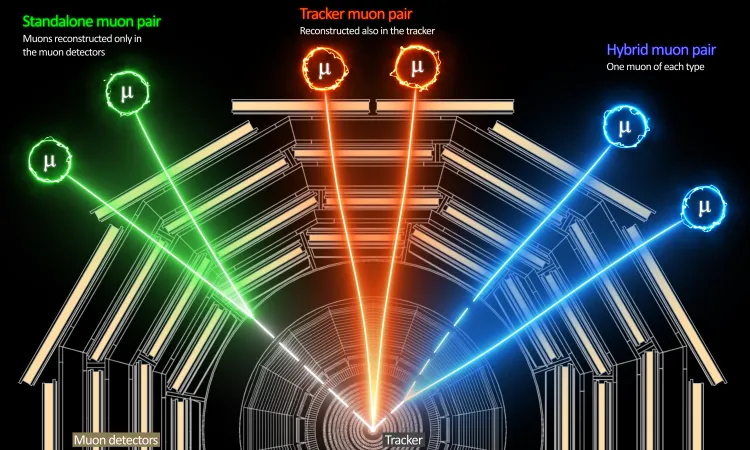
In a detector far, far away: searching for elusive long-lived travellers by tracing pairs of muons
A search for long-lived particles decaying into two muons has been performed by the CMS collaboration. Many scenarios of beyond standard model physics envisage such a possibility, whereby the exotic particles, travel before decaying, a considerable distance which can range from few microns to several kilometres depending on detailed properties. The striking experimental signature of…
-
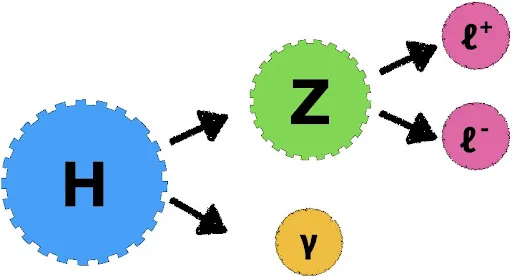
A possible new decay mode of the Higgs boson
CMS looked for a relatively rare decay mode of the Higgs boson, viz., to a Z boson and a photon (H → Z𝛾 ). The Z was identified via its decays to electron and muon pairs (e+e- or 𝝁+ 𝝁-). The spectrum for the combined mass of the three particles (e+, e- and 𝛾 and…
-
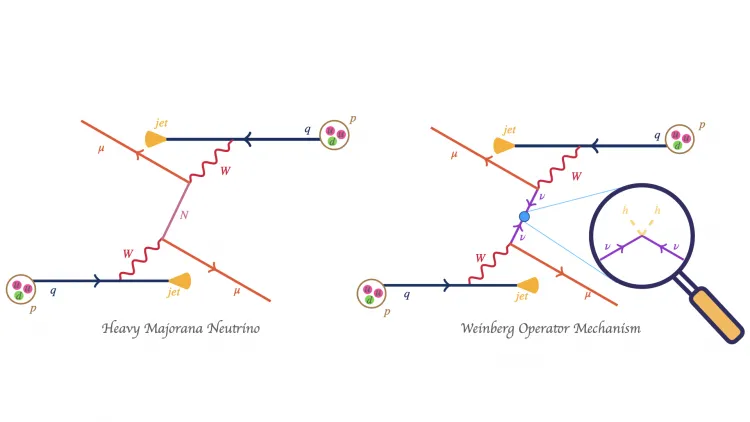
Two Ends of a Seesaw
Experiments have established that the neutrinos do have non-zero mass but extremely tiny, though in standard model they are treated as mass-less. This can be explained using theoretical ideas of Majorana and Weinberg. The testable prediction at the LHC is the production of 2 same-sign muons unaccompanied by neutrinos. Data collected by the CMS experiment…
-
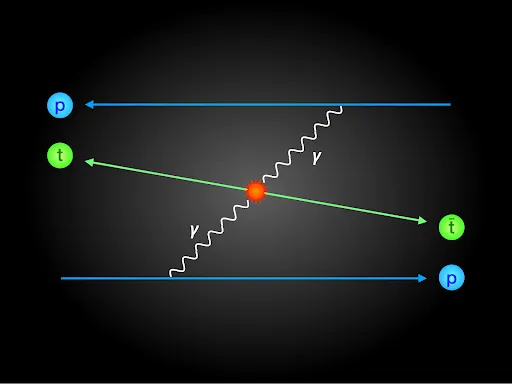
Detecting the creation of top quarks out of light
Ask someone what experiments at the CERN-LHC do, they will tell you: ‘You accelerate two protons to very high energy, smash them together and look in great detail at all particles created from the disintegration of the protons.’
-
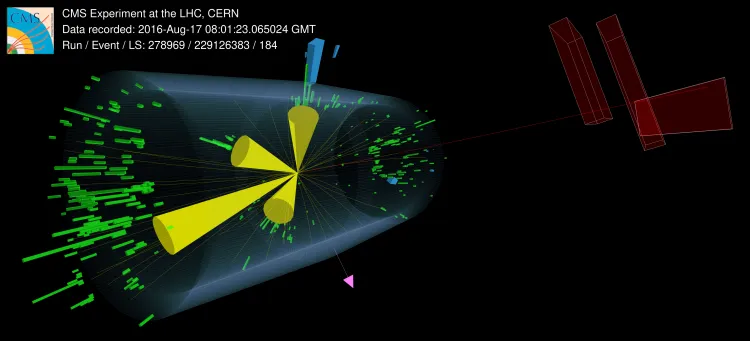
CMS Collaboration measures the mass of the top quark with unparalleled accuracy
The CMS collaboration has substantially improved the precision with which the top quark mass is measured. The latest result, a measurement of the top quark mass of 171.77 ± 0.38 GeV, was presented at CERN last week and estimates the value of the top quark mass with a precision of about 0.22%. The gain comes…
-
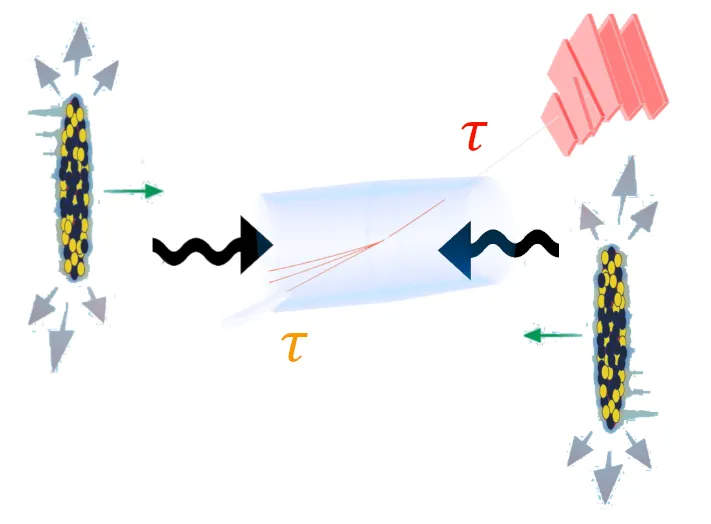
Using light to make cousins of the electron
In heavy ion collisions, for ultra-peripheral processes, simultaneous emission of photons by oppositely moving 2 lead ions can occasionally produce a pair of tau leptons. The CMS Collaboration has observed such a phenomena, for the first time in the LHC data. The results were presented in the recently concluded Moriond and Quark Matter conferences.
-
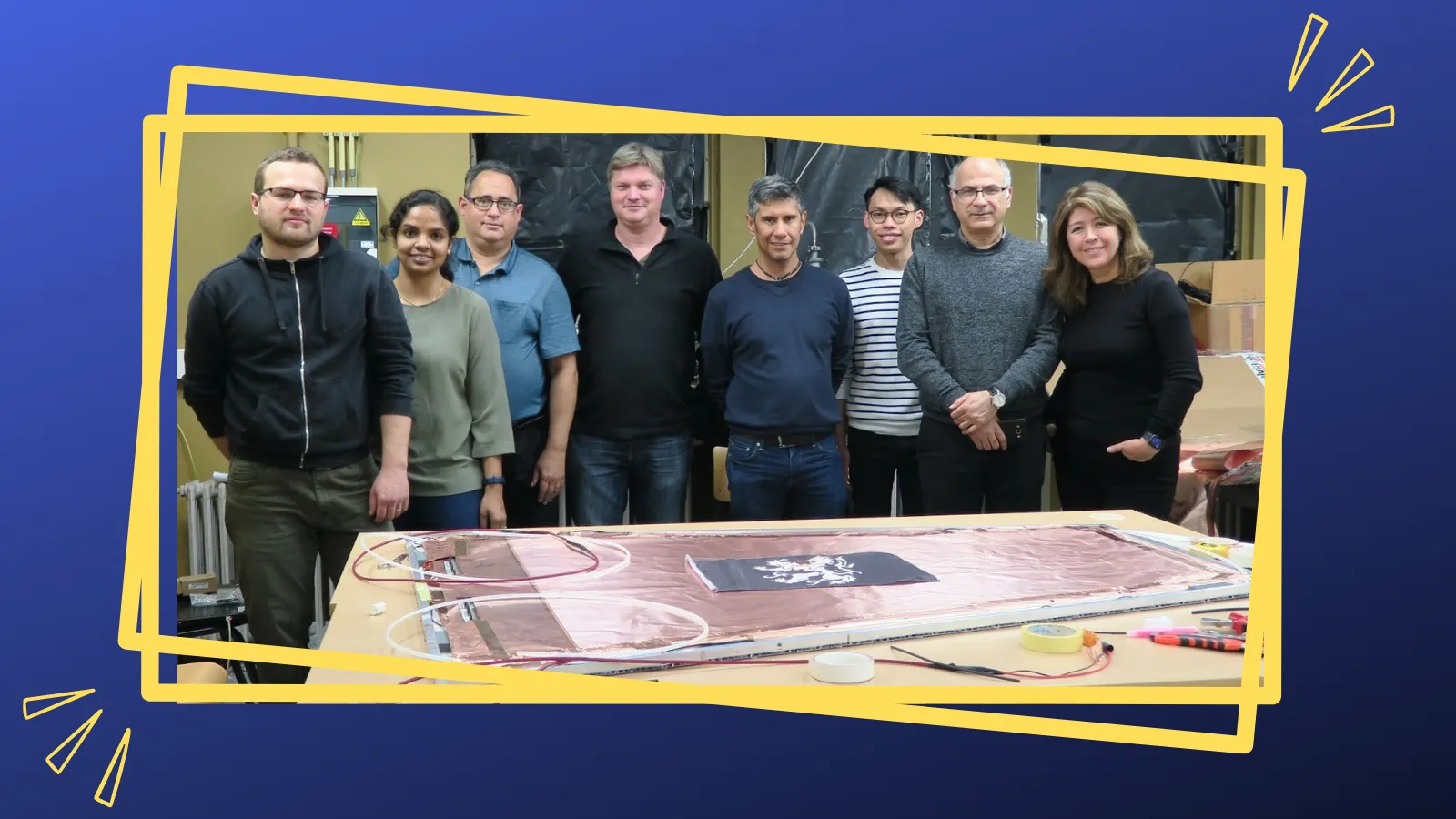
[CMS Labs] My experience as a CMS PhD student at Ghent University
I started working with particle detectors during my Master’s at the Central University of Karnataka, India. Although I always wanted to continue working in the field of particle physics, I never thought that I would end up as a PhD student at the world’s largest particle collider.
-
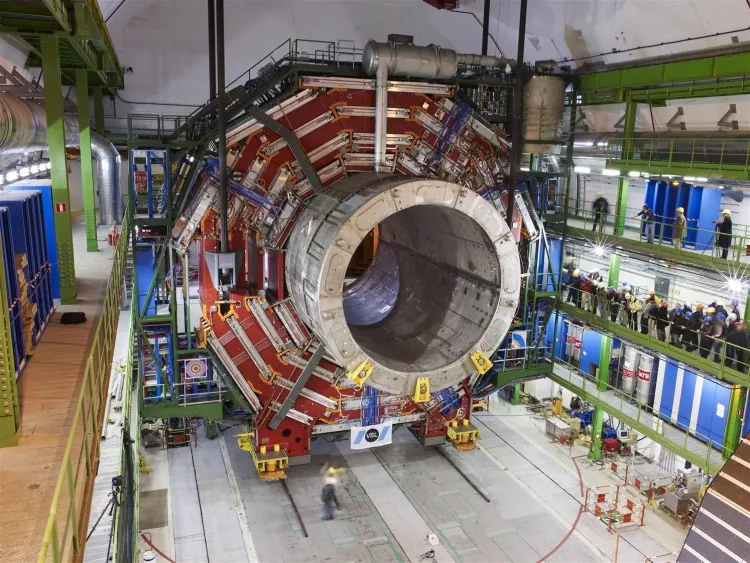
Pay attention: CMS magnet powered ON!
Running toward the start of Run3 at the Large Hadron Collider (LHC), the CMS experiment completed one of its last and crucial steps: the big solenoid magnet has been powered on to reach the nominal magnetic field of 3.8T on March 4th 2022. Hidden inside the CMS detector, the solenoid magnet looks like a cylinder…
-
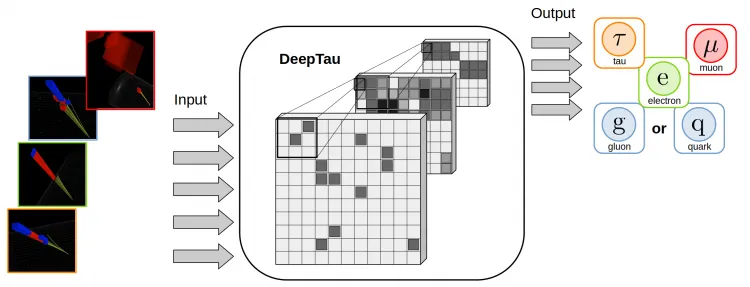
Deep learning technique identifies complex decays of tau leptons
State-of-the art machine learning techniques have been used by scientists of the CMS collaboration to identify efficiently the hadronic decays of the tau leptons vis-a-vis jets (sprays of particles boosted in a given direction). This will help the CMS experiment in a big way to discriminate quickly, in real time of the LHC collision, the…
-

CMS firmly supports the CERN Council statement.
CMS firmly supports the CERN Council statement.