
Category: Article
-

Why measure the W boson accurately? Let’s ask Lorenzo.
The CMS member Lorenzo Bianchini, researcher from Istituto Nazionale di Fisica Nucleare (INFN), Sezione di Pisa, has been granted the European Research Council (ERC) Consolidator grant.
-
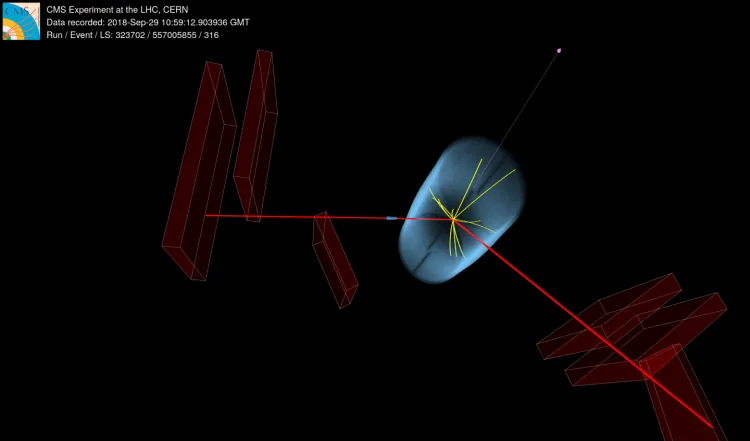
CMS: A hunter of Super-Leptons
The Standard Model of Particle Physics is the theory that physicists use to describe elementary particles’ fundamental interactions.
-
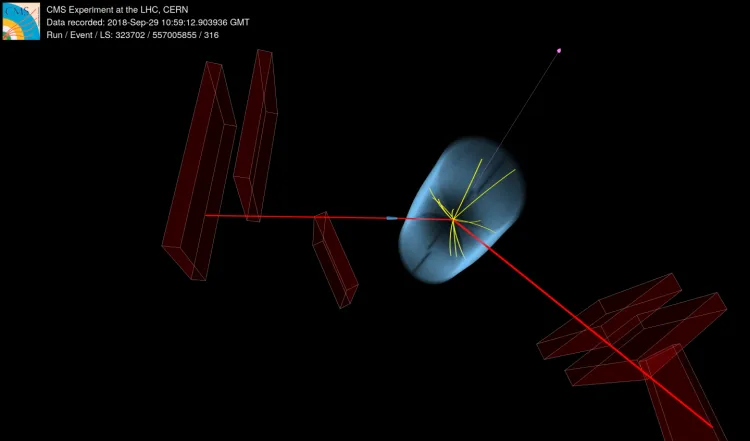
CMS: A hunter of Super-Leptons
The Standard Model of Particle Physics is the theory that physicists use to describe elementary particles’ fundamental interactions.
-
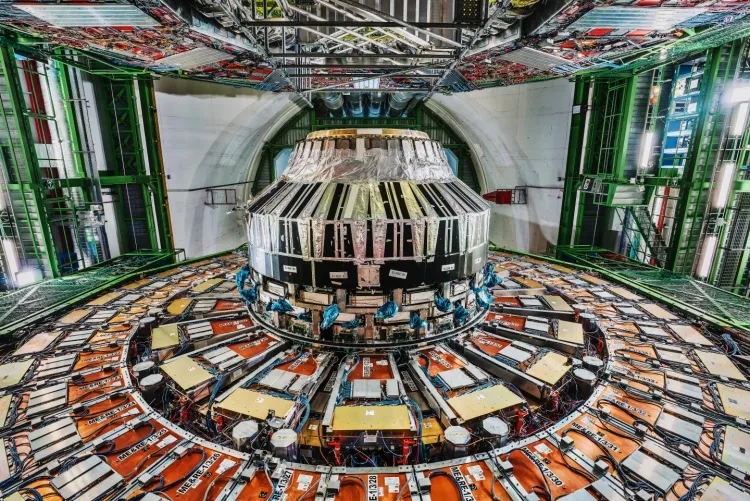
End of Year Overview, 2020
The year 2020 is coming to an end; despite its exceptional difficulties and challenges caused by the world-wide COVID-19 pandemic, the CMS collaboration reached many important milestones during this period.
-
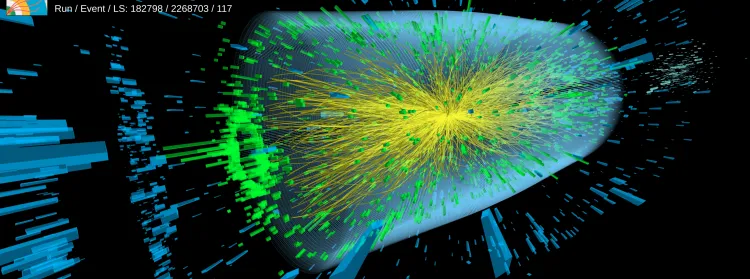
The CMS experiment has released its first batches of opendata from heavy-ion collisions at the LHC
The CMS experiment at CERN has released into the public domain its first batches of open data from heavy-ion collisions at the Large Hadron Collider.
-
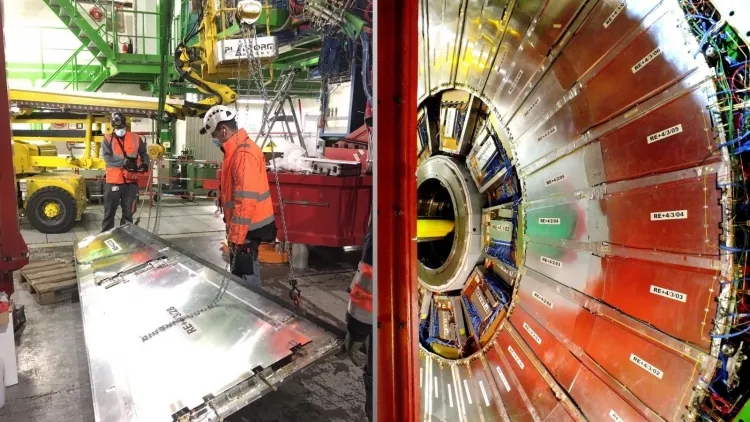
RPC Completed the Reinstallation of Super Modules
After the Large Hadron Collider (LHC) was shut down in December 2018 following the successful completion of RUN 2 operation (2015-2018), CMS is undergoing an intensive upgrade and maintenance program during the current 3-years break (“Long Shutdown 2” or LS2) in order to ensure an excellent performance of the detector in the subsequent physics program.
-
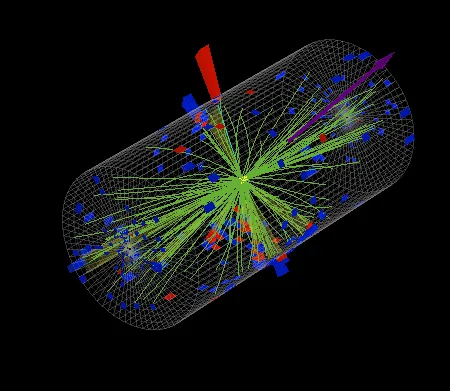
Hunting leptoquarks with the CMS experiment
The CMS Collaboration has released a new search for leptoquarks, a hypothetical particle that would be the “missing link” between quarks and leptons. The result has been submitted to the journal Physics Letters B.
-
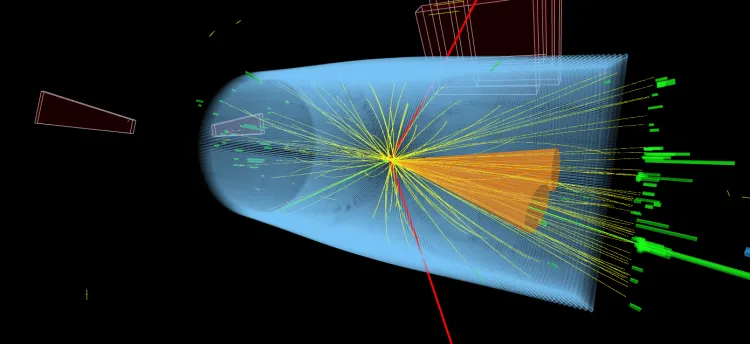
A Toy Universe to study top quarks and search for New Physics
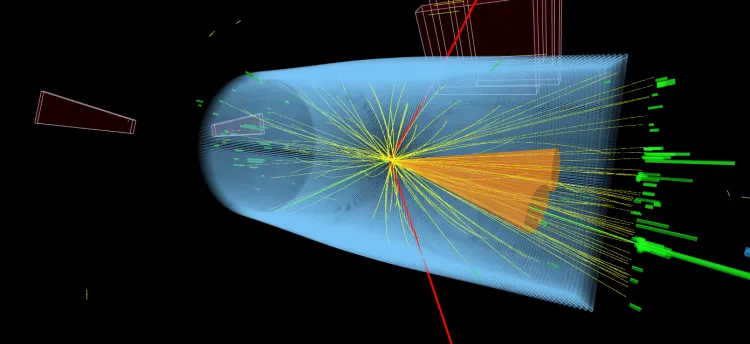
What if new particles modify the behaviour of existing particles, but by only a little bit?
-
A Toy Universe to study top quarks and search for New Physics
What if new particles modify the behaviour of existing particles, but by only a little bit?
-
A Toy Universe to study top quarks and search for New Physics
What if new particles modify the behaviour of existing particles, but by only a little bit?