
Category: Article
-
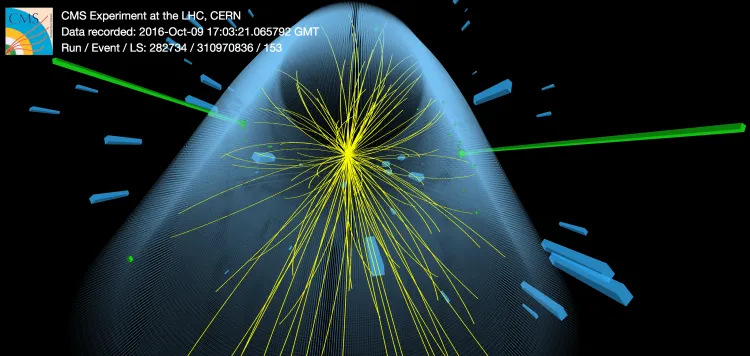
CMS precisely measures the mass of the Higgs boson
A new result by the CMS Collaboration narrows down the mass of the Higgs boson to a precision of 0.1%.
-
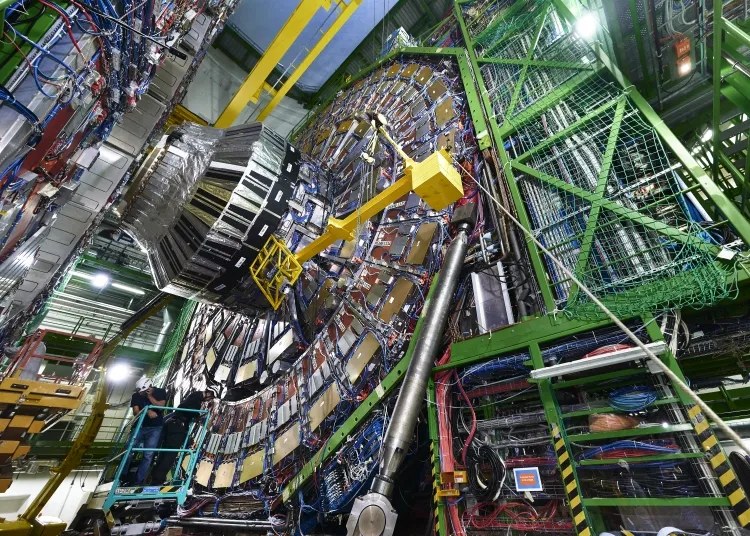
CMS Continues to Shine with New GEMs
On July 25th, 2019, the very first GEM superchambers were installed into the CMS YE- endcap as part of the newest CMS muon subsystem, GE1/1. And while this was a fantastic accomplishment worth celebrating, it was only the beginning of the story.
-

Meet CMS Young Researchers 2019 Prize Awardees
The CMS Young Researchers Prize dates back to 2012, when seven scientists from the CMS and ATLAS collaborations, as well as from the LHC project, were recognised by the Fundamental Physics Prize Foundation for their leadership role in the discovery of the Higgs boson.
-
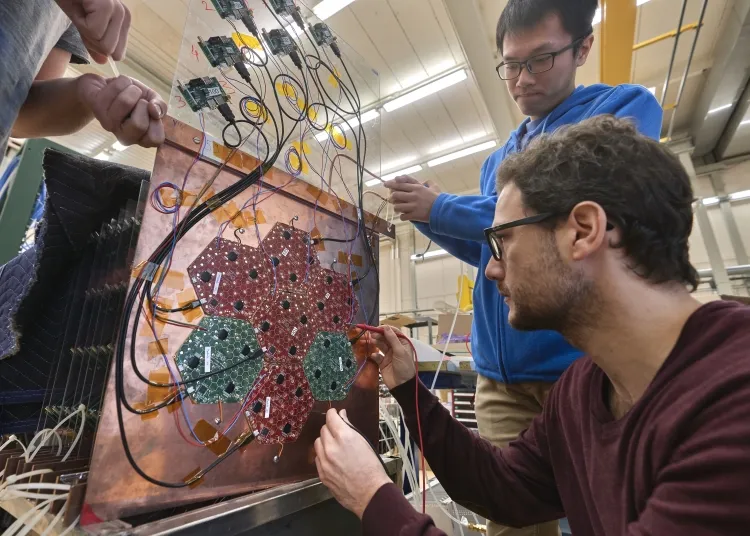
A NEW ERA IN CALORIMETRY
The high-granularity calorimeter (HGCAL) is a major upgrade of CMS, and is necessary to maintain excellent calorimetric performance in the endcaps during HL-LHC operations.
-
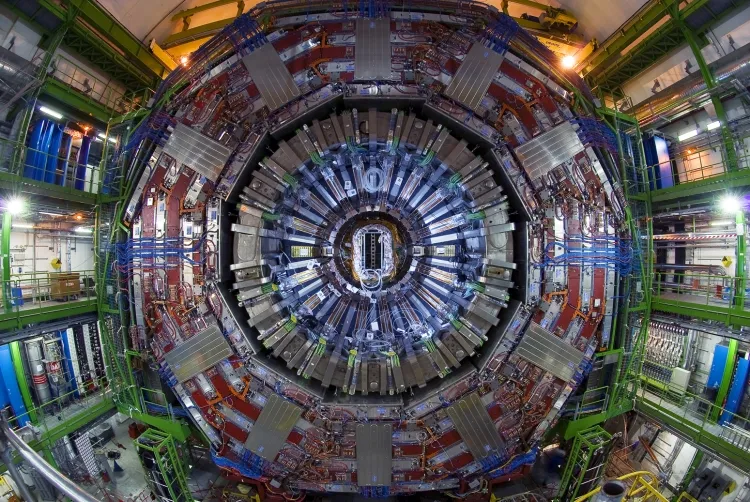
Three questions that the top quark can answer
For the first time, CMS physicists have measured the production rate of top quark pairs as a function of three experimental observables simultaneously. The new result helps to answer several fundamental questions, among which, the properties of gluons inside protons, the strength of the strong nuclear interaction, and how massive the top quark precisely is.
-
Congratulations to CMS APS Fellows 2019
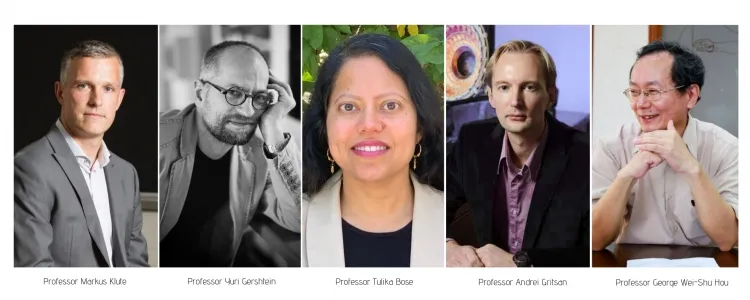
Congratulations to five CMS scientists, Tulika Bose, Yuri Gershtein, Andrei Gritsan, George Wei-Shu Hou and Markus Klute, who were elected as American Physical Society (APS) Fellows in 2019 for their exceptional contributions to the field of physics.
-
Watching the top quark mass run
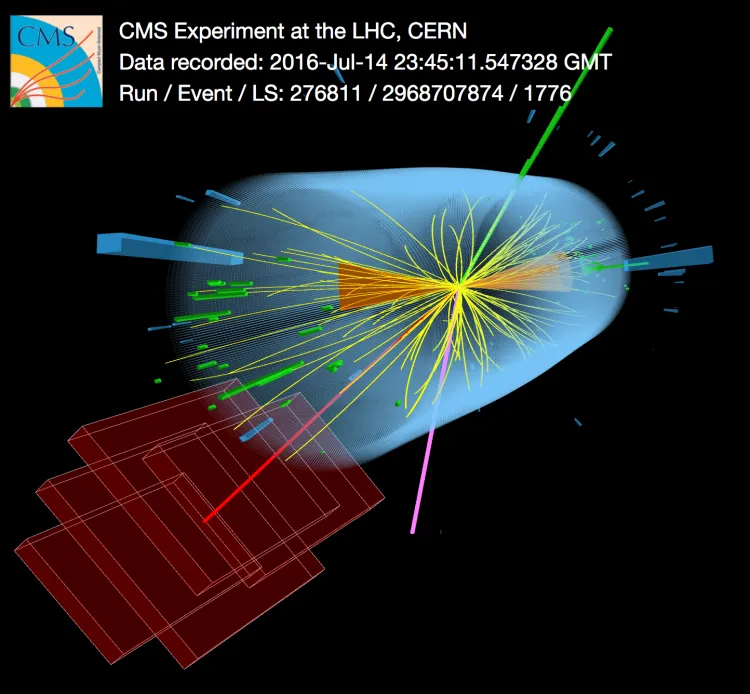
For the first time, CMS physicists have investigated an effect called the “running” of the top quark mass, a fundamental quantum effect predicted by the Standard Model.
-
How CMS weeds out particles that pile up
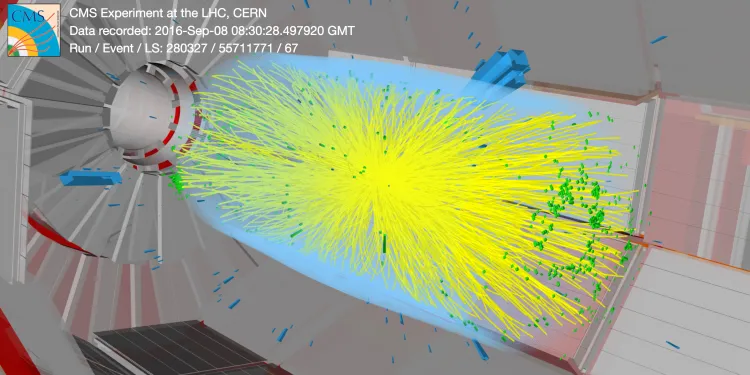
When the CMS experiment records particle collision events, a large number of unwanted extra collisions overlap in the detector and hide the rare particle collision that is worthwhile studying. CMS physicists have developed a new method that gives improved precision for the study of collisions even when occurring together with 50 or more extra interactions.
-
Machining jets
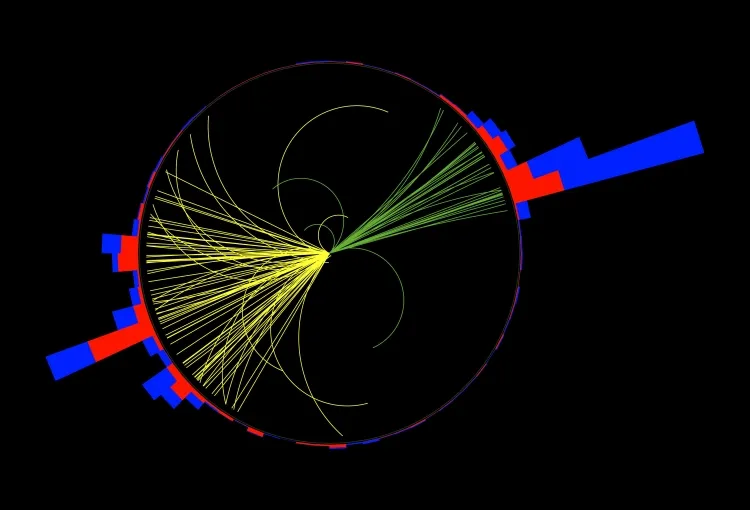
New algorithms from the Compact Muon Solenoid experiment use the ideas used in mobile phone facial recognition to better understand the collisions at the Large Hadron Collider.
-
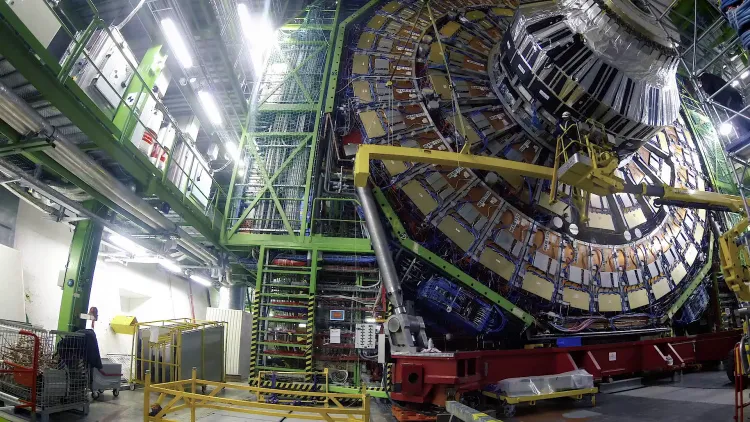
CMS Muon Cathode Strip Chambers’ trip for new electronics
As part of the LHC Long Shutdown 2 (LS2) activities at CMS, the CMS Muon Cathode Strip Chamber (CSC) subsystem is having its electronics upgraded in the chambers closest to the beam line.