
Category: Physics
-
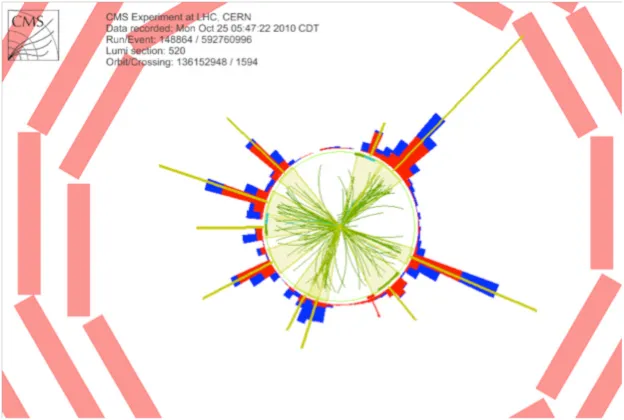
Search for microscopic black hole signatures at the Large Hadron Collider
The CMS experiment at CERN’s Large Hadron Collider (LHC) has completed a search for microscopic black holes produced in high-energy proton-proton collisions.
-
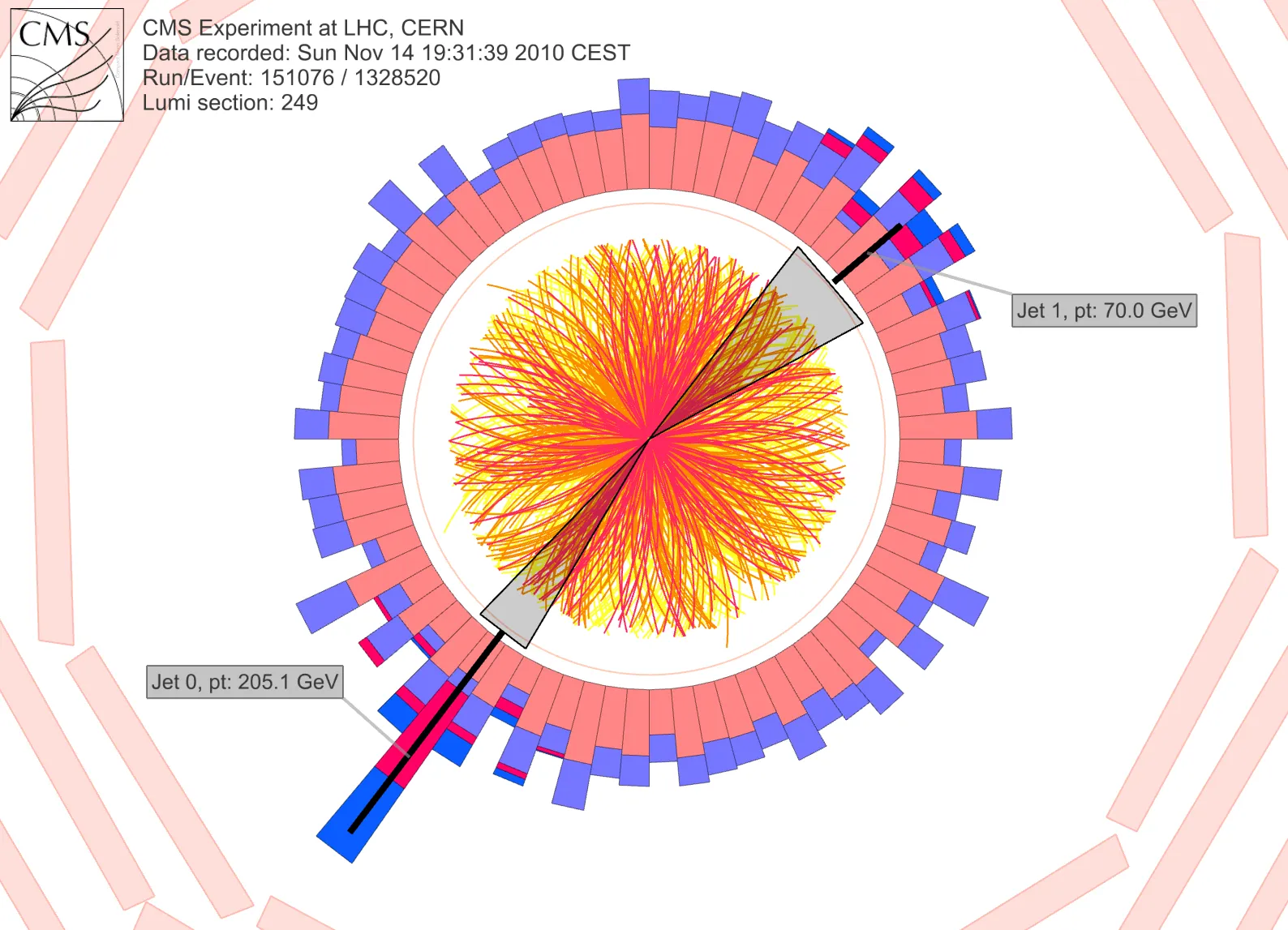
Jet Quenching observed by CMS in heavy-ion collisions
After only three weeks of heavy-ion running at CERN’s Large Hadron Collider (LHC), the CMS experiment is already yielding new insights into the condition of matter that existed in the very first instants of the Universe’s life, some 13.7 billion years ago.
-
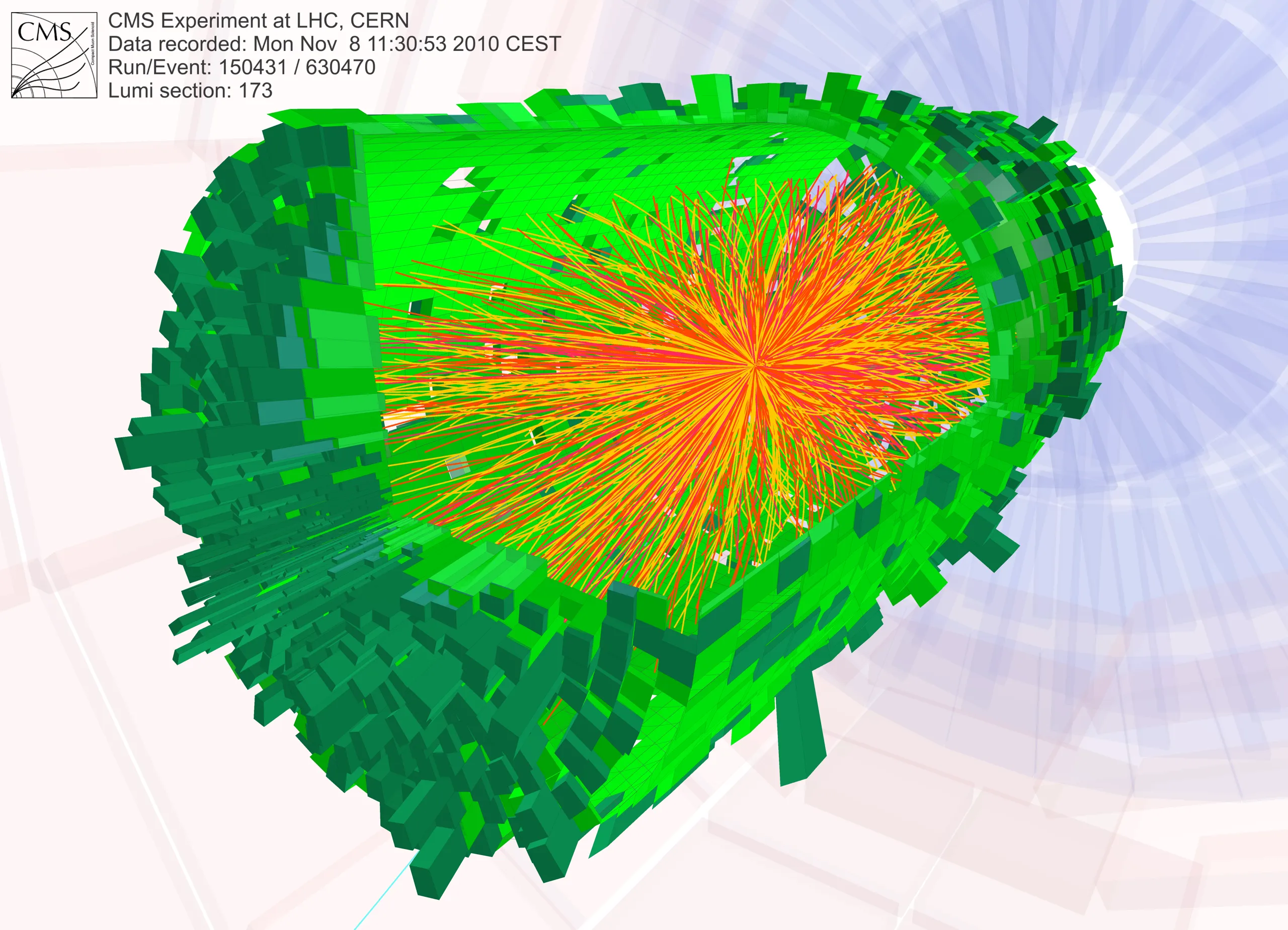
First heavy-ion collisions in CMS
The CMS experiment at CERN’s Large Hadron Collider (LHC) has recorded its first Lead-Lead collisions at a centre-of-mass energy of 2.76 TeV per nucleon pair, marking the start of its heavy ion research programme.
-
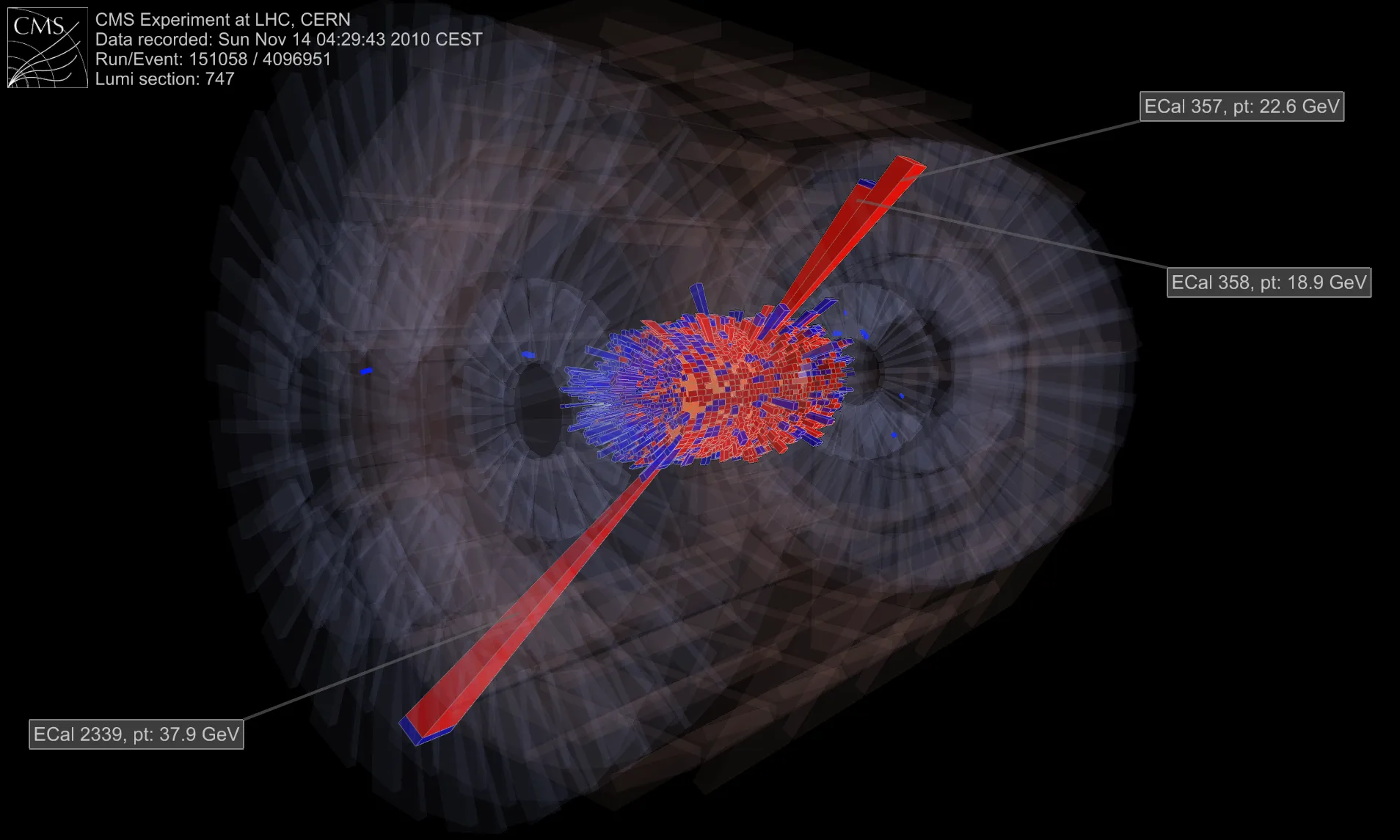
First Z bosons detected by CMS in heavy-ion collisions
Z bosons produced in collisions of heavy ions have been observed for the first time by the CMS experiment at CERN’s Large Hadron Collider (LHC).
-
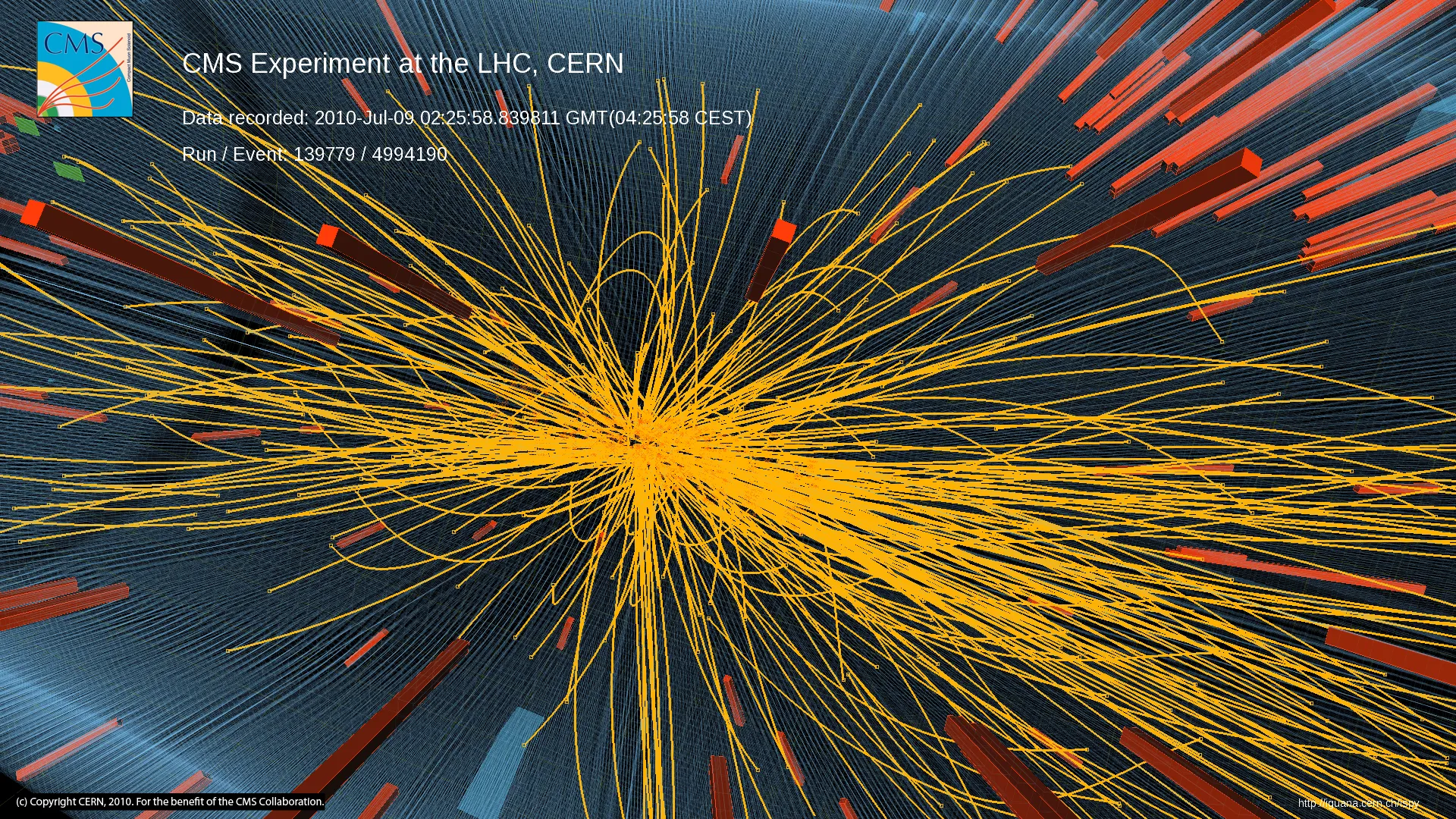
New two-particle correlations observed in the CMS detector at the LHC
The CMS Collaboration at CERN released today a paper entitled “Observation of Long-Range Near-Side Angular Correlations in Proton-Proton Collisions” that details signs of a new phenomenon in proton interactions.
-
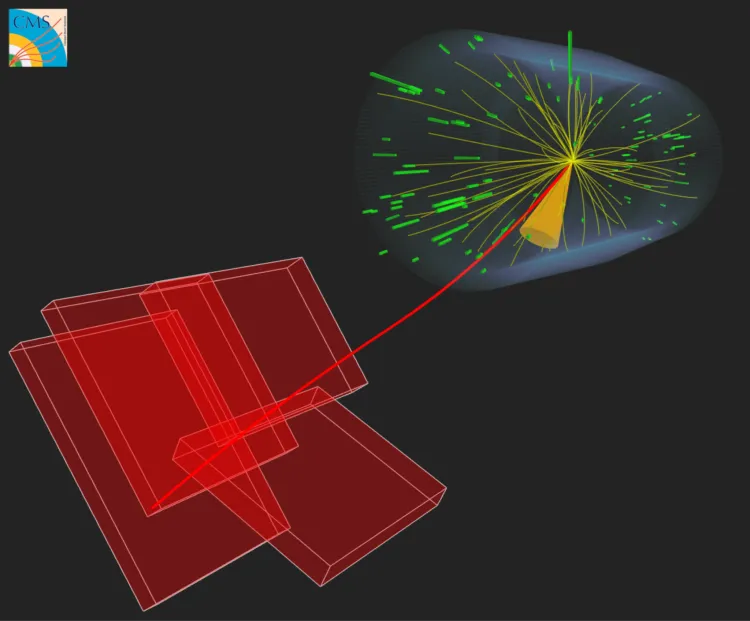
Opening up the tau cone in search for new particles
CMS sees evidence of the Upsilon meson decaying into two tau leptons for the first time at a hadron collider Beyond our best current understanding of particle physics, encapsulated in the standard model, various theoretical models predict the existence of additional particles–including new scalar bosons–which could help explain mysteries such as dark matter or the…