
Category: Physics
-
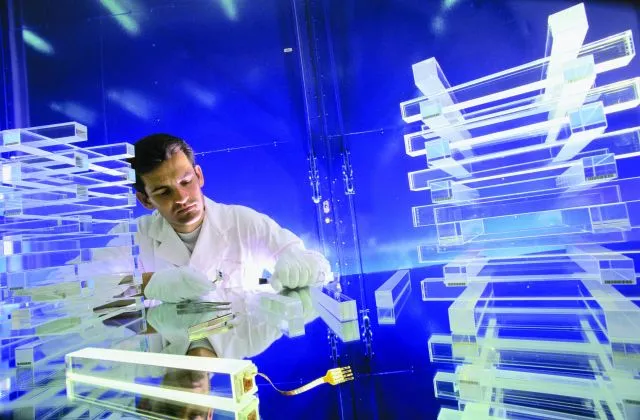
Finding electrons and photons with the CMS detector
Fundamental particles are the most basic building blocks of the universe.
-
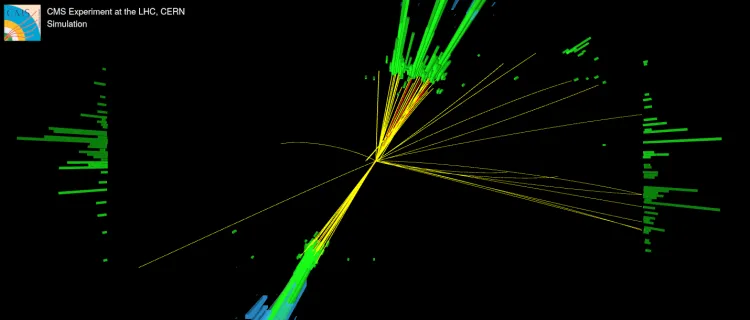
Getting excited about quarks
Physicists continue to question if the particles we know of are the most fundamental.
-
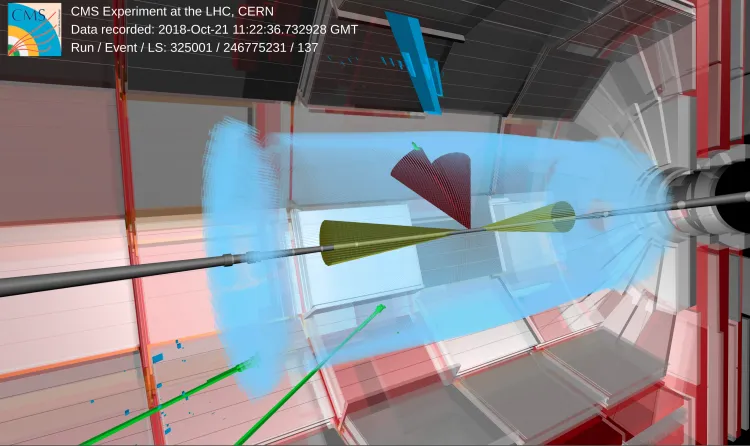
How does the Higgs boson interact with itself?
Studying the production of two Higgs bosons is the most obvious way to understand the field responsible for the Higgs boson. A new result by the CMS collaboration gets closer than ever to measuring this field and its physics prediction.
-
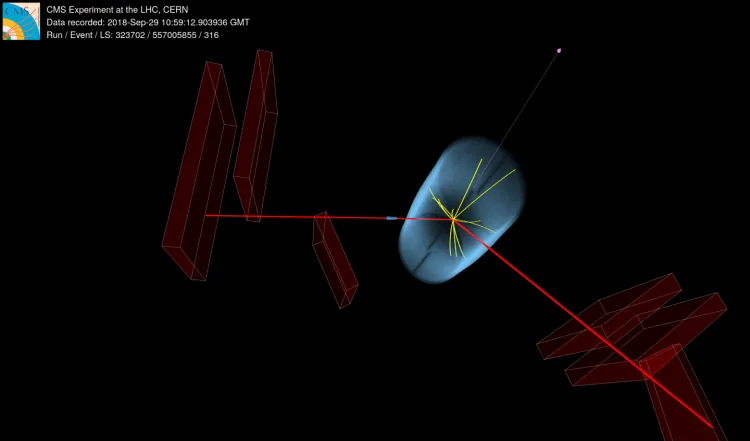
CMS: A hunter of Super-Leptons
The Standard Model of Particle Physics is the theory that physicists use to describe elementary particles’ fundamental interactions.
-
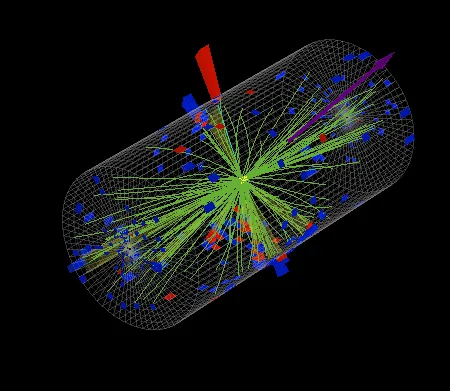
Hunting leptoquarks with the CMS experiment
The CMS Collaboration has released a new search for leptoquarks, a hypothetical particle that would be the “missing link” between quarks and leptons. The result has been submitted to the journal Physics Letters B.
-
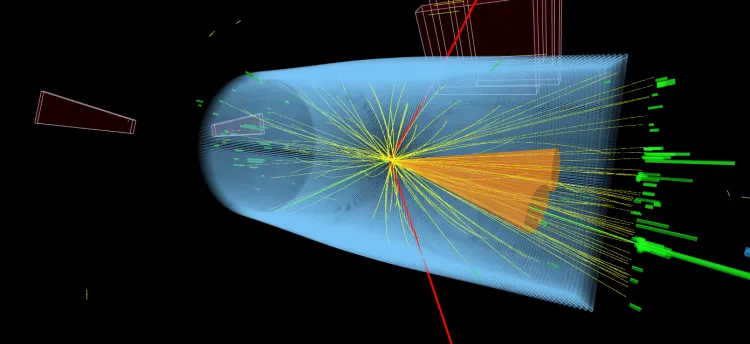
A Toy Universe to study top quarks and search for New Physics
What if new particles modify the behaviour of existing particles, but by only a little bit?
-
Protected: The fine art of counting
There is no excerpt because this is a protected post.
-
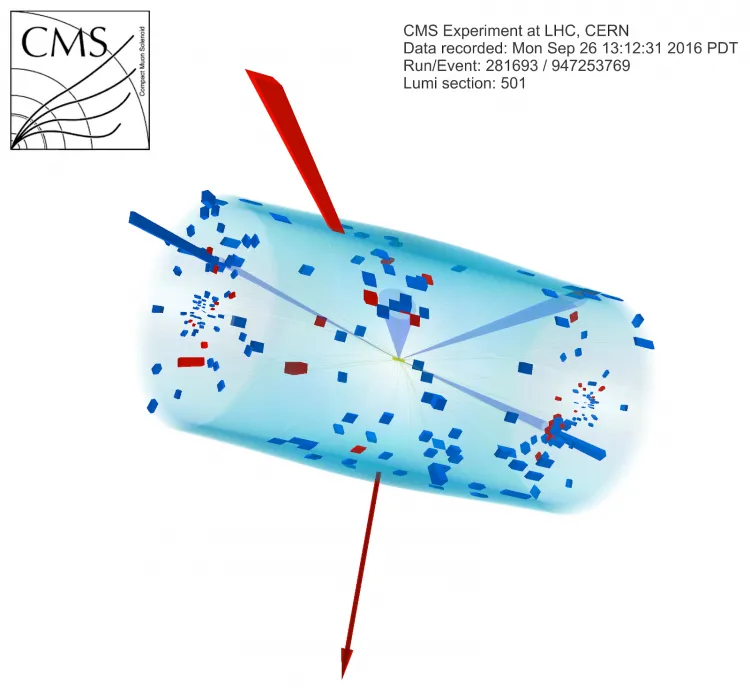
Forward-looking with half a Higgs
Eight years ago in 2012, at the largest International Conference on High Energy Physics, the discovery of a new particle carefully coined as Higgs boson-like was announced by the ATLAS and CMS Collaborations.
-
WWW.Triboson.CMS
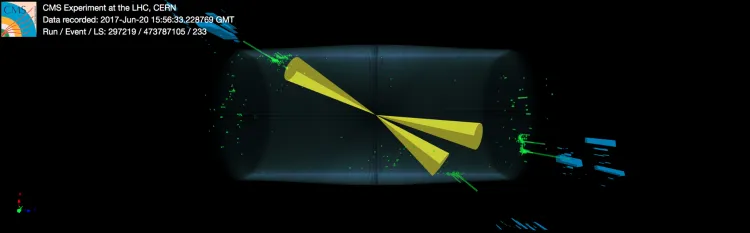
WWW.Triboson.CMS Apart from the “World Wide Web” the three Ws may have a different interpretation in the LHC era.
-
Heavy metal hits the top
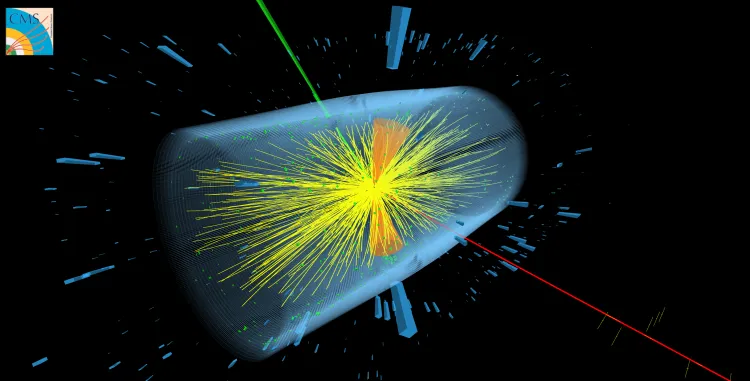
A new result by the CMS collaboration accepted by the journal Physical Review Letters demonstrates for the first time that top quarks are produced in nucleus-nucleus collisions.