
Tag: EXO
-
Can AI find new particles on its own?
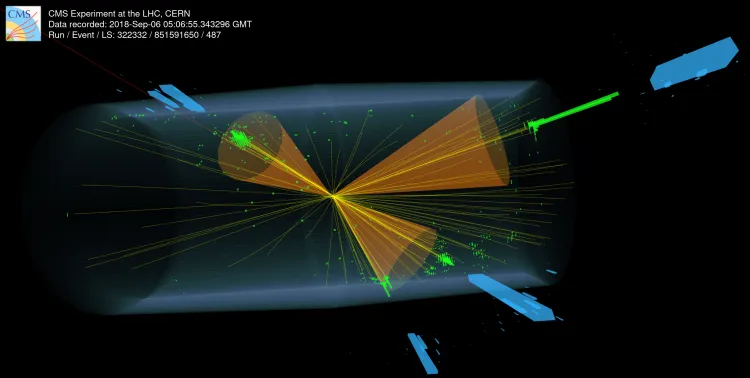
One of the events determined by the AI algorithm to be highly anomalous and therefore potentially coming from a new particle.
-
A dark world ruled by a strong force
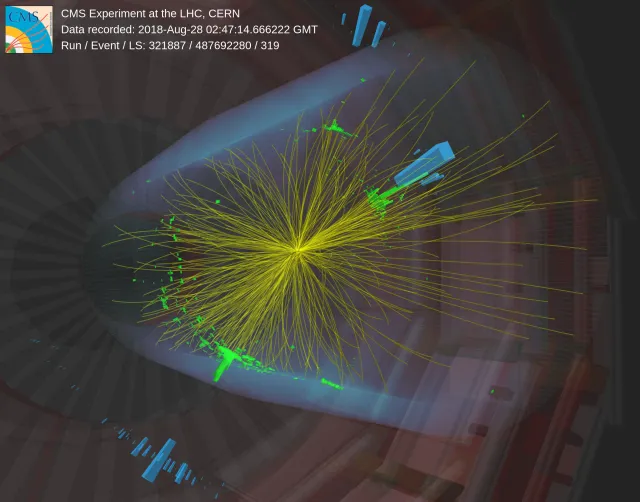
Above: Event display for a potential SUEP event, recorded at CMS in 2018, showing the characteristically high multiplicity of soft tracks in yellow.
-
Using computer vision techniques to search for new particles as collimated bursts of light
The main goal of the LHC physics programme is to deeply understand the fundamental principles of particles and their interactions.
-
Scouting for superpartner particles
Imagine diving into the very core of the universe, where the tiniest pieces that make up everything hold the answers to big cosmic questions.
-
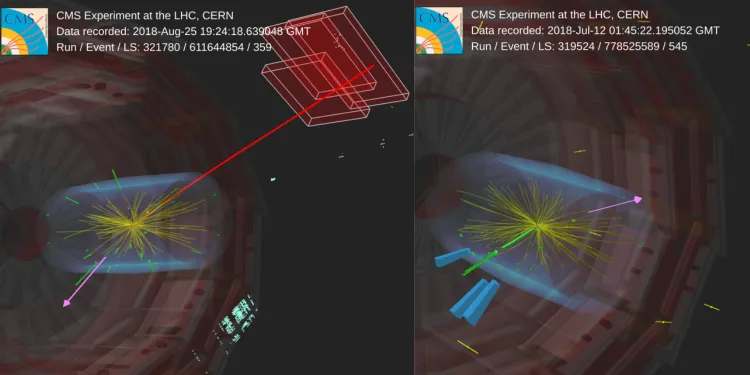
Searching for heavy neutrinos with muon detectors
Two key properties of neutrinos in the standard model of particle physics (SM) are that they are massless and “left-handed”, i.e. their spin is always opposite to their momentum.
-
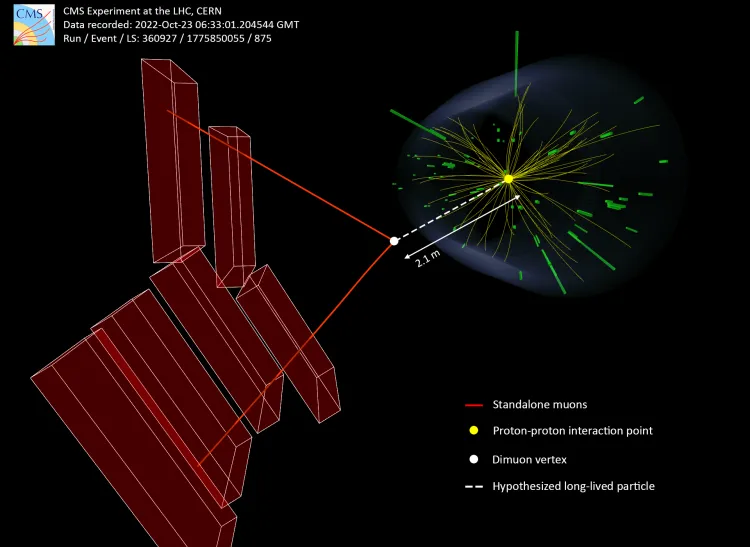
Long-lived particles in light of the LHC Run 3 data
The first search for new physics using LHC data collected in Run 3 has been presented by CMS.
-
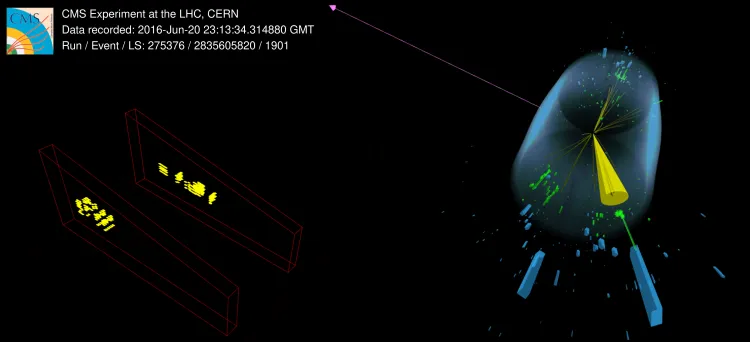
Detector showers wash away backgrounds of new long-lived particles
Most searches for new physics beyond the standard model (SM) focus on particles that decay almost instantly after being produced.
-
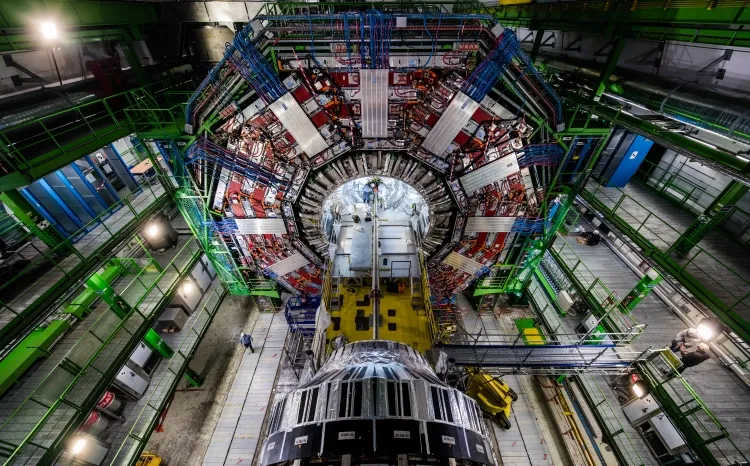
Leptoquarks as intergenerational messengers
We have this idea that we communicate best within our own generation, but is this true?
-
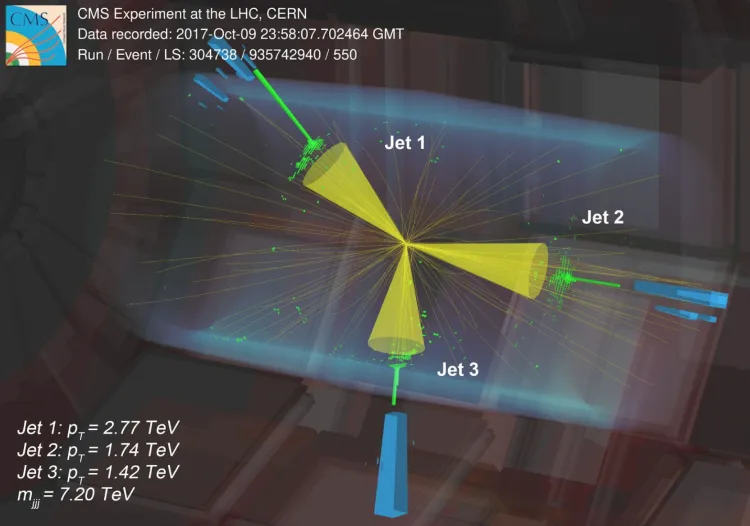
Three is a charm!
Three-jet event with an invariant mass of 7.2 TeV, showing the jets (yellow cones) and the energy deposited in the electromagnetic (green) and hadron (blue) calorimeters.
-
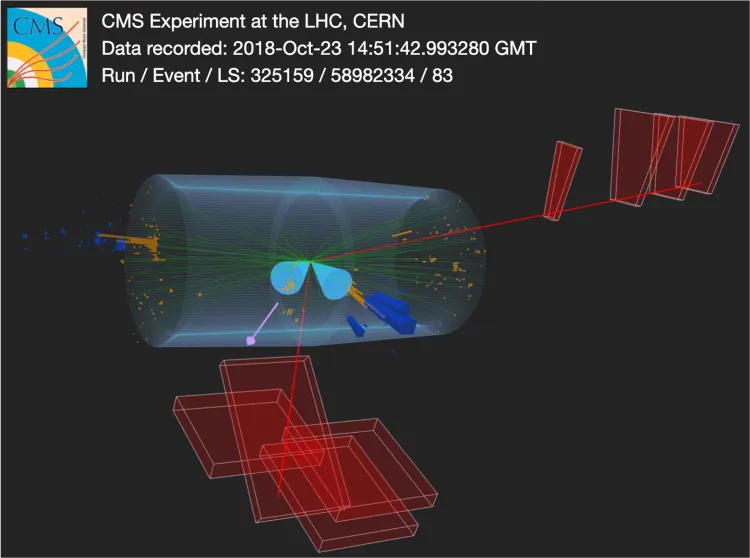
Muons meet beauty and the strange at CMS
The standard model (SM) of particle physics is by far the most successful theory describing the experimental observations of particle interactions.