
Tag: ICHEP 2020
-
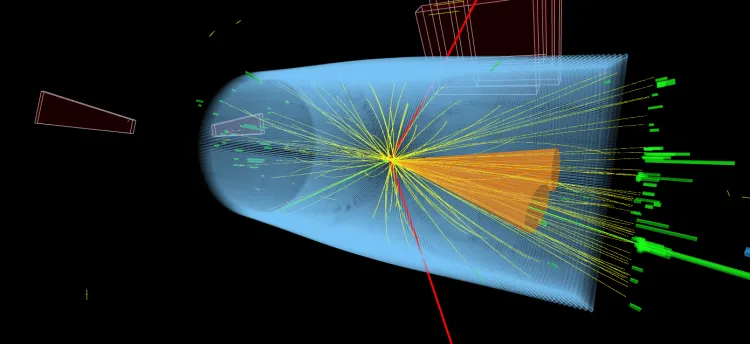
A Toy Universe to study top quarks and search for New Physics
What if new particles modify the behaviour of existing particles, but by only a little bit?
-
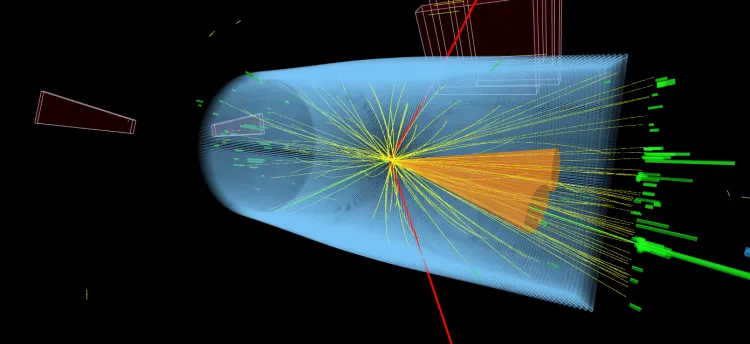
A Toy Universe to study top quarks and search for New Physics
What if new particles modify the behaviour of existing particles, but by only a little bit?
-
A Toy Universe to study top quarks and search for New Physics
What if new particles modify the behaviour of existing particles, but by only a little bit?
-
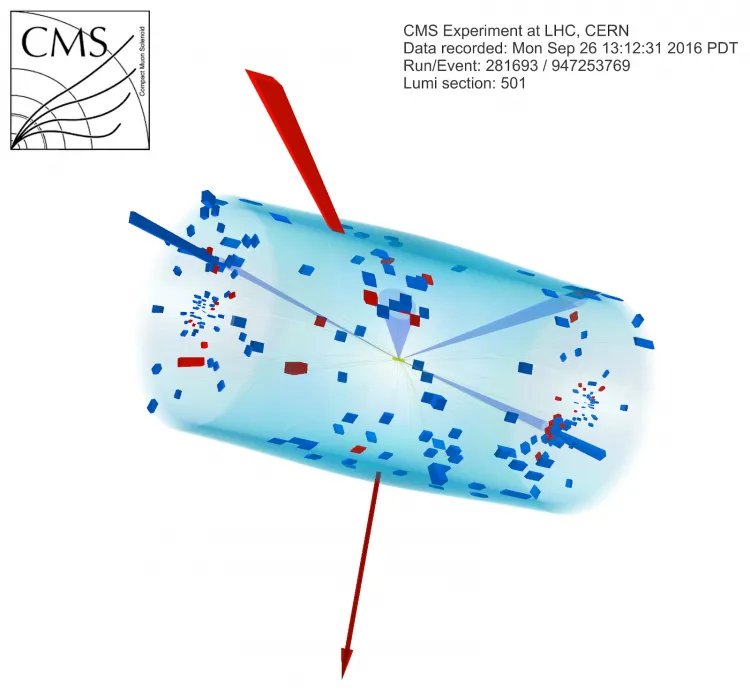
Forward-looking with half a Higgs
Eight years ago in 2012, at the largest International Conference on High Energy Physics, the discovery of a new particle carefully coined as Higgs boson-like was announced by the ATLAS and CMS Collaborations.
-
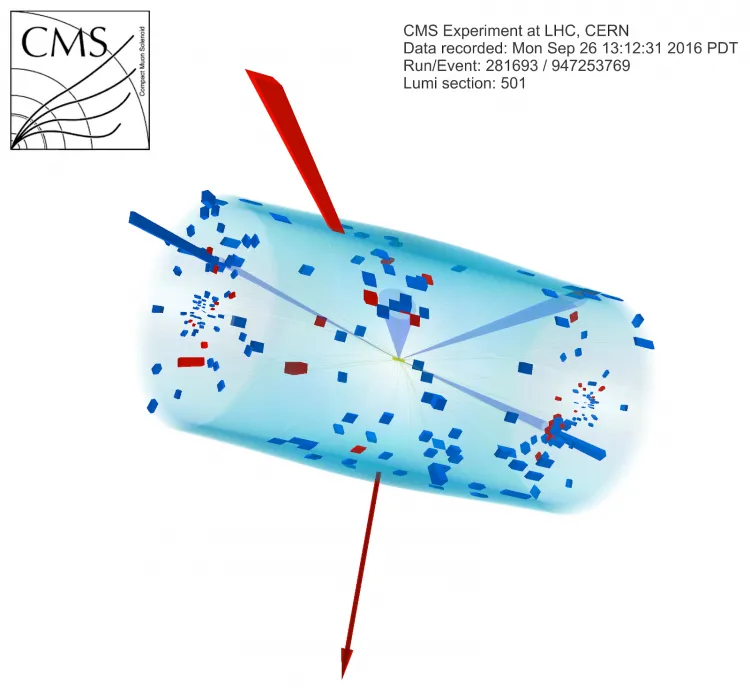
Forward-looking with half a Higgs
Eight years ago in 2012, at the largest International Conference on High Energy Physics, the discovery of a new particle carefully coined as Higgs boson-like was announced by the ATLAS and CMS Collaborations.
-
Forward-looking with half a Higgs
Eight years ago in 2012, at the largest International Conference on High Energy Physics, the discovery of a new particle carefully coined as Higgs boson-like was announced by the ATLAS and CMS Collaborations.
-
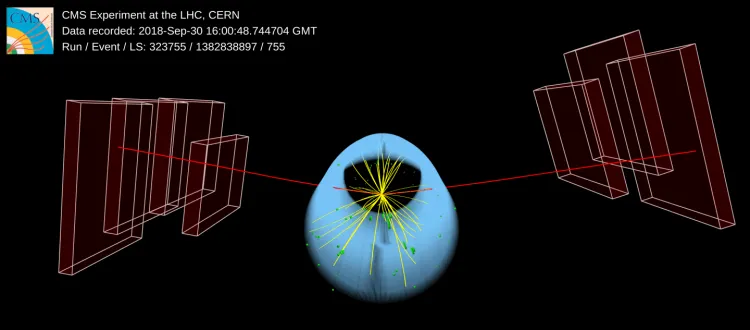
CMS sees evidence for the Higgs boson decaying into muons
A new result released by the CMS Collaboration presents the first evidence of the Higgs boson interacting with the muon.
-
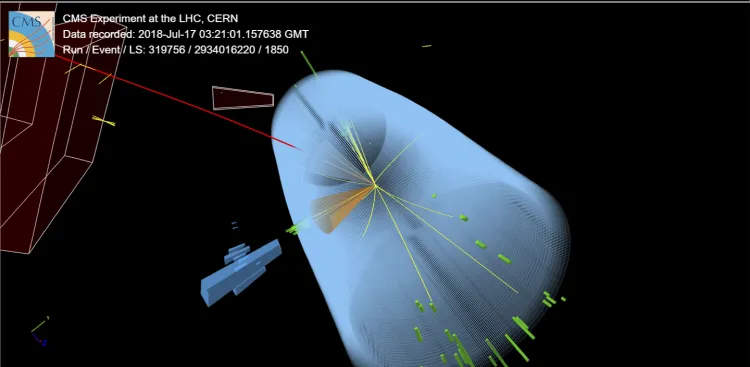
Mirror, mirror on the wall, who is the most CP-even of them all?
In 2012 the ATLAS and CMS collaborations discovered a boson with a mass of 125 GeV, i.e. approximately 125 times the mass of the proton, in proton-proton collisions at the CERN LHC.
-
Mirror, mirror on the wall, who is the most CP-even of them all?
In 2012 the ATLAS and CMS collaborations discovered a boson with a mass of 125 GeV, i.e. approximately 125 times the mass of the proton, in proton-proton collisions at the CERN LHC.
-
Mirror, mirror on the wall, who is the most CP-even of them all?
In 2012 the ATLAS and CMS collaborations discovered a boson with a mass of 125 GeV, i.e. approximately 125 times the mass of the proton, in proton-proton collisions at the CERN LHC.