
Tag: Run 3
-
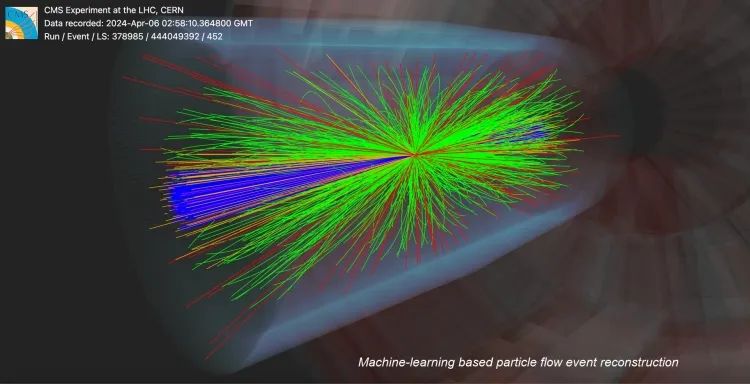
Teaching CMS to trace particles
An interactive version of the above event display can be found at this page.
-
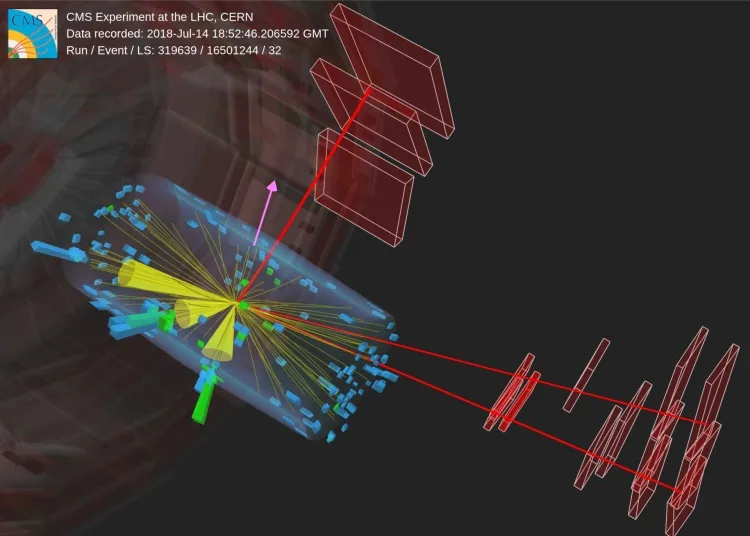
CMS observes rare top quark interaction with a W and a Z boson
Using data collected from 2016 to 2023 and cutting-edge machine learning, CMS observes for the first time the creation of a top quark together with a W and a Z boson – a process so rare it occurs only once in a trillion proton-proton collisions!
-
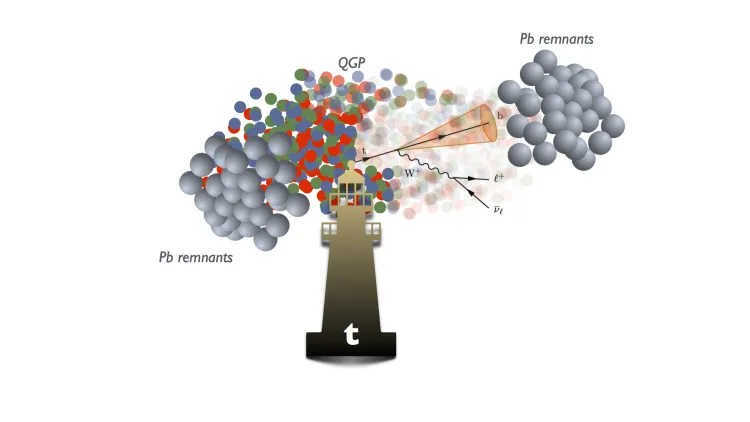
Clash of the titans: top quark meets lead ions
Five years after the first evidence that heavy metal hits the top quark, CMS now observes the clash of two titans with higher precision at unprecedented energy.
-
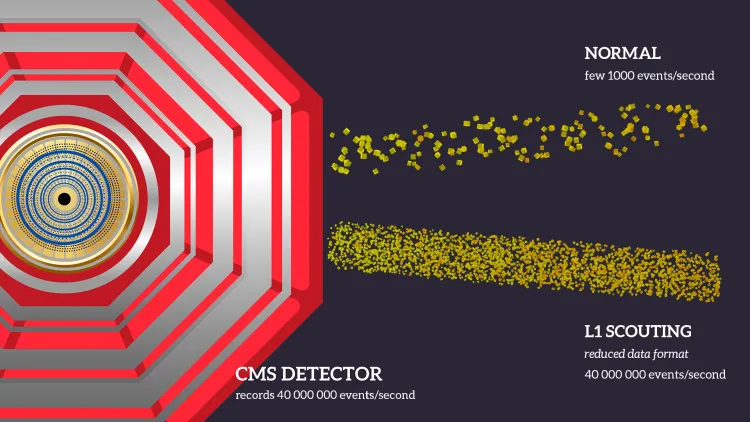
How CMS records all 40 million events per second
The CMS experiment is utilising a novel technique called L1 Scouting, which allows it to record data from all collisions, without any selection, but in a reduced format.
-
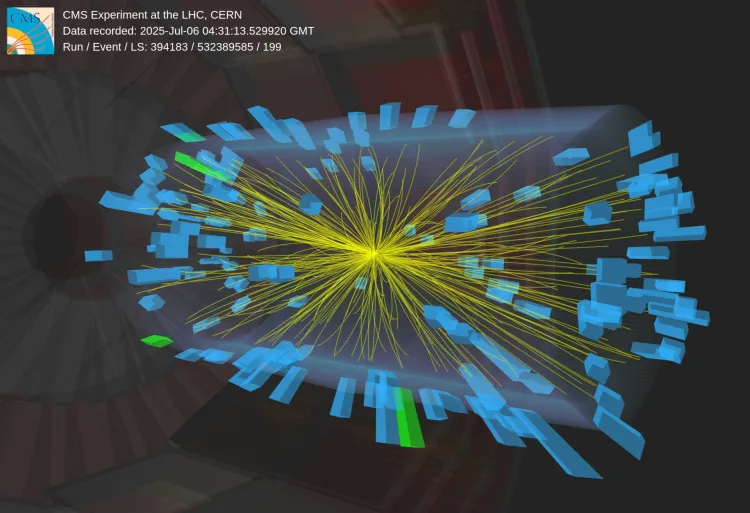
Collective motion in tiny systems: oxygen and neon collisions as a window into nuclear structure
CMS observes collective motion of particles in light-ion collisions, providing robust evidence of how initial nuclear geometry maps to final-state flow.
-
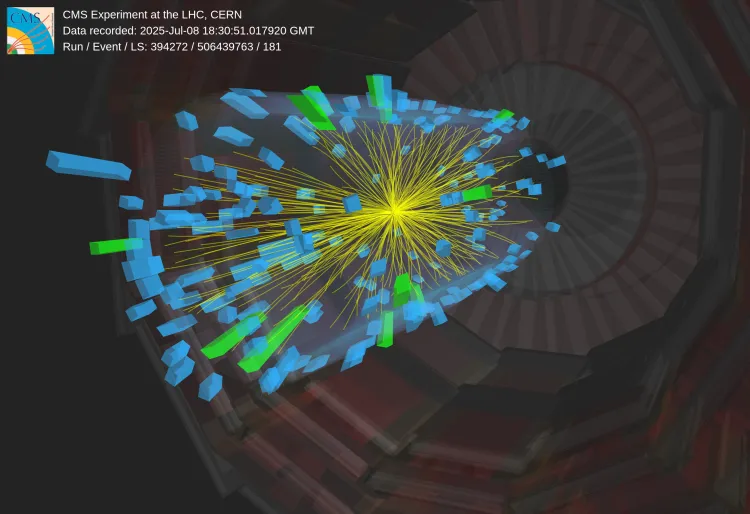
LHC’s first oxygen-oxygen and neon-neon collisions – CMS spots an interesting pattern
The CMS experiment has analyzed the first-ever neon-neon collisions, looking for signs of quark-gluon plasma.
-
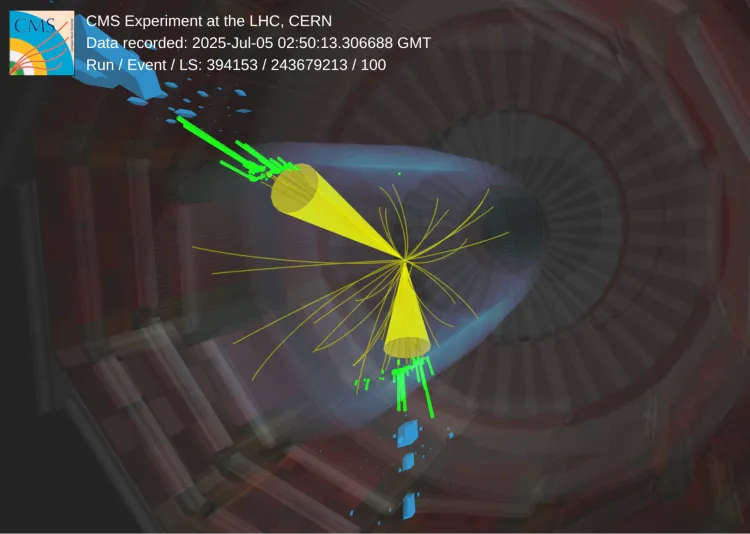
LHC’s first oxygen collisions – CMS spots signs of small-scale quark-gluon plasma
CMS scientists study the first-ever oxygen-oxygen collisions at the LHC, and observe signs of quarks and gluons losing energy when they travel through quark-gluon plasma – a state that existed just after the Big Bang.
-
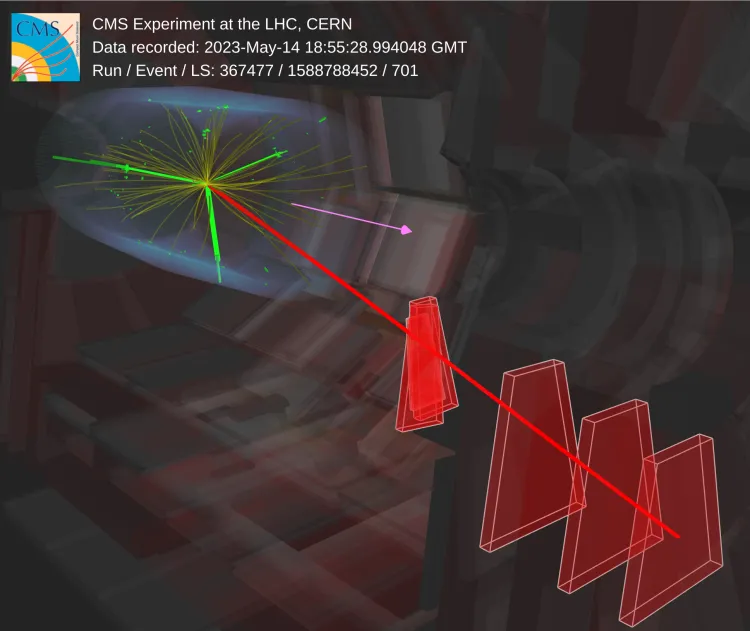
Probing interactions among trios of heavy vector bosons at record energy
CMS presents the most precise measurement of WWZ production to date by combining Run 2 data with more recent Run 3 data.
-
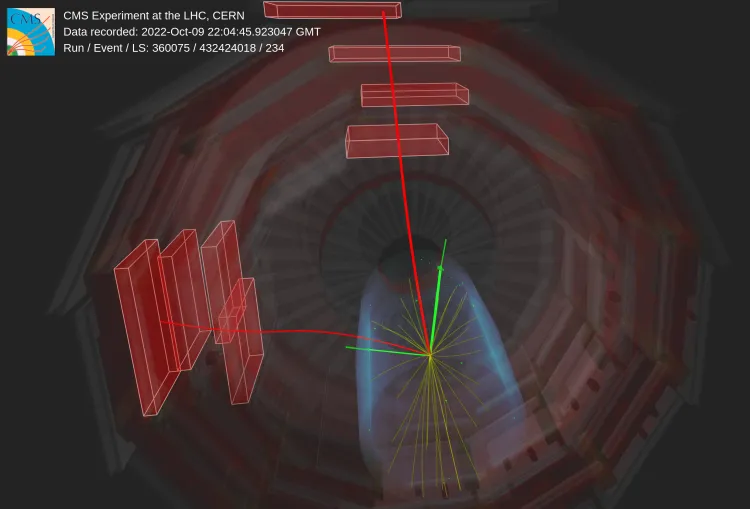
Rediscovering the Higgs boson at 13.6 TeV
Going back to the origins, in a latest result, the CMS experiment rediscovers the Higgs boson and measures its rate of production in the “golden channel”, now at the unprecedented centre-of-mass energy of 13.6 TeV.
-
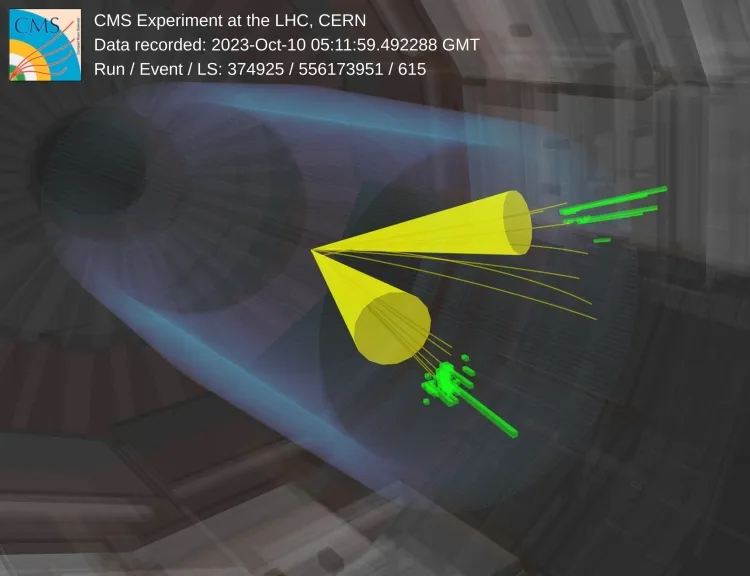
A charming look into the structure of nuclei using collisions with photon clouds
In a recent result, the CMS experiment measures the production of charmed D0 mesons in collisions of a photon with a heavy lead nucleus for the first time.