
Tag: Di-muon
-
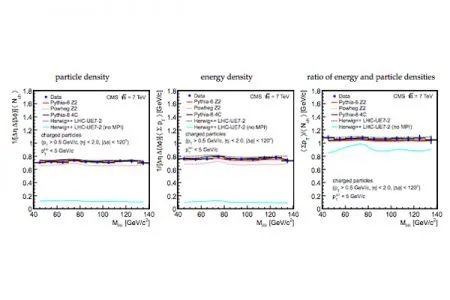
Measurement of the underlying event in the Drell-Yan process in proton-proton collisions at sqrt(s) = 7 TeV
A measurement of the underlying event (UE) activity in proton-proton collisions at a centre-of-mass energy of 7 TeV is performed using Drell-Yan events in a data sample corresponding to an integrated luminosity of 2.2 fb−1 (inverse femtobarns), collected by the CMS experiment at the LHC.
-
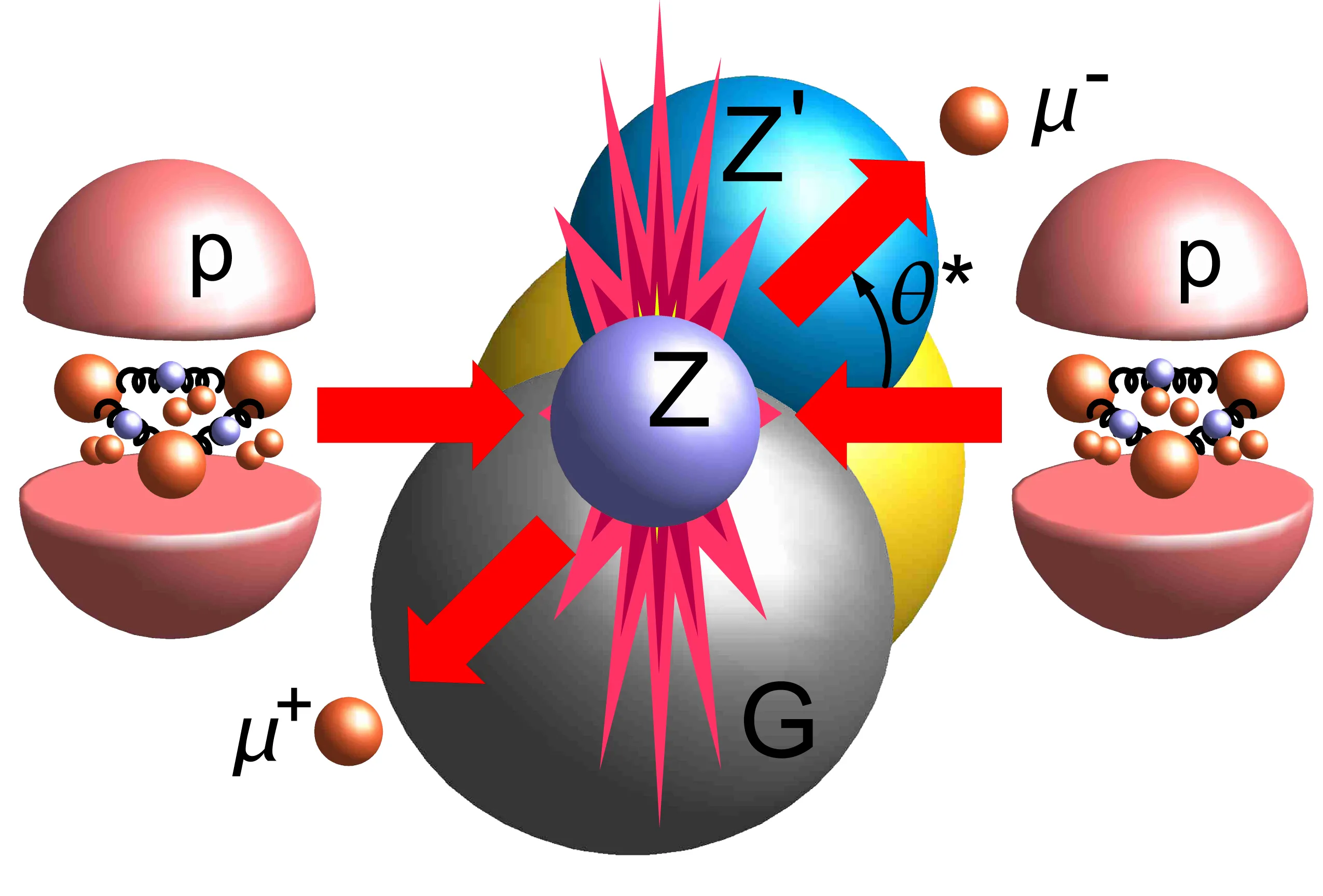
The Weak Mixing of Light and Heavy
The source of energy for most of the life on our planet originates from proton-proton collisions at the core of the Sun, which occur at an energy (or temperature) about a billion times less than the collision energy of the LHC.
-
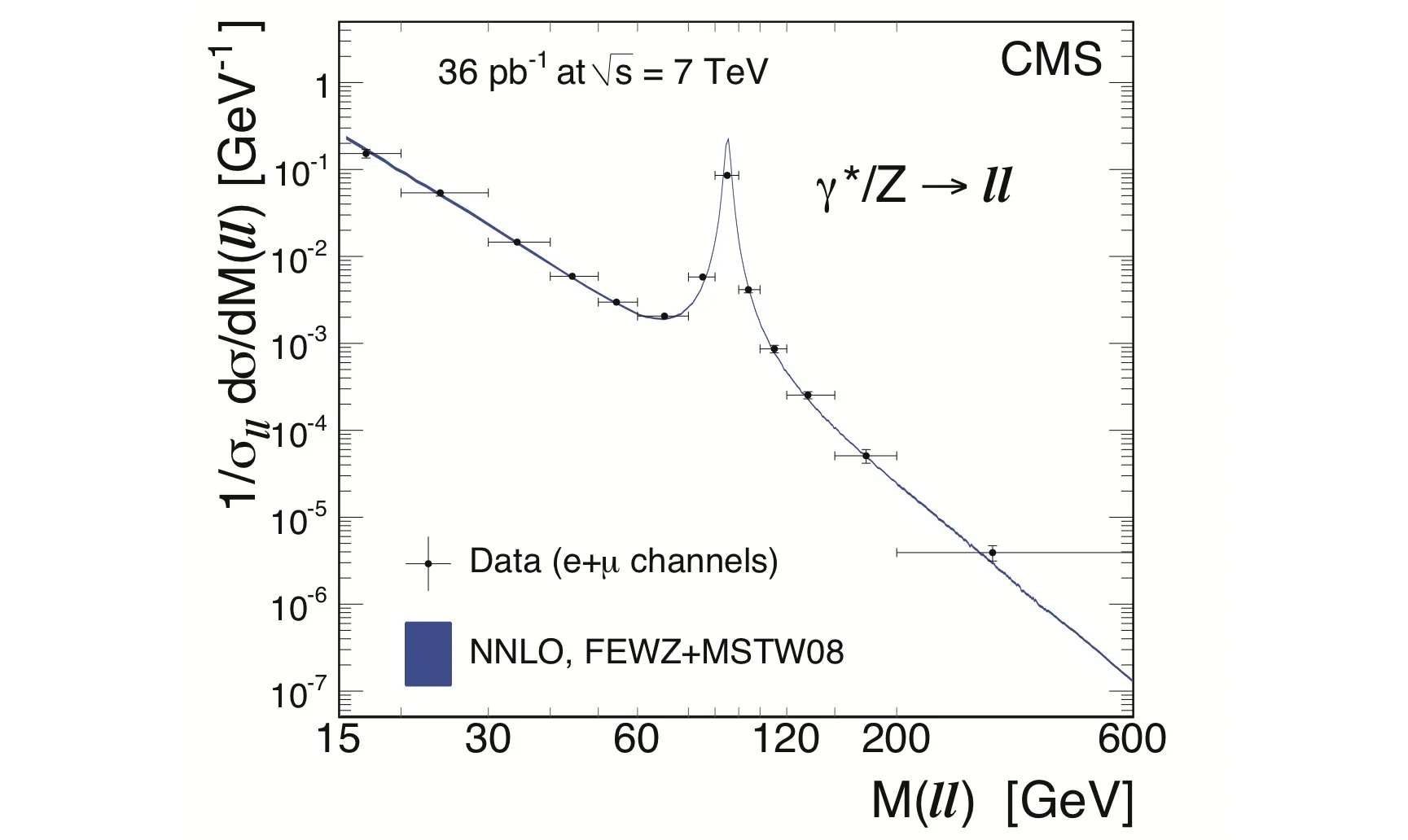
Measurement of the Drell–Yan Cross Section in pp Collisions at 7 TeV
Read the paper: QCD-10-037 The measured Drell-Yan production rates, normalised to the production rates in the Z-boson region, show good agreement with the theoretical predictions.
-
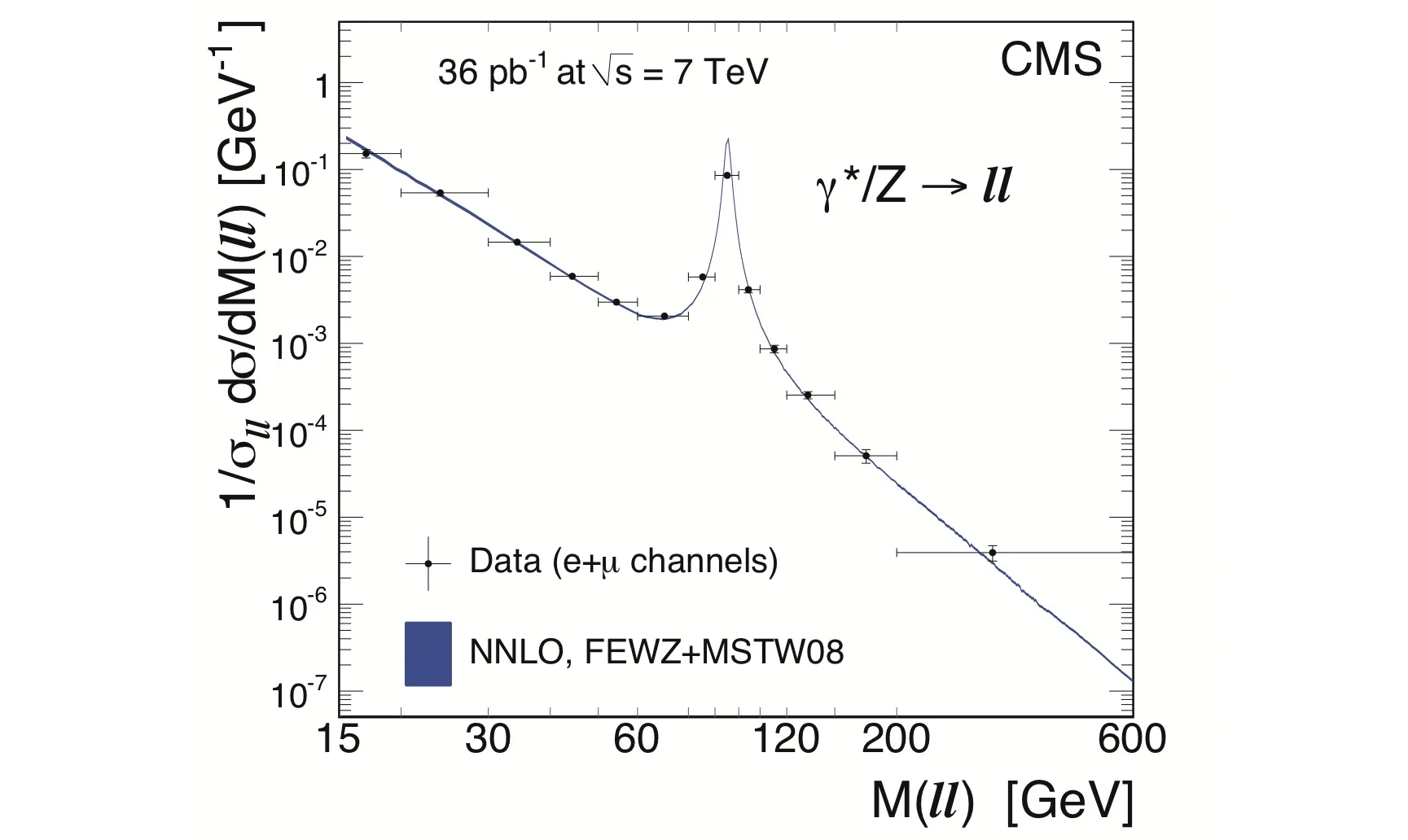
Measurement of the Drell–Yan Cross Section in pp Collisions at 7 TeV
Read the paper: QCD-10-037 The measured Drell-Yan production rates, normalised to the production rates in the Z-boson region, show good agreement with the theoretical predictions.
-
Measurement of the Drell–Yan Cross Section in pp Collisions at 7 TeV
Read the paper: QCD-10-037 The measured Drell-Yan production rates, normalised to the production rates in the Z-boson region, show good agreement with the theoretical predictions.
-
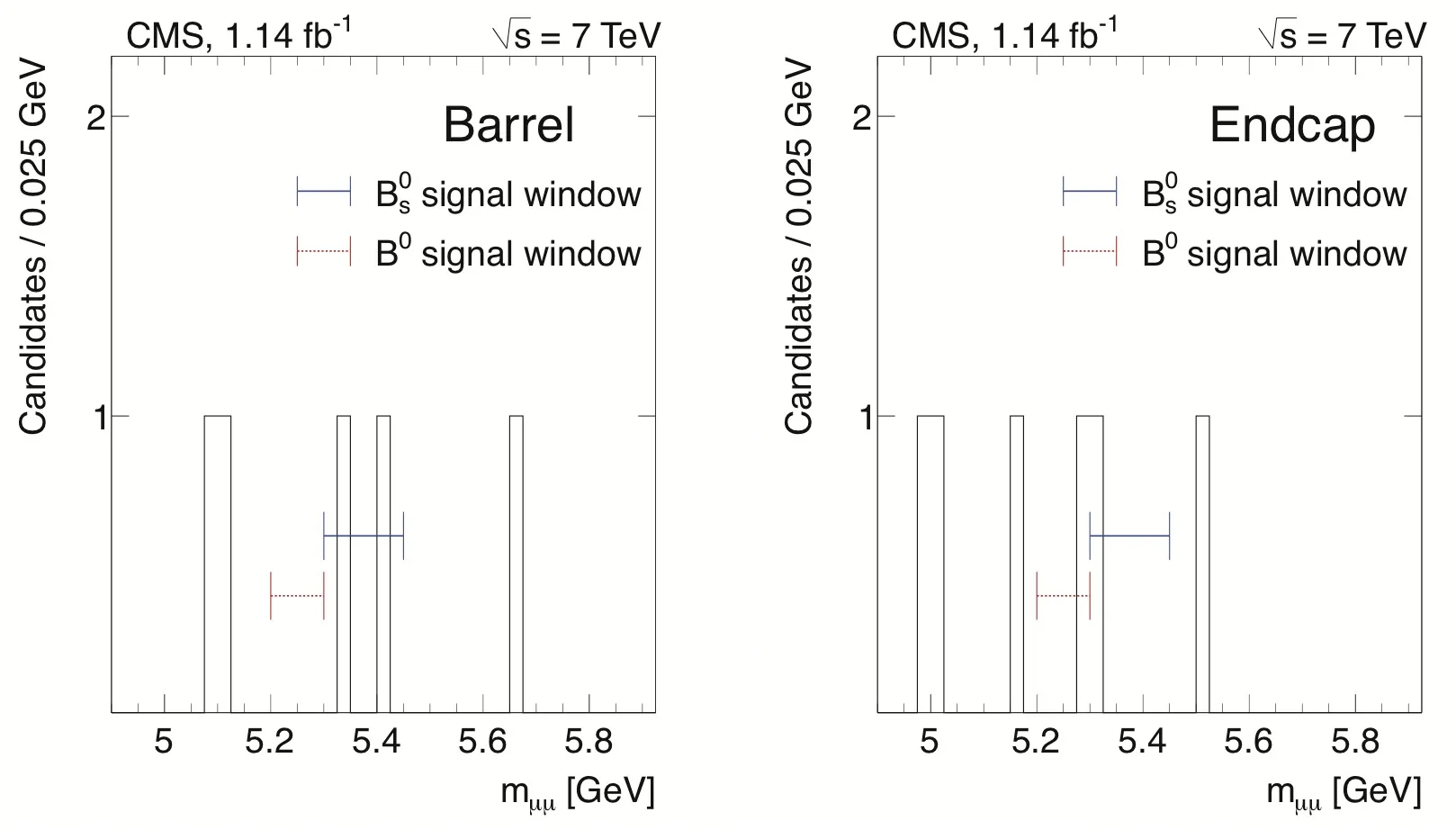
Search for Bs –> mu+mu– and B0 –> mu+mu– decays in pp collisions at 7 TeV
Read the paper: BPH-11-002 The observed numbers of events in both decay modes are consistent with those expected in the Standard Model.
-
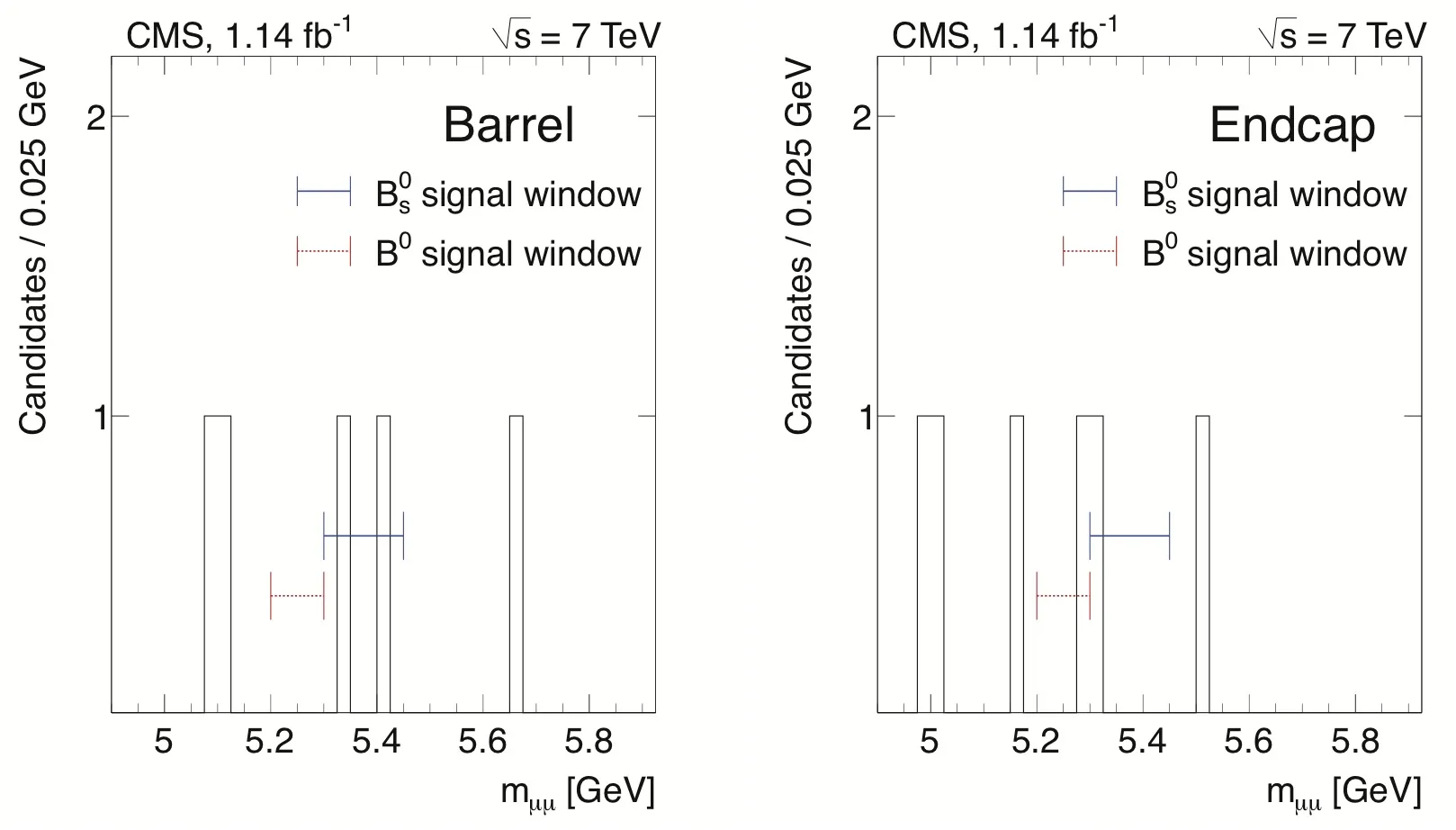
Search for Bs –> mu+mu– and B0 –> mu+mu– decays in pp collisions at 7 TeV
Read the paper: BPH-11-002 The observed numbers of events in both decay modes are consistent with those expected in the Standard Model.
-
Search for Bs –> mu+mu– and B0 –> mu+mu– decays in pp collisions at 7 TeV
Read the paper: BPH-11-002 The observed numbers of events in both decay modes are consistent with those expected in the Standard Model.