
Tag: Jets
-
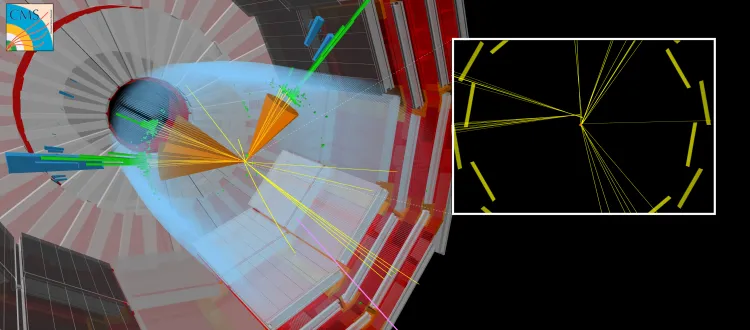
Using artificial intelligence to search for new exotic particles
Nowadays, artificial neural networks have an impact on many areas of our day-to-day lives. They are used for a wide variety of complex tasks, such as driving cars, performing speech recognition (for example, Siri, Cortana, Alexa), suggesting shopping items and trends, or improving visual effects in movies (e.g., animated characters such as Thanos from the…
-
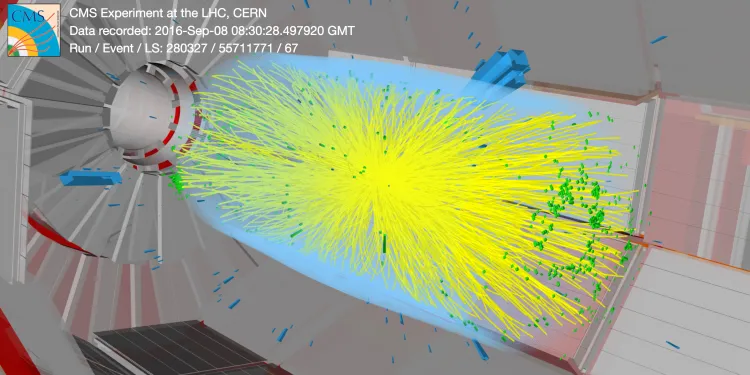
How CMS weeds out particles that pile up
When the CMS experiment records particle collision events, a large number of unwanted extra collisions overlap in the detector and hide the rare particle collision that is worthwhile studying. CMS physicists have developed a new method that gives improved precision for the study of collisions even when occurring together with 50 or more extra interactions.
-
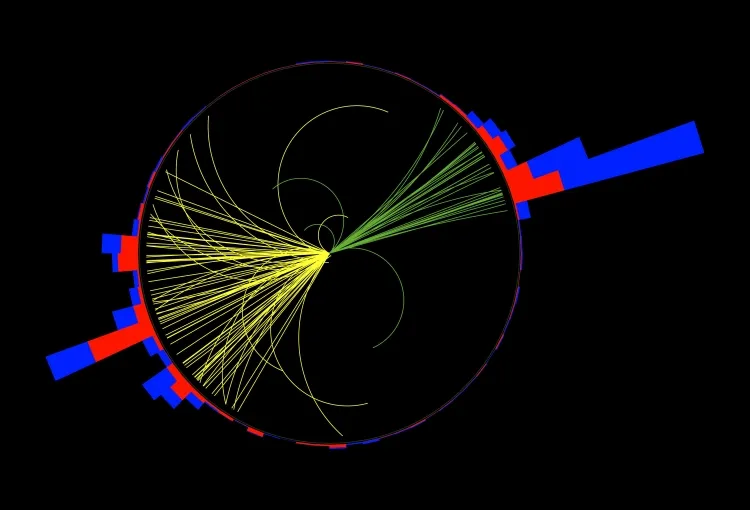
Machining jets
New algorithms from the Compact Muon Solenoid experiment use the ideas used in mobile phone facial recognition to better understand the collisions at the Large Hadron Collider.
-
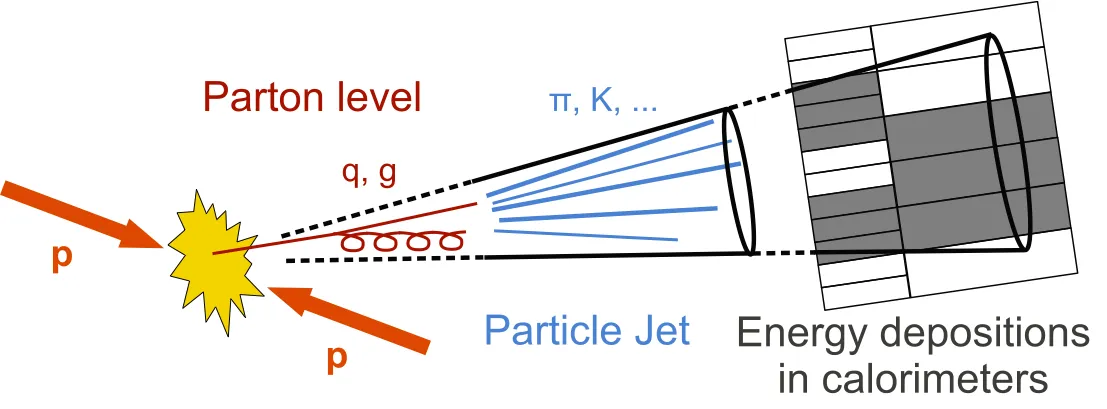
Jets at CMS and the determination of their energy scale
Jets are the experimental signatures of quarks and gluons produced in high-energy processes such as head-on proton-proton collisions.
-
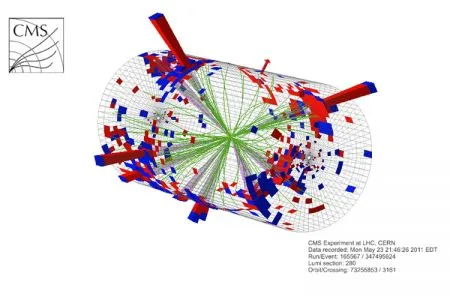
The search for microscopic black holes, as of March 2012
The search for microscopic black holes at the LHC is motivated by the hierarchy problem — the huge observed difference between the strengths of the electroweak and gravitational forces.
-
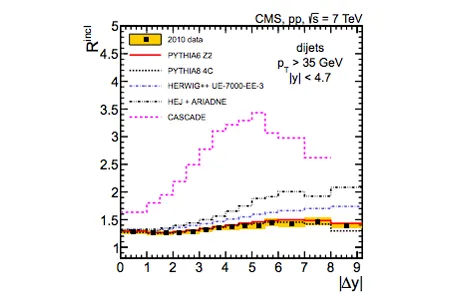
Ratios of dijet production cross sections as a function of the absolute difference in rapidity between jets in proton-proton collisions at sqrt(s) = 7 TeV
A study of dijet production in proton-proton collisions was performed at √s = 7 TeV for jets with pT > 35 GeV and |y| < 4.7[1] using data collected with the CMS detector at the LHC in 2010. Events with at least one pair of jets are denoted as “inclusive”, while events with exactly one…