
Tag: Physics briefing
-
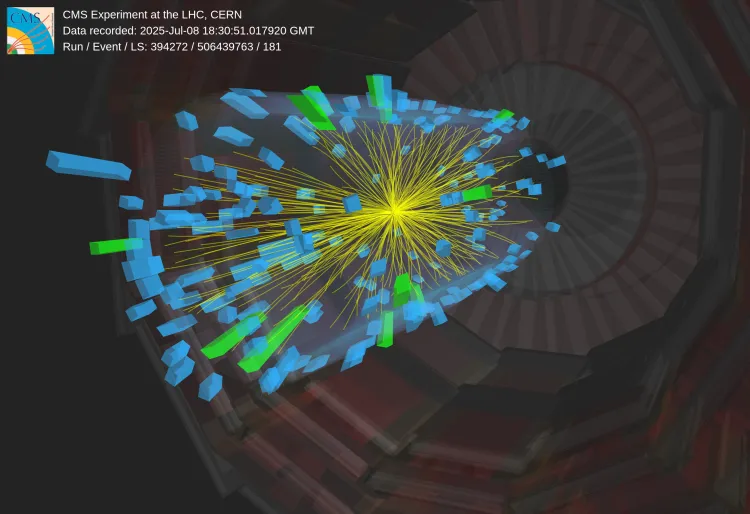
LHC’s first oxygen-oxygen and neon-neon collisions – CMS spots an interesting pattern
The CMS experiment has analyzed the first-ever neon-neon collisions, looking for signs of quark-gluon plasma.
-
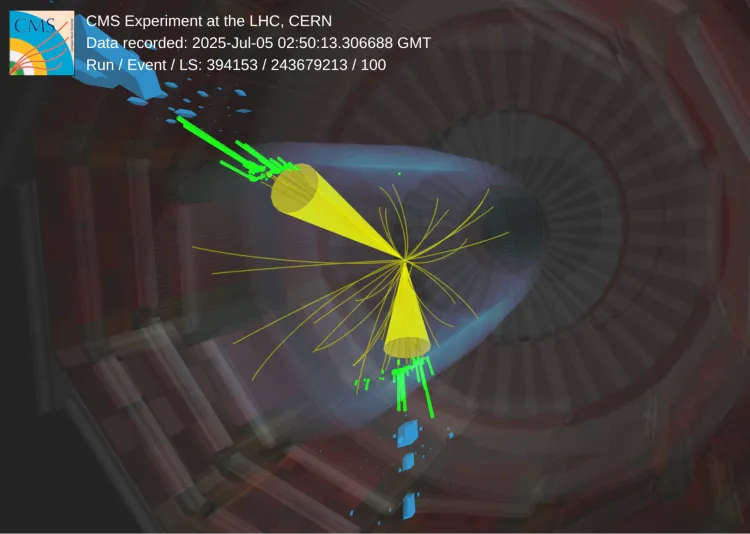
LHC’s first oxygen collisions – CMS spots signs of small-scale quark-gluon plasma
CMS scientists study the first-ever oxygen-oxygen collisions at the LHC, and observe signs of quarks and gluons losing energy when they travel through quark-gluon plasma – a state that existed just after the Big Bang.
-
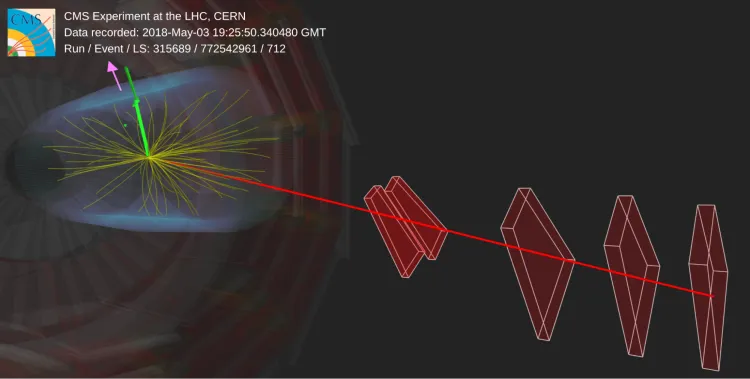
When light turns into weak heavy bosons
Turning the LHC into a photon collider, the CMS experiment observes for the first time how two photons fuse and convert into two W bosons.
-
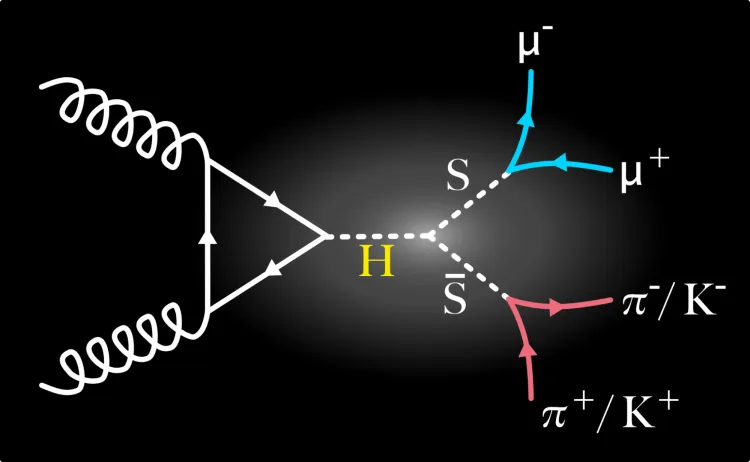
Hunting exotic Higgs bosons decaying to lightweight scalar particles
In a first search of its kind at the LHC, the CMS experiment looks for light beyond-the-standard-model particles with a mass in the GeV range that decay into charged hadrons and muons.
-
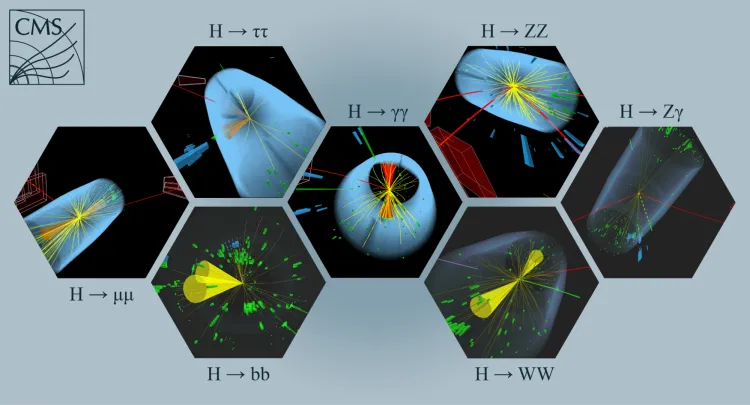
From pieces to precision: building the Higgs boson’s clearest portrait to date
In a much anticipated result, the CMS experiment presents the legacy combination of Higgs boson studies using the full LHC Run 2 data, recorded between 2016 and 2018 – the result is the most precise and comprehensive measurement of the Higgs boson by CMS to date.
-
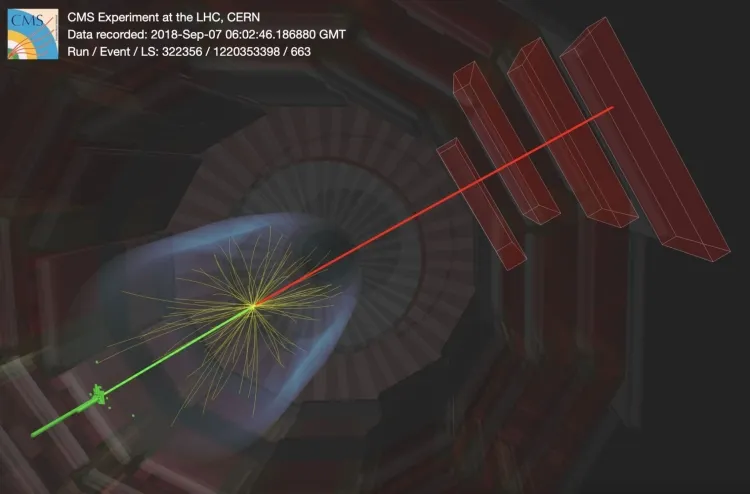
On the hunt for a rule-breaking heavy boson
The CMS Collaboration probes decays of the Z boson which would defy our expectations of lepton behavior How strict are Nature’s conservation laws governing the interactions among elementary particles?
-
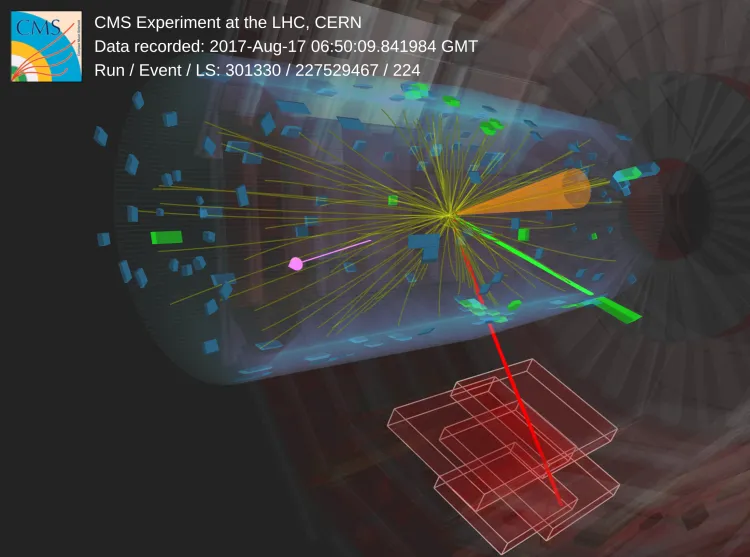
CMS measures WH charge asymmetry — a novel probe of the Higgs–charm interaction
Measuring the charge asymmetry in W boson-associated production for the first time, paves the way for testing the coupling of the Higgs boson to charm and lighter quarks.
-
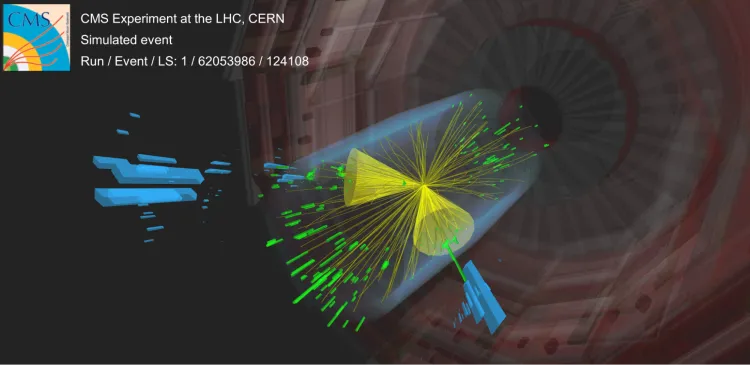
How to weigh the W boson using hadrons
An interactive version of the event display is found on a separate, full page here.
-
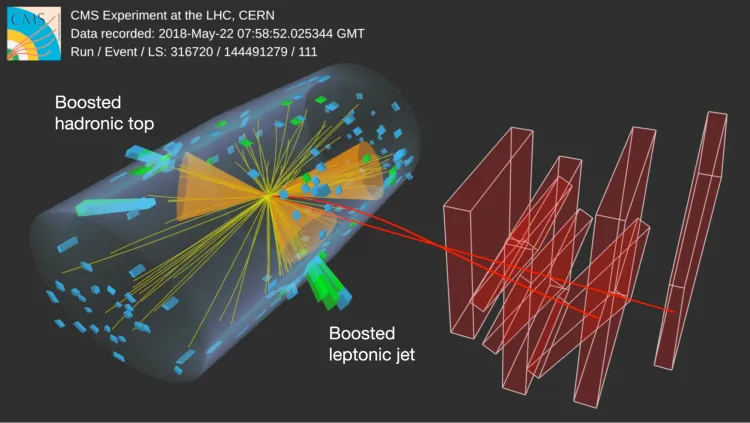
An all-round boosted chase for supersymmetry
The CMS collaboration expands the search for supersymmetry by exploring a wide variety of final states with boosted particles, in a new analysis called “razor boost”.
-
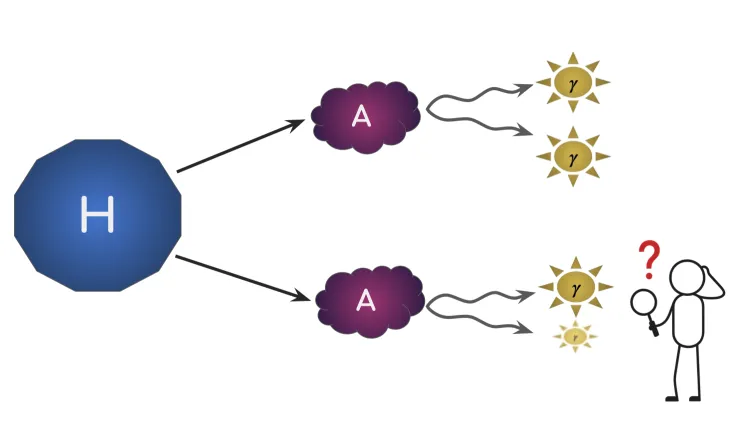
One photon short: Recovering lost photons using AI to hunt for exotic Higgs boson decays
CMS breaks new ground by reconstructing challenging photon signatures using machine learning, opening new paths in the search for physics beyond the standard model.