
Tag: Physics briefings
-
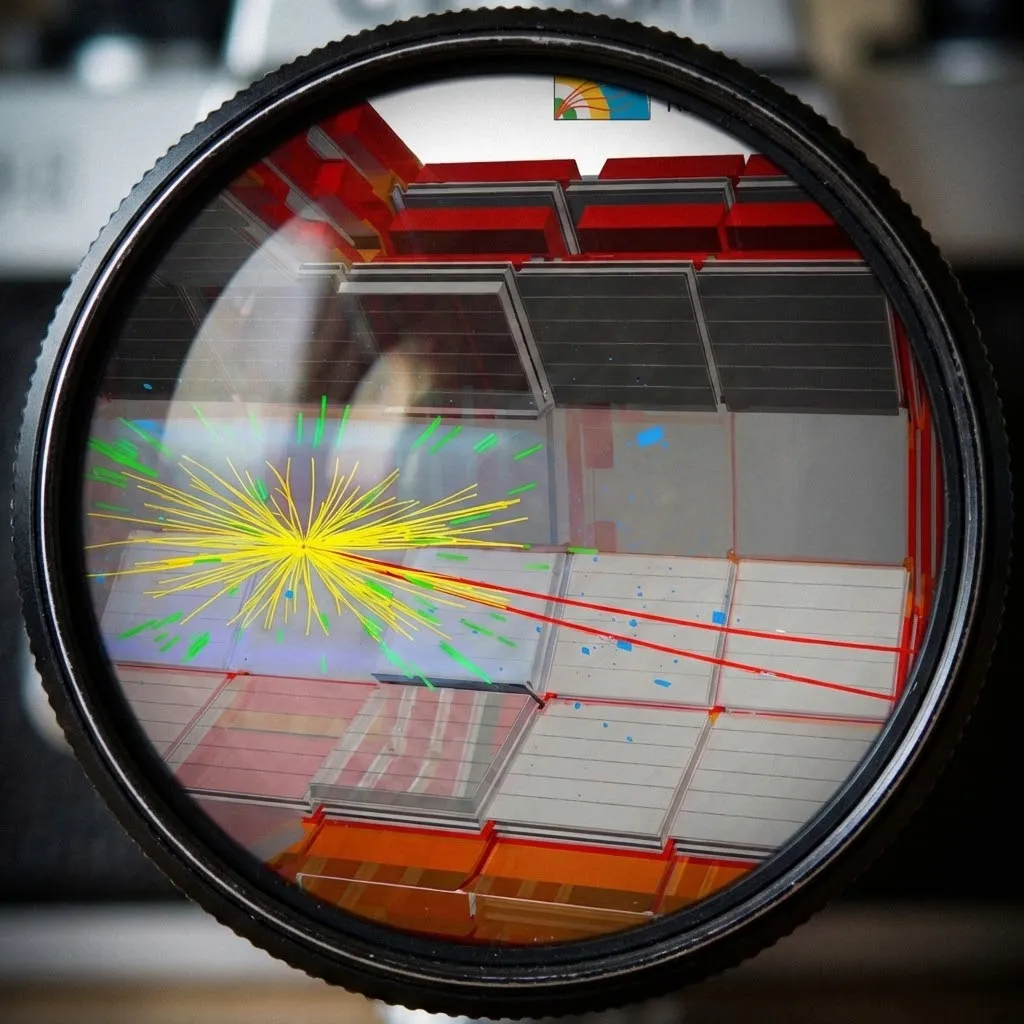
ϒ mesons in light-ion collisions
The CMS experiment presents the first measurement of ϒ mesons – bound states of a bottom quark-antiquark pair – in oxygen-oxygen and neon-neon collisions, and strongly indicates that their production is suppressed owing to quark-gluon plasma droplets formed in such light-ion collisions.
-
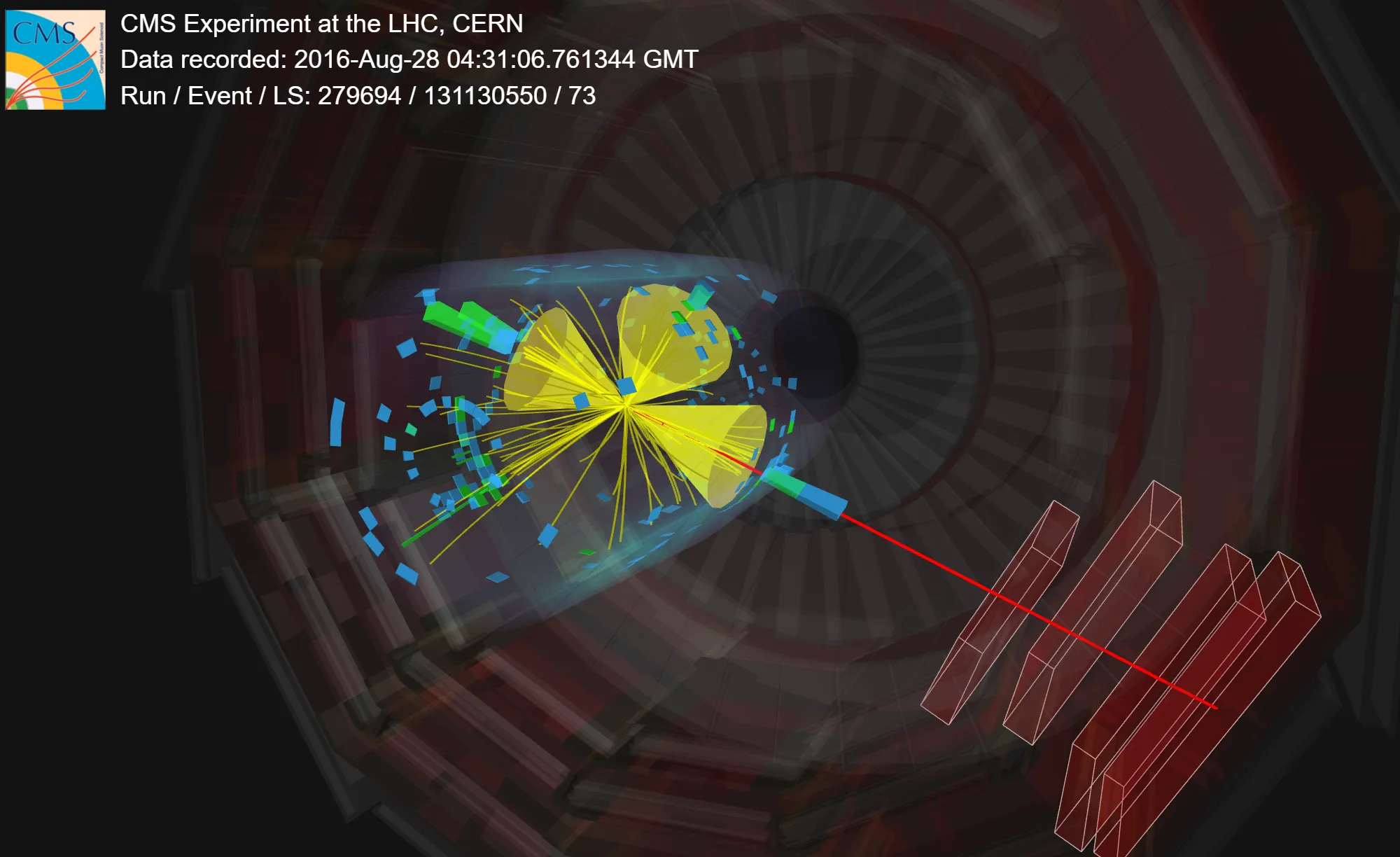
Looking for new physics at the multiboson frontier
The CMS experiment presents a novel search for new physics by studying collisions that produce three W or Z bosons.
-
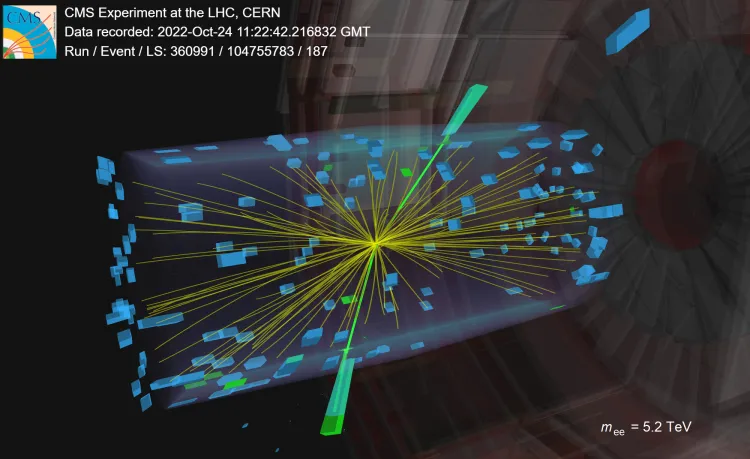
Hunting heavy particles through high-mass pairs of electrons or muons
CMS observes rare collisions that produce pairs of electrons or muons with the highest combined invariant mass ever recorded, extending the search for undiscovered heavy particles.
-
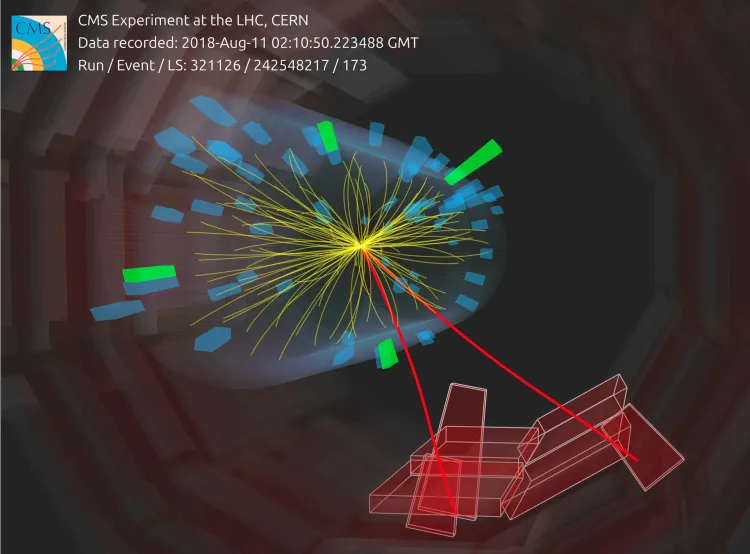
Estranged siblings? Observed meson decays are compatible with one bottomonium state, but without any hint of its partner
The CMS experiment reports the observation of a peaking structure in the Υ(1S)ϕ(1020) channel in proton-proton collisions at 13 TeV.
-
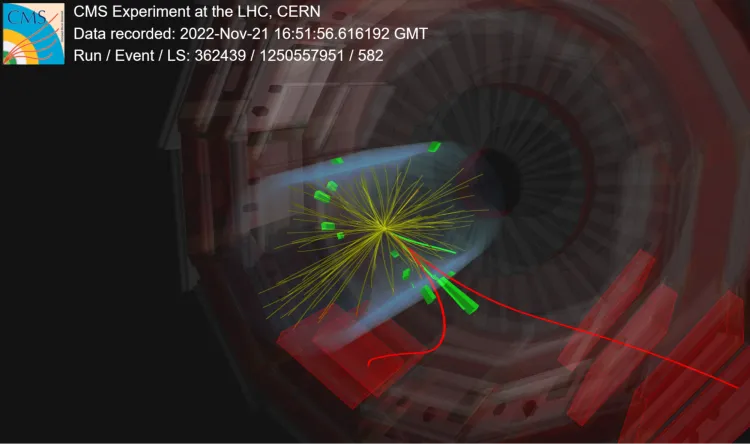
Light mesons with a heavy impact
The CMS experiment reports the first observation of the rare decay of an eta meson to two muons and two electrons.
-
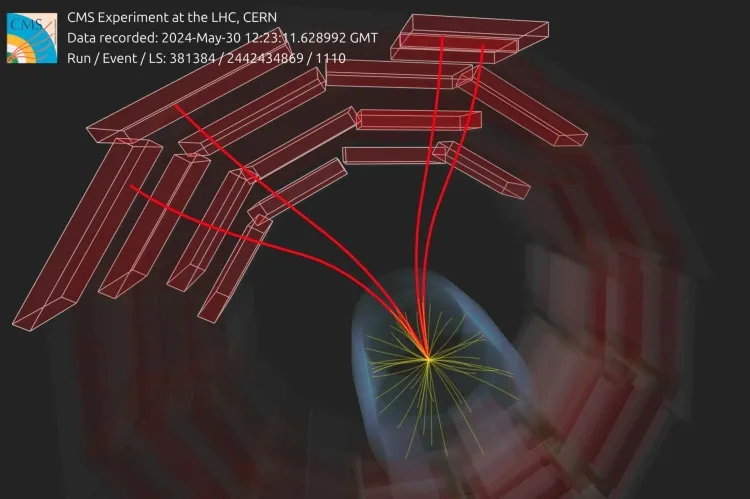
Pushing the limits: rare four-muon decays of B mesons
CMS sets the world’s most stringent limits on B⁰ and B⁰ₛ decays into four muons.
-
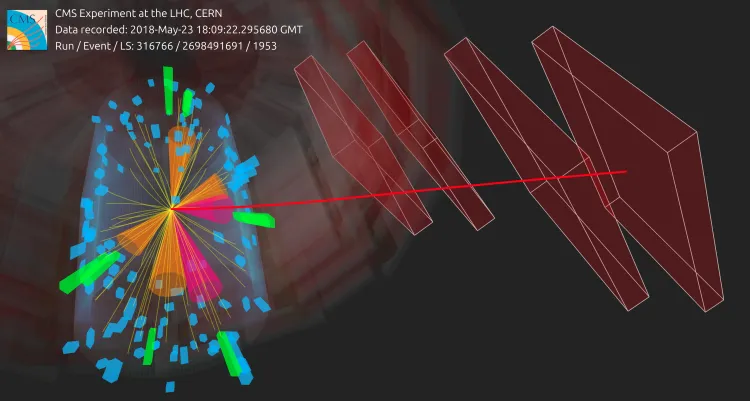
In search of new particles like the Higgs boson
Could there be more particles like the Higgs boson?
-
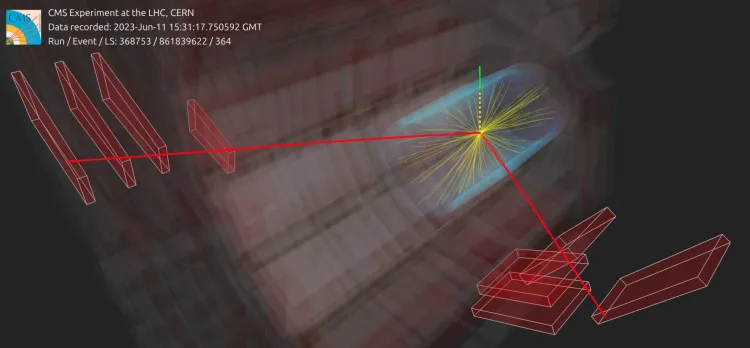
Out of the loop: CMS advances in the search for a rare Higgs boson decay
CMS pushes the sensitivity frontier towards a measurement of the rare Higgs boson decay into a Z boson and a photon The 2012 discovery of the Higgs boson at CERN by CMS and ATLAS was a landmark achievement in the world of particle physics – but it was only the beginning.
-
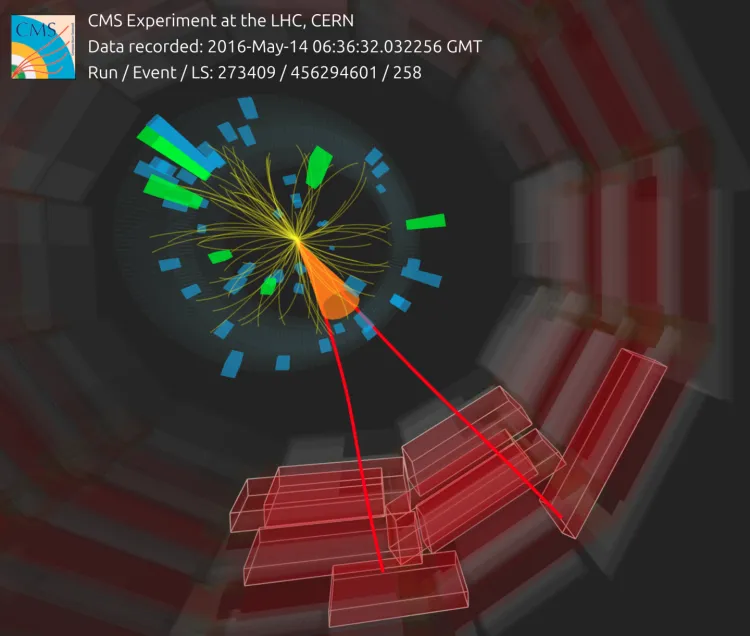
The curious case of quarkonia inside jets
The CMS experiment presents a first study of the ϒ mesons (bound states of a bottom quark and antiquark) produced within jets.
-
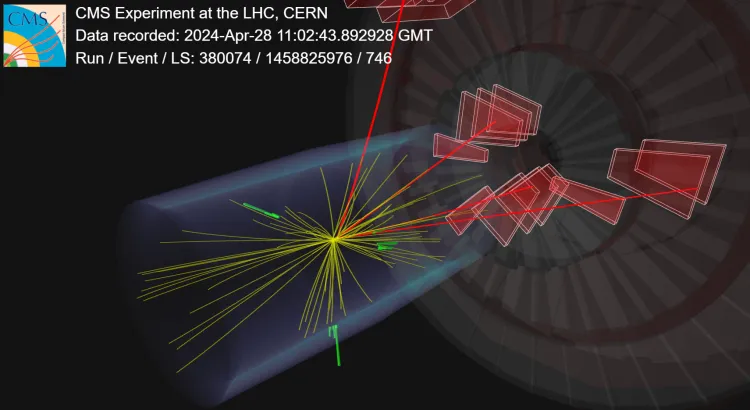
From discovery to deep dive: The Higgs boson under the microscope
The CMS experiment uses data collected between 2022 and 2024 to perform a detailed study of Higgs boson production rates as a function of several variables.