
Tag: Physics briefings
-
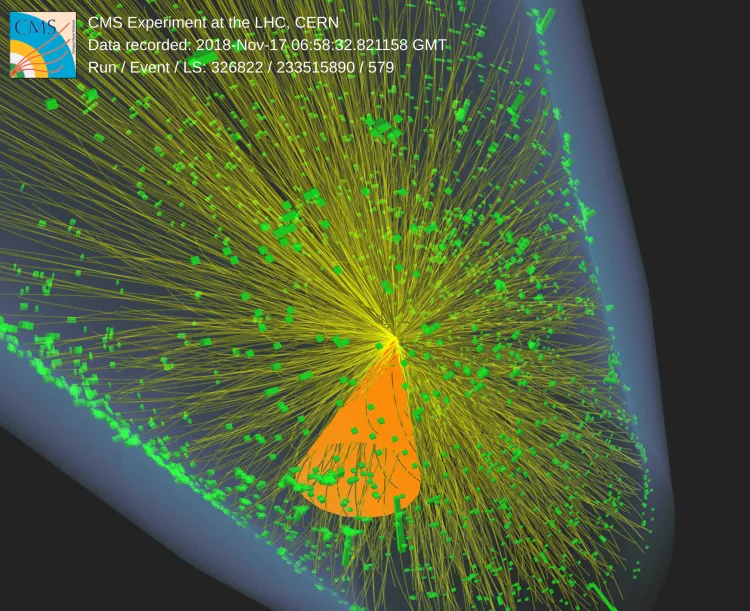
Looking for early vacuum-like emissions in jets in heavy ion collisions
CMS explores the early stages of jet evolution in heavy-ion collisions When heavy ions such as lead (Pb) collide in the LHC, a new state of matter called the quark-gluon plasma (QGP) is formed.
-
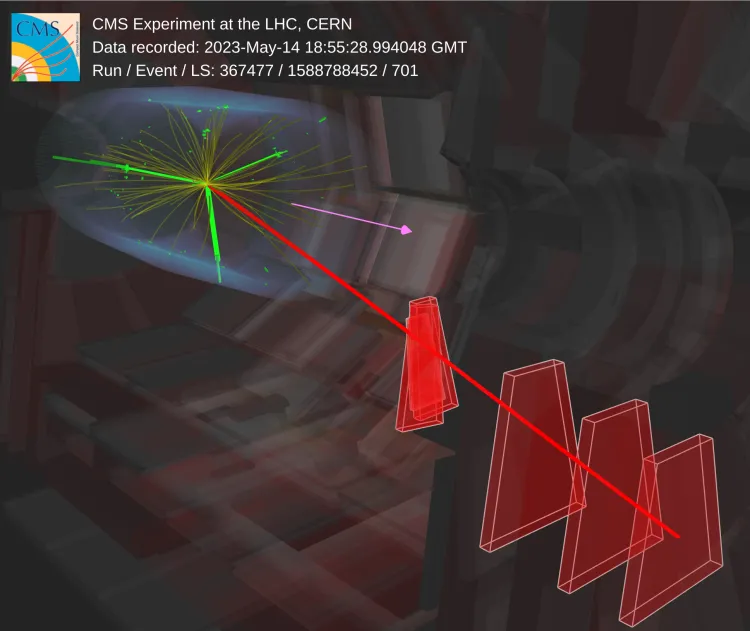
Probing interactions among trios of heavy vector bosons at record energy
CMS presents the most precise measurement of WWZ production to date by combining Run 2 data with more recent Run 3 data.
-
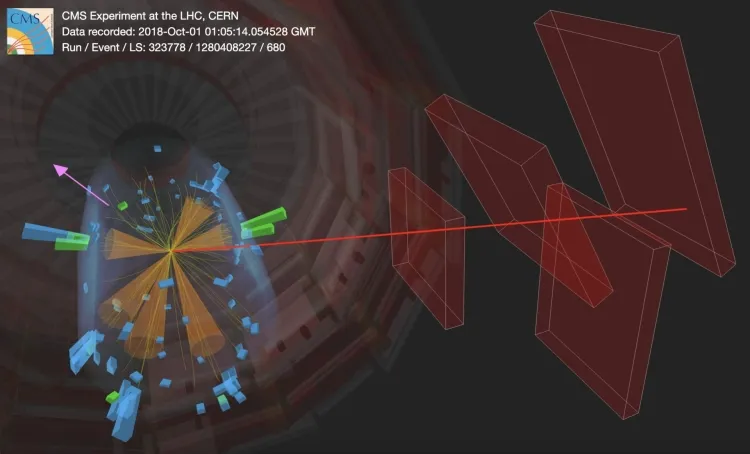
Topping up the charming Higgs
The CMS experiment presents the first-ever search for a Higgs boson decaying to charm quarks when the Higgs boson is produced along with two top quarks.
-
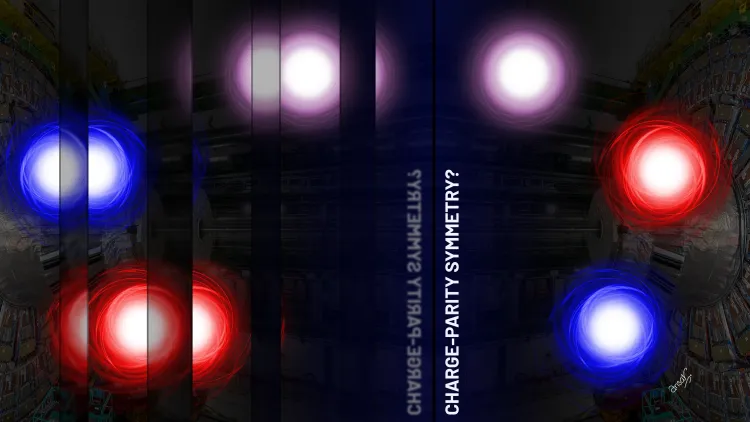
Broken mirrors: Do top quarks and Z bosons defy charge-inversion and reflection symmetry?
For the first time, the CMS experiment has employed physics-informed machine learning to observe whether the laws of physics still hold true when top quarks and Z bosons are replaced with their antiparticles and space is reflected.
-
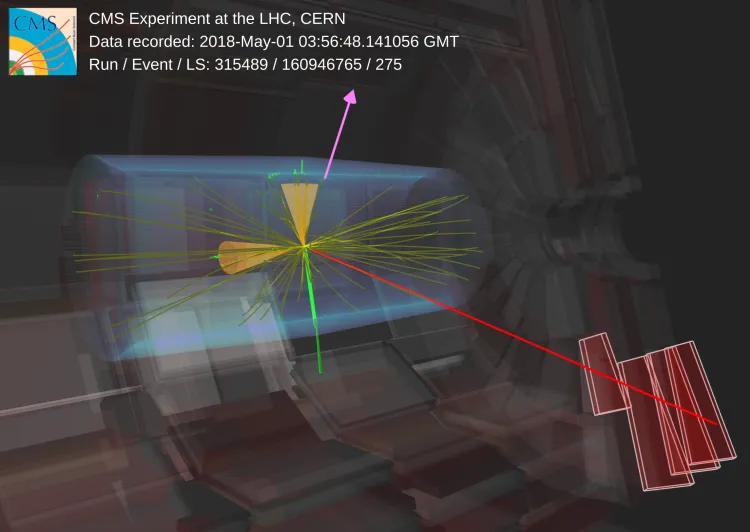
It takes two: CMS observes signs of attraction between top quark pairs
An excess in data hints at the existence of a top quark-antiquark quasi-bound state, called “toponium”.
-
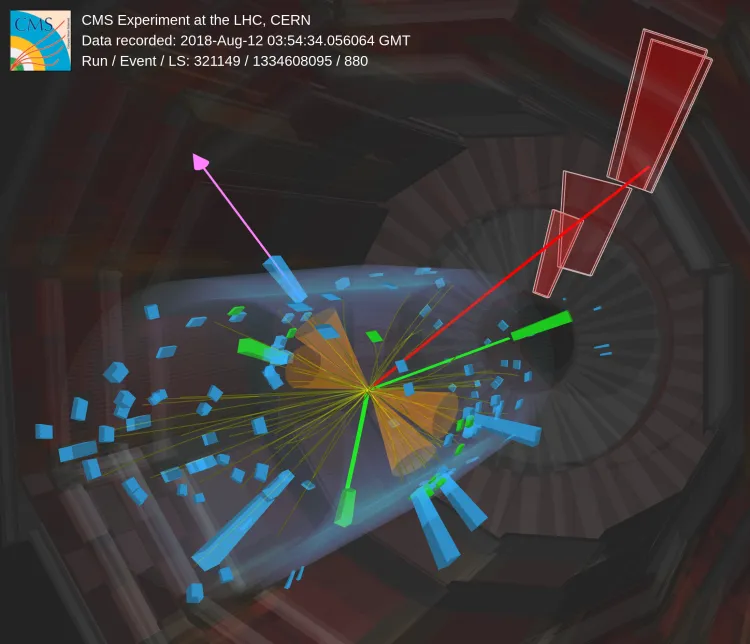
The flavour of new physics
The CMS Collaboration investigates whether physics plays favorites with quarks.
-
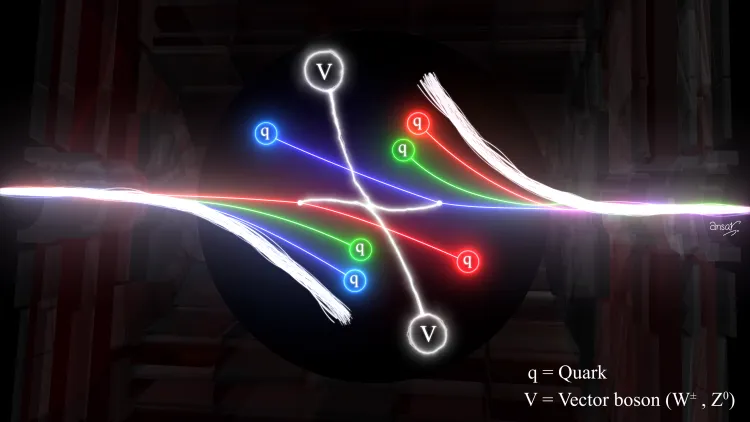
Piecing together the puzzle: a comprehensive look at vector boson scattering
The CMS experiment performs a combined measurement of the scattering of W and Z bosons in the several possible final states, improving over the precision of each individual result.
-
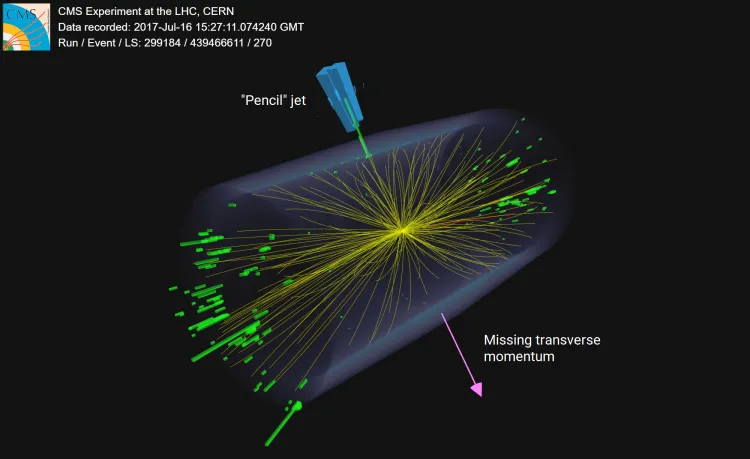
Dark matter and pencil jets: The search for a low-mass Z’ boson using machine learning
The CMS experiment conducts the first search for dark matter particles produced in association with an energetic narrow jet—the pencil jet.
-
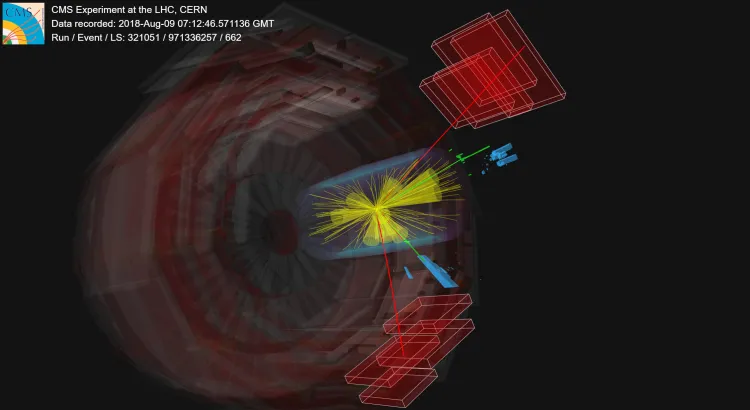
Mind the gap! Top quark pairs with W bosons continue to defy the latest predictions
In a recent measurement, the CMS experiment confirms a slight but persistent disagreement between the simulated and the observed rates of events in which a top quark pair is produced accompanied by a W boson.
-
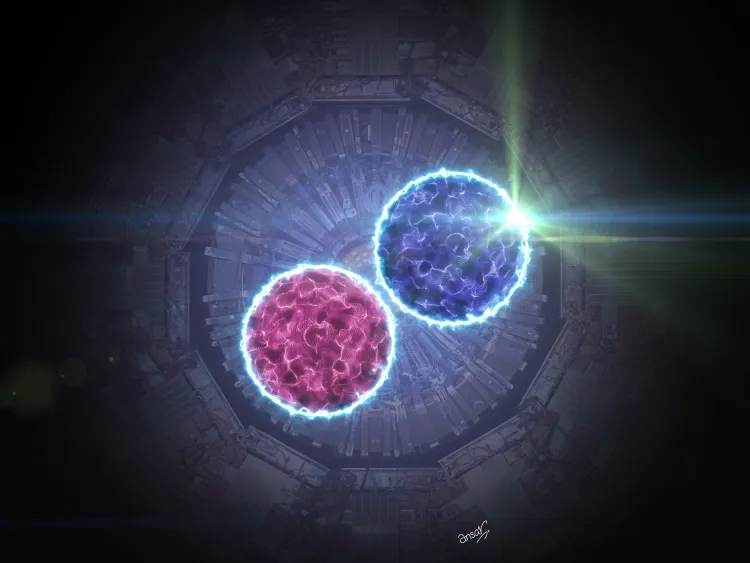
Shiny top quarks: what happens when top quarks emit light?
The CMS experiment has conducted a comprehensive study of the rates of production of top quark pairs created along with a photon, both inclusively and as a function of several kinematic variables.