
Tag: Physics briefings
-
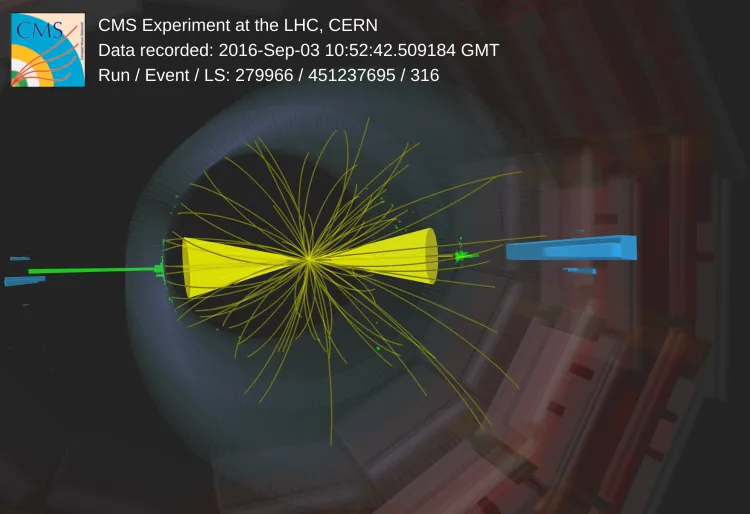
Jets elucidate how partons evolve into hadrons
Among all the elementary particles, quarks and gluons (partons) are the only ones that cannot be observed in isolation.
-
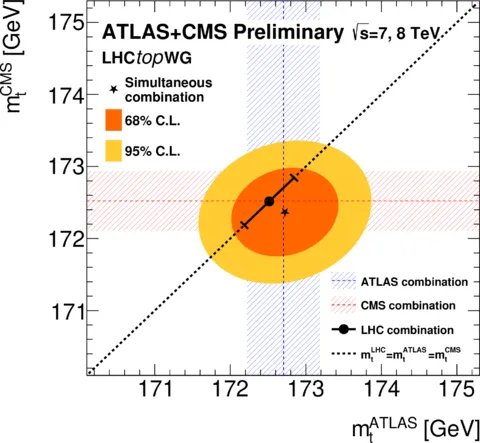
CMS and ATLAS unite to weigh in on the top quark
The ATLAS and CMS Experiments at CERN have just released a new measurement of the mass of the top quark.
-
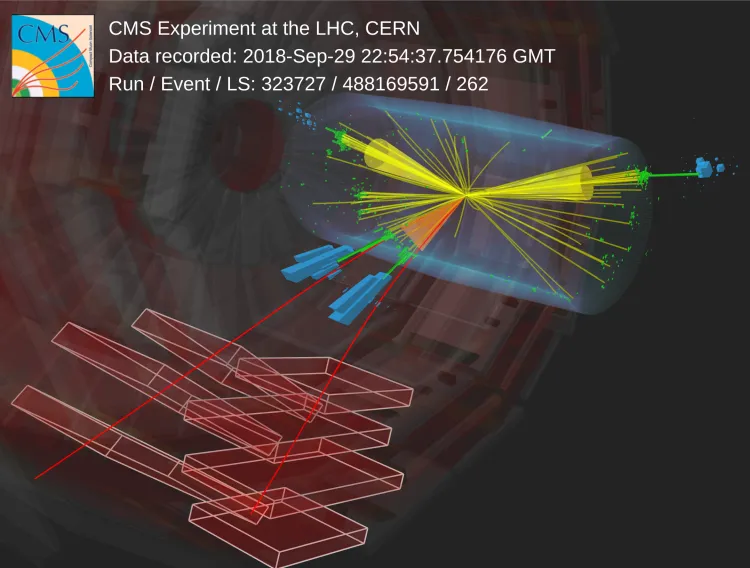
The Higgs boson gets a boost
A new search conducted by the CMS collaboration is exploring Higgs bosons with very high energy.
-
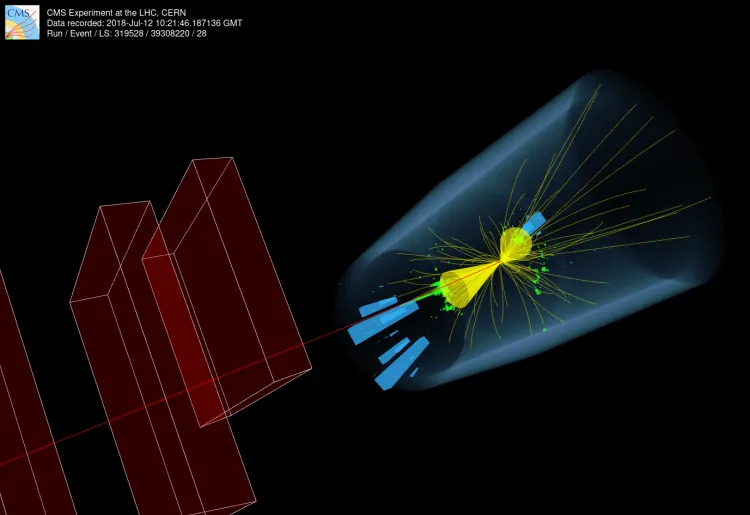
Performance of jet flavour algorithms: ML to calibrate ML in data
Very quickly after quarks are produced in proton-proton collisions, they radiate gluons (the mediators of the strong force between quarks) that in turn produce more particles that radiate gluons.
-
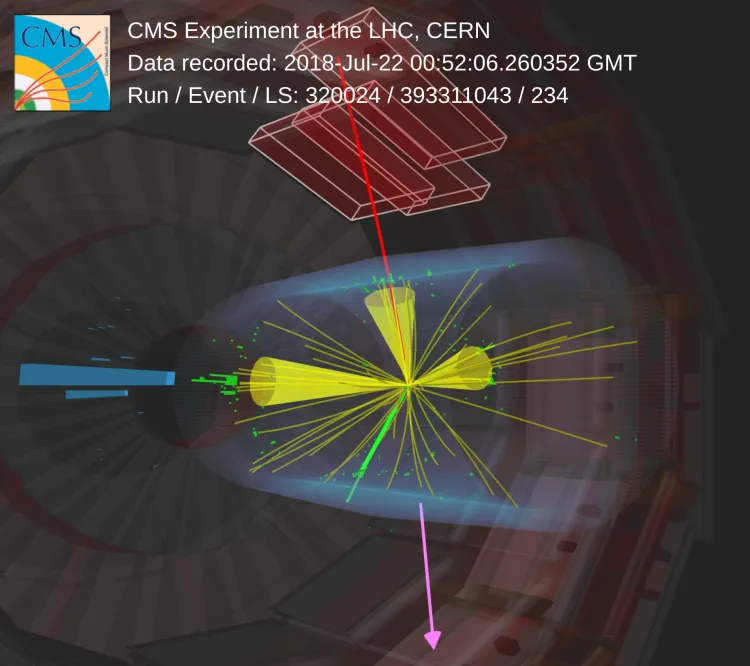
Hunting the Higgs boson siblings with top quarks
Peter Higgs and François Englert received the Nobel Prize in Physics after the 2012 discovery of the Higgs boson with a mass of 125 GeV.
-
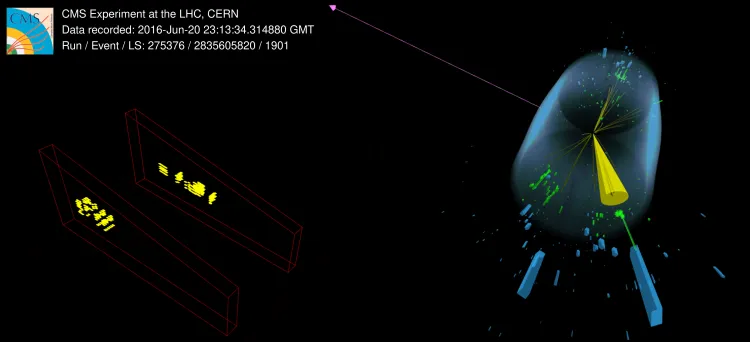
Detector showers wash away backgrounds of new long-lived particles
Most searches for new physics beyond the standard model (SM) focus on particles that decay almost instantly after being produced.
-
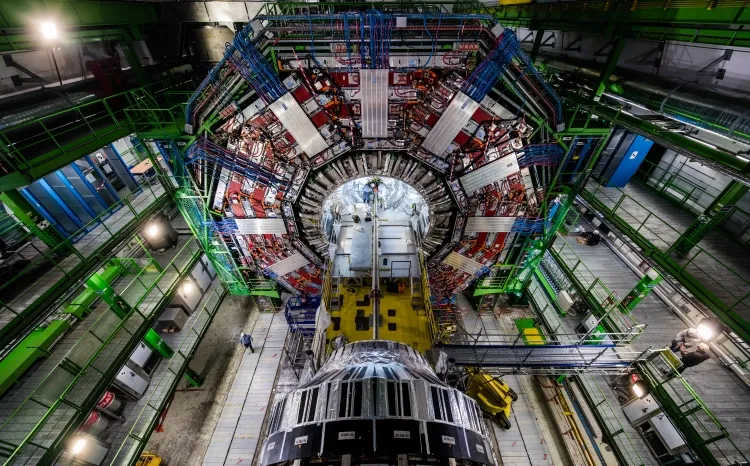
Leptoquarks as intergenerational messengers
We have this idea that we communicate best within our own generation, but is this true?
-
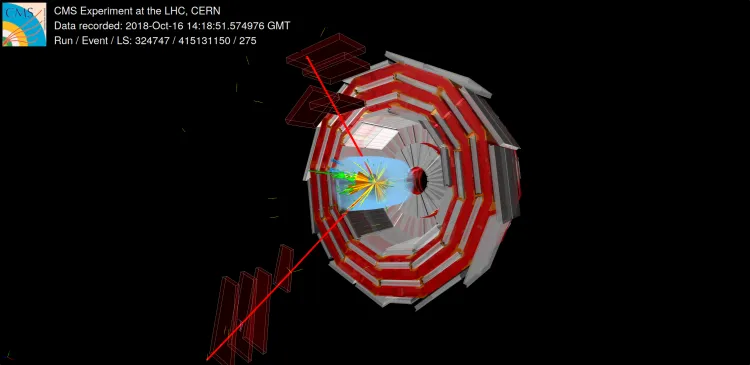
Using Machine Learning to find good muons
The CMS experiment at the LHC is set to explore the fundamental nature of our universe.
-
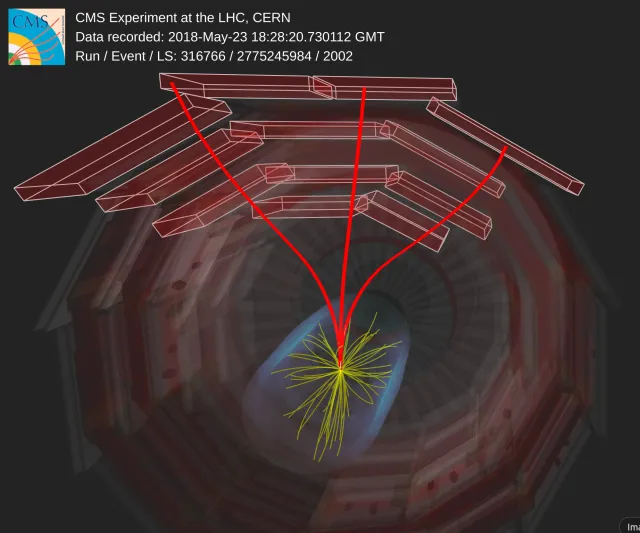
Flavoured Mysteries: searching for the tau lepton’s 3 muon decay
It was 1918 when the mathematician Emmy Noether published what is known as her most famous theorem, revealing the fundamental relation between the symmetries of a physical system and the laws enforcing the conservation of some of its characteristic quantities.
-
Three is a charm!
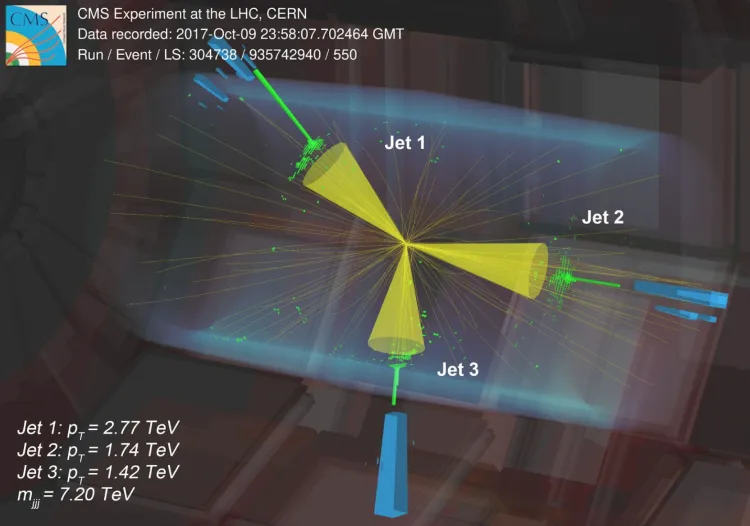
Three-jet event with an invariant mass of 7.2 TeV, showing the jets (yellow cones) and the energy deposited in the electromagnetic (green) and hadron (blue) calorimeters.