
Tag: Physics briefings
-
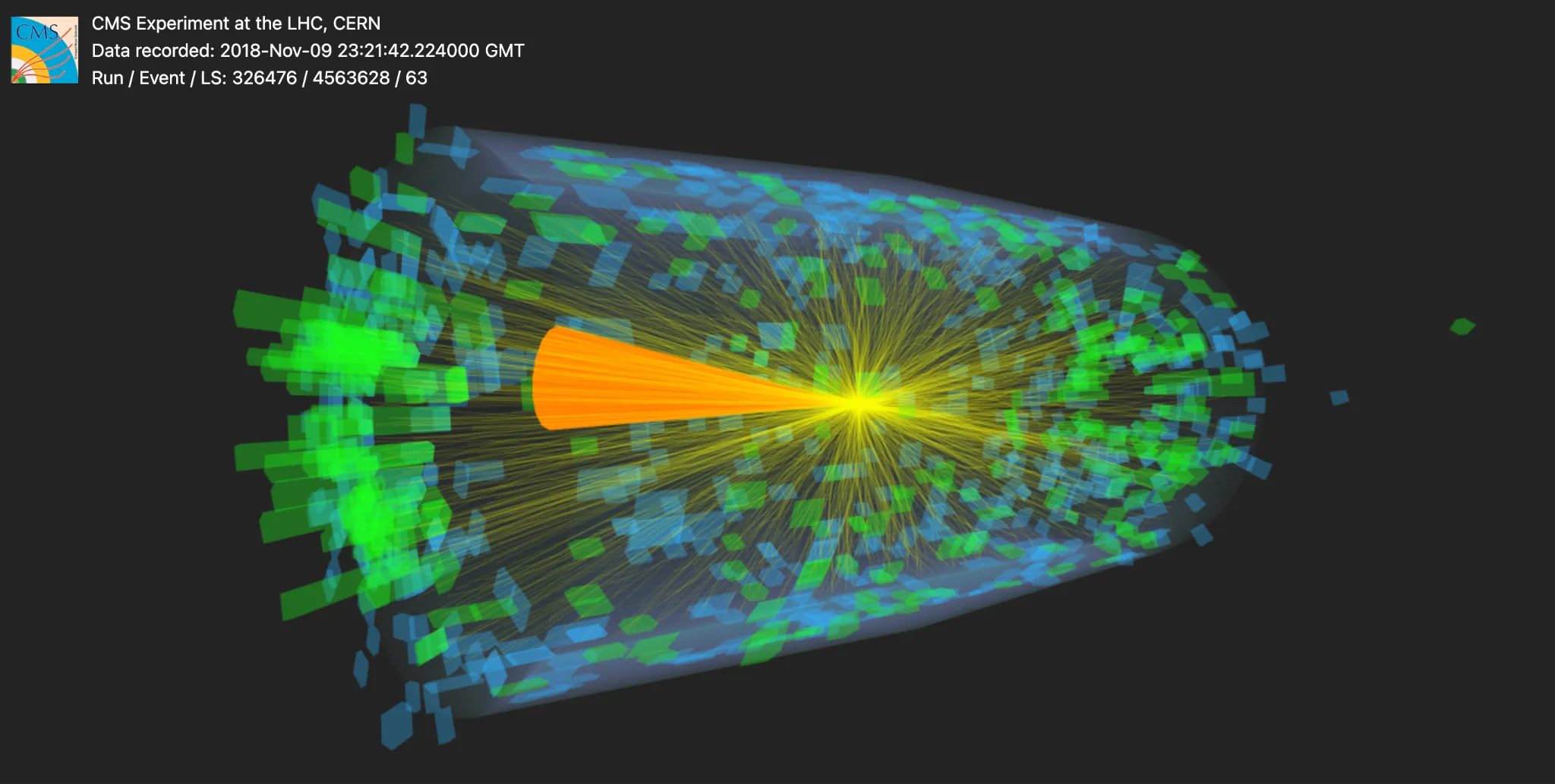
Probing the charm-quark dead cone in the quark-gluon plasma
CMS investigates charm-quark jets in heavy-ion collisions and finds no evidence of additional radiation inside the dead cone When lead ions collide at the Large Hadron Collider, they create an extreme state of matter known as the quark-gluon plasma (QGP), a hot and dense medium similar to the one that filled the Universe shortly after…
-
In the wake of partons
The CMS experiment reports the first observation of a “wake” created by a fast-moving parton in quark-gluon plasma.
-
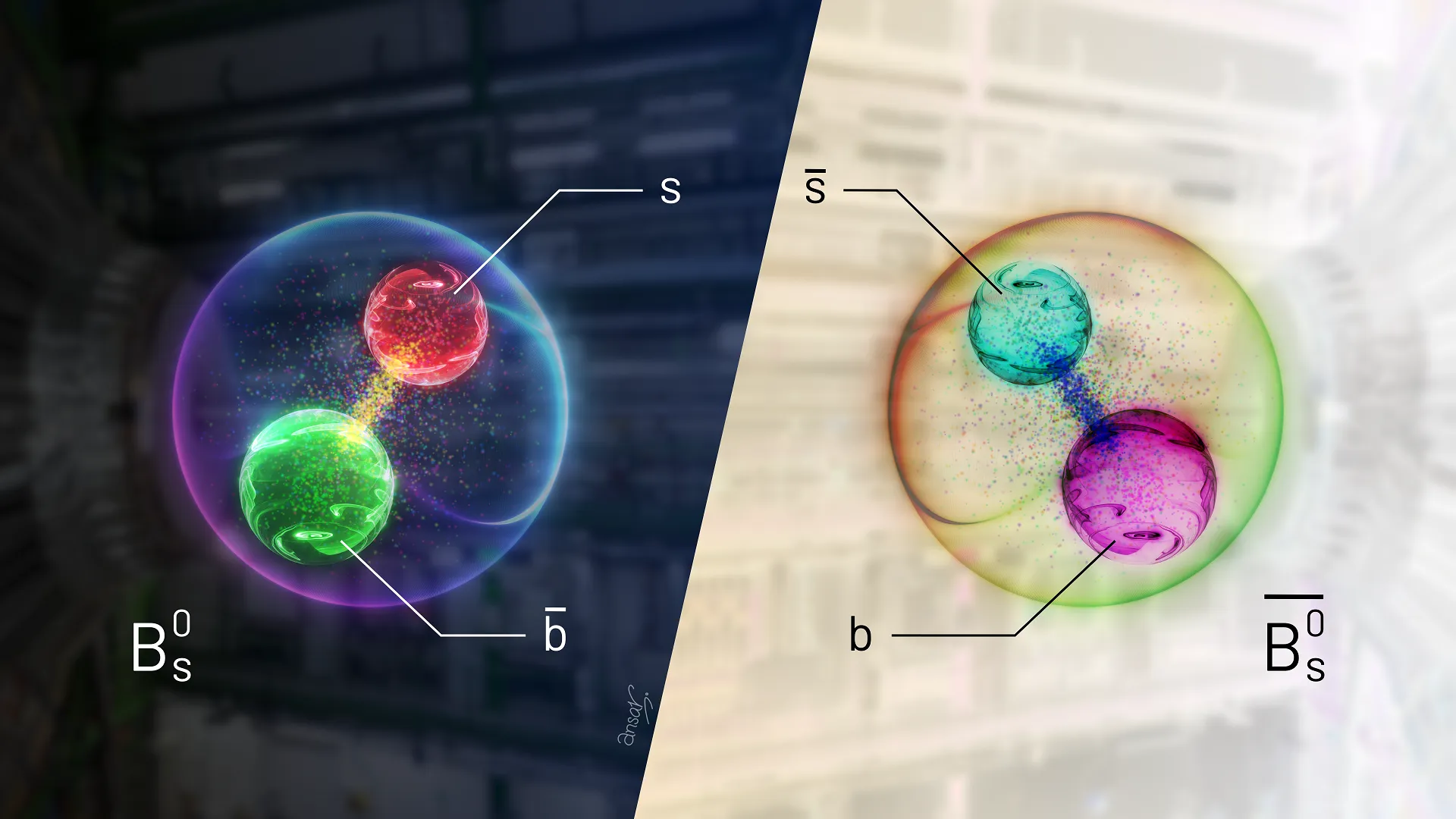
Where did all the antimatter go? CMS investigates using B mesons
The CMS experiment uses its largest sample of B mesons to date to perform a high-precision test of subtle differences between matter and antimatter.
-
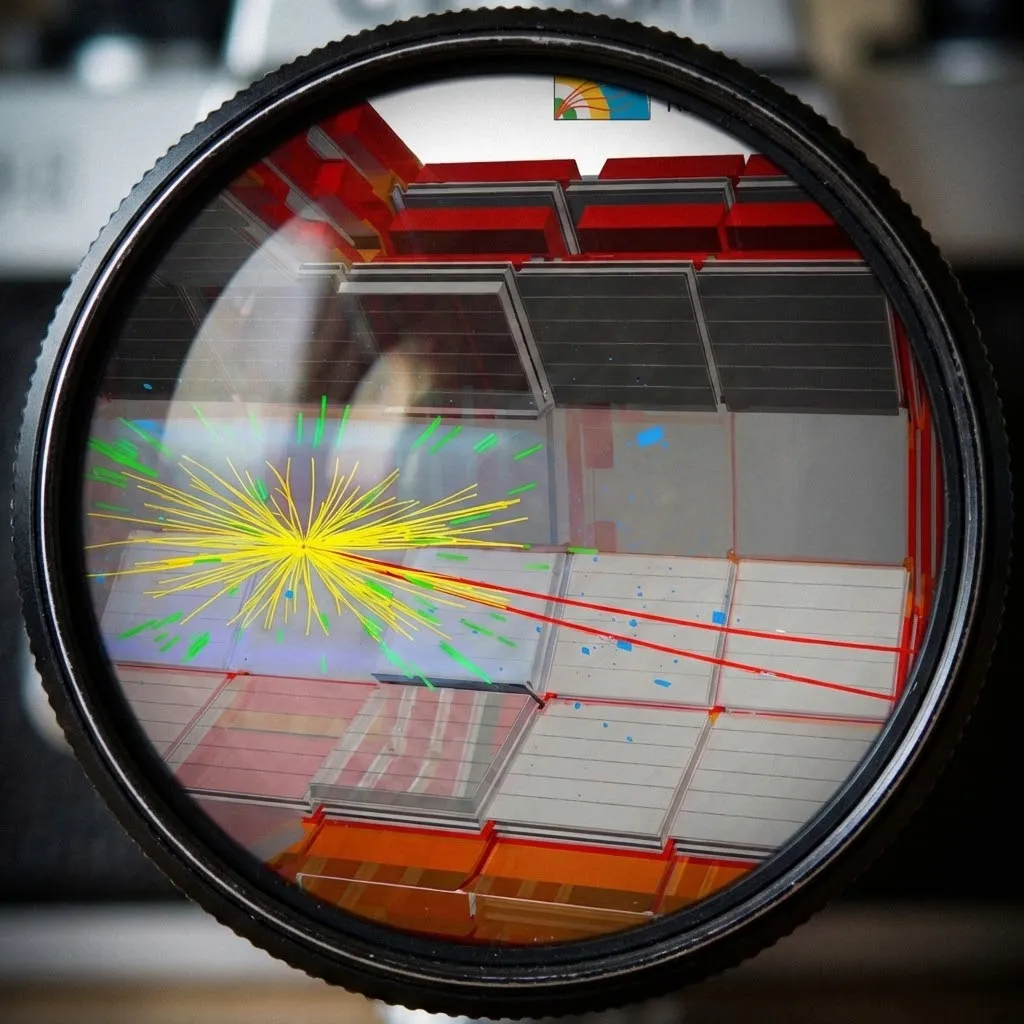
ϒ mesons in light-ion collisions
The CMS experiment presents the first measurement of ϒ mesons – bound states of a bottom quark-antiquark pair – in oxygen-oxygen and neon-neon collisions, and strongly indicates that their production is suppressed owing to quark-gluon plasma droplets formed in such light-ion collisions.
-
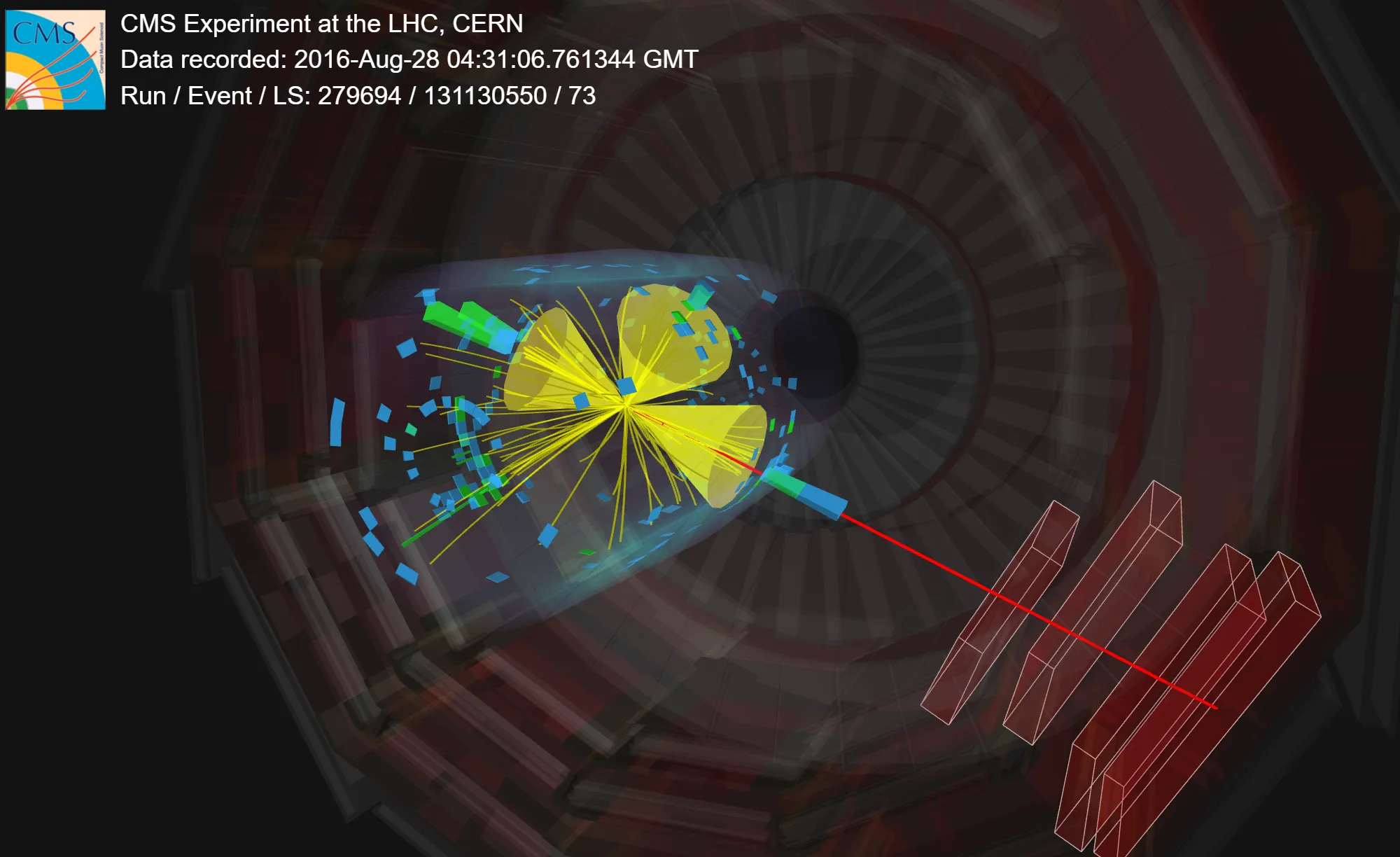
Looking for new physics at the multiboson frontier
The CMS experiment presents a novel search for new physics by studying collisions that produce three W or Z bosons.
-
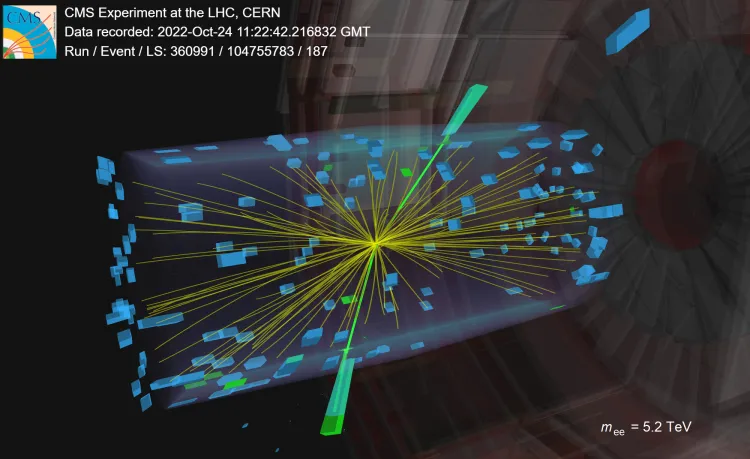
Hunting heavy particles through high-mass pairs of electrons or muons
CMS observes rare collisions that produce pairs of electrons or muons with the highest combined invariant mass ever recorded, extending the search for undiscovered heavy particles.
-
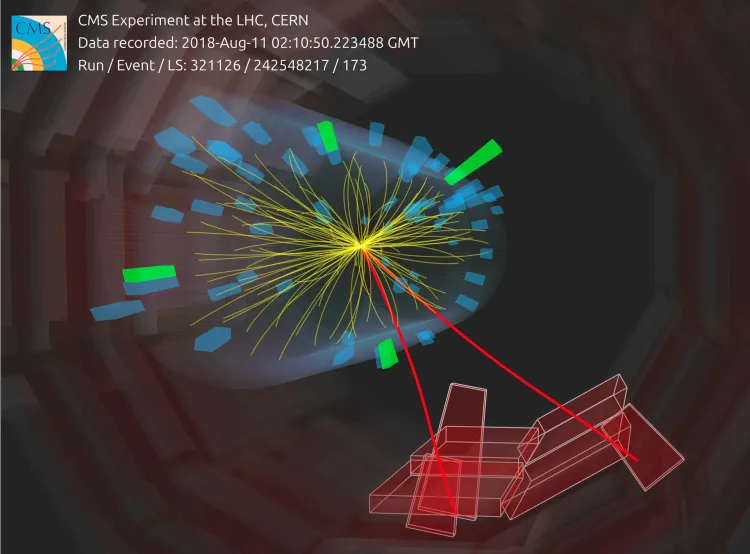
Estranged siblings? Observed meson decays are compatible with one bottomonium state, but without any hint of its partner
The CMS experiment reports the observation of a peaking structure in the Υ(1S)ϕ(1020) channel in proton-proton collisions at 13 TeV.
-
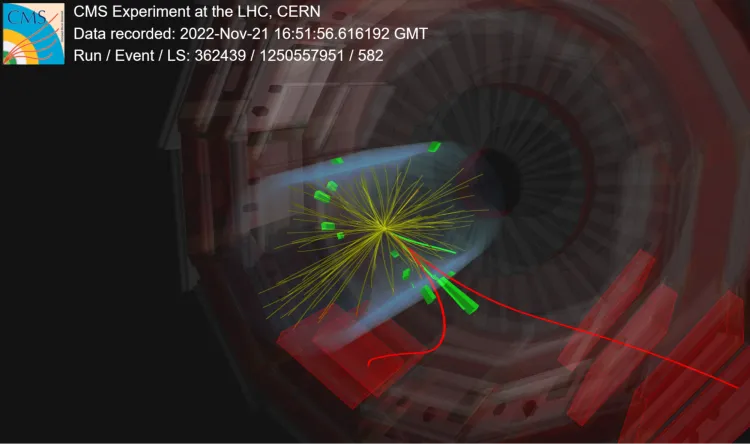
Light mesons with a heavy impact
The CMS experiment reports the first observation of the rare decay of an eta meson to two muons and two electrons.
-
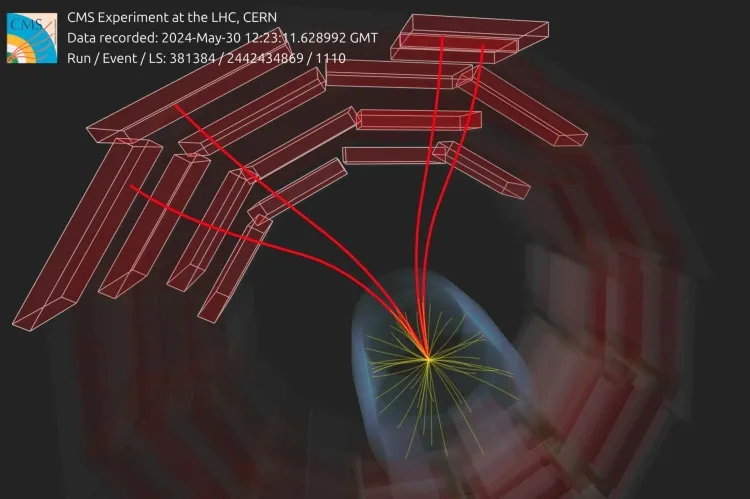
Pushing the limits: rare four-muon decays of B mesons
CMS sets the world’s most stringent limits on B⁰ and B⁰ₛ decays into four muons.
-
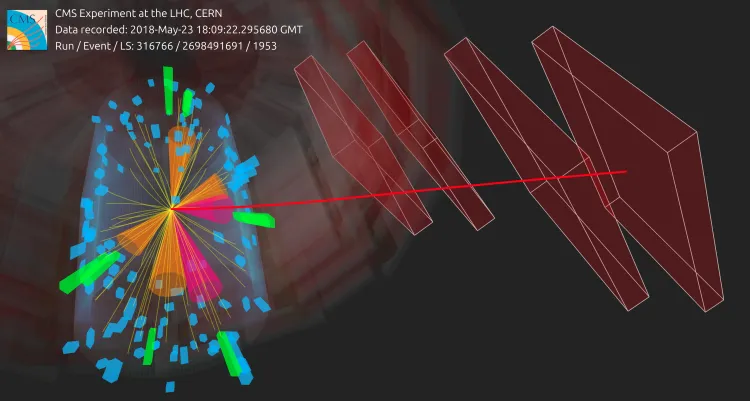
In search of new particles like the Higgs boson
Could there be more particles like the Higgs boson?