
Tag: Physics briefings
-
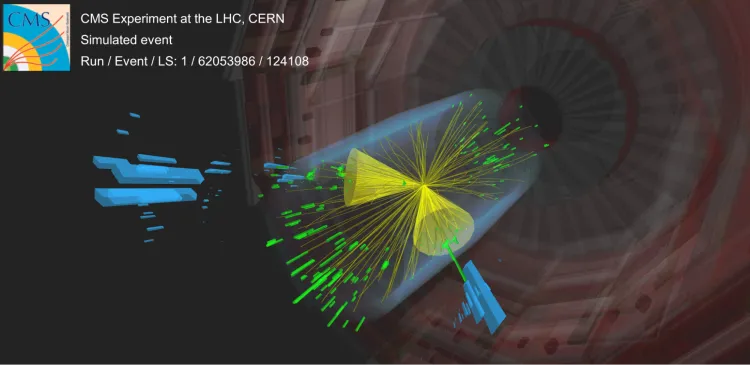
How to weigh the W boson using hadrons
An interactive version of the event display is found on a separate, full page here.
-
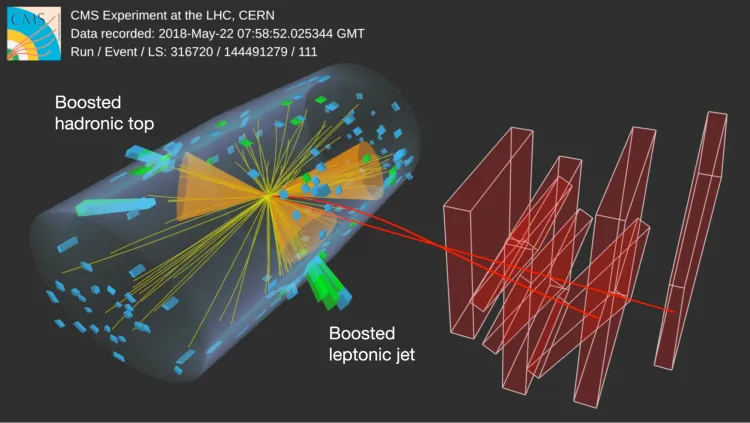
An all-round boosted chase for supersymmetry
The CMS collaboration expands the search for supersymmetry by exploring a wide variety of final states with boosted particles, in a new analysis called “razor boost”.
-
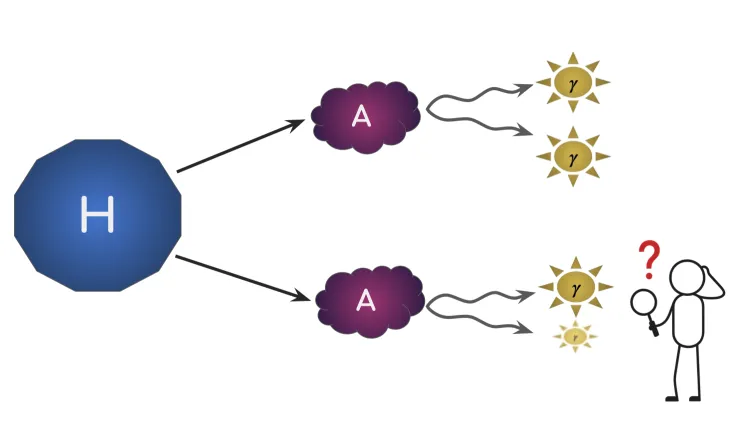
One photon short: Recovering lost photons using AI to hunt for exotic Higgs boson decays
CMS breaks new ground by reconstructing challenging photon signatures using machine learning, opening new paths in the search for physics beyond the standard model.
-
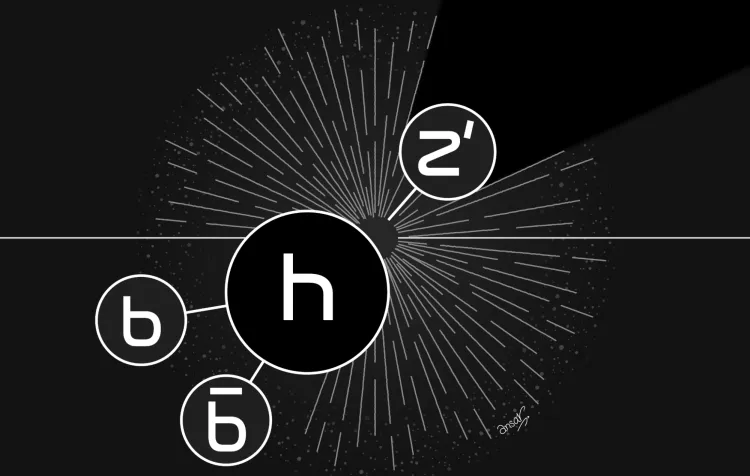
The Higgs boson’s shadowy cousin: a CMS search for the dark Higgs
Remember the media buzz when we finally pinned down the Higgs boson in 2012?
-
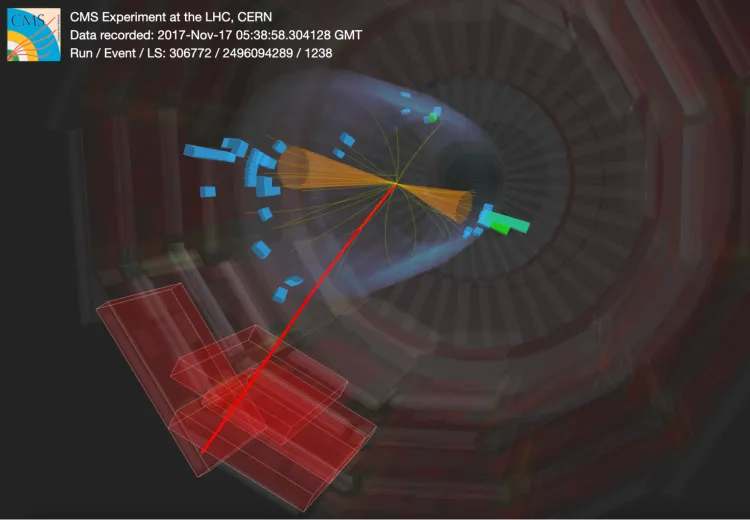
Top quarks take the t-channel express at 5.02 TeV
For the first time, the CMS experiment measures the production of single top quarks in a mode called the “t-channel” at 5.02 TeV, reporting results aligned with the standard model expectations.
-
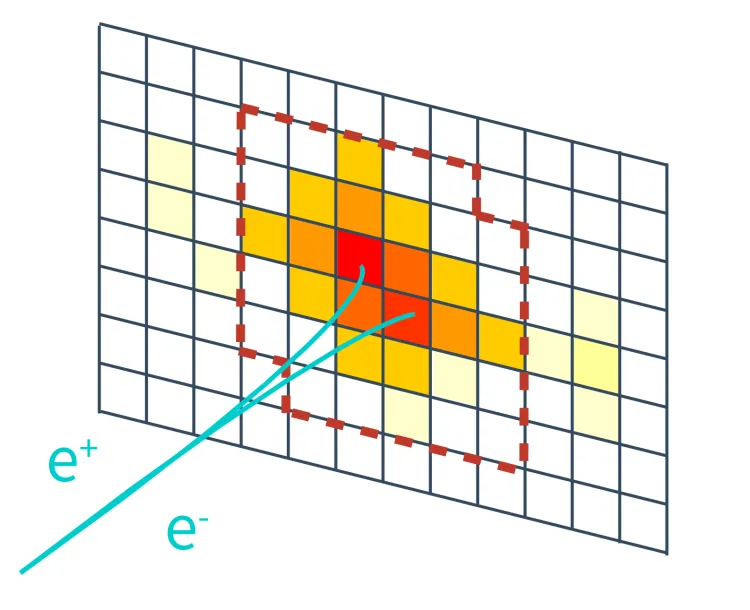
CMS has sharpened its eyesight for highly collimated electron-positron pairs
The CMS collaboration has developed a new technique to distinguish electron-positron pairs travelling so closely together that we see them as a single cluster of deposited energy.
-
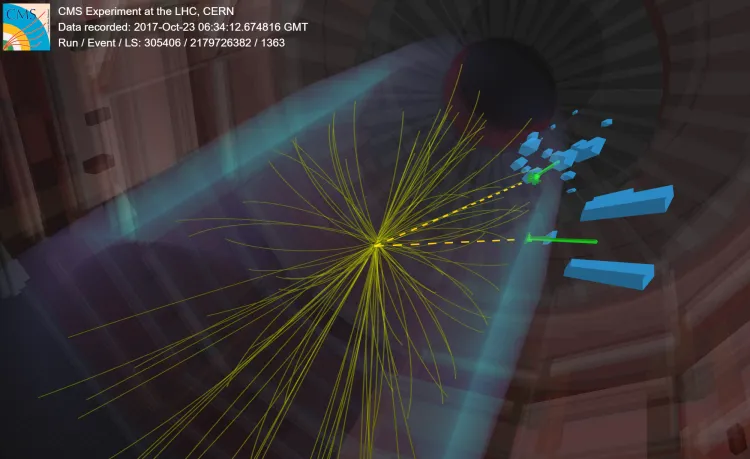
Beyond the script: Does the Higgs boson improvise in its interactions?
By observing decays of Higgs bosons into pairs of photons, the CMS experiment probes anomalous interactions, including those between Higgs bosons and W/Z bosons or gluons when all particles are replaced with their antiparticles and space is reflected.
-
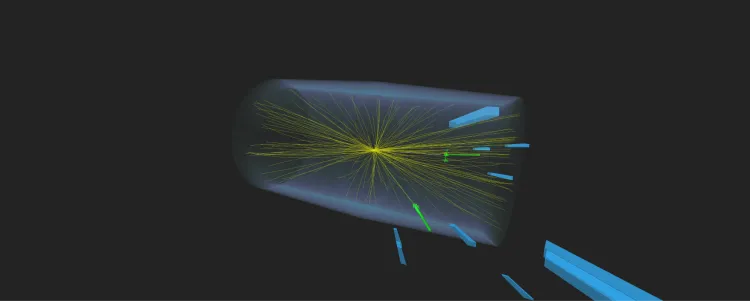
Chasing light-weight particles in Higgs boson decays using pairs of electrons
The CMS experiment sets limits for BSM particles down to tens-of-MeV aided by machine learning techniques.
-
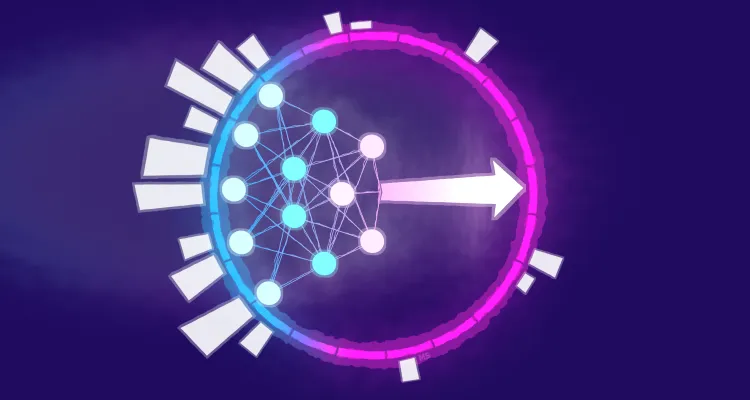
Teaching machines to see the invisible: the DeepMET algorithm
The CMS experiment employs a new machine-learning algorithm to improve the reconstruction of invisible particles.
-
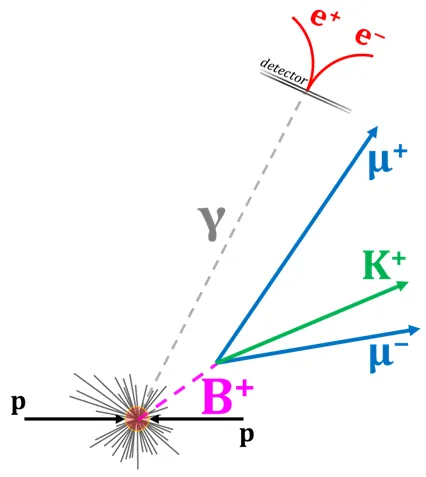
B* mesons are excited to (finally) show up
For the first time ever, the excited states of three beauty mesons are fully reconstructed and their masses are measured directly, using data from the CMS experiment.