
Category: Article
-

Young Researcher Prize 2025 – The Winners
The CMS Collaboration announced the 2025 Young Researcher Prize winners during the September 2025 CMS Week.
-
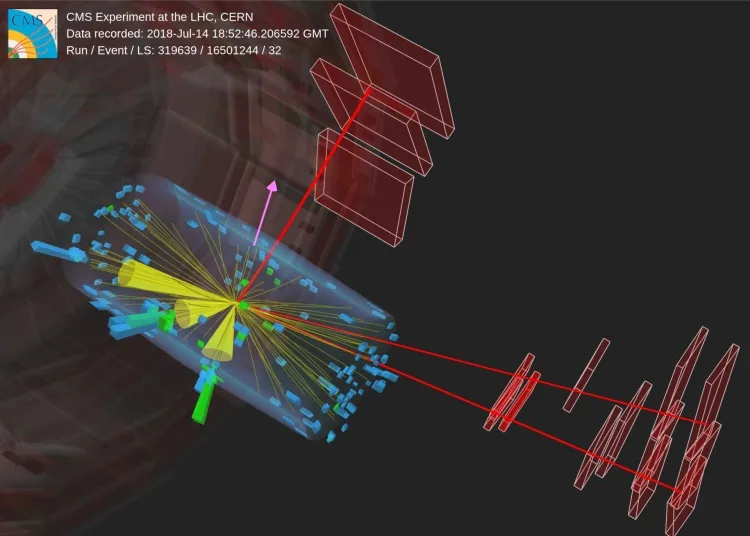
CMS observes rare top quark interaction with a W and a Z boson
Using data collected from 2016 to 2023 and cutting-edge machine learning, CMS observes for the first time the creation of a top quark together with a W and a Z boson – a process so rare it occurs only once in a trillion proton-proton collisions!
-
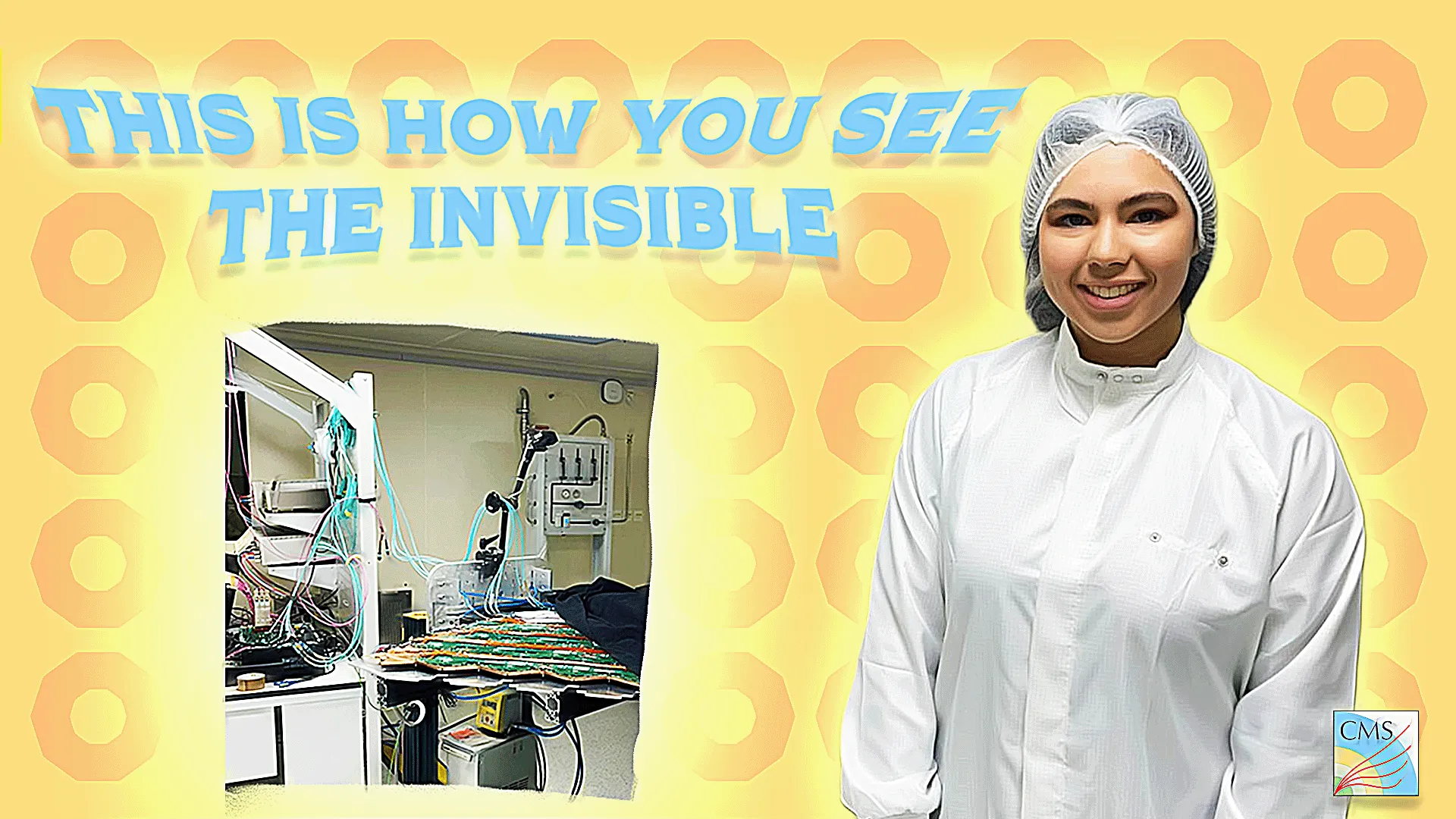
“This is how you see the invisible” – A teen’s week at CMS
My name is Palma Bejarano, I’m 16 years old and I live in a small village in southern Spain, surrounded by the wonderful Los Alcornocales Natural Park: a place full of beauty, but with very few STEM opportunities.
-
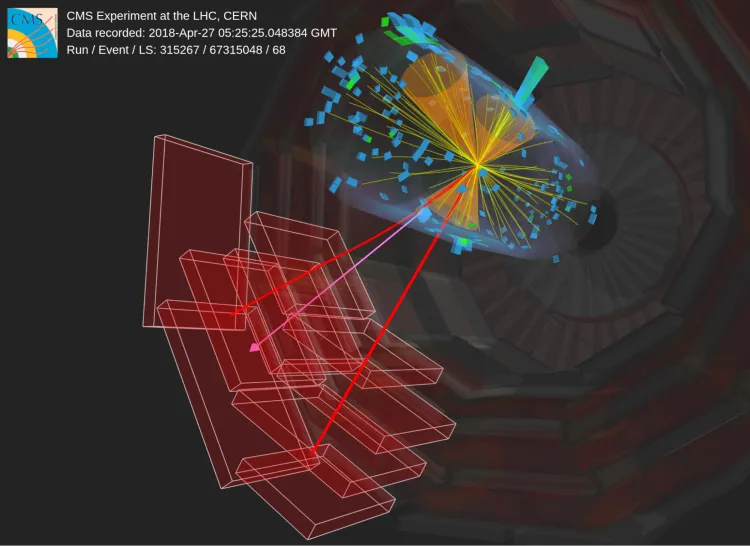
Using physics-based machine learning to hunt dark matter
In the first search of its kind at a particle collider, the CMS experiment looks for partially visible sprays of particles (jets), containing leptons and dark matter using physics-informed machine learning.
-
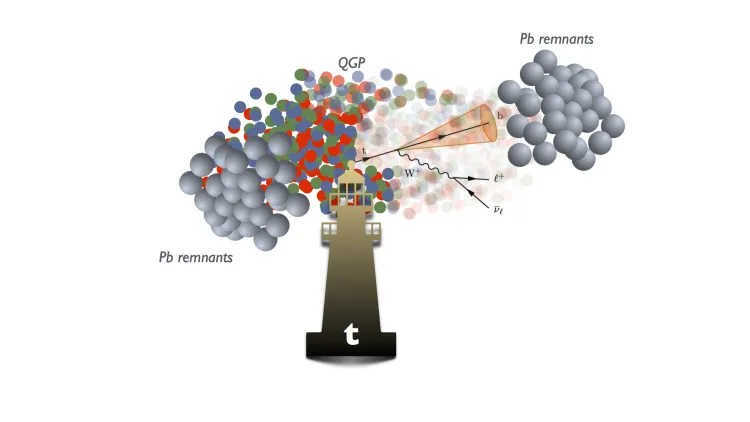
Clash of the titans: top quark meets lead ions
Five years after the first evidence that heavy metal hits the top quark, CMS now observes the clash of two titans with higher precision at unprecedented energy.
-
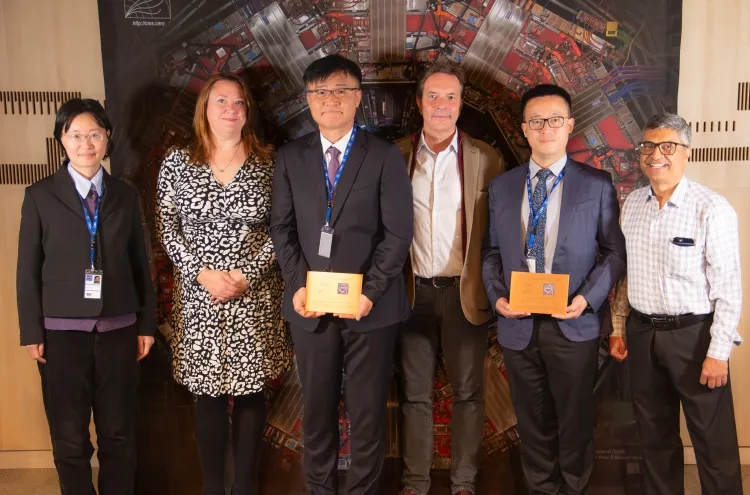
CMS Industry and Partner Gold Awards 2024
The CMS Collaboration is proud to announce the recipients of the 2024 Industry and Partner Awards, which recognise the vital contributions of our partners in advancing the experiment’s capabilities.
-
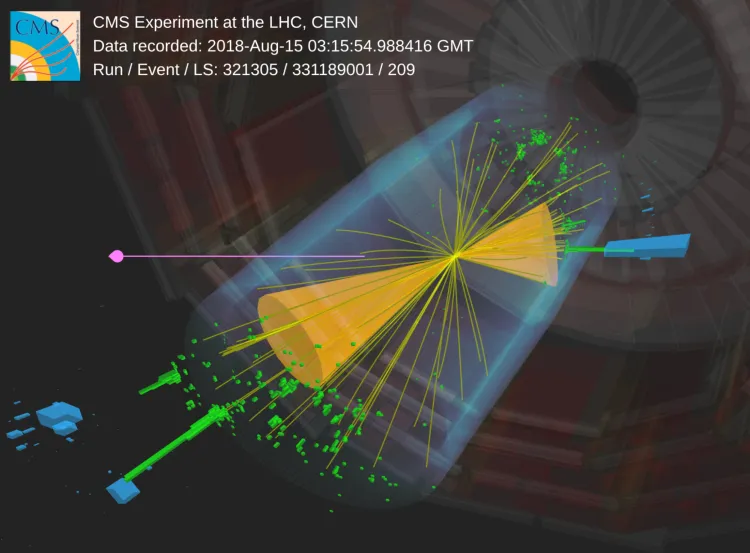
Double the Higgs, double the mystery! The hunt for a new, heavy particle decaying to a pair of Higgs bosons
CMS scientists are on the hunt for a new, heavy particle that decays into a pair of Higgs bosons.
-
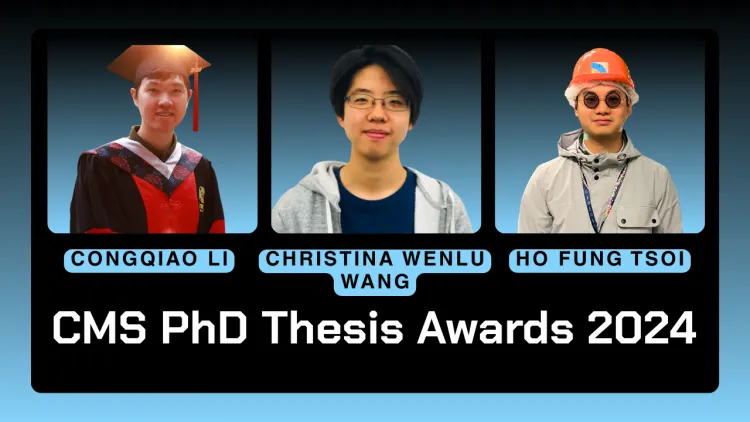
CMS Ph.D. Thesis Award Winners 2024
It’s with great pride that the CMS Collaboration announces the winners of the 2024 CMS PhD Thesis Award.
-
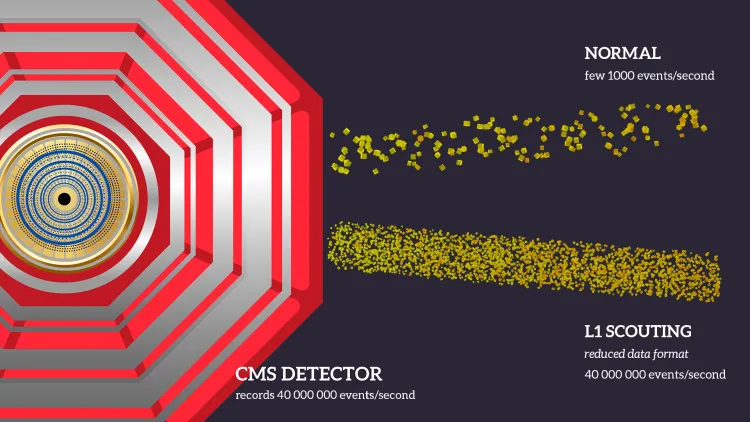
How CMS records all 40 million events per second
The CMS experiment is utilising a novel technique called L1 Scouting, which allows it to record data from all collisions, without any selection, but in a reduced format.
-
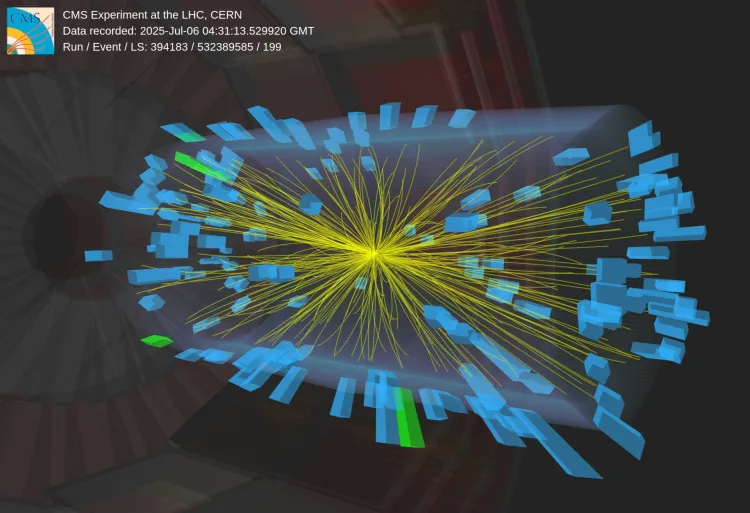
Collective motion in tiny systems: oxygen and neon collisions as a window into nuclear structure
CMS observes collective motion of particles in light-ion collisions, providing robust evidence of how initial nuclear geometry maps to final-state flow.