
Category: Detector
-
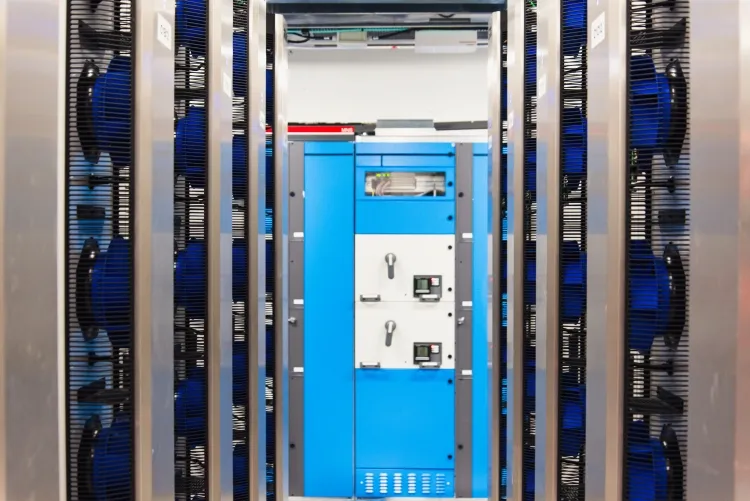
CMS completes a new DAQ Server room in preparation for Hi-Lumi
The increase in data processing capabilities means that CMS is one step closer to being ready for Run 4. The new Data Acquisition (DAQ) room is a state-of-the-art server room, essential for the Hi-Lumi phase of the detector and beyond.
-
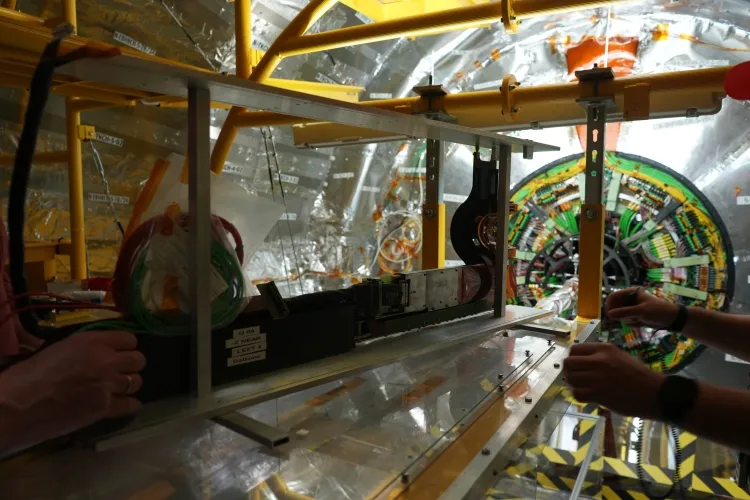
Shiny new luminosity and beam conditions instrumentation for CMS
New BRIL subsystems illuminate CMS’s path through Run 3 After many months of meticulous preparations, new BRIL subsystems were installed in mid-January.
-
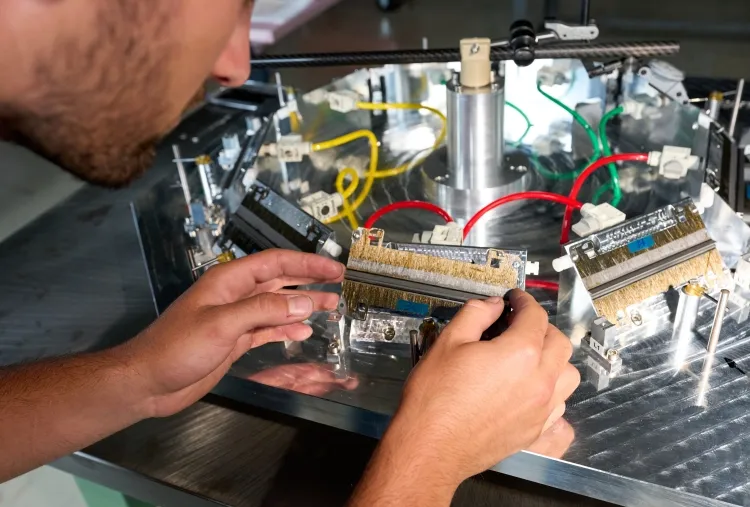
First Tracker Support Structures, TBPS Rings, in production for Hi-Lumi CMS!
The TBPS Rings are in production, offering an innovative design to incline sensors toward the LHC beam and maximise coverage.
-
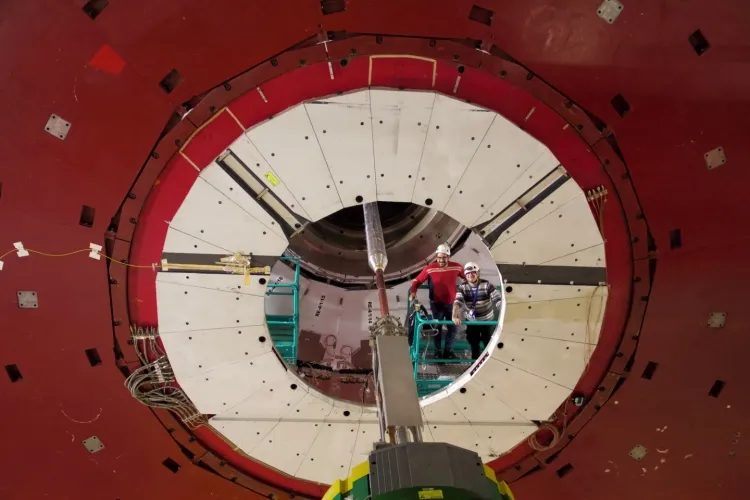
Hi-Lumi iRPC Muon chambers installed in CMS in record time!
The first of the improved Resistive Plate Chambers for Hi-Lumi CMS were installed in record time during the LHC winter break.
-
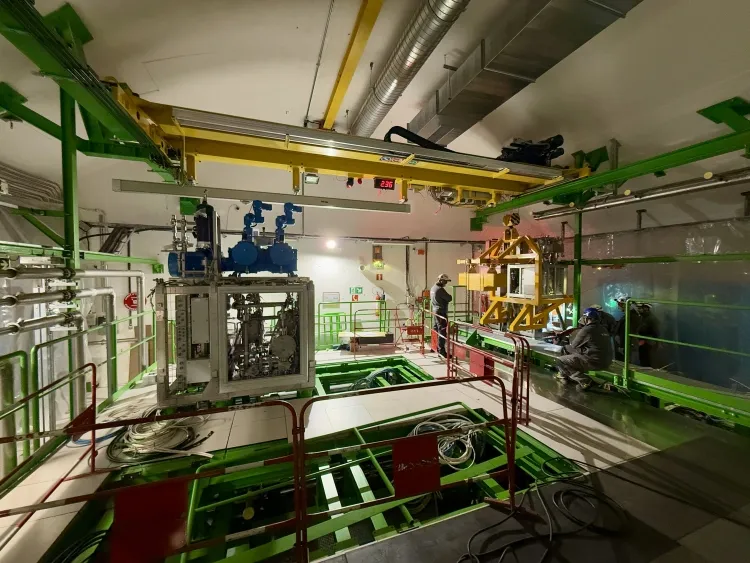
Installation of Next-Generation CO2 Cooling System for Hi-Lumi CMS
CERN and CMS engineers and technicians have installed the first two of nine required next-generation carbon dioxide (CO2) cooling plants in the underground Service Cavern of the CMS experiment in Cessy, France, as well as two of the accumulators.
-
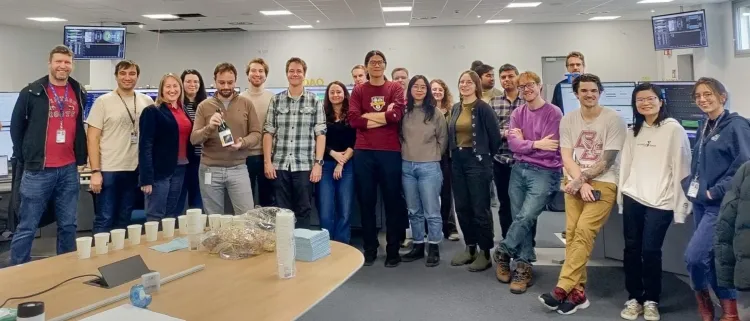
New record: 2024 has been the year with the most recorded data by CMS!
The heavy ion Run has just concluded, marking the start of the extended year-end technical stop (EYETS).
-
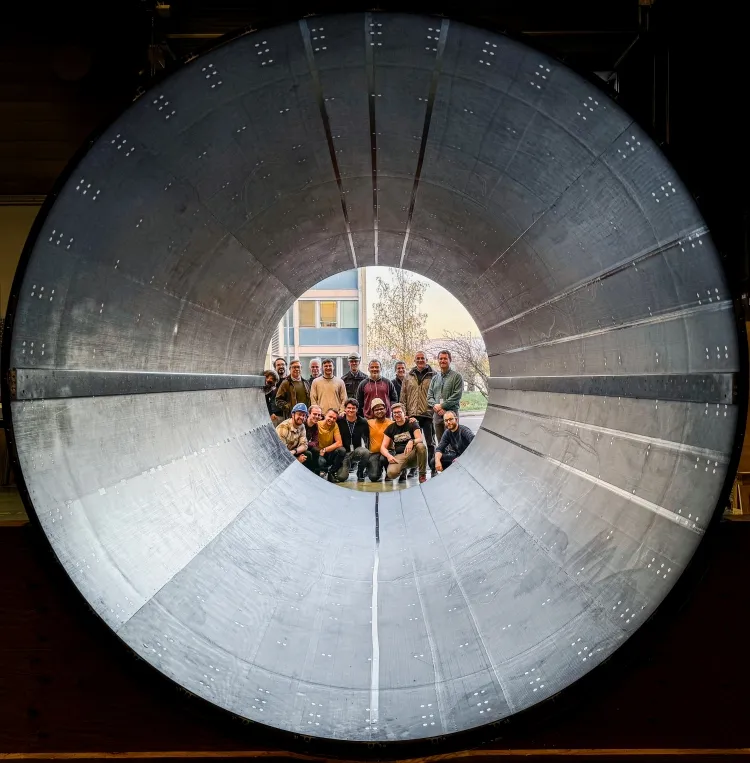
The BTST, a key piece of the Upgraded CMS Detector, arrives at CERN
Above: Part of the BTST team during the unboxing of the tube.
-
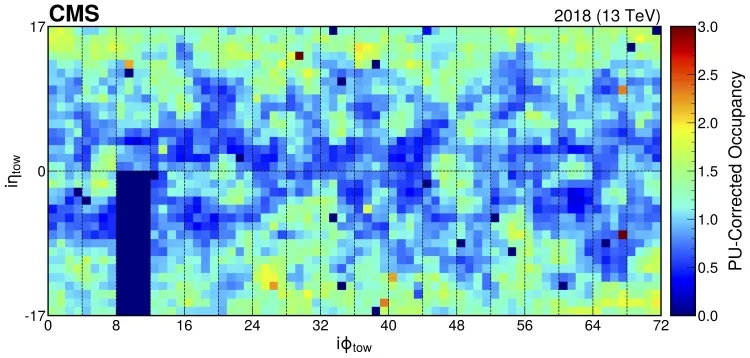
Harnessing the power of AI to Monitor Data Quality in CMS
CMS develops and deploys a new machine-learning technique based on neural networks that is able to spot existing and developing anomalies in the functioning of the detector.
-

Scouting the flow of data for the future High Luminosity LHC
How to manage large amounts of data without losing any interesting ones?
-
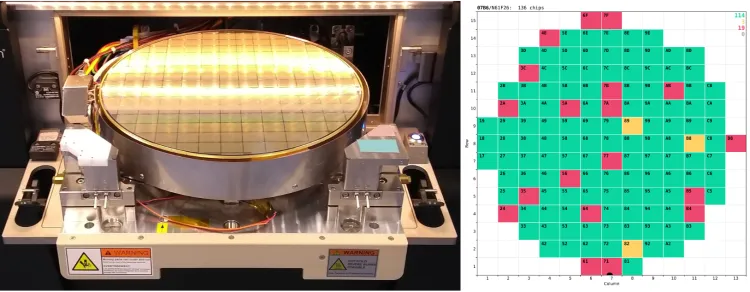
CMS’ High Luminosity tracker chip is ready!
The first wafers of the CMS Read Out Chip (CROC) for the High Luminosity Pixel detector have been produced and tested, marking a major milestone for the next generation CMS Tracker.