
Category: Detector
-
Crystals for precision timing arrive in Rome
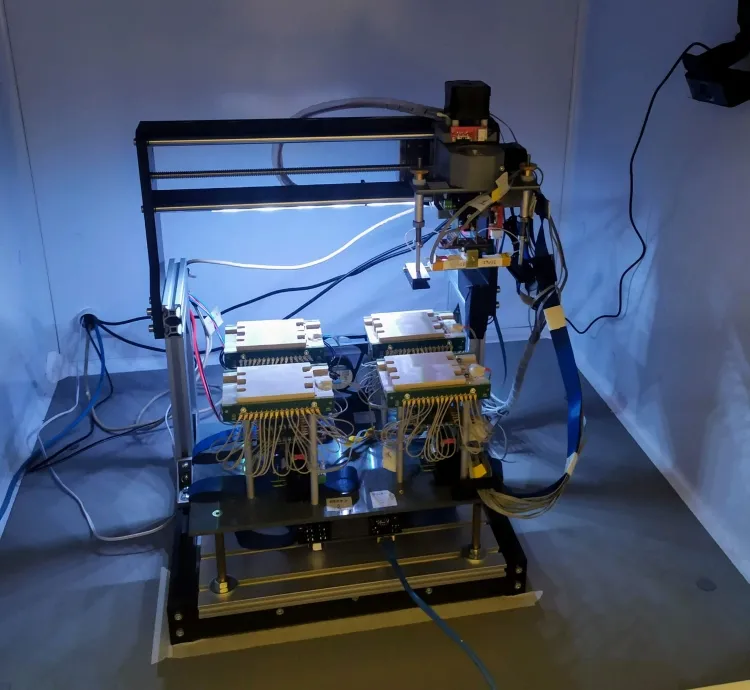
Above: Test bench for time resolution measurement of LYSO arrays coupled with SiPMs In the last few weeks, the first batch of Ce:LYSO crystals, a type of scintillating crystals, has been delivered to the Sapienza University of Rome ready for quality assessment.
-
Waking up the CMS detector – Part 3
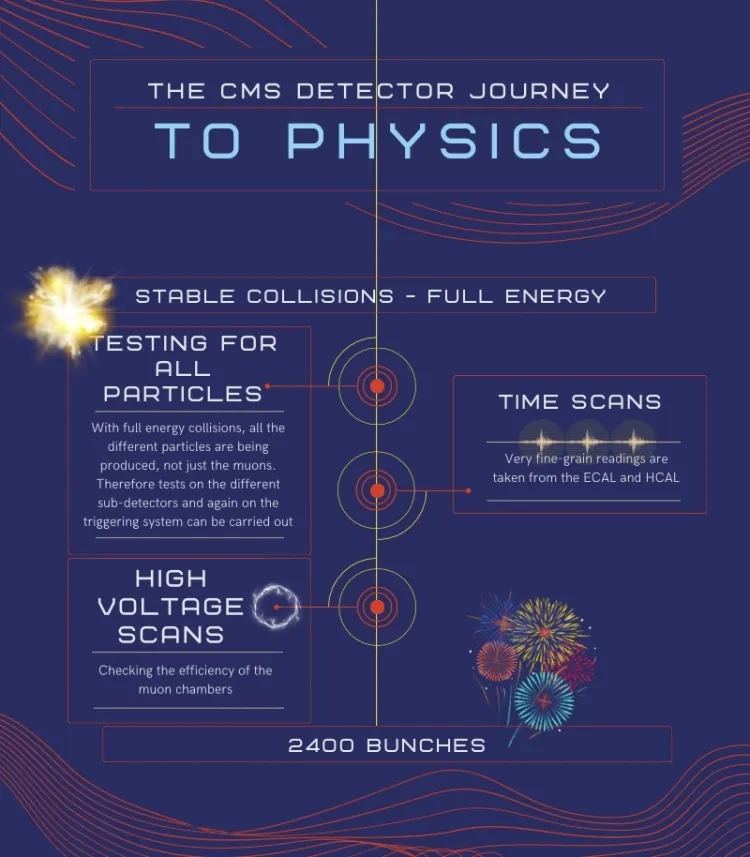
Welcome back to the mini-series about waking up the CMS detector after the YETS – Year End Technical Shutdown.
-
New Forward Shielding Installed
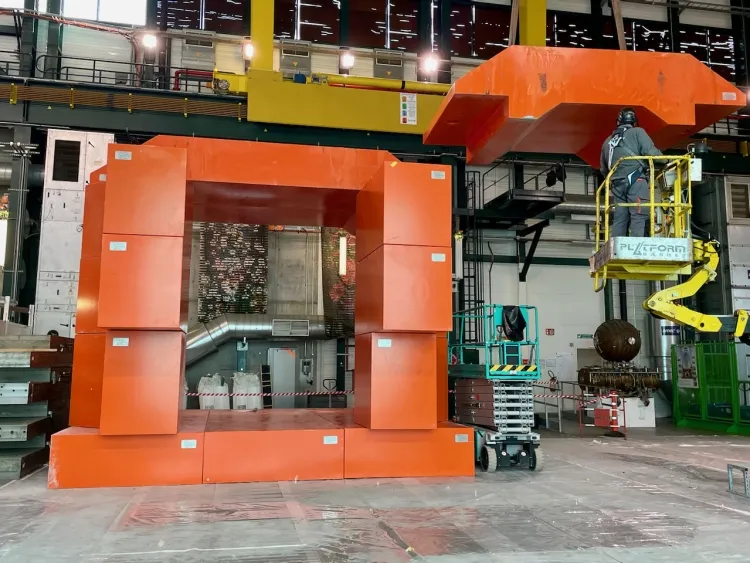
In the same way that loud background noise does not allow us to listen to a conversation or appreciate a piece of music, so too the CMS detector needs a quiet environment to optimize data taking and analysis.
-
Waking up the CMS detector – Part 2
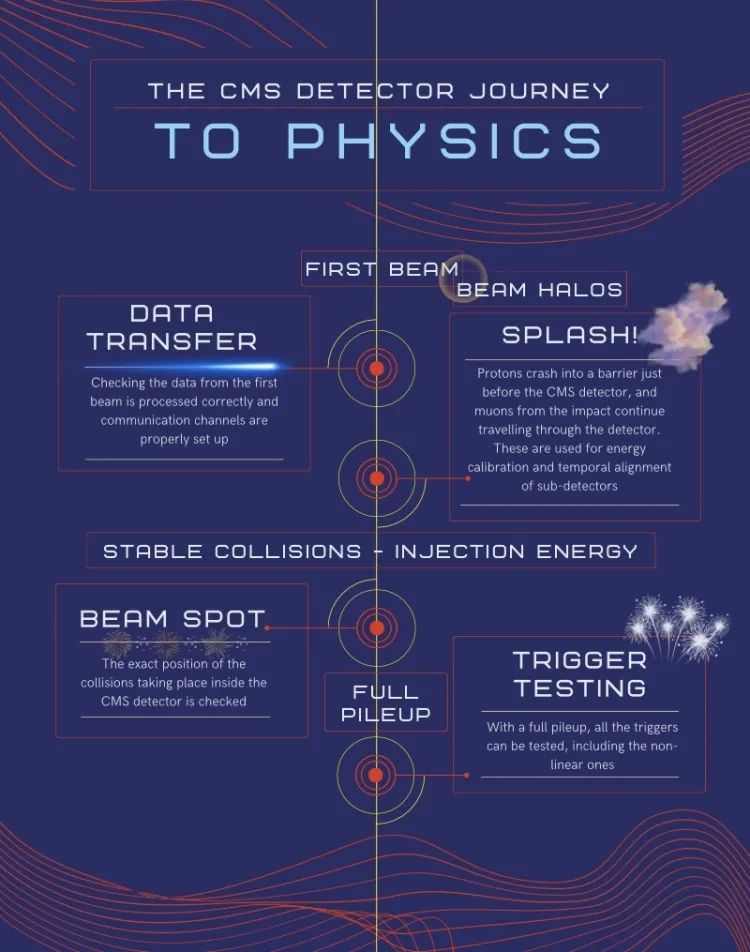
In this short series, we look at the different types of tests and steps needed for CMS to run at the precision the experiment requires.
-
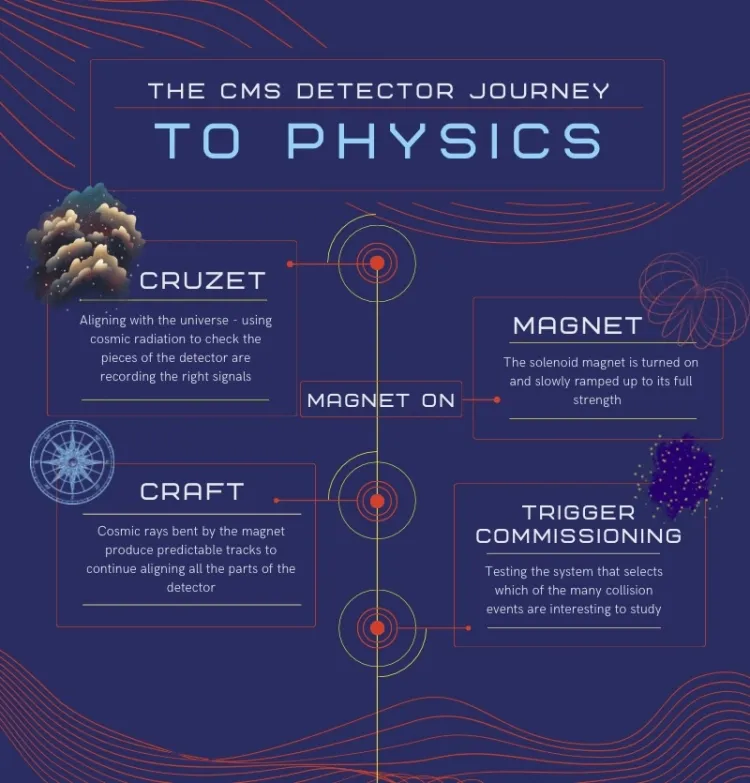
Waking up the CMS detector – Part 1
It is compelling to picture large physics labs with lots of sparks and heavy levers that wake up big, important experiments with sparks and loud bangs.
-
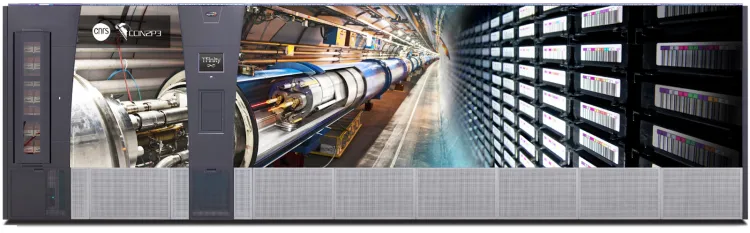
How CMS cleaned up 85’000’000’000’000’000 bytes without touching any original, raw data!
CMS has recently conducted the largest deletion campaign in its history, deleting roughly 85 Petabytes (85’000’000’000’000’000 bytes) of data from the magnetic tapes, in order to free up space for the Run 3 collisions.
-
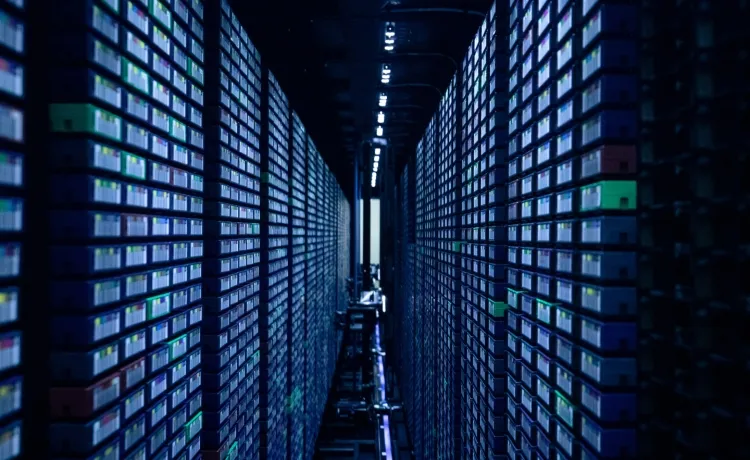
Prompt data processing in CMS
Data taking is restarting in CMS for the continuation of Run 3 – and with it the enormous responsibility of keeping the data safe and making sure it is usable in order to conduct the physics analyses.
-

Problems and solutions: the ECAL leak story
Everything started in early September 2022 while, during the ECAL Operations meeting that we hold every Wednesday morning, our veteran electronics expert, Evgueni, reported that the voltage in a control card was unstable.
-
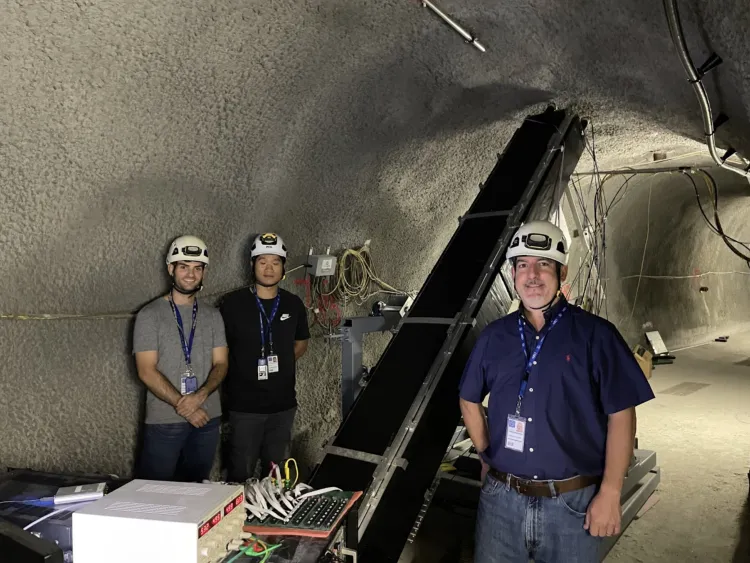
milliQan is getting ready to have a look at the dark
This October, the first component of the milliQan detector has been installed on top of the CMS experimental cavern, and it is now taking data at the high energy of LHC RUN3. The milliQan detector project was proposed as a new LHC experiment in 2016 aiming to look for the so-called milli-charged particles, theoretical subatomic…
-
Busy summer at CMS
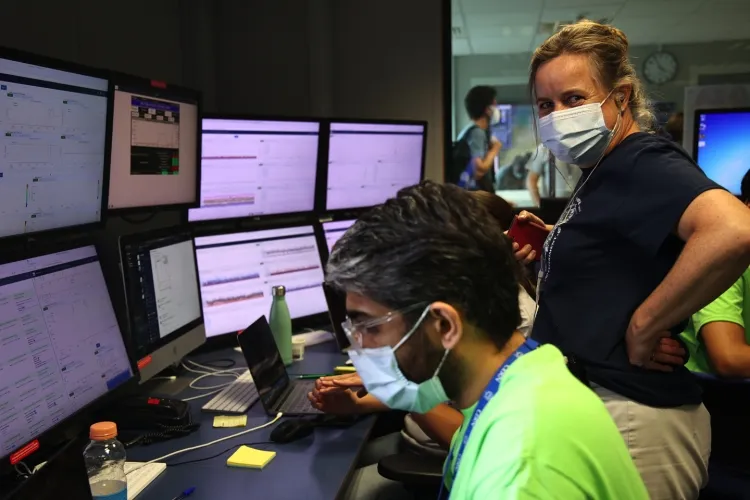
While the CMS detector takes data 24 /7, physicists take turns in the control room every 8 hours, ensuring continuity of operations and keeping the detector running continuously.