
Category: Physics
-
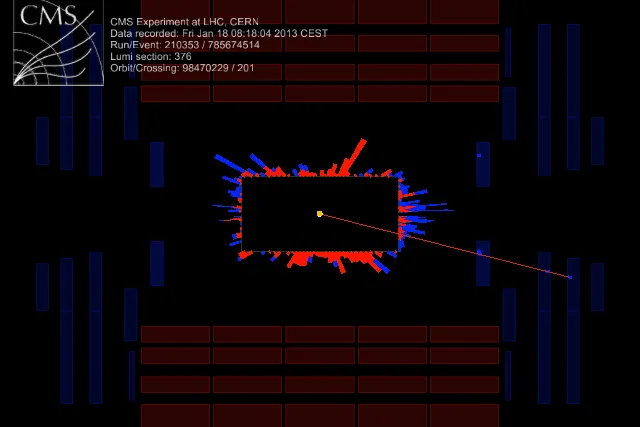
Colliding different particle species: the LHC’s proton-lead run
The new year brings a new type of collision at the LHC: the accelerator will smash protons and lead nuclei together, allowing CMS and the other LHC experiments to study the cold nuclear matter we expect these collisions to produce.
-
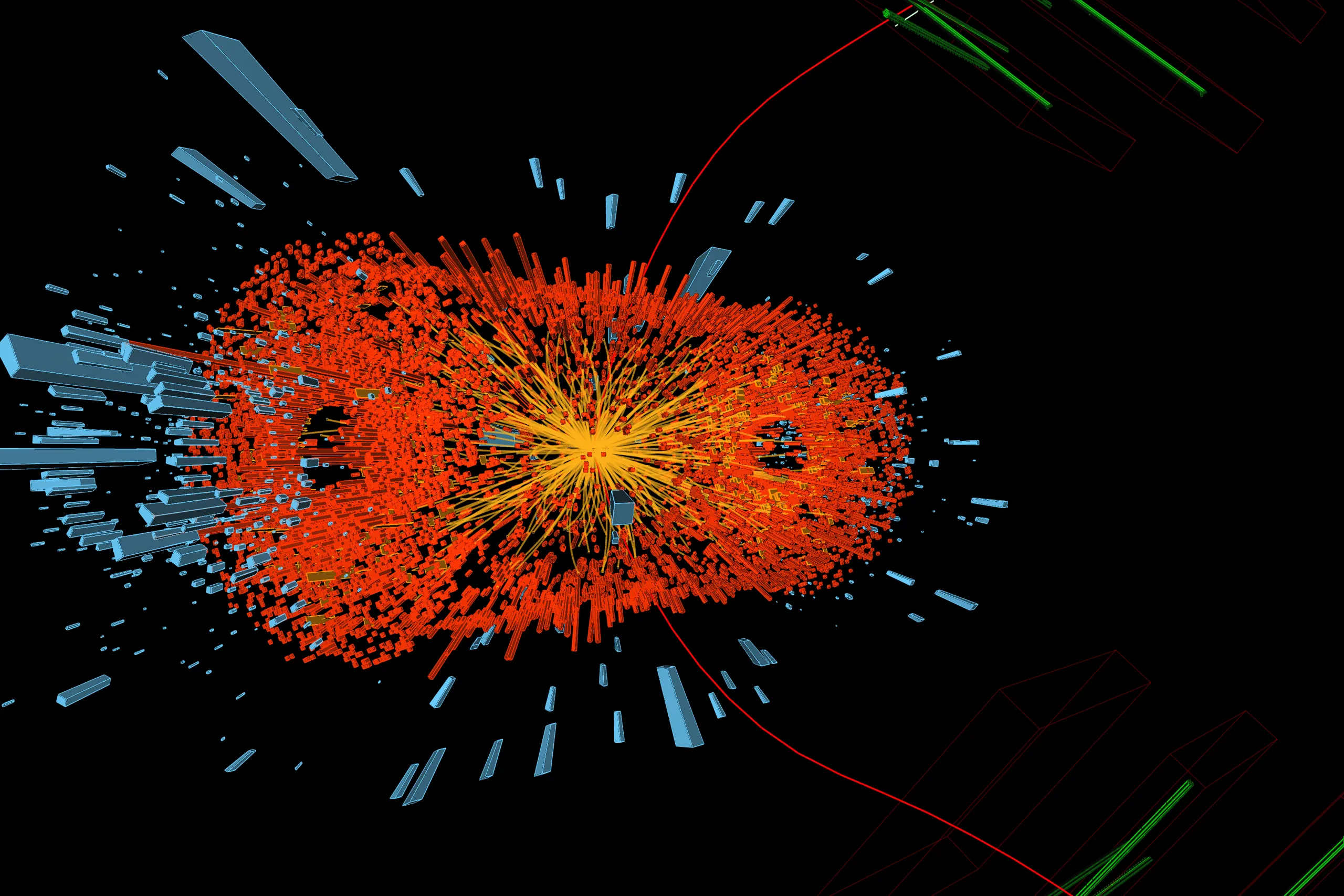
CMS observes melting of Upsilon particles in heavy-ion collisions
In 2011, CMS presented early evidence that Upsilon (Υ) particles produced in lead-lead collisions “melt” as a consequence of interacting with the hot nuclear matter created in these heavy-ion interactions.
-
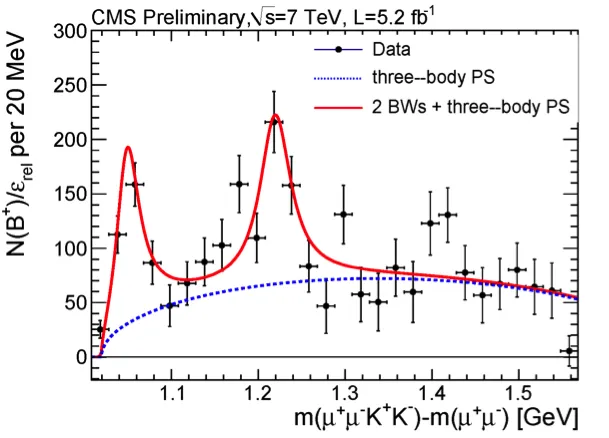
CMS observes unexplained particle states
In the vast particle landscape, there are, to borrow a phrase, known knowns (the Standard Model, for example), unknown unknowns (exotic extensions of the Standard Model and beyond), and those ever-interesting known unknowns.
-
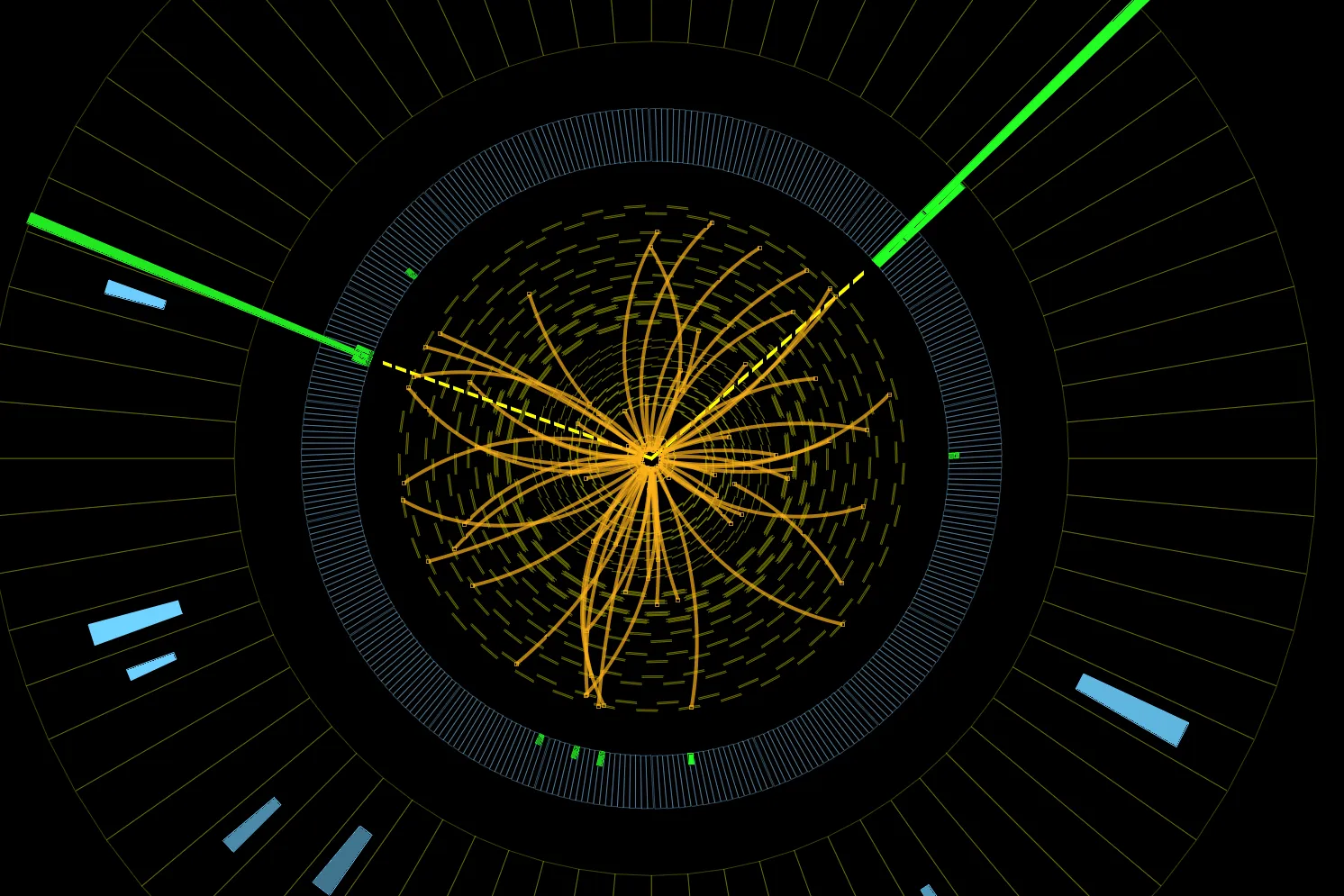
Highlights of CMS results presented at HCP
Kyoto, Japan on 12–16 November 2012
-
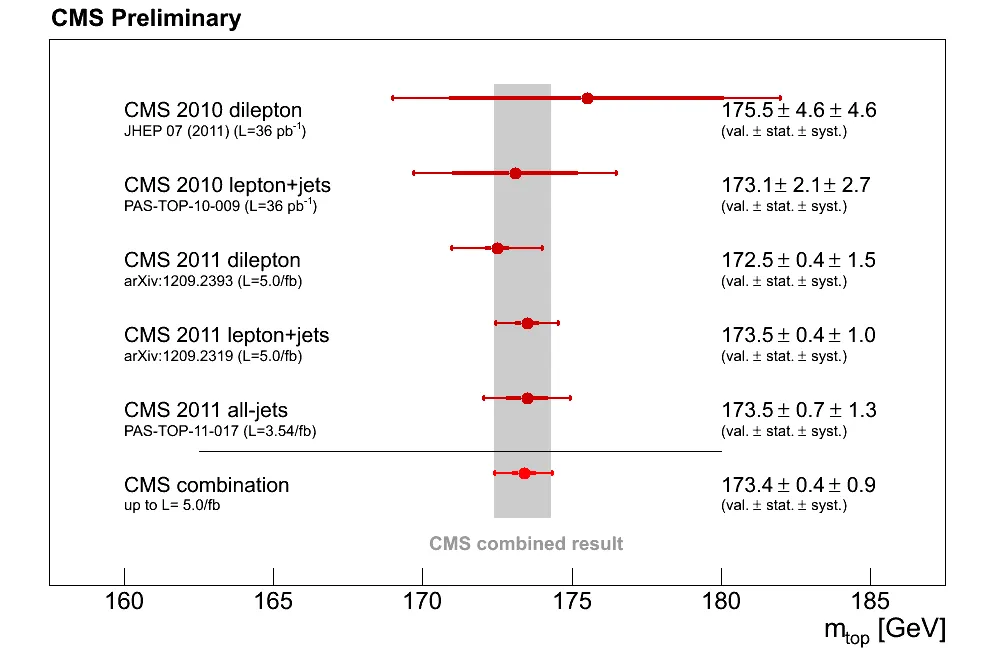
Precision measurements using top quarks at CMS
Amongst all known elementary particles, the top quark is peculiar: weighing as much as a Tungsten atom, it completes the so-called 3rd generation of quarks and is the only quark whose properties can be directly measured.
-
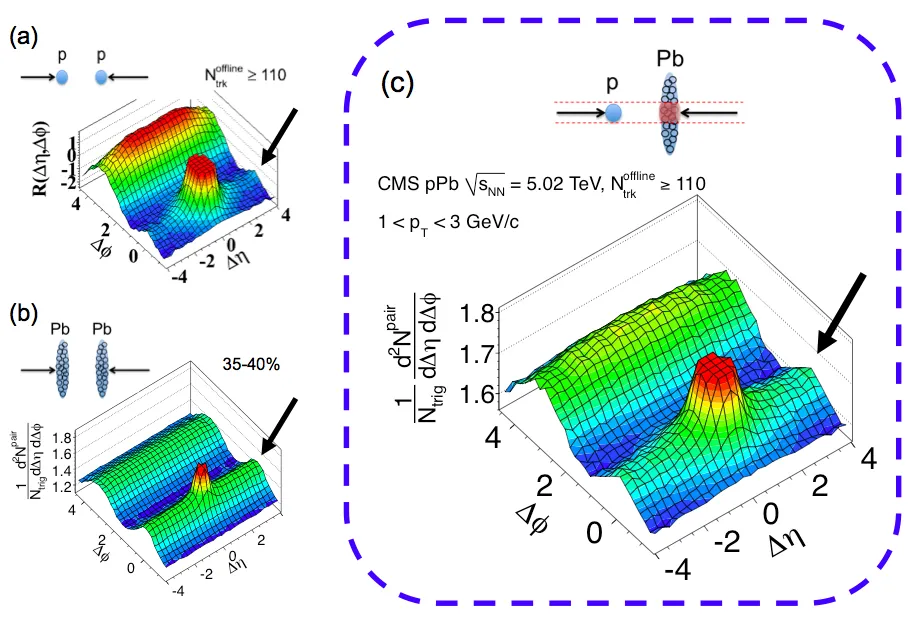
Unexplained long-range correlations observed in pPb collisions
CMS has published its first paper on proton-lead (pPb) collisions, describing the observation of a phenomenon that was previously seen first in nucleus-nucleus collisions but also detected by CMS in proton-proton (pp) collisions.
-

Hunt for the platypus particle
All of the atoms in our bodies are made of electrons, protons and neutrons, and the protons and neutrons can be further broken down into quarks.
-

Asymmetric collisions: smashing protons into lead nuclei
Our best understanding of the early Universe tells us that a dense medium, known as the quark-gluon plasma (QGP), existed in the first microseconds after the big bang.
-
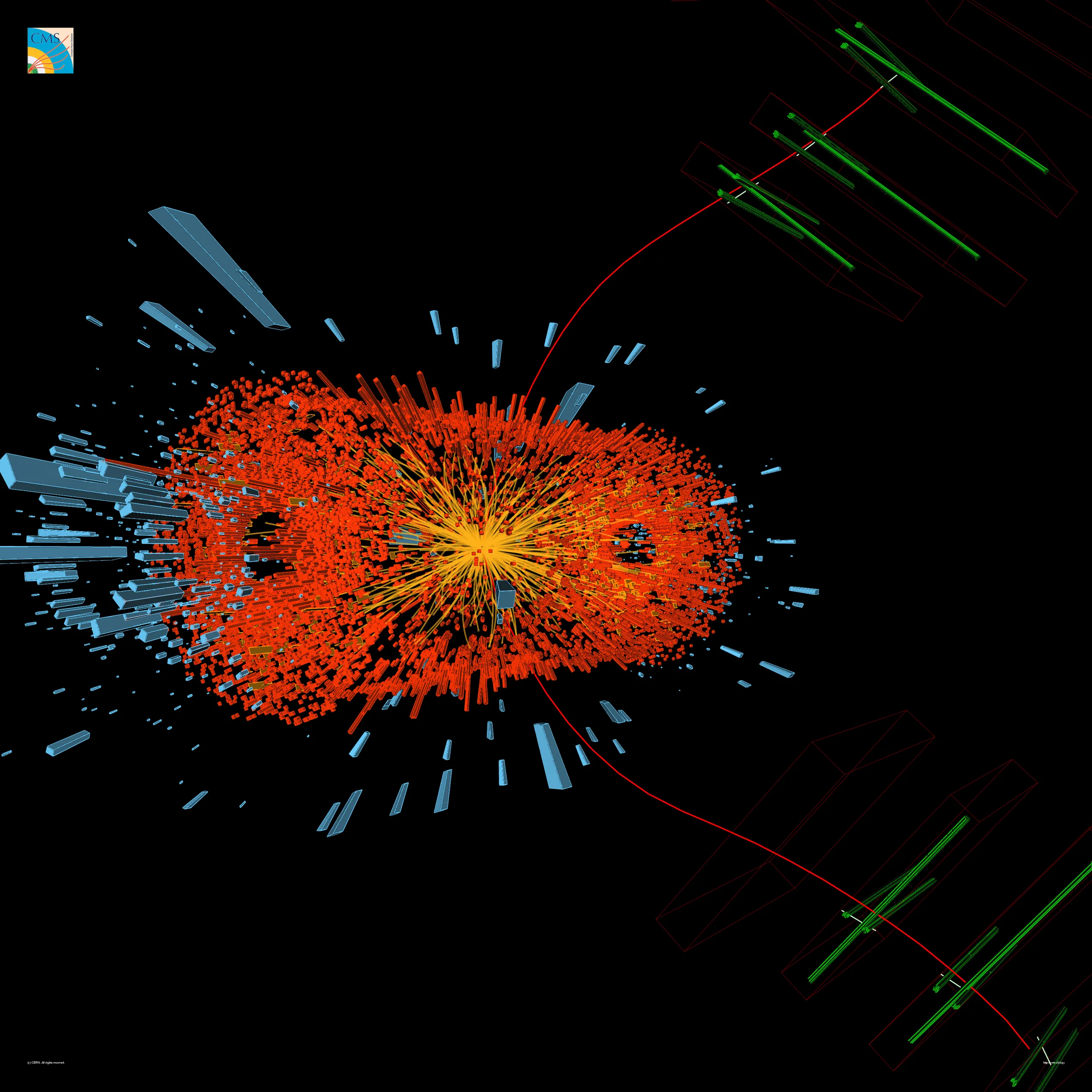
New CMS heavy ion results for Quark Matter 2012 conference
The Quark Matter 2012 conference, held in Washington DC from 13-18 August 2012, brings together experimental and theoretical experts in the area of heavy-ion physics.