
Category: Physics
-
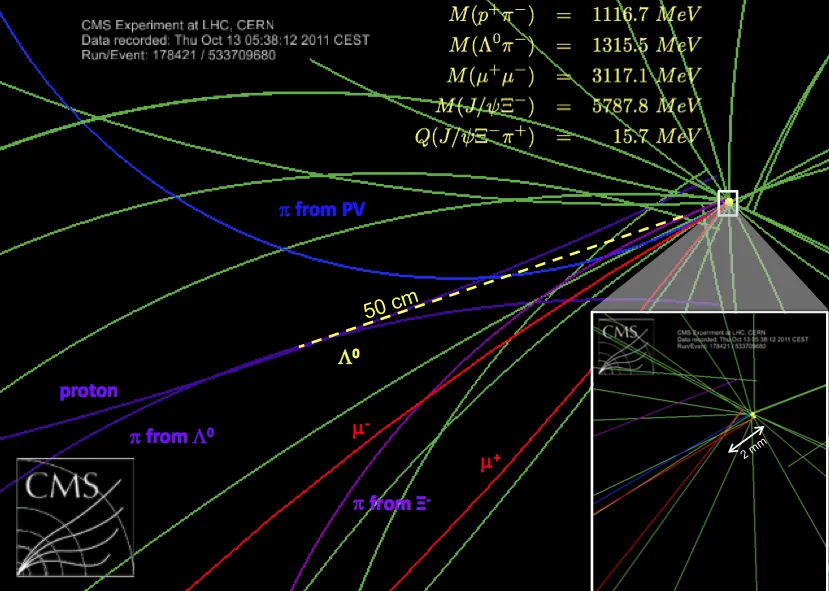
Observation of a new Xi_b^*0 beauty particle
New, excited Ξ*b0 baryon observed with more than 5 standard deviations significance at a mass of 5945.0 ± 2.8 MeV.
-
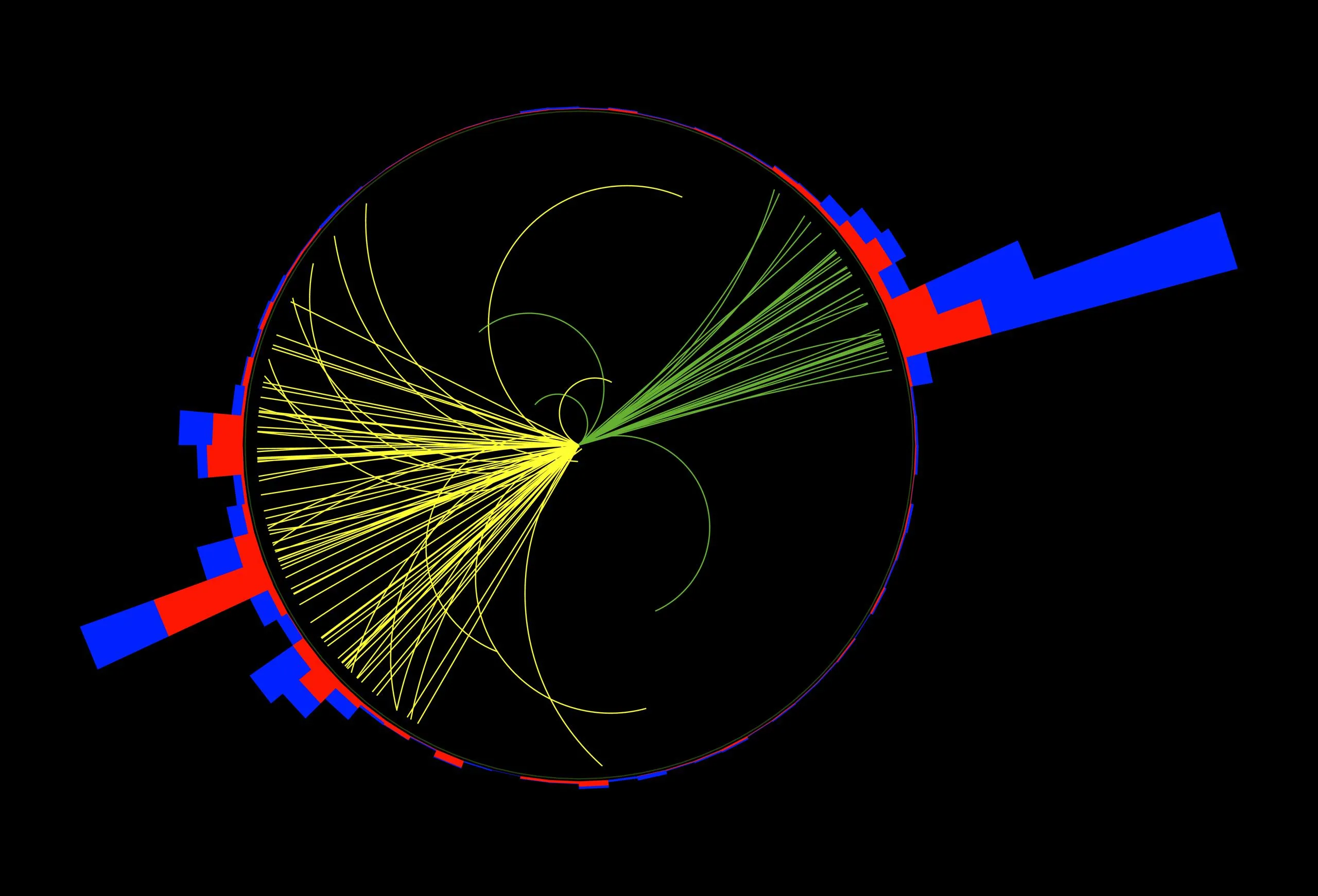
Search for anomalous ttbar production in the highly-boosted all-hadronic final state
A search is presented for a massive particle, generically referred to as a Z′, decaying into a t-tbar pair.
-
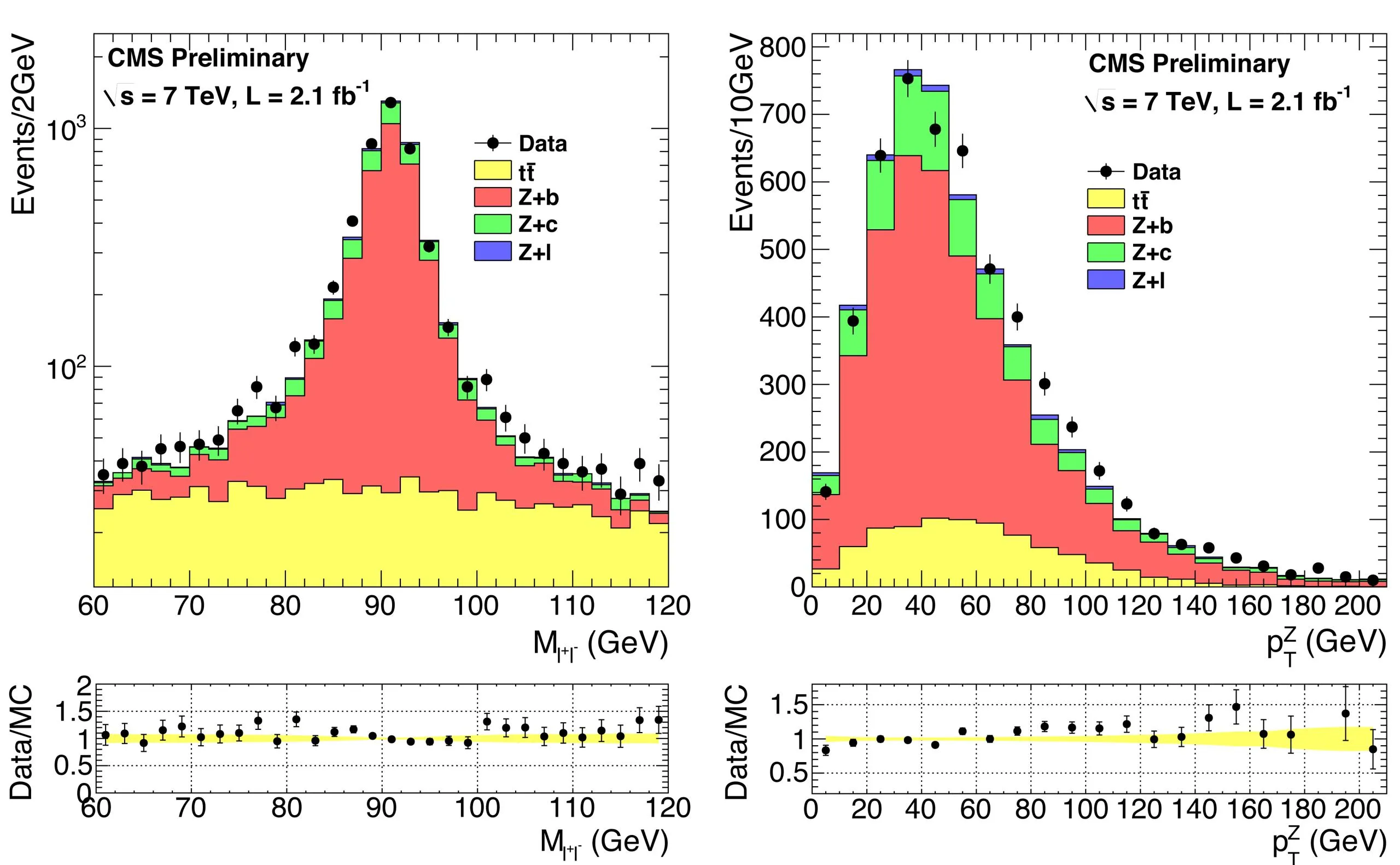
Measurement of the Z/gamma*+b-jet cross section in pp collisions at sqrt(s) = 7 TeV
The production of b jets in association with a Z/γ* boson is studied using proton-proton collisions delivered by the LHC at a centre-of-mass energy of 7 TeV and recorded by the CMS detector.
-
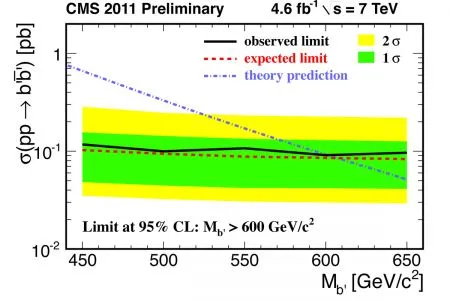
Search for heavy bottom-like quarks in 4.9 inverse femtobarns of pp collisions at sqrt(s) = 7 TeV
Results are presented from a search for heavy bottom-like quarks, produced in pairs in pp collisions at √s = 7 TeV, undertaken with the CMS experiment at the LHC.
-
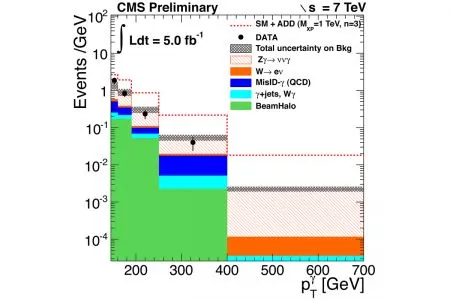
Search for Dark Matter and Large Extra Dimensions in pp Collisions Yielding a Photon and Missing Transverse Energy
Results are presented from a search for new physics in which the final state contains a photon (γ) and missing transverse energy (MET).
-
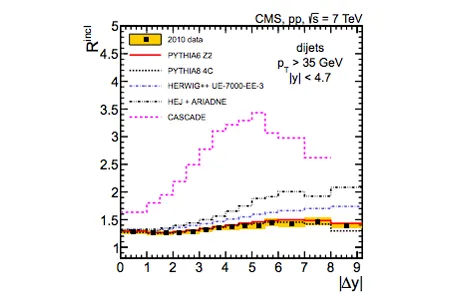
Ratios of dijet production cross sections as a function of the absolute difference in rapidity between jets in proton-proton collisions at sqrt(s) = 7 TeV
A study of dijet production in proton-proton collisions was performed at √s = 7 TeV for jets with pT > 35 GeV and |y| < 4.7[1] using data collected with the CMS detector at the LHC in 2010. Events with at least one pair of jets are denoted as “inclusive”, while events with exactly one…
-
New “Physics Performance and Dataset” Group at CMS
The LHC provides CMS with millions of collisions each second, and a wealth of physics data is obtained from the proton-proton interactions.
-
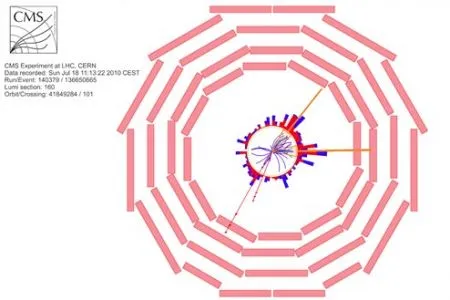
Physics Analysis Summaries for Moriond Conference (Electroweak)
CMS has presented a rich variety of results at the Electroweak Interactions and Unified Theories sessions of the Rencontres de Moriond conference in La Thuile, Italy.
-
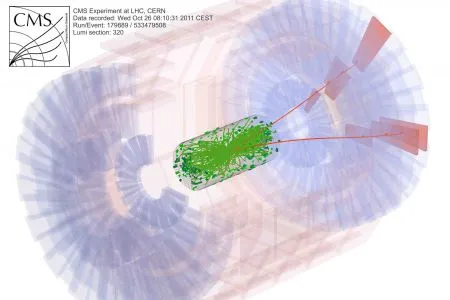
Search for rare decay of neutral B mesons to two muons
At a CERN seminar today, CMS presented results for the search for new physics in the decay of Bs and B0 mesons to two muons, taking into account all of the 4.9 fb−1 of data collected in 2011. The results — upper limits of 7.7 x 10⁻⁹ (Bs) and 1.8 x 10⁻⁹ (B0) at 95%…