
Category: Physics
-
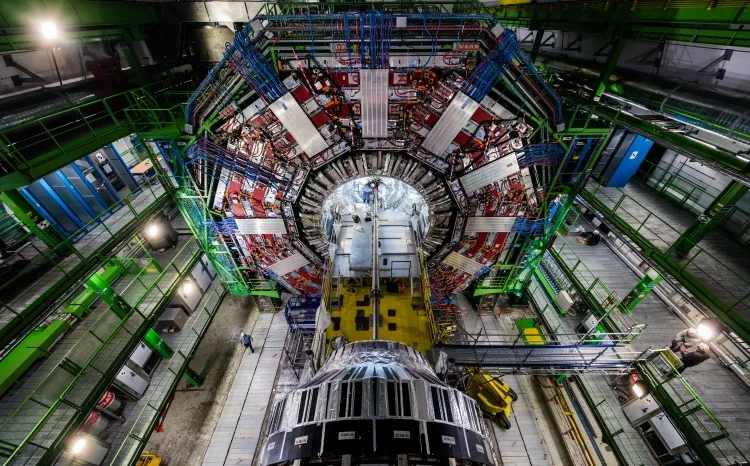
Symmetric or not? That’s the question!
The heaviest known particle, the top quark, is one of our main gateways to search for new phenomena that are not addressed by our existing knowledge, the standard model of particle physics (SM), either through precision measurements of the top quark’s properties or by considering it as a decay product of (never seen before) heavier…
-
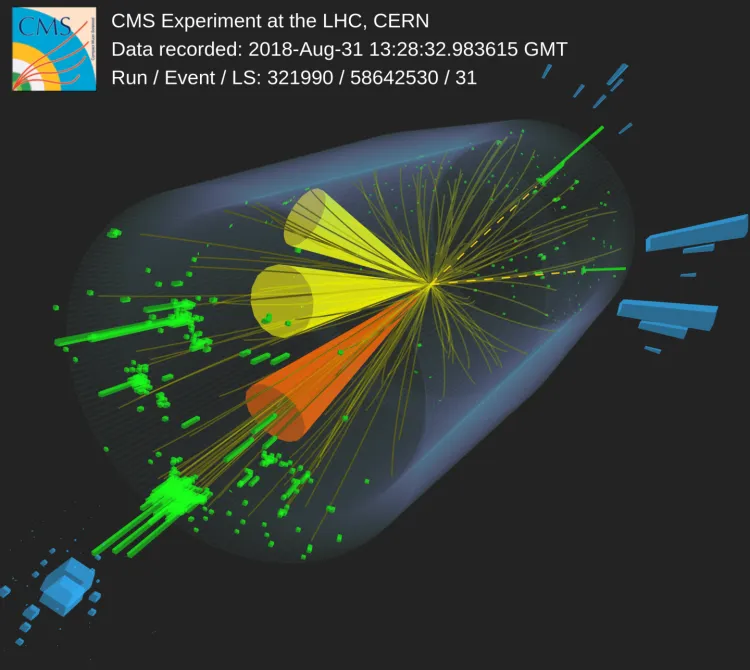
Hunting for new particles with light from the Higgs boson
Have you heard of vector-like quarks?
-
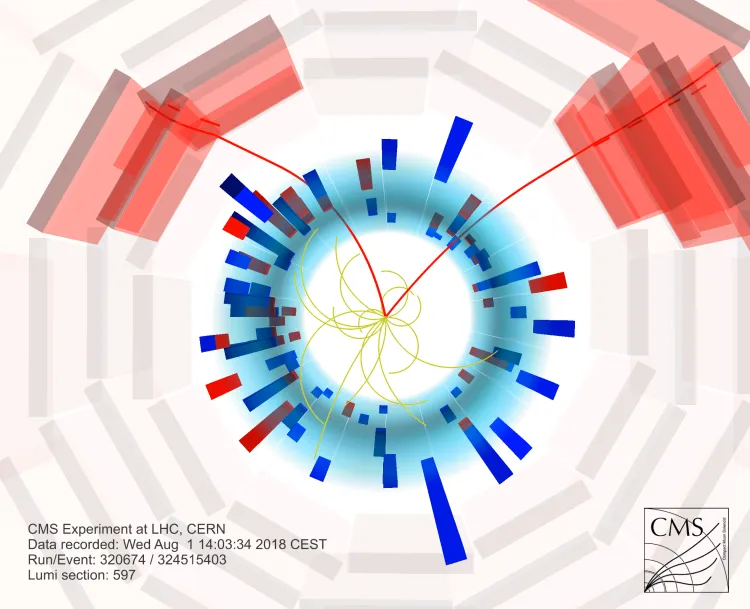
New study of rare B meson decays to two muons
Rare events, such as a total solar eclipse or a supernova explosion, are fascinating and stimulate our imagination.
-
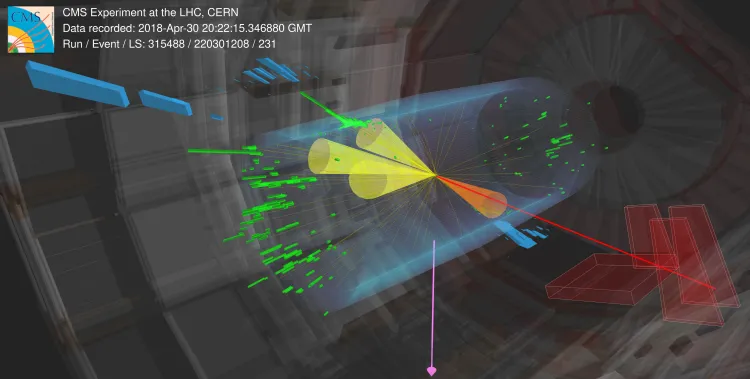
Jet cones with top flavour
CMS has developed a new method to measure the properties of the top quark with high precision.
-
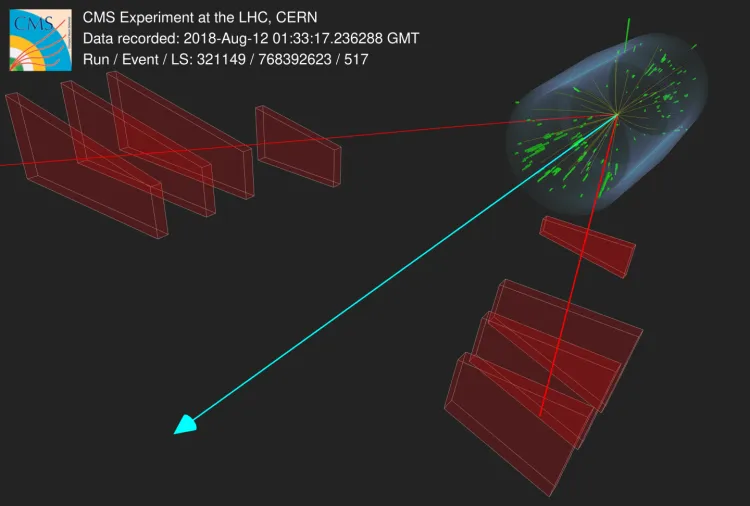
Protons that do not break up at the LHC
The processes that are mostly studied at the LHC are caused by energetic collisions where the protons break up into their constituents, the quarks and gluons, which recombine to form composite hadrons.
-
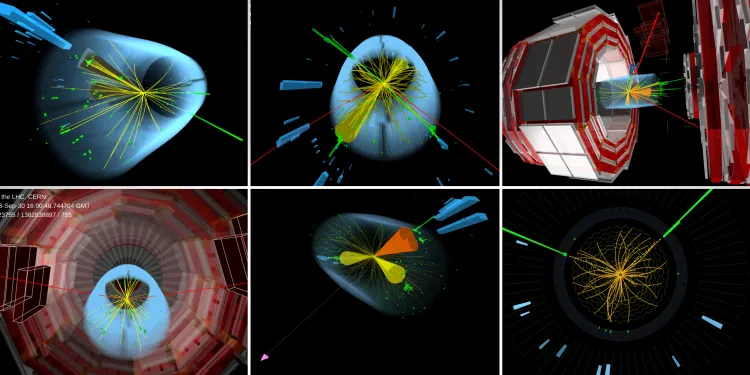
The Higgs Boson turns 10: Results from the CMS experiment
Exactly ten years ago, on the 4th of July 2012, the ATLAS and CMS experiments announced the discovery of a new particle compatible with the long-sought Higgs boson.
-
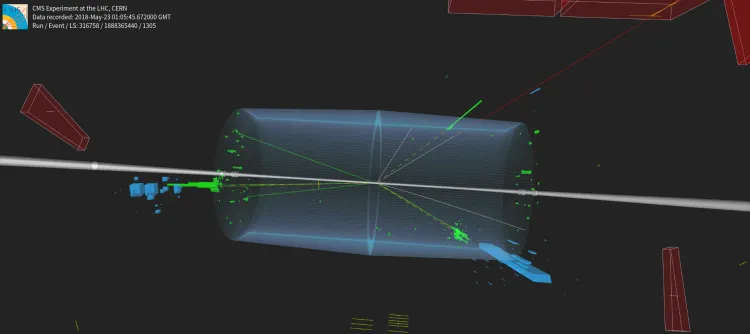
The LHC as a W-photon collider
The LHC can be viewed not only as a hadron collider, but also as a boson collider.
-
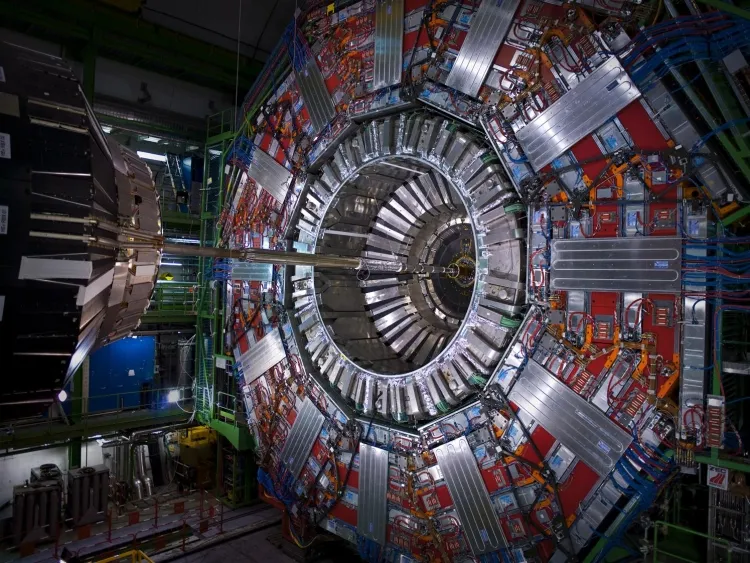
How are the quarks moving?
The Large Hadron Collider, LHC, collides protons at an energy of 13 TeV — thirteen thousand times the mass of a proton.
-
Two collisions for the price of one
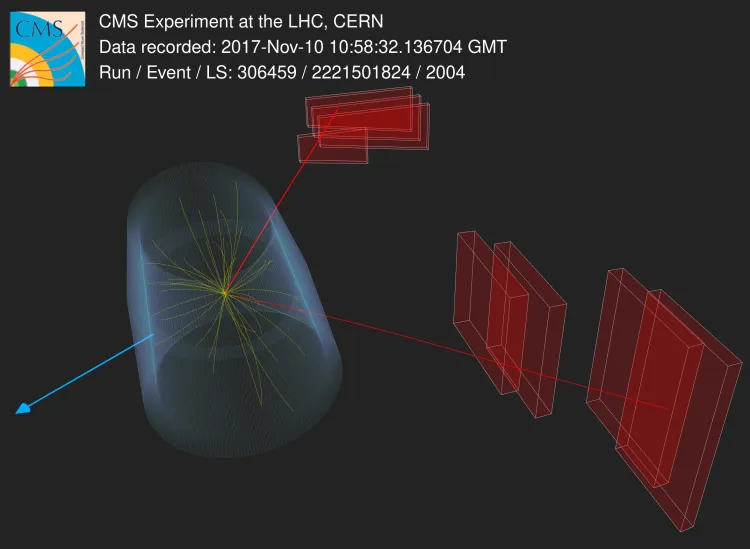
The Large Hadron Collider (LHC) offers a unique opportunity to probe the internal structure of protons, with great precision and at unprecedented energies.
-
W, Z, and Higgs bosons as portals to exotic physics
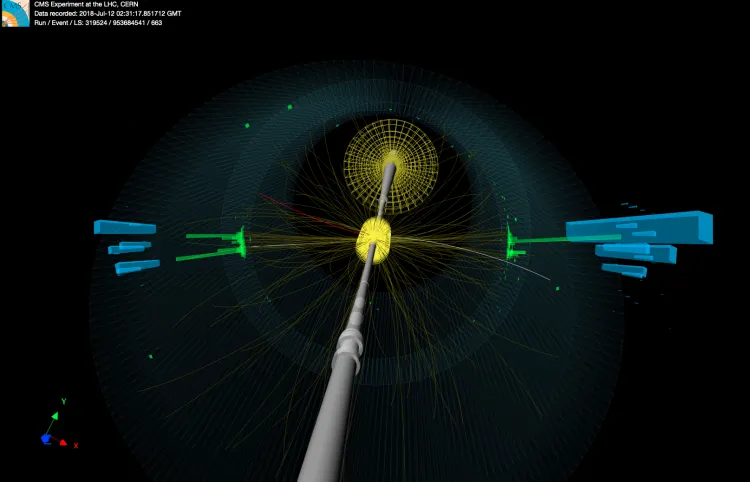
Since the LHC collider started operating, more than a decade ago, several trillions of proton-proton collisions have taken place.