
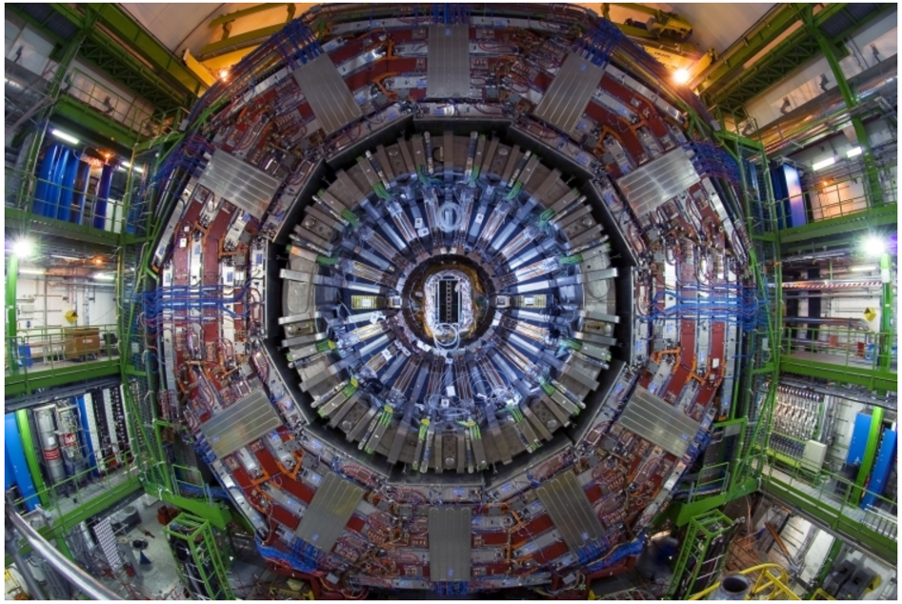
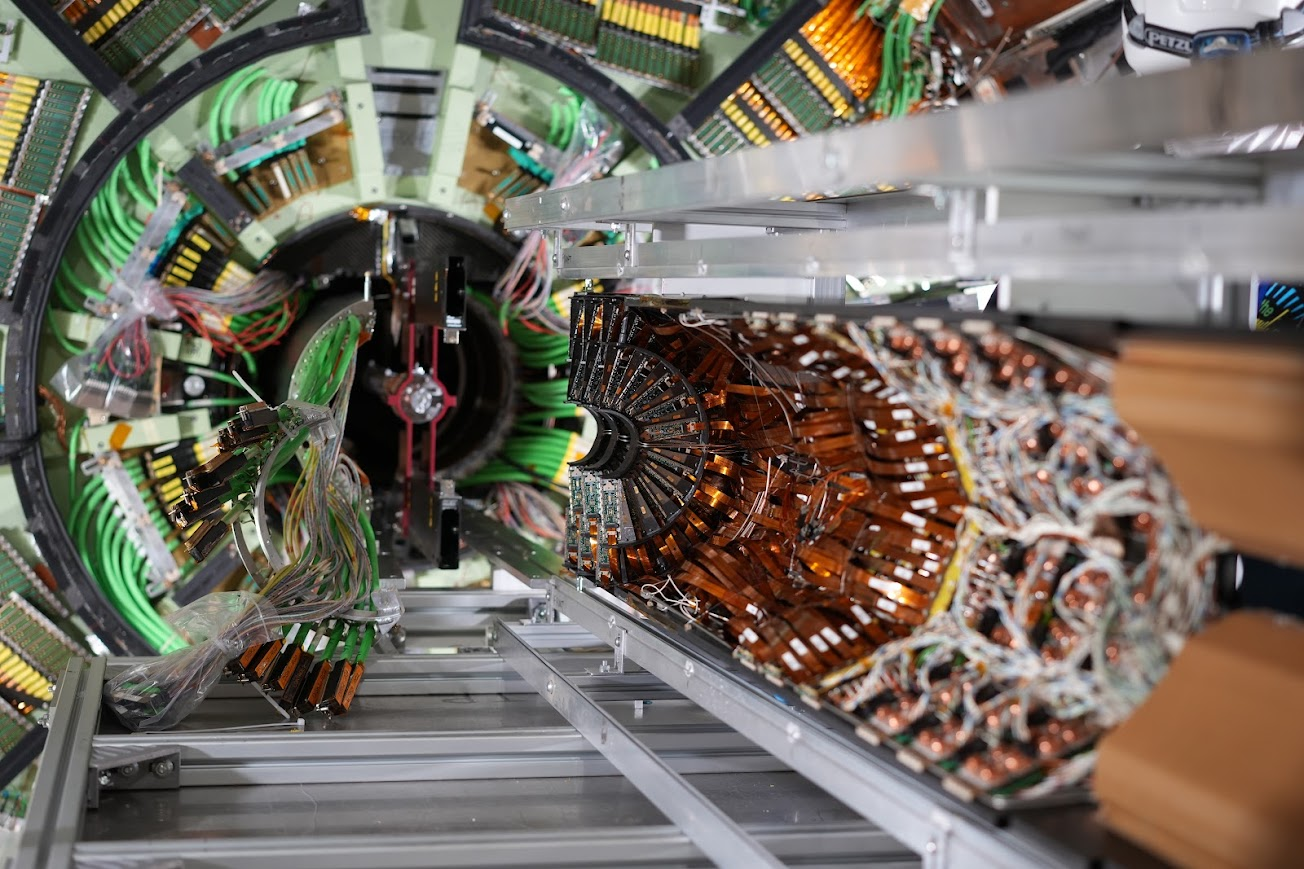
The core of the CMS experiment, the tracker pixel detector, has been removed after a decade of successful operation.
Acting as the detector’s innermost tracker, it recorded signals left by charged particles, enabling scientists to reconstruct their paths and identify the precise points in which collisions occurred. Despite being exposed to more collisions – and therefore more radiation – than originally anticipated, he pixel detector completed its mission with about 95% of its channels still active, ensuring excellent track and vertex reconstruction until the very end.
The first upgrade of the pixel detector, known as Phase-1, originally proposed in 2010, was installed in early 2017 during the year-end technical stop and began collecting data during LHC Run 2, specifically between 2017 and 2018.
The detector contained around 1 800 silicon modules, each equipped with 66 000 rectangular pixels measuring just 100x150 μm2, about the width of a human hair. Together, they formed a detector of around 120 million pixels, allowing CMS to capture particle collisions with exceptional precision.
These modules were mounted on support structures consisting of four cylindrical barrel layers and three disks on either side. Due to years of exposure to intense radiation, the innermost layer of the barrel was replaced in spring 2021.
After a short commissioning period, the pixel detector successfully collected data during LHC Run 3, between 2022 and 2026.

The silicon sensors inside each module recorded the signals left by charged particles. By linking these signals together in the 3D space, scientists could reconstruct the charged particle’s trajectories, known as “tracks”, as they travelled away from the collision point. From these tracks, the exact position of the collision, or the “primary vertex”, could be determined. Scientists could also identify “secondary vertices”, occurring when short-lived particles decayed a short distance away from the original collision. This capability was of fundamental importance for the CMS physics program, as particles containing beauty (b) quarks play a crucial role in many relevant processes, including the most frequent decay modes of both the Higgs boson and the top quark.
Operating and maintaining the pixel detector, located closest to the beam collision point, was a significant challenge. Over a decade of operation in one of the most demanding environments in experimental physics, a dedicated team of physicists, engineers and technicians worked continuously to keep it performing at its best. Like any complex system, the pixel detector had to cope over the years with hardware limitations, evolving running conditions and the gradual effects of radiation damage. Mitigating negative effects required constant monitoring and regular adjustments to ensure the best achievable performance.
In June 2026, the pixel detector and the silicon strip tracker were switched off for the last time. Together, these two detectors constituted the world’s largest silicon tracking system, and now a new Phase-2 silicon detector is now being built for the HL-LHC.
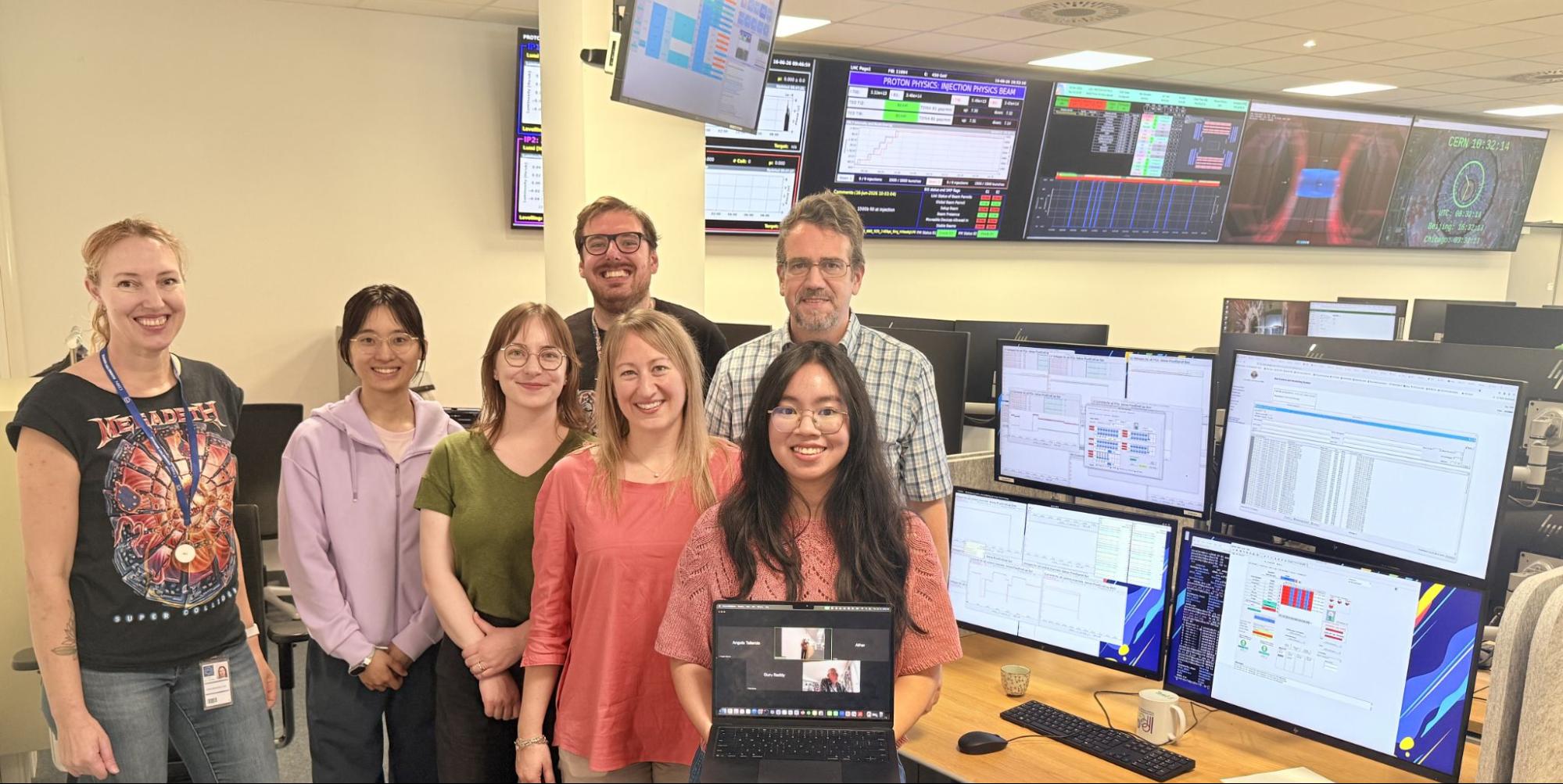
ABOVE: The pixel and strip detector operations teams after the detectors were switched off for the final time, bringing an era of CMS tracking to a close, June 2026. [Credits: Jérôme Daguin]
During the summer, the CMS detector was opened, and in September the pixel detector finally became accessible. The extraction took place over the course of one week and required particular caution, as these components had spent years closest to the collision point and had therefore become radioactive through material activation.
The operation began with the removal of the four quarters of the forward detector, two from each end of CMS. Each quarter, consisting of 3 half disks, was extracted together with the cables and services needed for its operation. After the extraction, it was sealed in a protective container and lifted to the surface.

The two halves of the barrel detector were extracted next. The detector is currently on the surface, awaiting detailed inspection so that lessons from the long-term operation of this extraordinary device can inform future generations of tracking detectors

The extraction team brought together both experienced members, who had contributed to the installation of the current detector, as well as younger collaborators working on the Phase-2 upgrade, gathering hands-on experience for the future.
For many, it was both the end of a chapter, as well as the beginning of another. The team responsible for building and operating the detector is now passing the baton to this new generation of scientists preparing its successor, the Inner Tracker, a pixel detector with 4,000 modules currently being assembled all around the world.
Read more:
- The CMS Phase-1 pixel detector upgrade (paper: 2021 JINST 16 P02027)
- Pixel detector installation after refurbishment (CMS News: 2021)
- Extraction of the forward pixel detector (photos):