
Tag: HIN
-
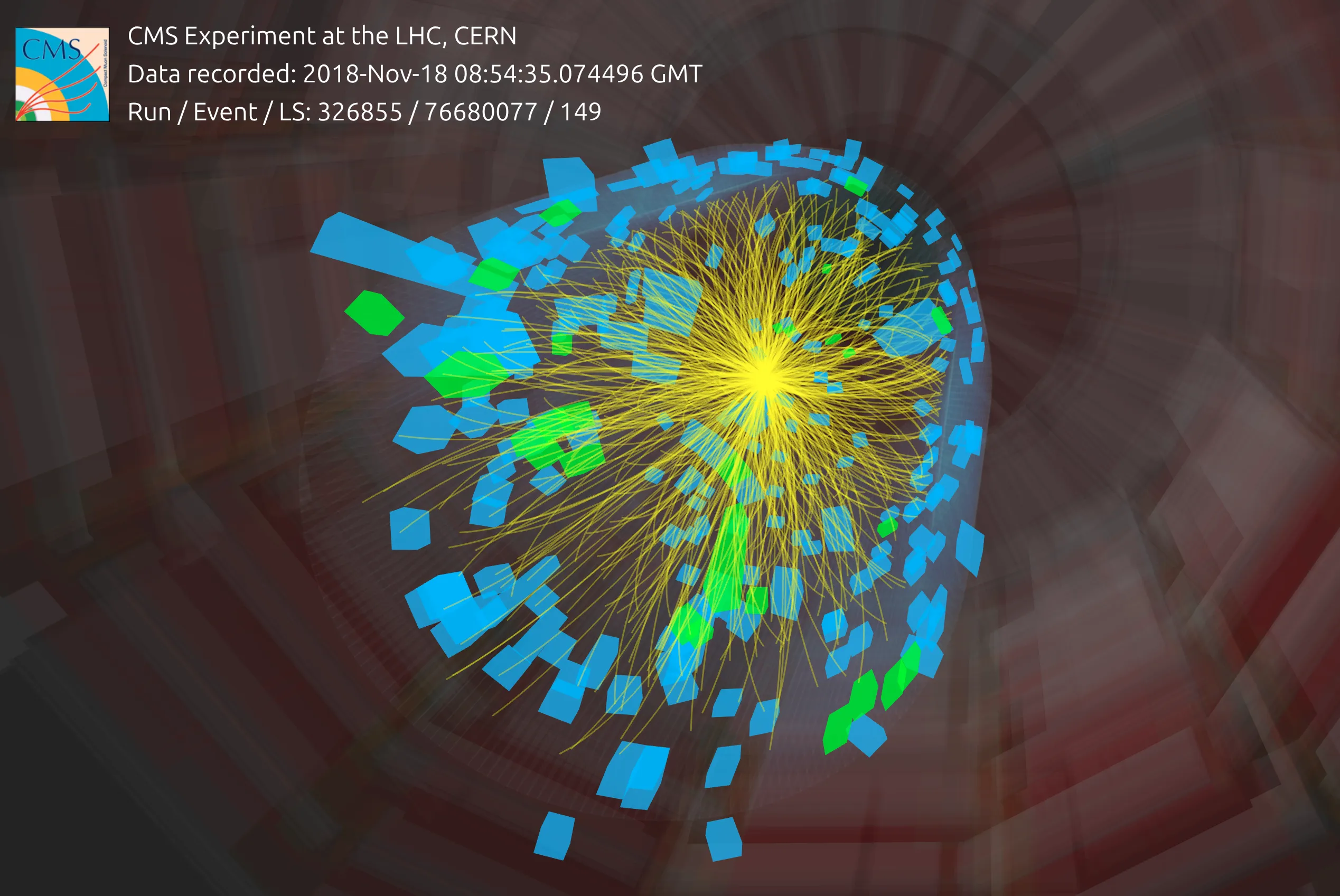
Carried by the current: how charm quarks probe quark–gluon plasma
For the first time, the CMS experiment applies a technique called “event-shape engineering” to understand how charm quarks respond to the expanding geometry of the quark–gluon plasma formed in heavy-ion collisions.
-
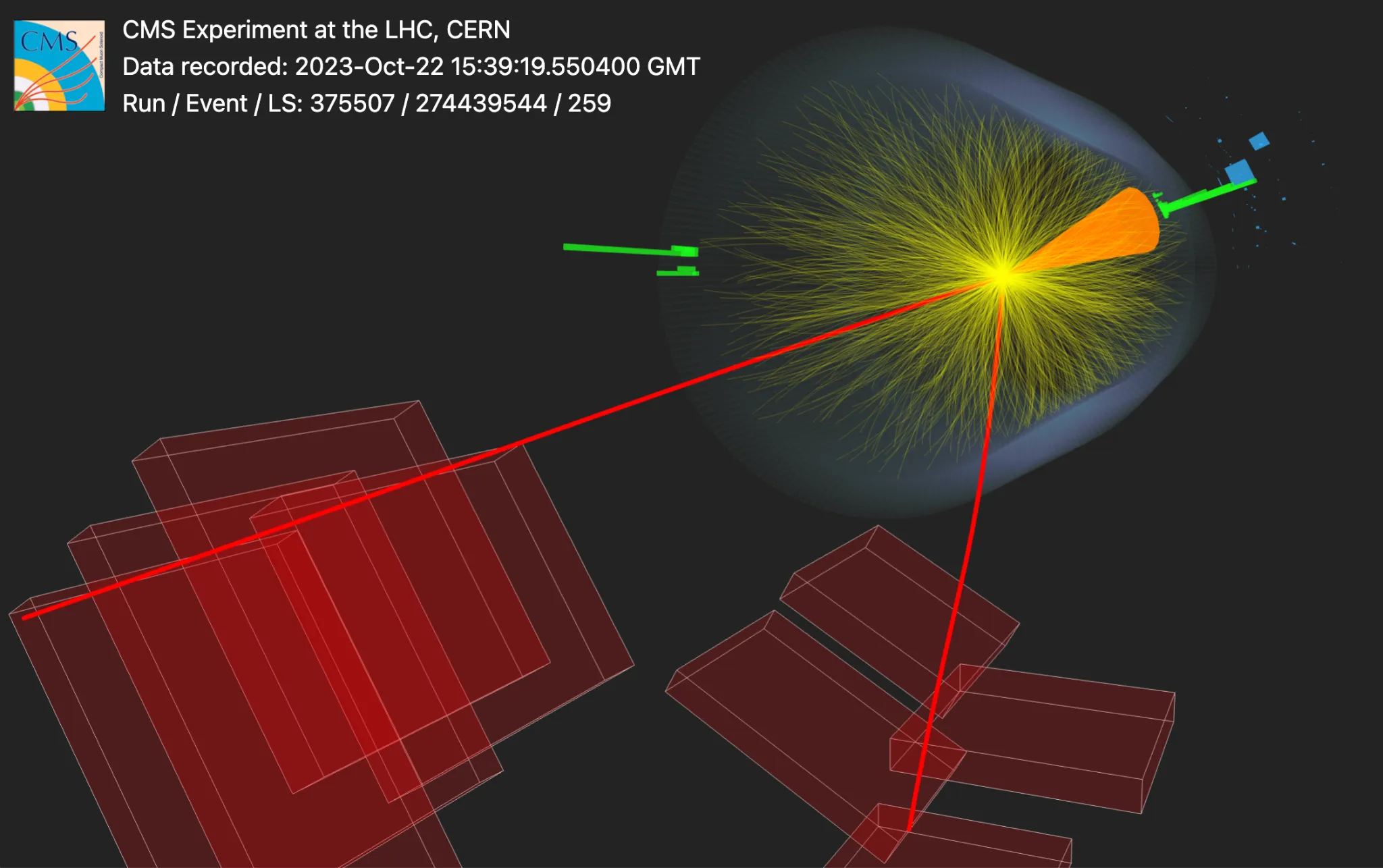
A messenger of the hottest matter in the Universe
Using Z bosons, the CMS experiment reveals new details of how the Quark-Gluon Plasma drains energy from energetic quarks and challenges current theoretical descriptions.
-
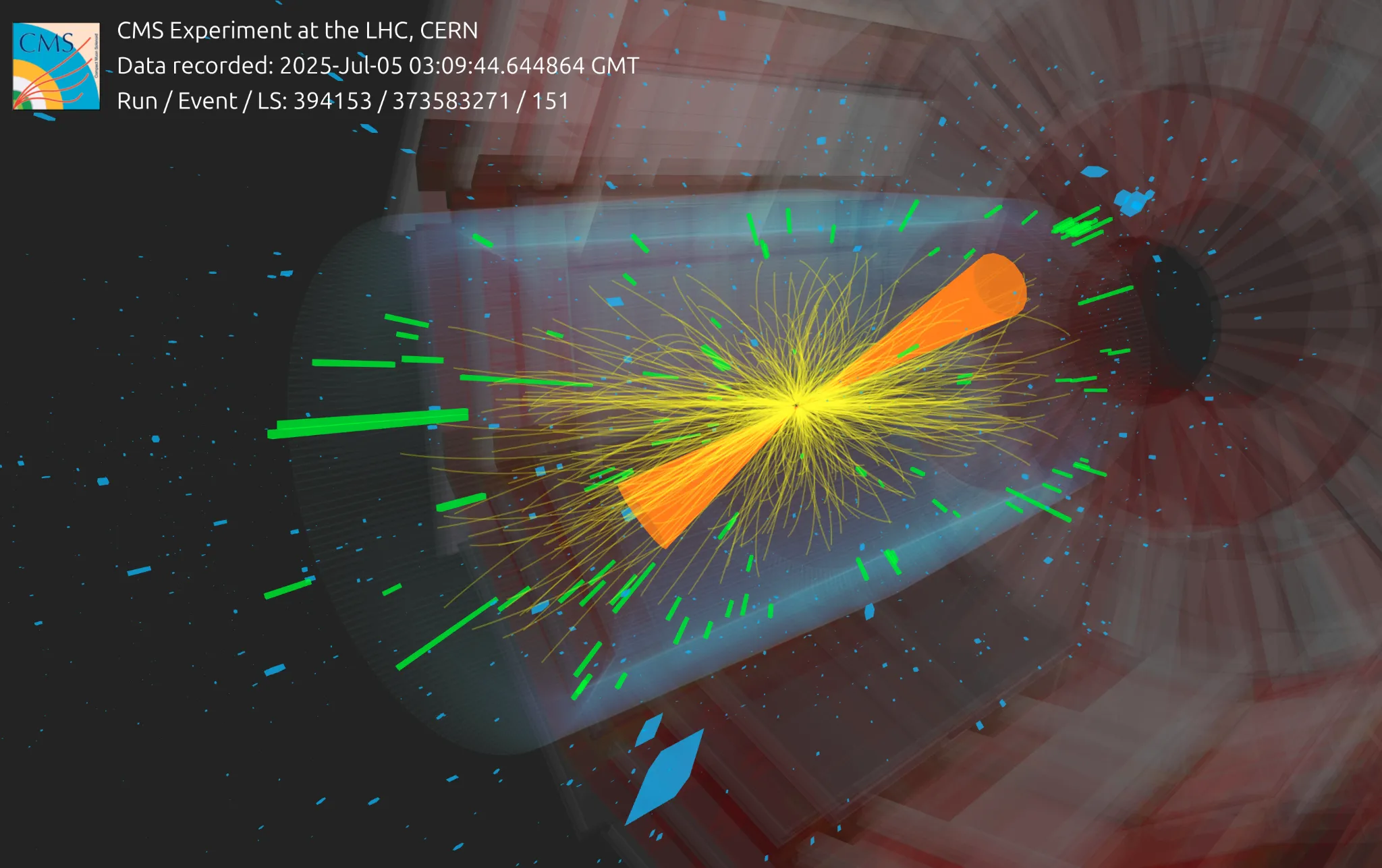
CMS maps the directional patterns of high-momentum particles in light-ion collisions
As high-transverse momentum particles punch through the plasma formed from light ions, the CMS experiment sees a possible imprint from the initial shape of the collisions For the first time, CMS has observed both suppression of high transverse momentum (pT) particles and anisotropy in their azimuthal distributions in a small collision system, which together represent…
-
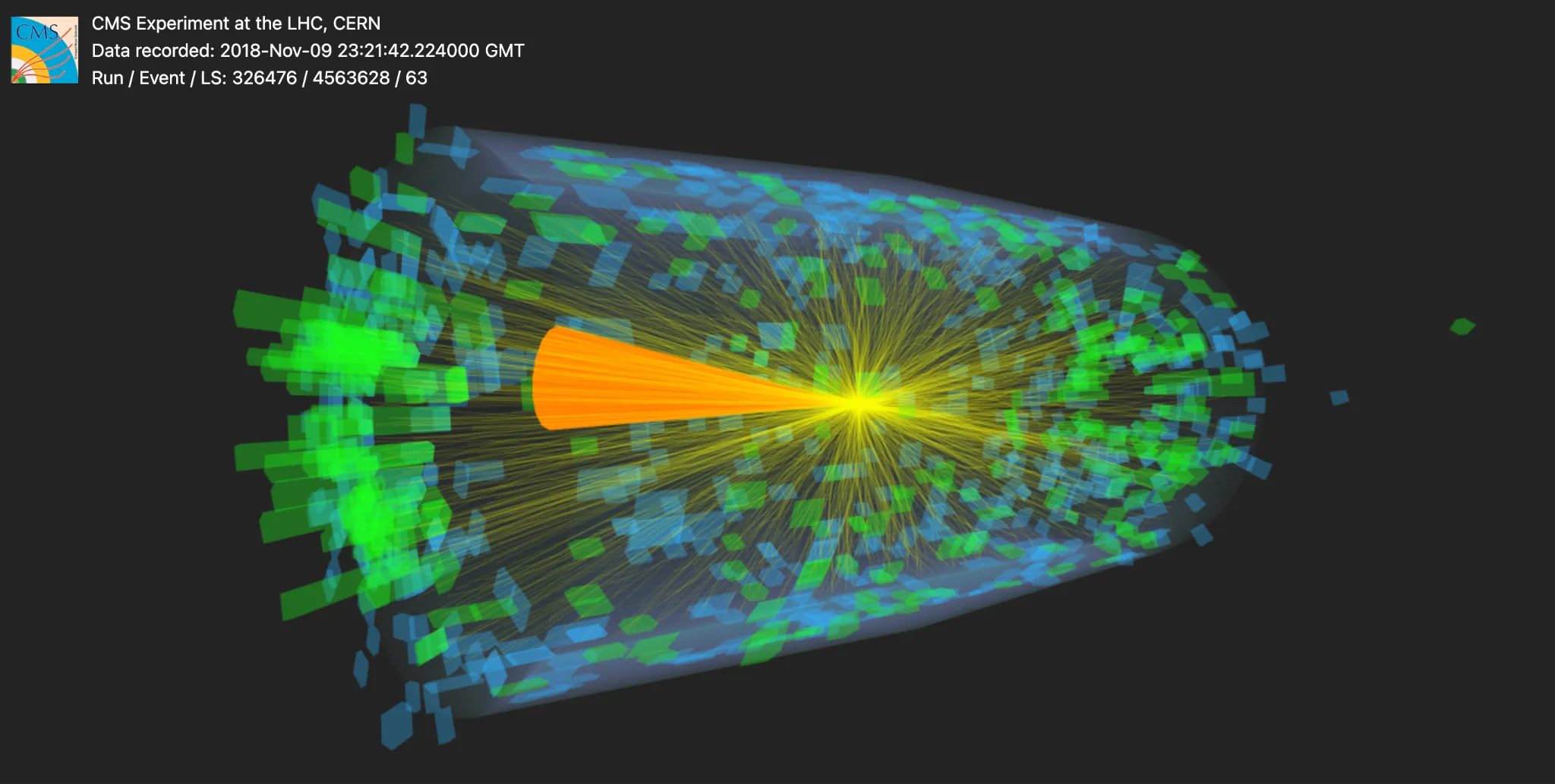
Probing the charm-quark dead cone in the quark-gluon plasma
CMS investigates charm-quark jets in heavy-ion collisions and finds no evidence of additional radiation inside the dead cone When lead ions collide at the Large Hadron Collider, they create an extreme state of matter known as the quark-gluon plasma (QGP), a hot and dense medium similar to the one that filled the Universe shortly after…
-
In the wake of partons
The CMS experiment reports the first observation of a “wake” created by a fast-moving parton in quark-gluon plasma.
-
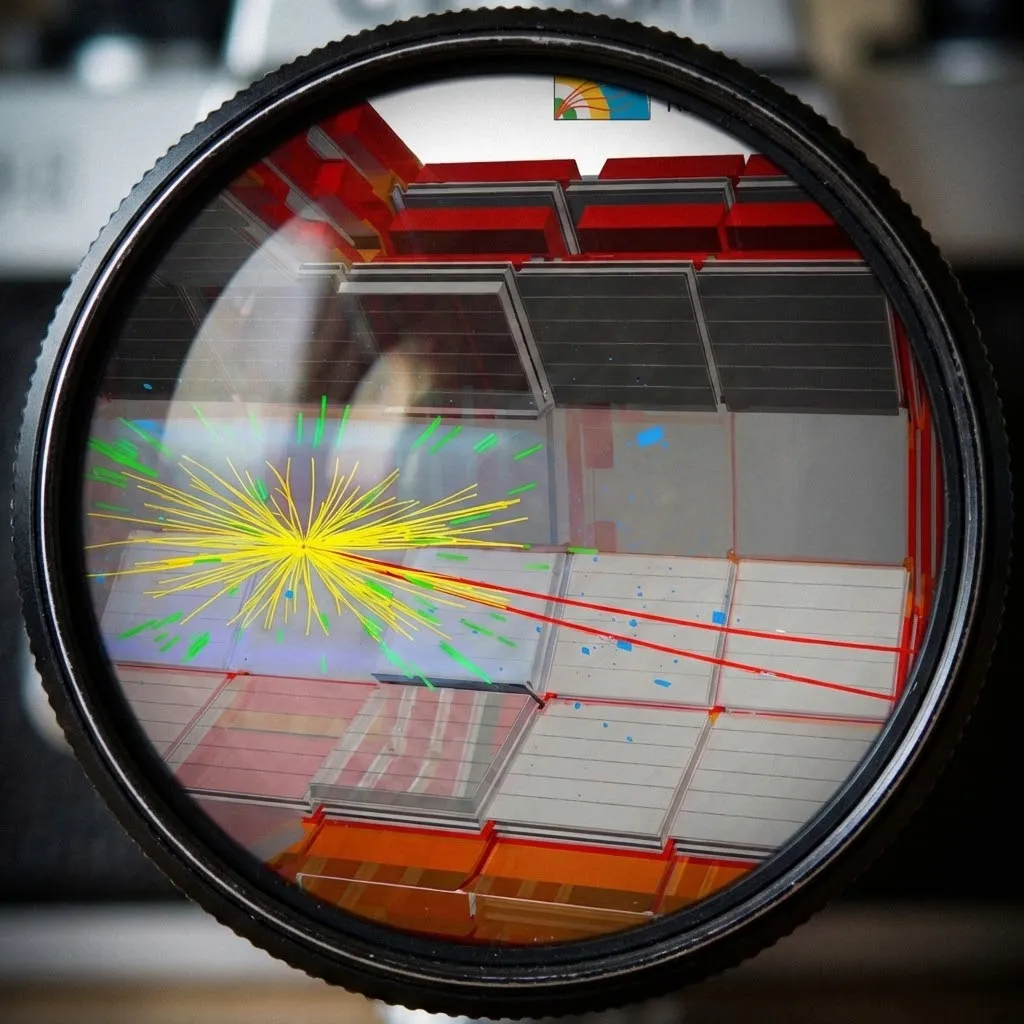
ϒ mesons in light-ion collisions
The CMS experiment presents the first measurement of ϒ mesons – bound states of a bottom quark-antiquark pair – in oxygen-oxygen and neon-neon collisions, and strongly indicates that their production is suppressed owing to quark-gluon plasma droplets formed in such light-ion collisions.
-
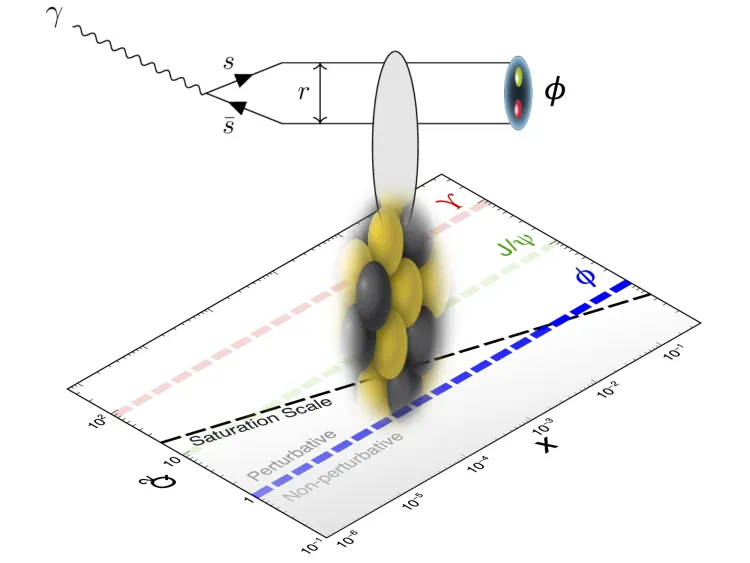
Examining the fringes of gluon densities in highly energetic nuclei
The CMS Collaboration reports the first measurement of coherent ϕ meson photoproduction, establishing a powerful new tool to explore the dense nuclear matter in the transition regime from perturbative to nonperturbative QCD.
-
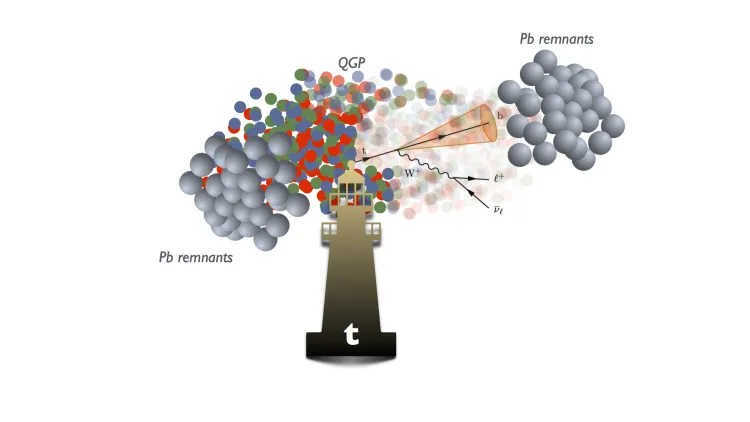
Clash of the titans: top quark meets lead ions
Five years after the first evidence that heavy metal hits the top quark, CMS now observes the clash of two titans with higher precision at unprecedented energy.
-
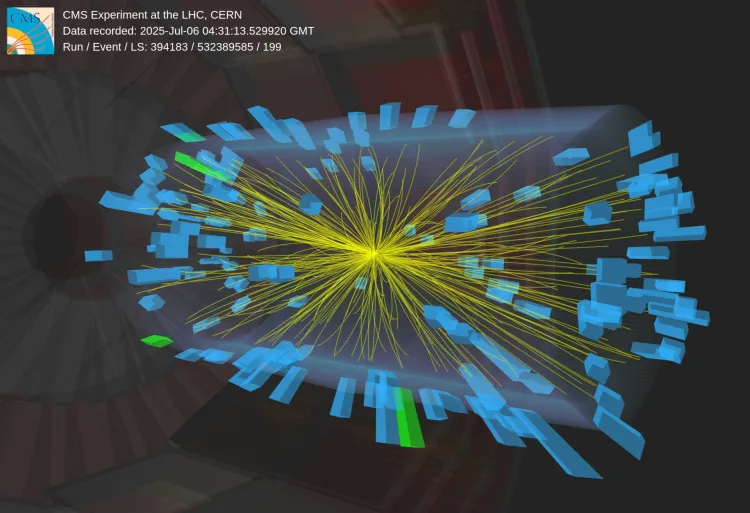
Collective motion in tiny systems: oxygen and neon collisions as a window into nuclear structure
CMS observes collective motion of particles in light-ion collisions, providing robust evidence of how initial nuclear geometry maps to final-state flow.
-
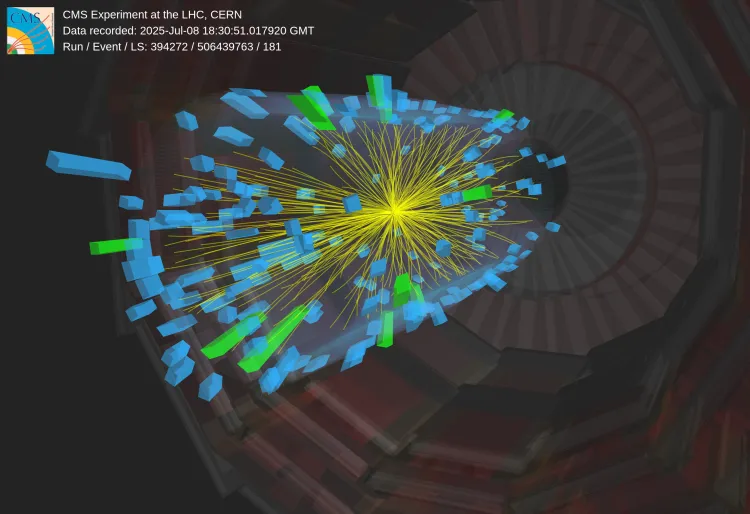
LHC’s first oxygen-oxygen and neon-neon collisions – CMS spots an interesting pattern
The CMS experiment has analyzed the first-ever neon-neon collisions, looking for signs of quark-gluon plasma.