
Tag: HIN
-
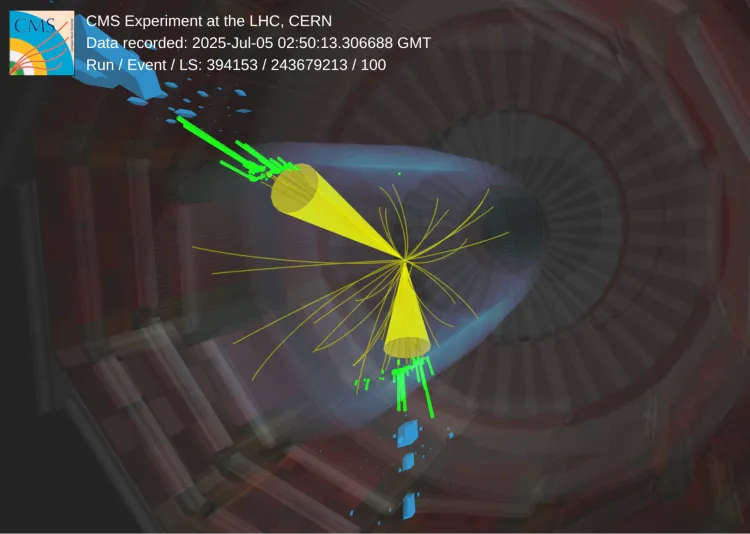
LHC’s first oxygen collisions – CMS spots signs of small-scale quark-gluon plasma
CMS scientists study the first-ever oxygen-oxygen collisions at the LHC, and observe signs of quarks and gluons losing energy when they travel through quark-gluon plasma – a state that existed just after the Big Bang.
-
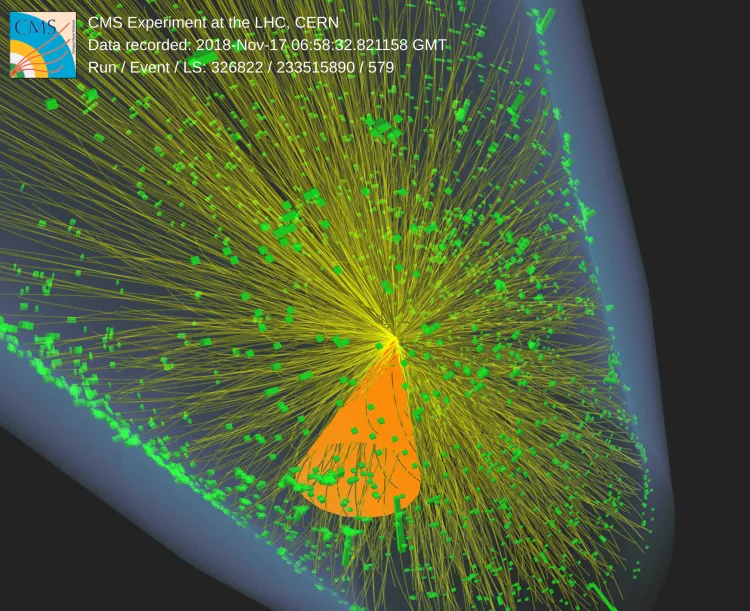
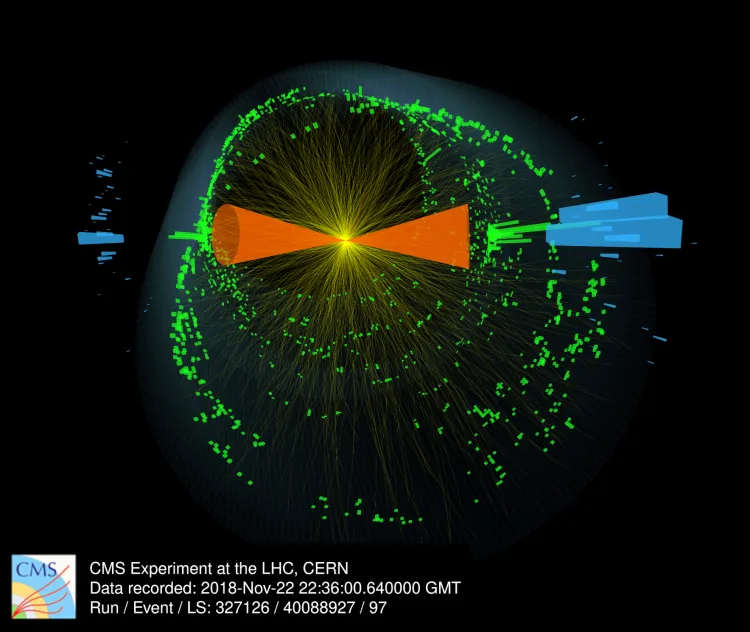
Looking for early vacuum-like emissions in jets in heavy ion collisions
CMS explores the early stages of jet evolution in heavy-ion collisions When heavy ions such as lead (Pb) collide in the LHC, a new state of matter called the quark-gluon plasma (QGP) is formed.
-
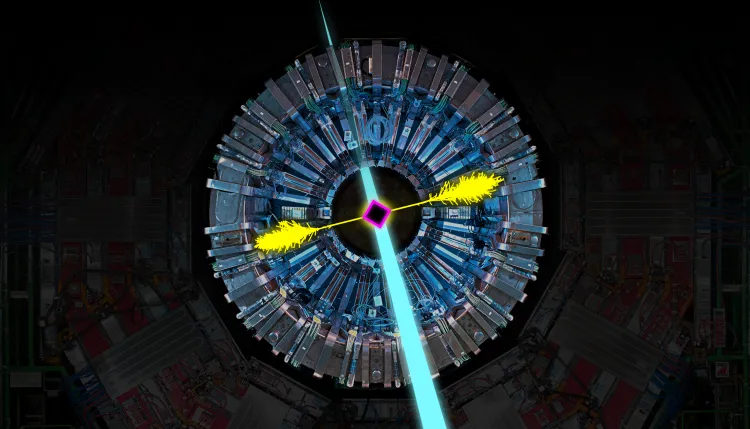
The “Large Photon Collider”: CMS observes scattering of light by light at the LHC
CMS scientists discover some of the rarest collisions that the LHC can produce – such as the scattering of light by light – and learn more about the quantum nature of electromagnetism, search for new particles, and much more.
-
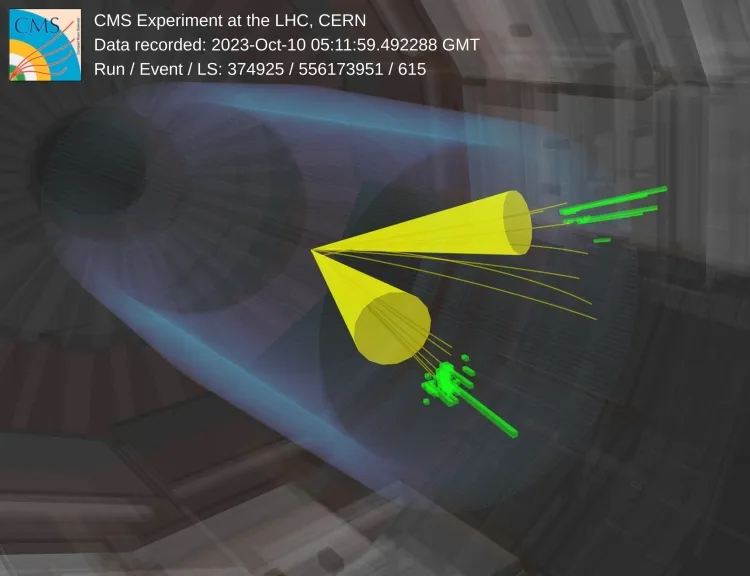
A charming look into the structure of nuclei using collisions with photon clouds
In a recent result, the CMS experiment measures the production of charmed D0 mesons in collisions of a photon with a heavy lead nucleus for the first time.
-
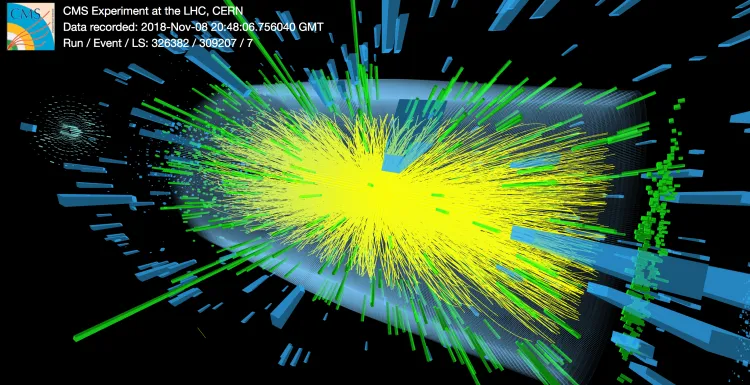
Journey through the Quark Gluon Plasma
At the LHC, lead ions are smashed together at extremely high speeds to create a unique state of matter called the quark gluon plasma.
-
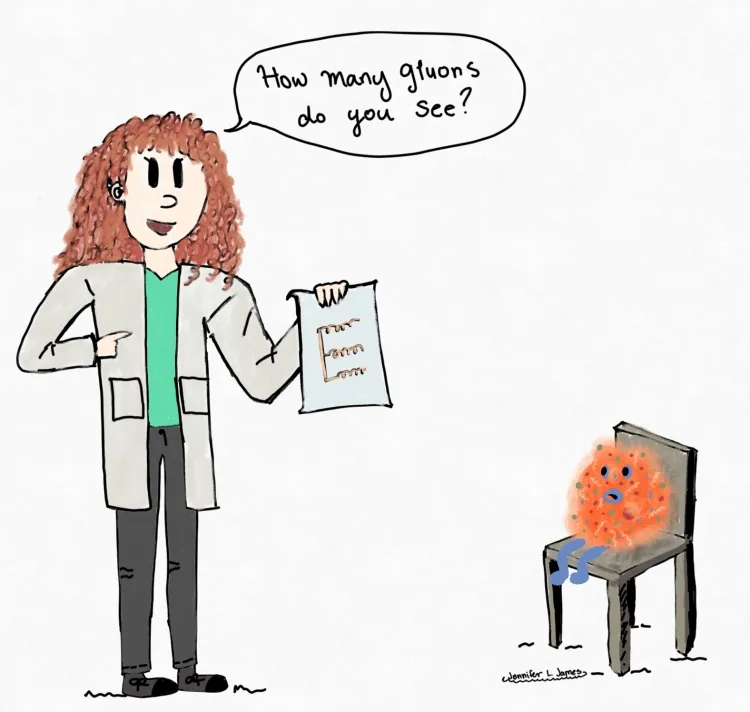
The quantum optician
Image credit: Jennifer James (Vanderbilt) Imagine going to an optician to check your vision.
-
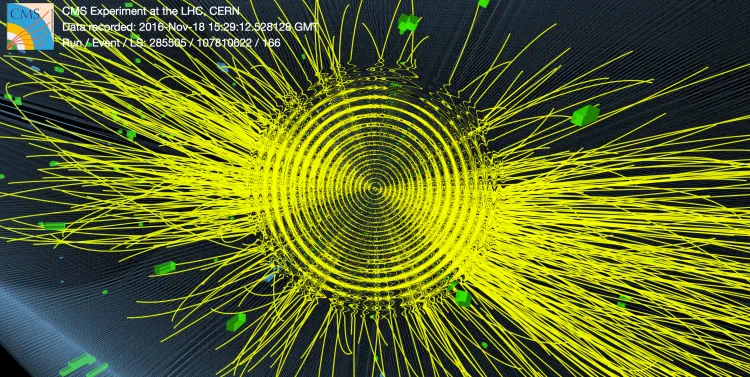
Hearing the sound of quark-gluon plasma
Neutron stars, ultra-cold atomic gases, and the quark-gluon plasma… You may find them totally unrelated but, surprisingly enough, they share a common feature: a fluid-like state of matter containing strongly interacting particles!
-
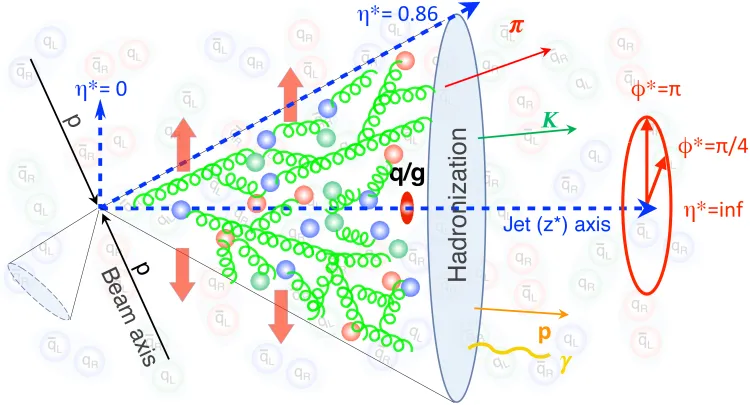
A Big Bang from a Quantum Quark?
The universe is governed by four known fundamental forces: gravity, electromagnetism, the weak force, and the strong force.
-
Exit through the microscopic gift shop
Imagine you are at a museum.