
Tag: Run 2
-
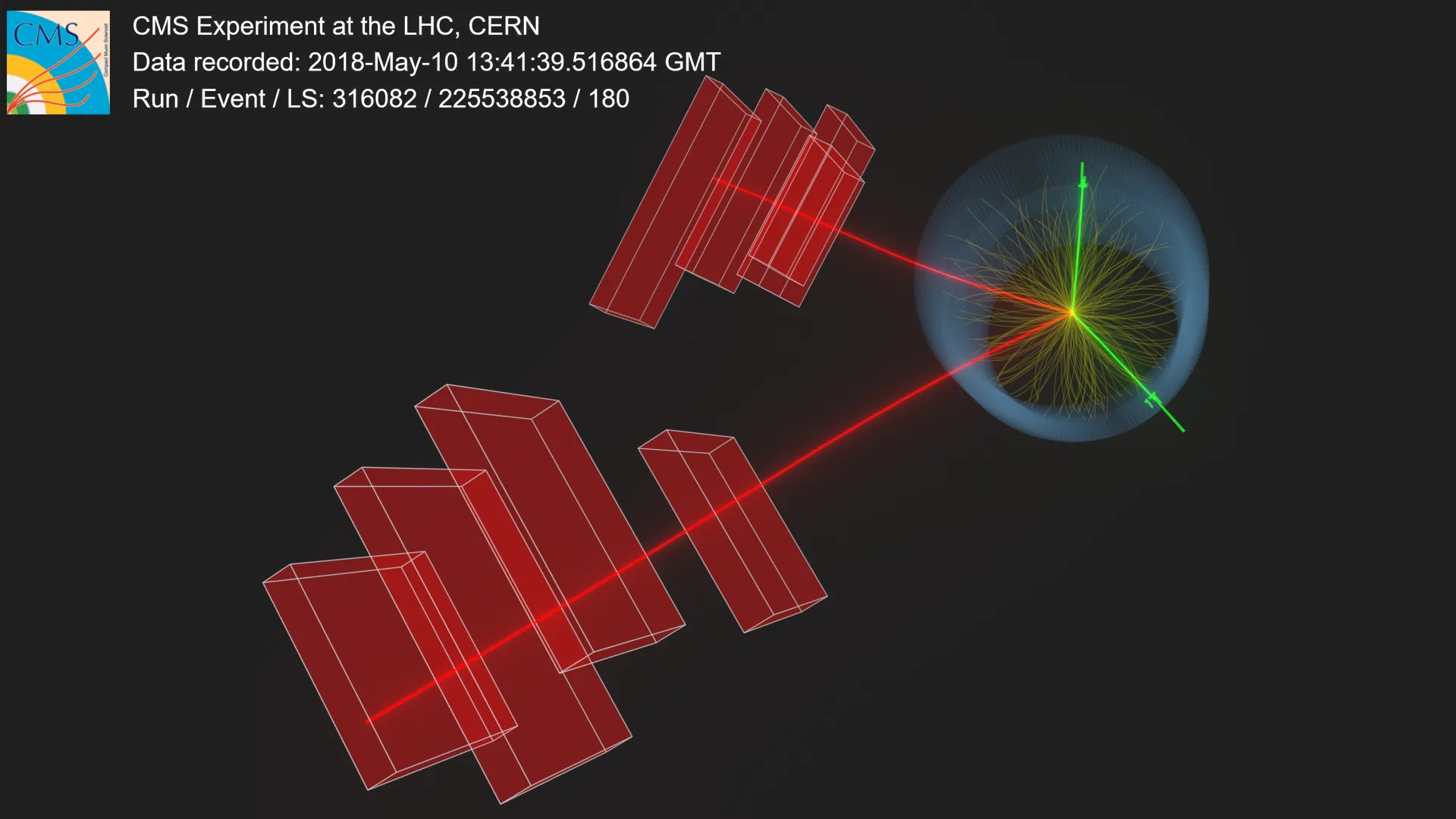
How much does the Higgs boson weigh? CMS gives its most precise answer yet
Combining measurements from two Higgs boson decay channels, the CMS experiment determines the particle’s mass to be 125.065 GeV, with an uncertainty of just 88 MeV.
-
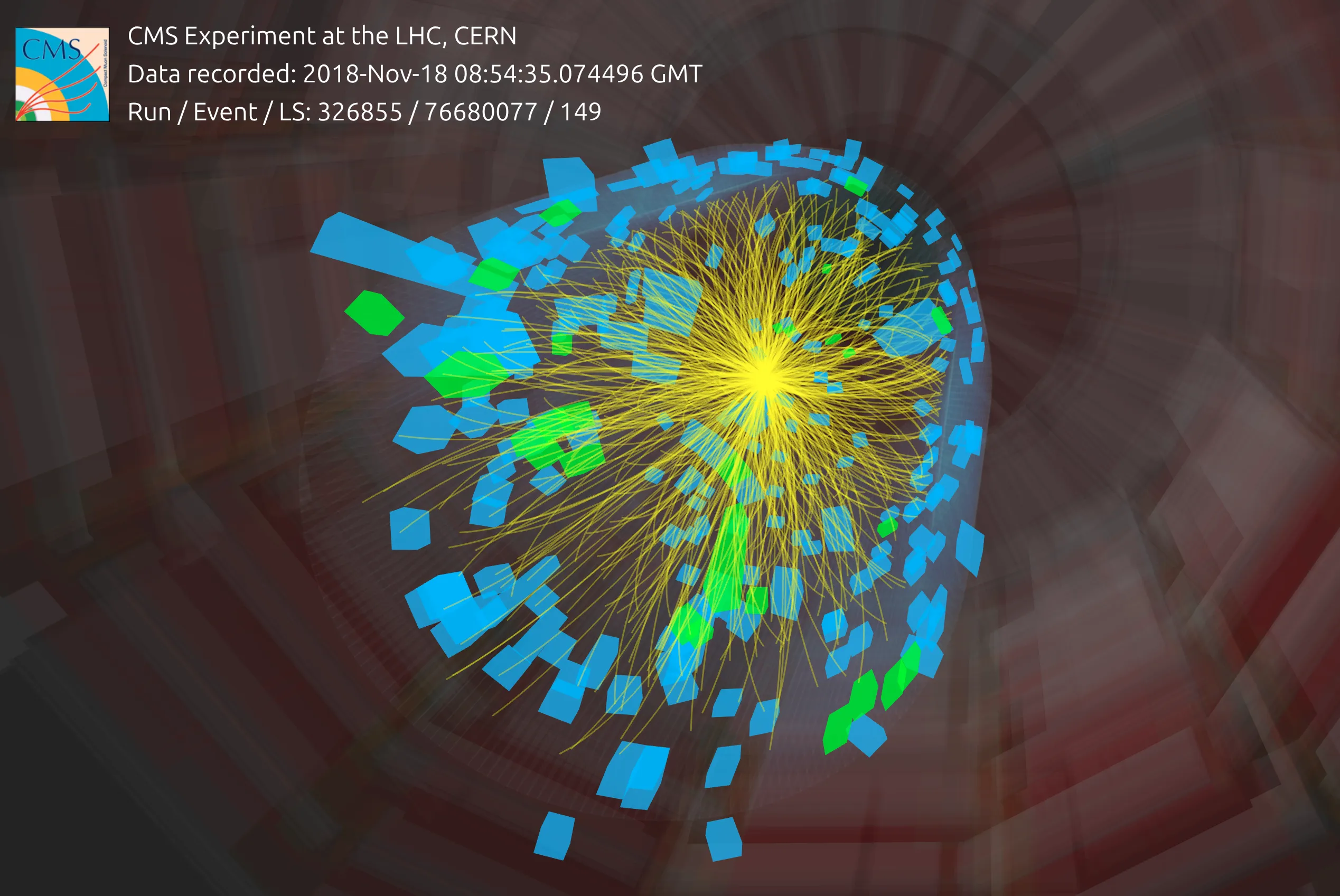
Carried by the current: how charm quarks probe quark–gluon plasma
For the first time, the CMS experiment applies a technique called “event-shape engineering” to understand how charm quarks respond to the expanding geometry of the quark–gluon plasma formed in heavy-ion collisions.
-
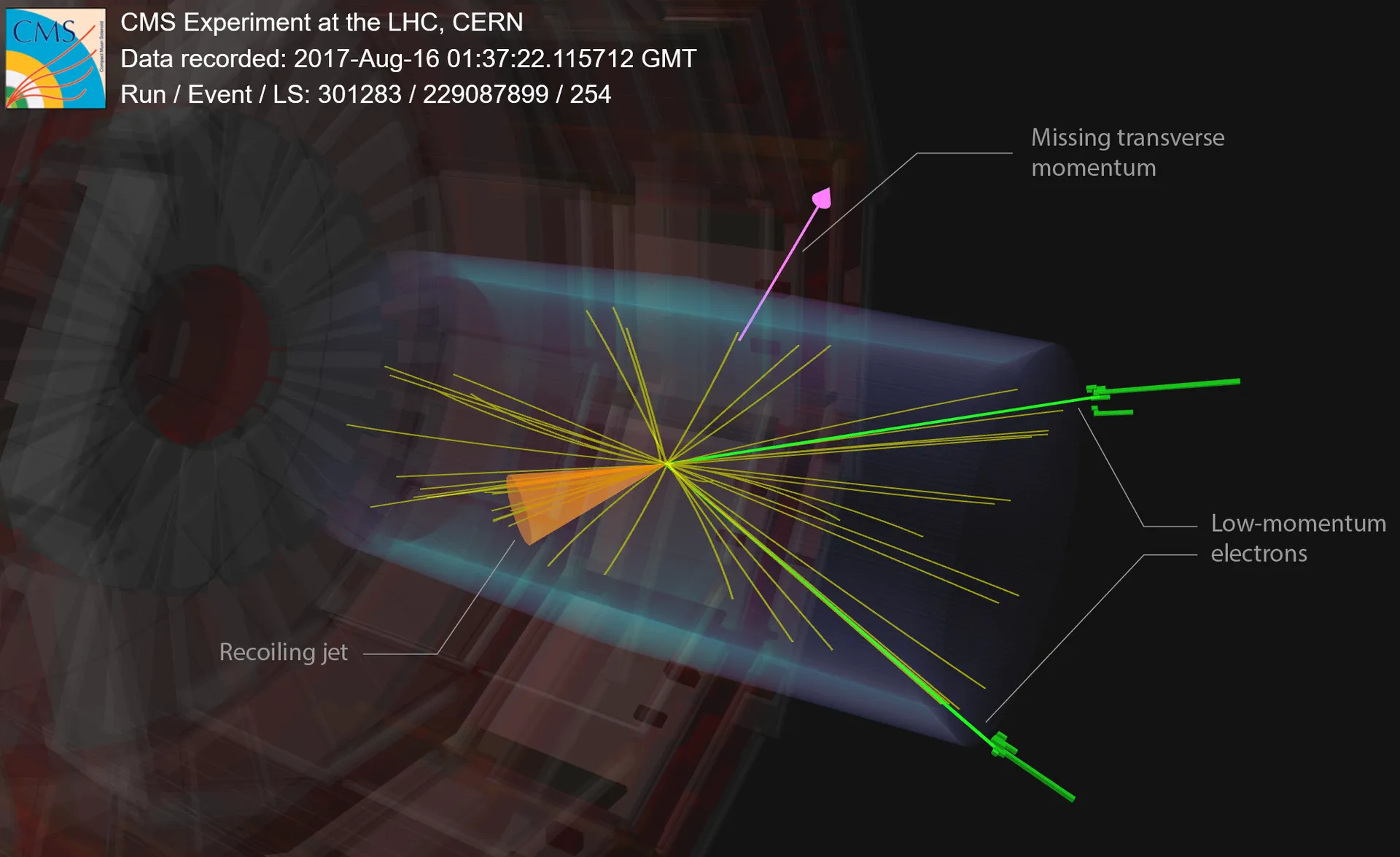
Chasing dark matter with mysterious electron pairs
The CMS experiment performs the first collider search for “inelastic dark matter” in the case where dark-matter particles travel a measurable distance before decaying into a pair of low-momentum electrons.
-
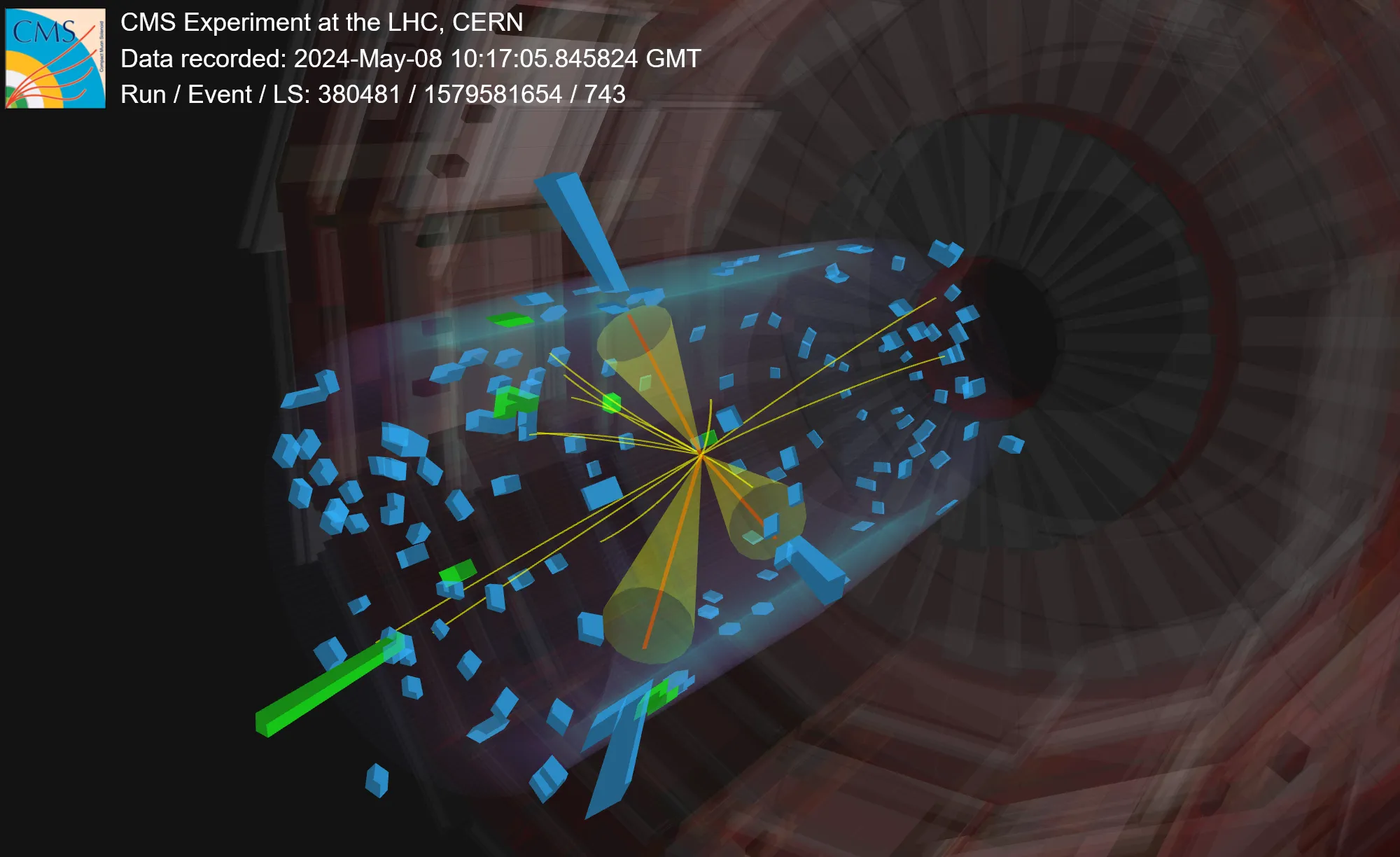
The W boson’s simplest decay into hadrons
The CMS experiment utilises proton–proton collision data collected between 2016 and 2026 to search for rare decays of the W boson into three charged hadrons.
-
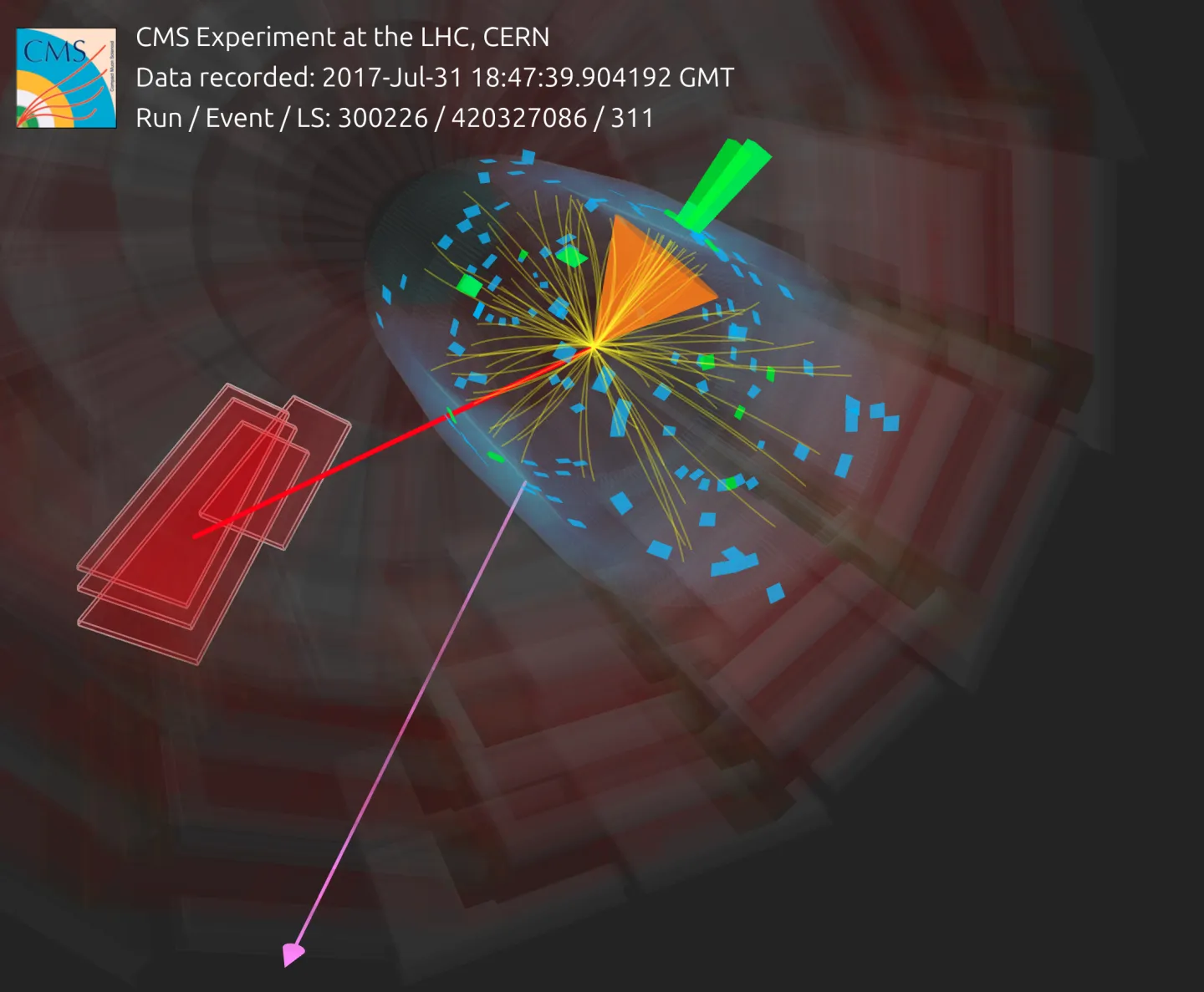
In search of unknown forces: Do W and Z boson pairs reveal new interactions?
CMS sets the world’s most stringent constraints on anomalous interactions between the bosons that carry the electroweak force.
-
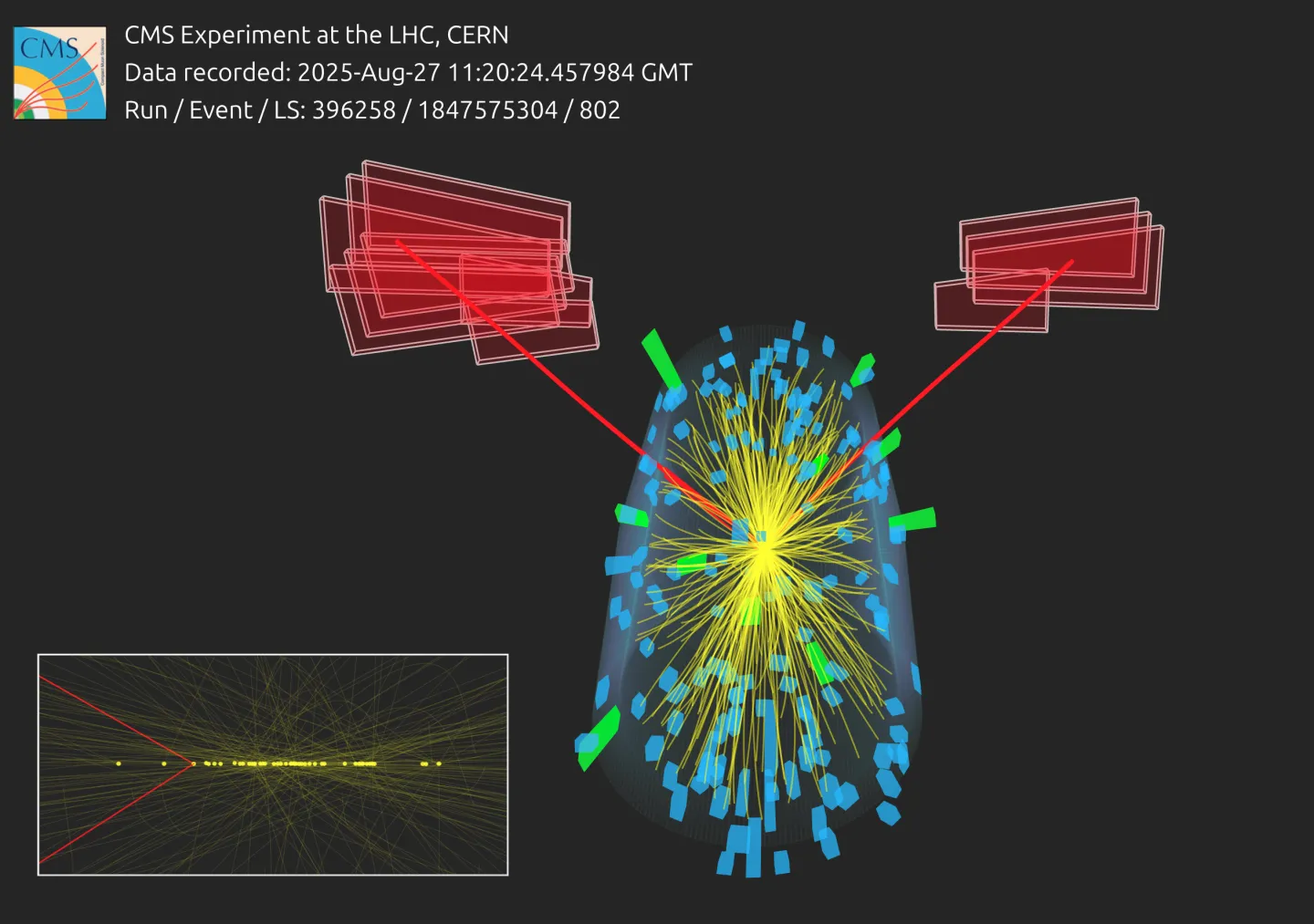
Lepton–lepton scattering in proton–proton collisions
The CMS experiment uses data collected between 2016 and 2026 to observe, for the first time, leptons (electrons and muons) emitted from protons scattering off one another.
-
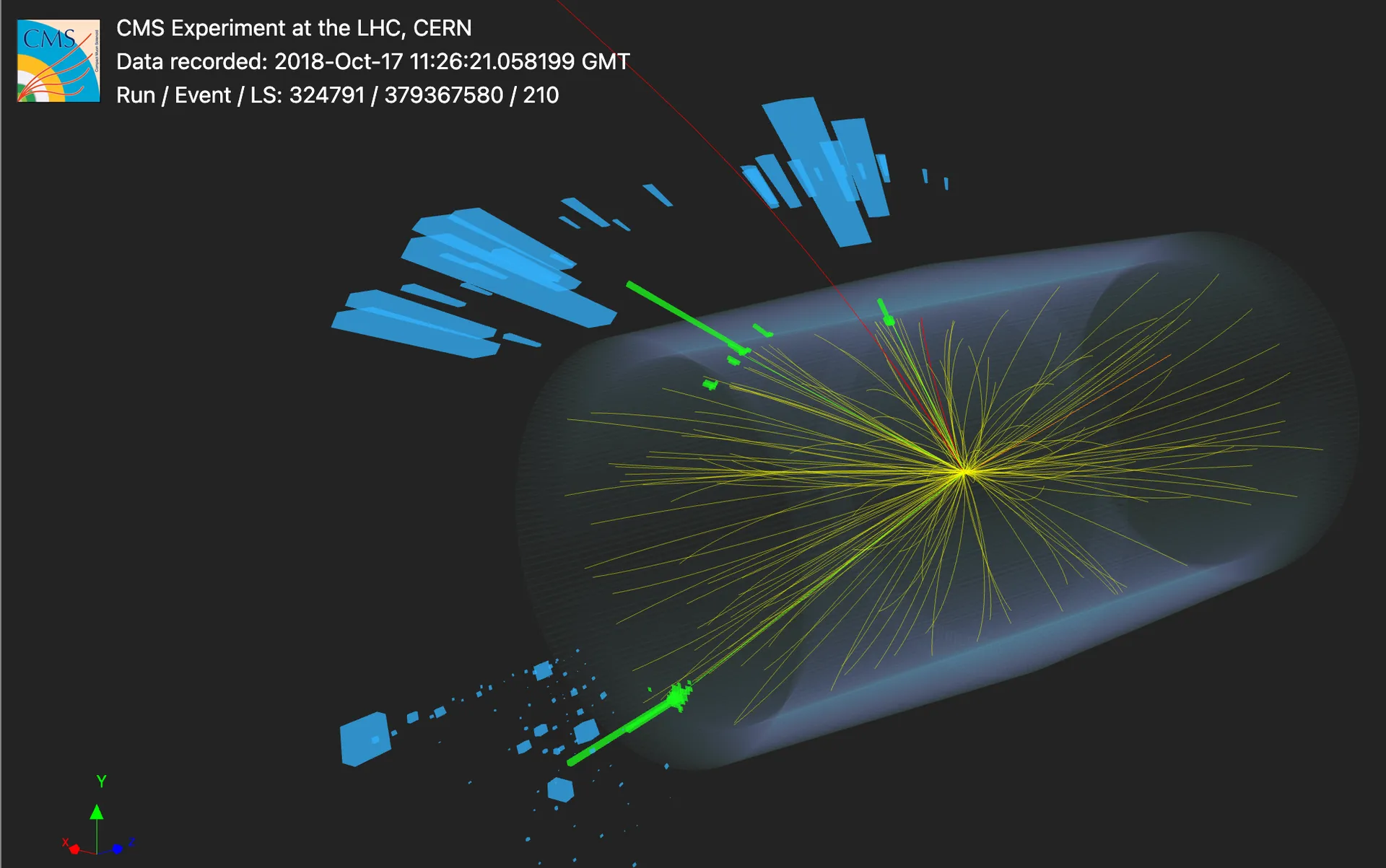
Hunting for a Hidden Side of the Higgs
A new boosted jet technique, powered by machine learning, gives CMS its most sensitive search for Higgs bosons breaking apart into never-before-seen particles.
-
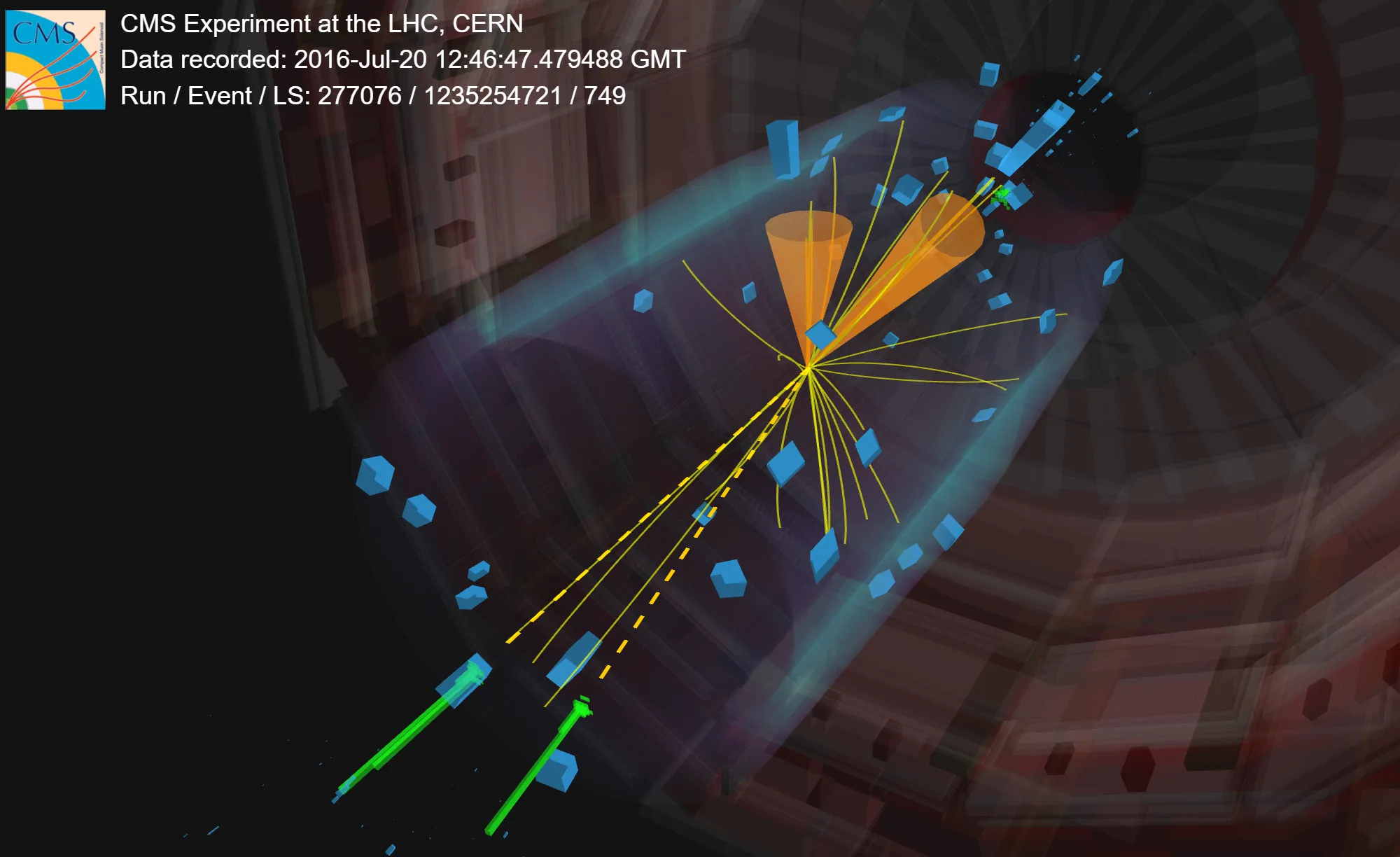
Two photons illuminate the path towards the Higgs boson’s hidden partner
CMS has made the first search in the two-photon and two-bottom-quark final state for a heavy particle with masses from one to four trillion electronvolts.
-
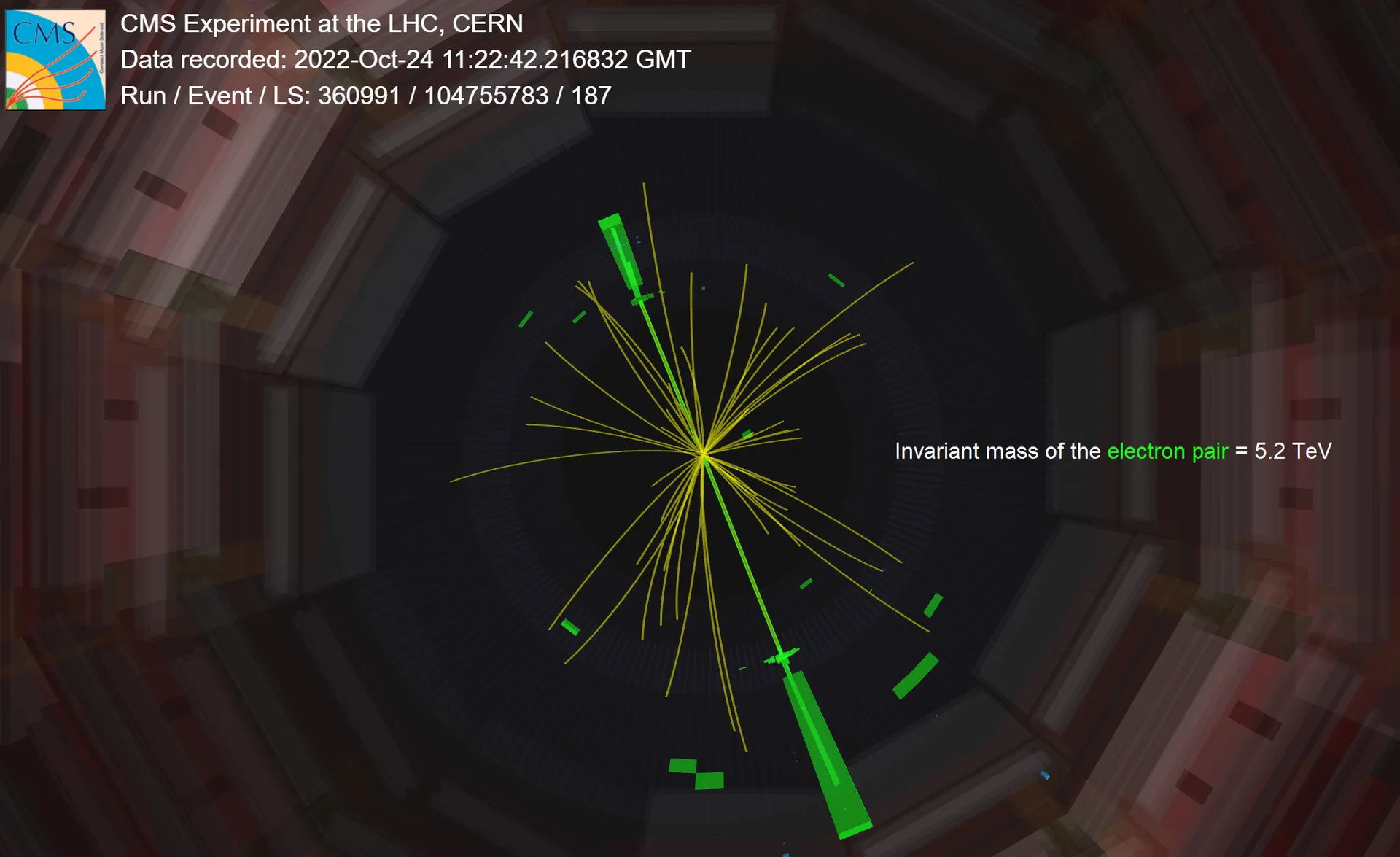
Is the Higgs boson truly elementary?
CMS probes the highest-energy lepton pairs ever recorded to search for hints pointing to a Higgs boson made of smaller constituents.
-
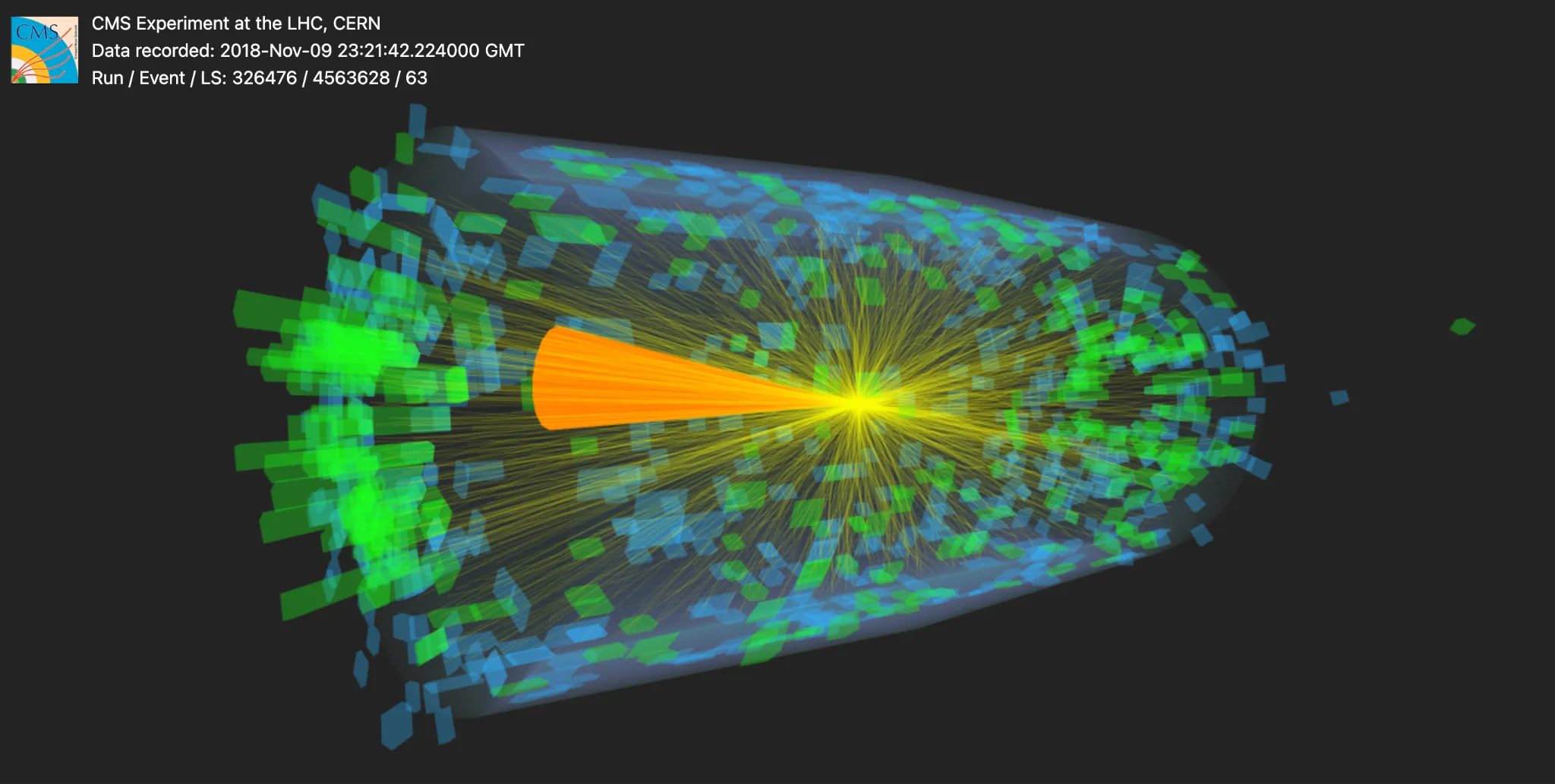
Probing the charm-quark dead cone in the quark-gluon plasma
CMS investigates charm-quark jets in heavy-ion collisions and finds no evidence of additional radiation inside the dead cone When lead ions collide at the Large Hadron Collider, they create an extreme state of matter known as the quark-gluon plasma (QGP), a hot and dense medium similar to the one that filled the Universe shortly after…