
Tag: Run 2
-
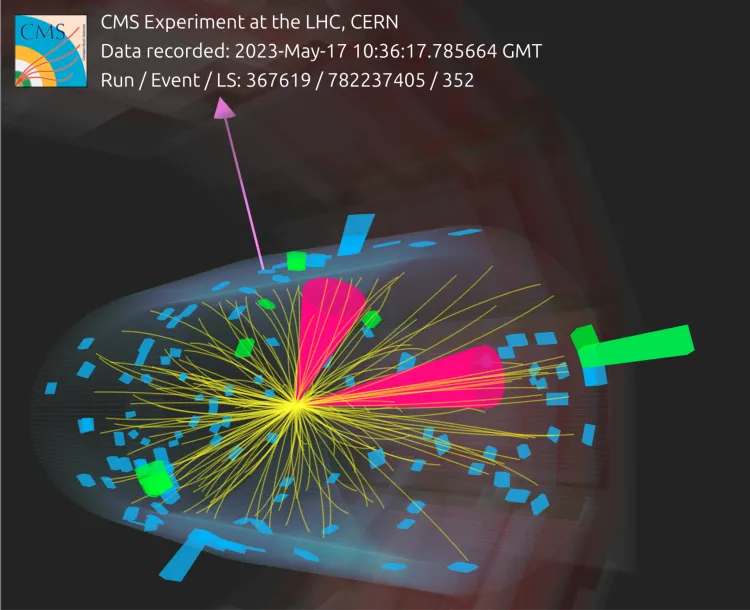
Does the Higgs look a little odd lately?
The CMS experiment has performed a new search for Charge-Parity violation in Higgs boson decays to tau leptons, shedding light on the origin of matter.
-
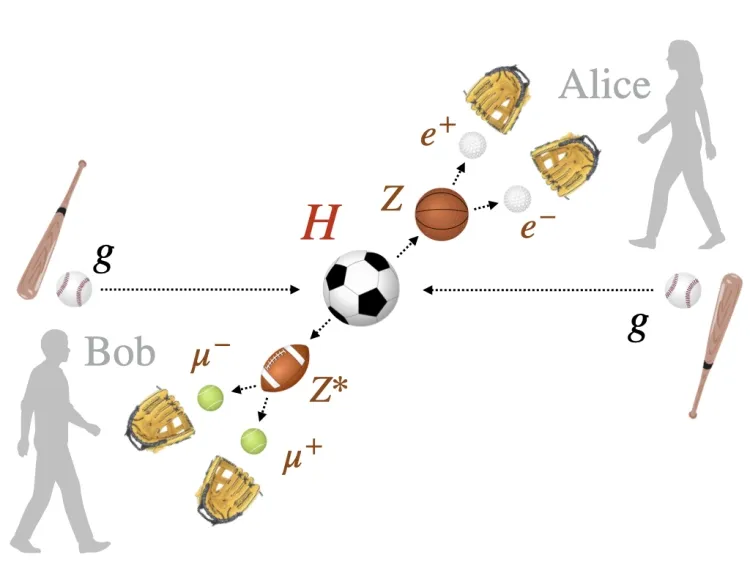
The tangled dance of Higgs boson decays
For the first time, the CMS experiment probes quantum entanglement in Higgs boson decays to a pair of Z bosons.
-
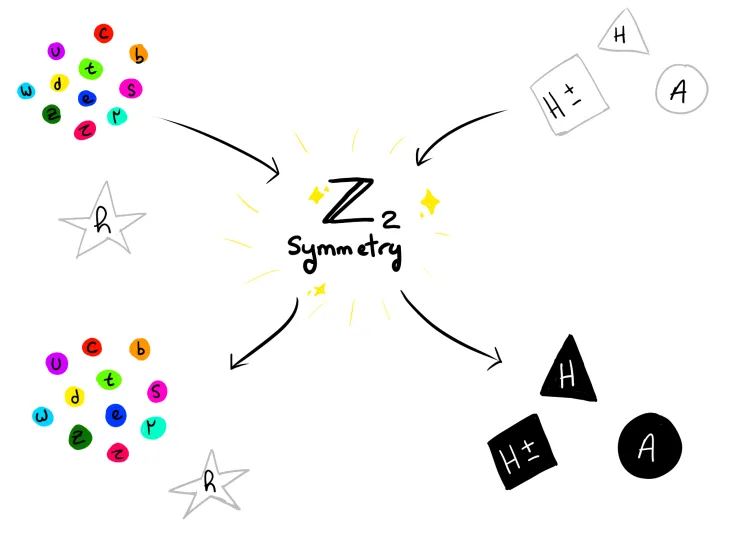
Double the doublet, shake well, break one, and keep the other intact: welcome, dark scalars!
For the first time ever, the CMS experiment has designed a dedicated analysis using parametrised machine learning to look for new dark particles that don’t socialize with Standard Model fermions, one of them being a favourite candidate in the search for dark matter.
-
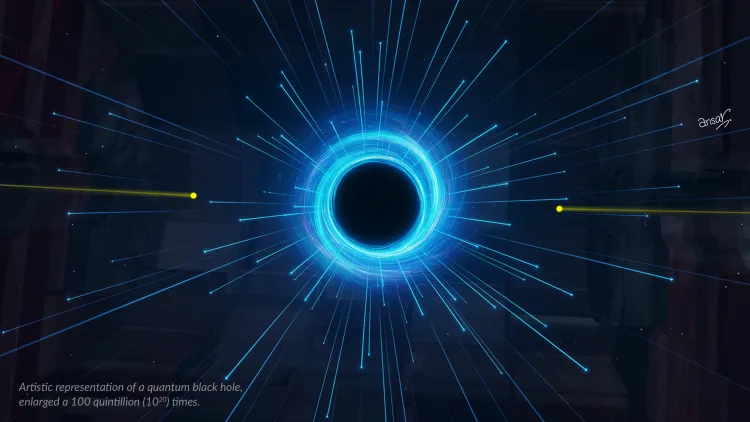
Are there quantum black holes that evaporate instantly?
The CMS experiment utilises cutting-edge machine learning techniques to search for microscopic, quantum black holes and other exotic objects that evaporate in an instant.
-
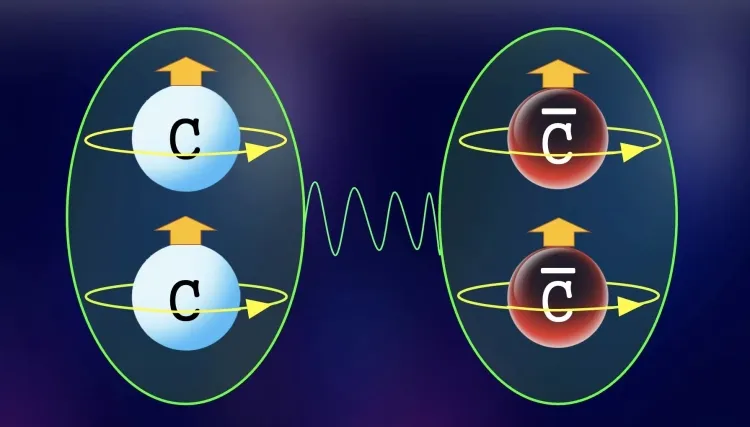
CMS gets acquainted with a family of all-charm tetraquarks
Upon close inspection, the tetraquark family members are consistent with tightly bound diquark pairs The CMS Collaboration has identified three extremely rare same-flavor teraquark states and determined, based on their spin-parity configuration, that they are consistent with a diquark-antidiquark model.
-
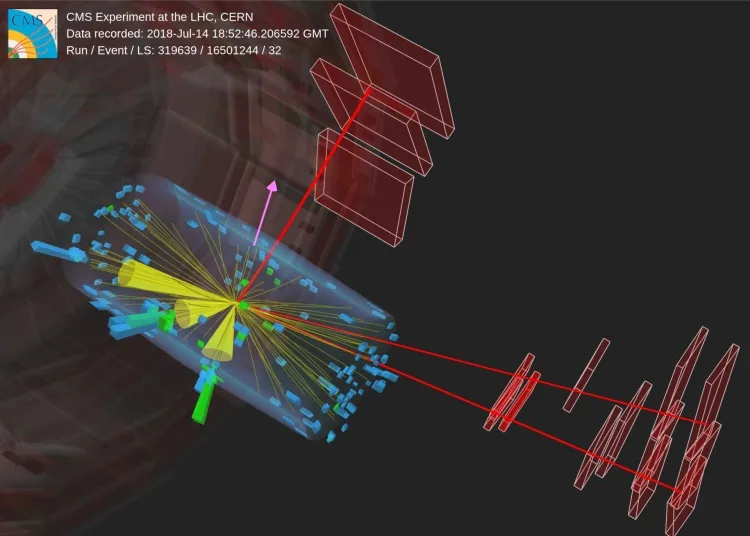
CMS observes rare top quark interaction with a W and a Z boson
Using data collected from 2016 to 2023 and cutting-edge machine learning, CMS observes for the first time the creation of a top quark together with a W and a Z boson – a process so rare it occurs only once in a trillion proton-proton collisions!
-
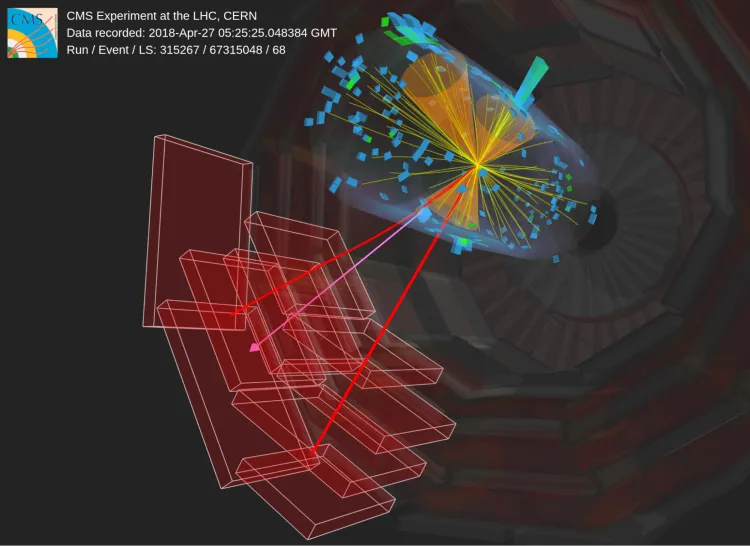
Using physics-based machine learning to hunt dark matter
In the first search of its kind at a particle collider, the CMS experiment looks for partially visible sprays of particles (jets), containing leptons and dark matter using physics-informed machine learning.
-
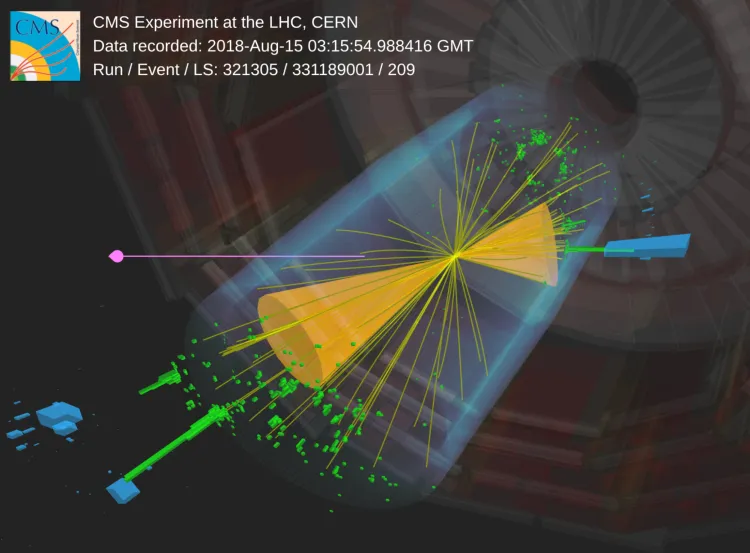
Double the Higgs, double the mystery! The hunt for a new, heavy particle decaying to a pair of Higgs bosons
CMS scientists are on the hunt for a new, heavy particle that decays into a pair of Higgs bosons.
-
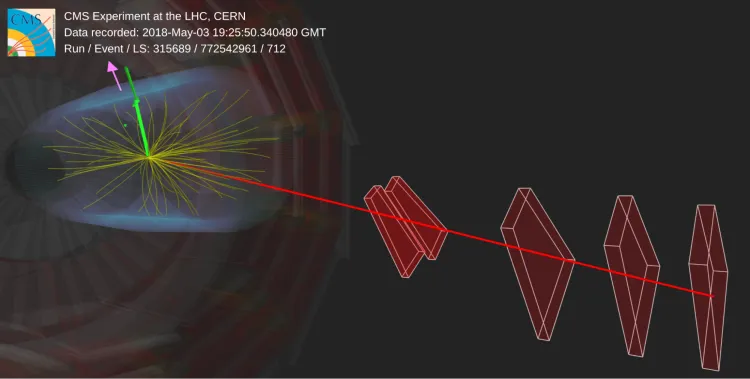
When light turns into weak heavy bosons
Turning the LHC into a photon collider, the CMS experiment observes for the first time how two photons fuse and convert into two W bosons.
-
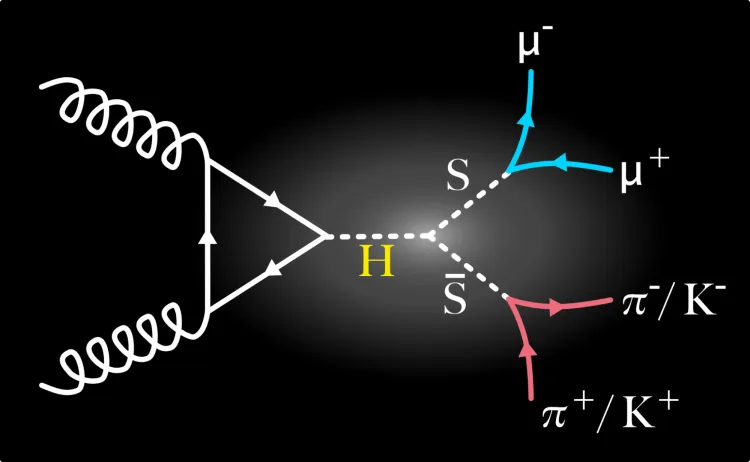
Hunting exotic Higgs bosons decaying to lightweight scalar particles
In a first search of its kind at the LHC, the CMS experiment looks for light beyond-the-standard-model particles with a mass in the GeV range that decay into charged hadrons and muons.