
Tag: Physics briefing
-
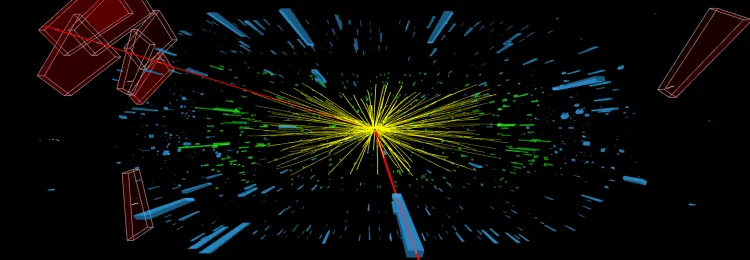
How CMS changes muons to taus to better catch the Higgs boson
At the LHC, protons do not collide one at a time.
-
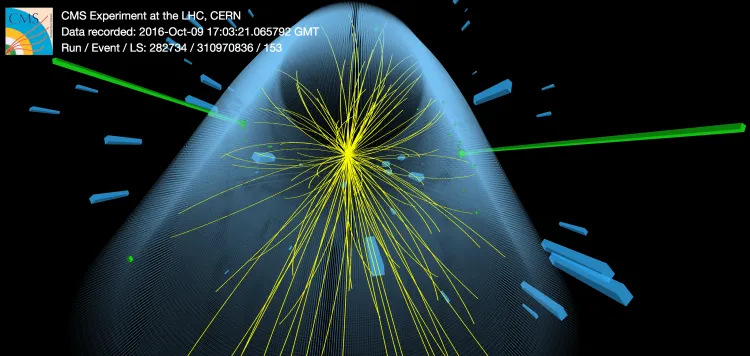
CMS precisely measures the mass of the Higgs boson
A new result by the CMS Collaboration narrows down the mass of the Higgs boson to a precision of 0.1%.
-
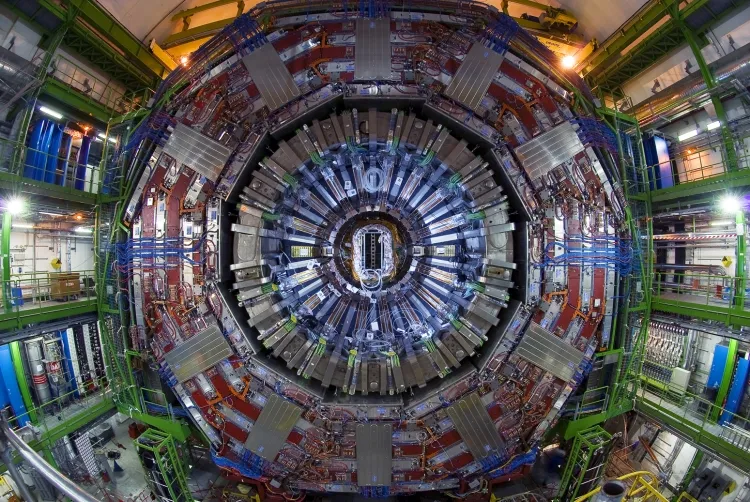
Three questions that the top quark can answer
For the first time, CMS physicists have measured the production rate of top quark pairs as a function of three experimental observables simultaneously. The new result helps to answer several fundamental questions, among which, the properties of gluons inside protons, the strength of the strong nuclear interaction, and how massive the top quark precisely is.
-
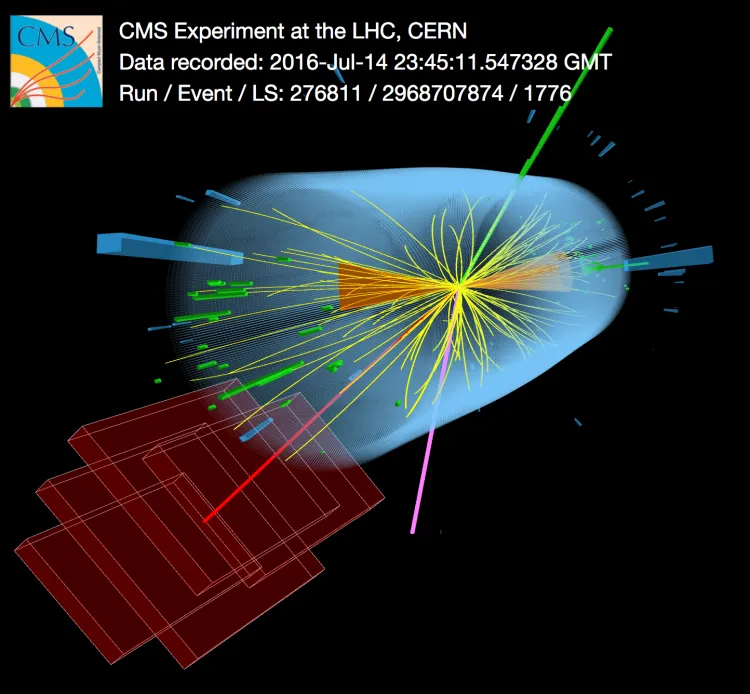
Watching the top quark mass run
For the first time, CMS physicists have investigated an effect called the “running” of the top quark mass, a fundamental quantum effect predicted by the Standard Model.
-
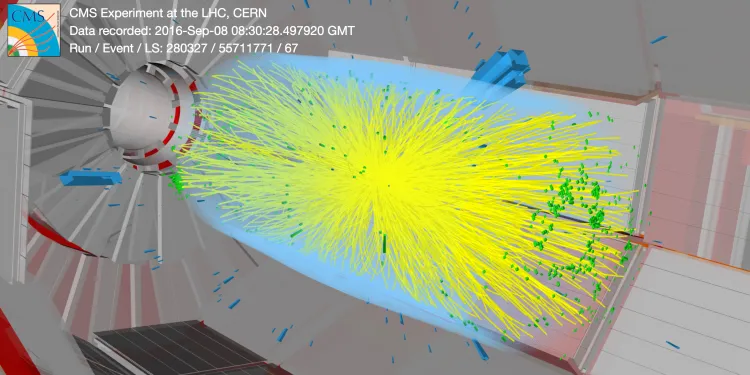
How CMS weeds out particles that pile up
When the CMS experiment records particle collision events, a large number of unwanted extra collisions overlap in the detector and hide the rare particle collision that is worthwhile studying. CMS physicists have developed a new method that gives improved precision for the study of collisions even when occurring together with 50 or more extra interactions.
-
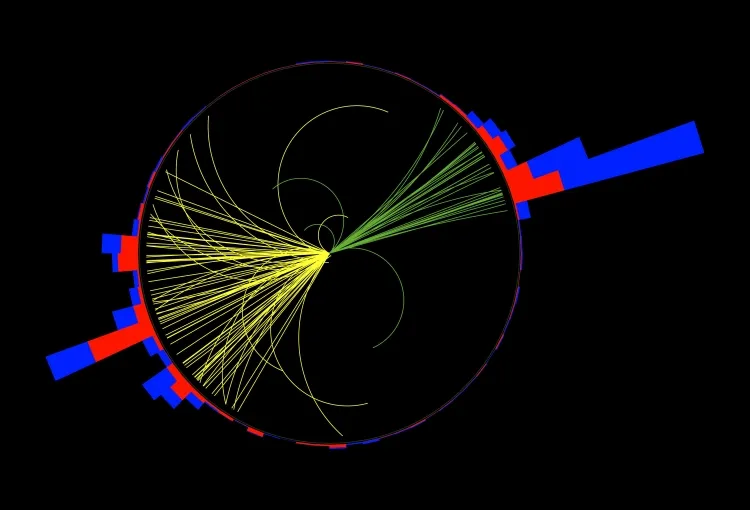
Machining jets
New algorithms from the Compact Muon Solenoid experiment use the ideas used in mobile phone facial recognition to better understand the collisions at the Large Hadron Collider.
-
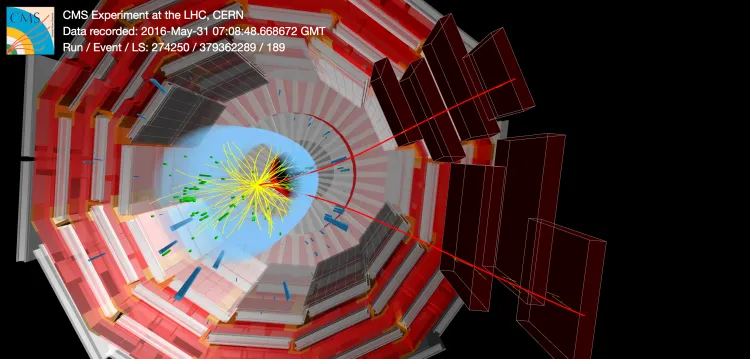
CMS Measures an Ultra-Rare Decay of a Beautiful and Strange Meson
The Bs meson is a bound state of a strange quark and a beauty antiquark – as such it possesses both beauty and strangeness!
-
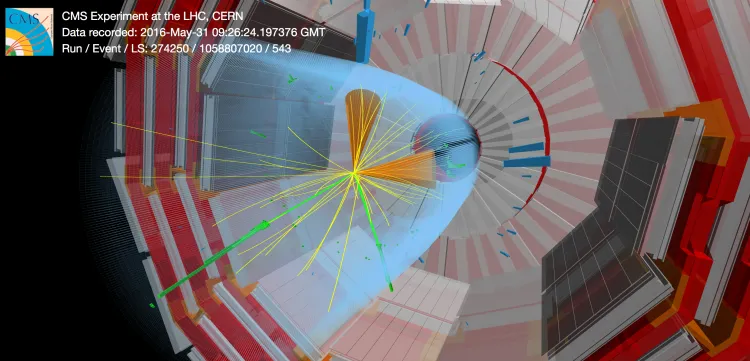
How charming is the Higgs boson?
The CMS collaboration has carried out for the first time a direct search for a Higgs boson decaying into charm quarks, a vital step in understanding the Higgs particle and the Standard Model.
-

A boson-boson collider hiding inside proton-proton collisions
Not many people know that there is a boson-boson collider hiding in the proton-proton collisions of the Large Hadron Collider.
-
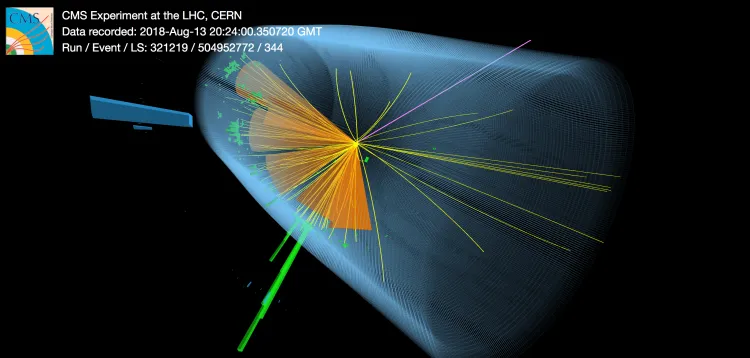
Enhancing the Missing Momentum Microscope
The CMS Collaboration has recently presented an updated search for new invisible particles. The technique capitalizes on the imbalance among the visible particles in a collision that such an object would induce. If dark matter is made of fundamental particles, these could reveal themselves in just this way.