
Tag: Physics briefing
-
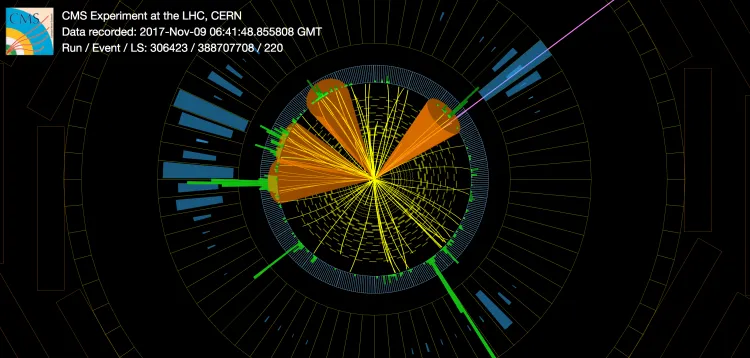
It`s never too late for photons at CMS!
New physics may show up at the LHC in the form of yet unobserved particles which travel inside the detector before decaying, far from the point in space where they were produced. If these particles decay to photons, at CMS we can use the short but measurable time these photons move through the detector to…
-
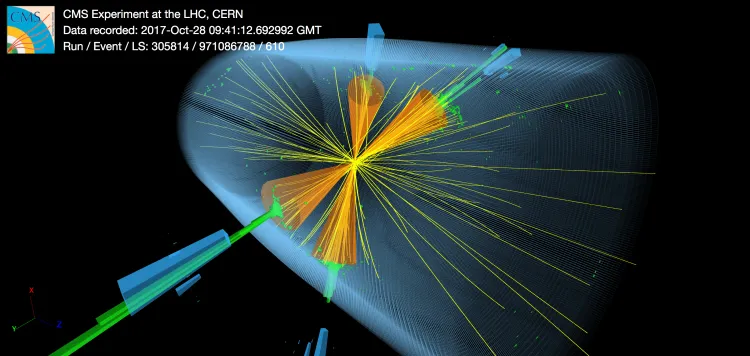
New ways to approach the most classical search for new particles
At the EPS-HEP conference this week the CMS collaboration presents new results of a powerful search that is motivated by a variety of new physics models that predict a signature of a bump in the production of the most frequently produced particles at the LHC, quarks and gluons. All the available collision data collected in…
-
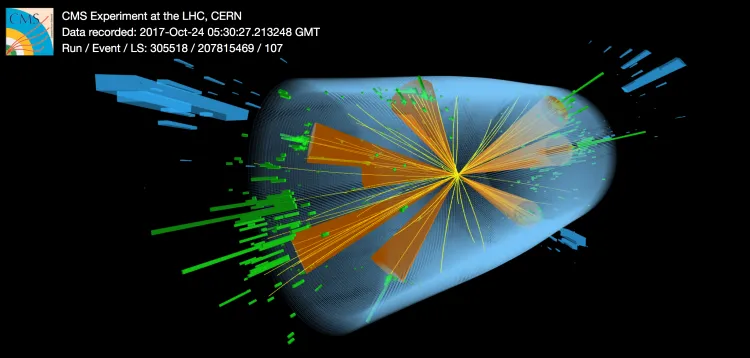
The two most massive quarks put the spotlight on the Higgs boson
The CMS collaboration has recently released new results on how the top quark and Higgs boson interact, and this required a much deeper understanding of the production of top quarks together with bottom quarks.
-
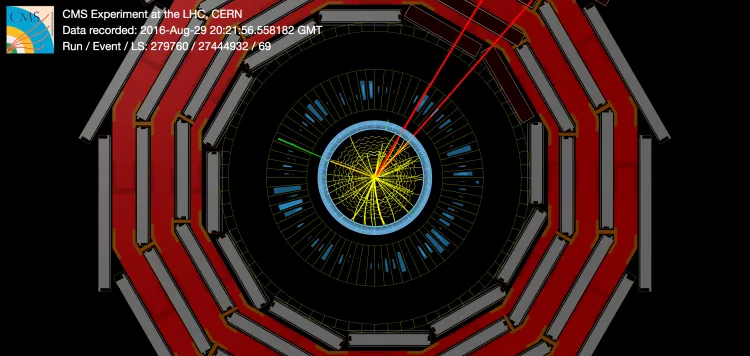
No sign of dark light from the Higgs boson
The study of dark matter is one of the primary research topics at the CMS experiment.
-
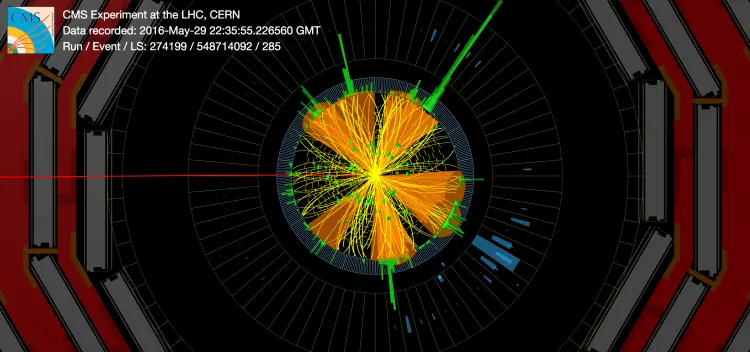
LHC powerlifting – searching for the simultaneous production of four times the most massive elementary particle
Physicists at the CMS experiment are now very close to observing the simultaneous production of four top quarks (really two top quarks and two antitop quarks, but particle physicists describe this process as tttt) at the Large Hadron Collider for the first time.
-
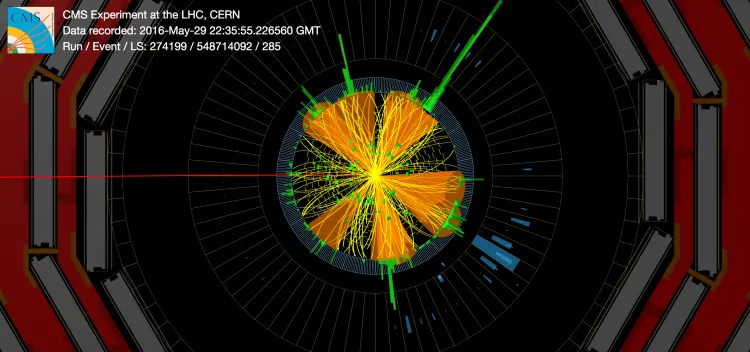
LHC powerlifting – searching for the simultaneous production of four times the most massive elementary particle
Physicists at the CMS experiment are now very close to observing the simultaneous production of four top quarks (really two top quarks and two antitop quarks, but particle physicists describe this process as tttt) at the Large Hadron Collider for the first time.
-
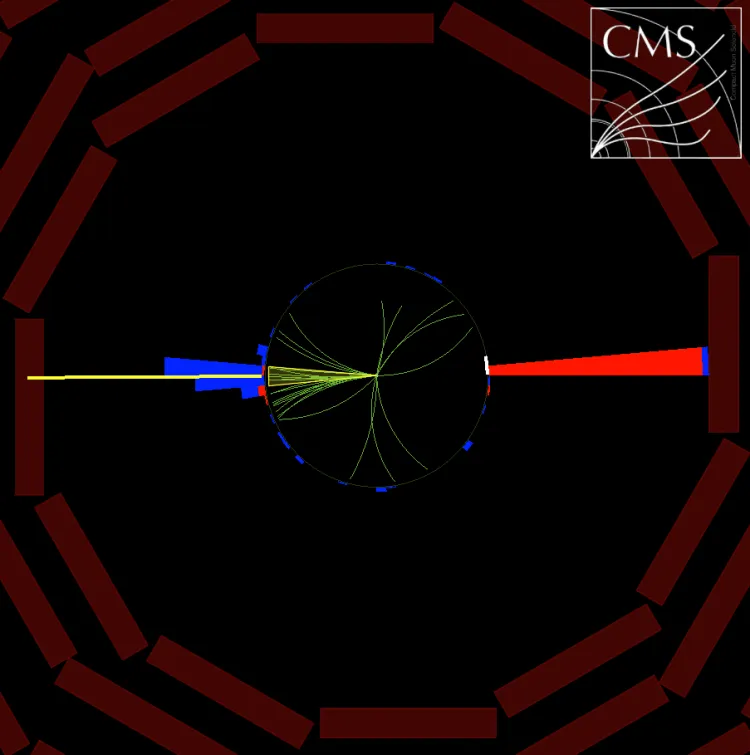
Casting Light on the Dark Sector
Physicists have been searching for new particles that would show up in the form of two jets for over twenty years. Such new particles could turn out to be messengers of dark matter, unlocking its secrets. Competing models exist which are trying to understand the unknown nature of dark matter and exploring their predicted consequences,…
-
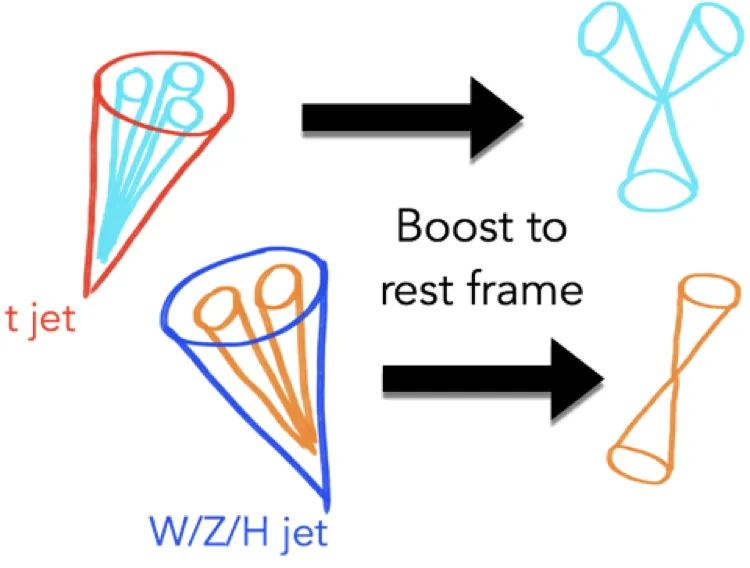
New for Moriond: Quarks: The Next Generation?
Since the discoveries of the third generation of quarks and leptons starting in the 1970s, physicists have asked the natural question “Can there be more generations?”.
-
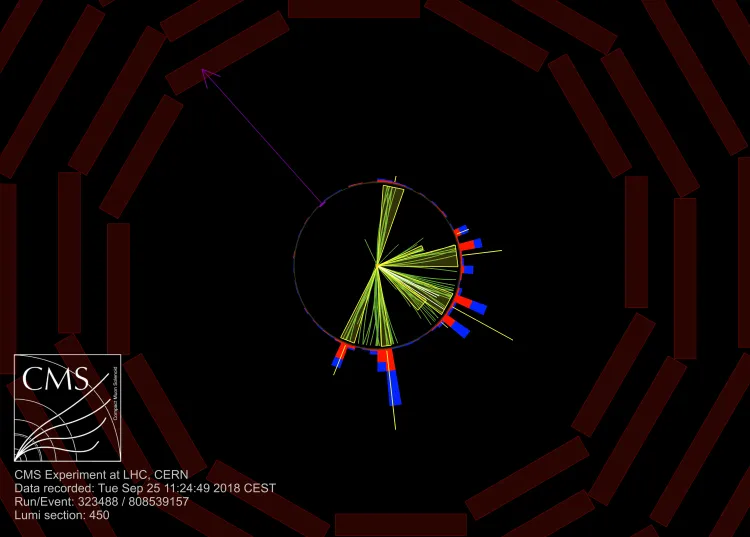
New for Moriond: Catching disappearing particles
Over the past century, physicists have developed a theory governing the fundamental interactions of elementary particles, known as the Standard Model of Particle Physics.