
Tag: Physics briefing
-
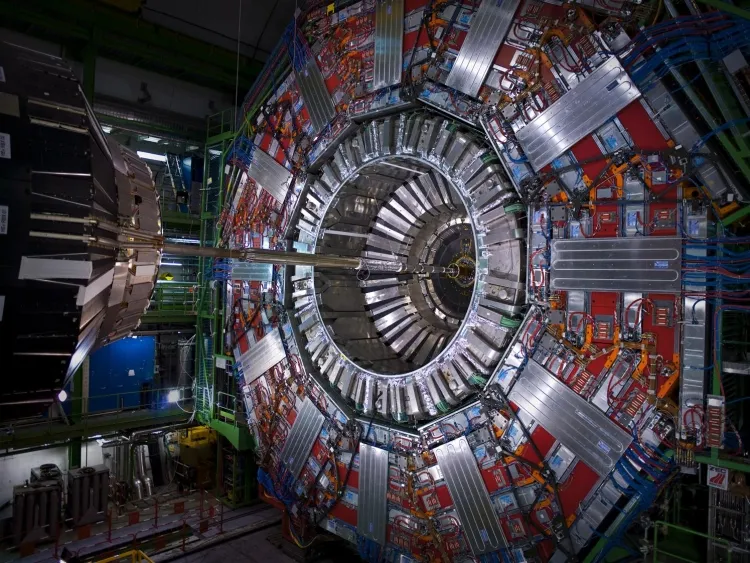
How are the quarks moving?
The Large Hadron Collider, LHC, collides protons at an energy of 13 TeV — thirteen thousand times the mass of a proton.
-
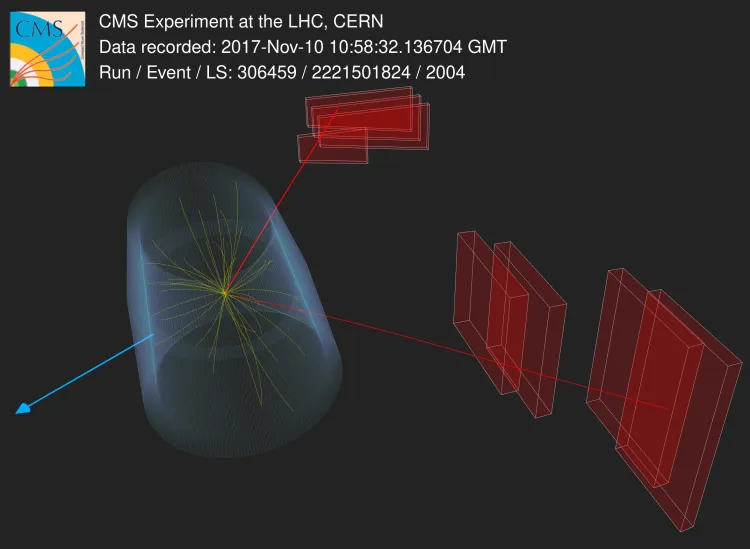
Two collisions for the price of one
The Large Hadron Collider (LHC) offers a unique opportunity to probe the internal structure of protons, with great precision and at unprecedented energies.
-
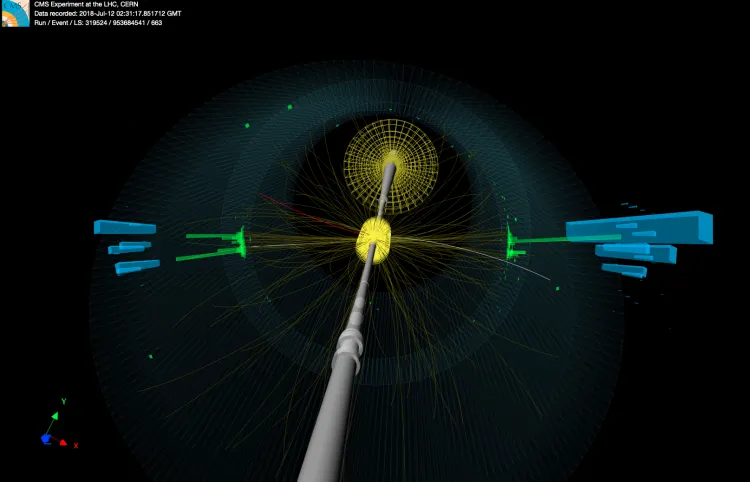
W, Z, and Higgs bosons as portals to exotic physics
Since the LHC collider started operating, more than a decade ago, several trillions of proton-proton collisions have taken place.
-
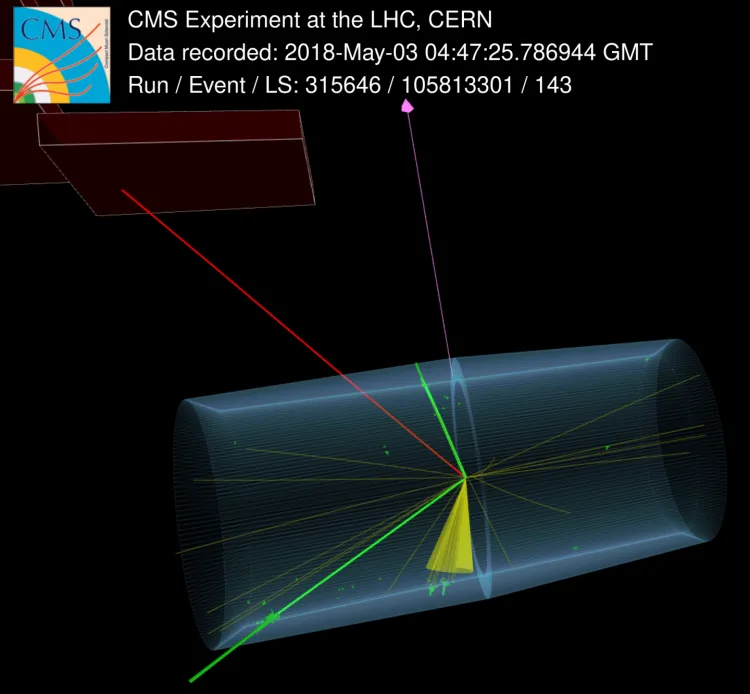
Search for double Higgs production with multiple leptons
Using events containing multiple leptons, the CMS Collaboration looked for production of a pair of Higgs bosons, but could not find any evidence. However there is some extra events in data with high mass values for the Higgs boson pair when compared with total expectation of Higgs boson pair signal and background. Only with more…
-
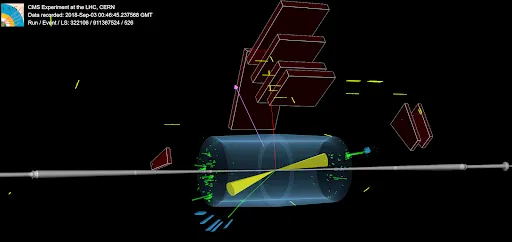
Search for rare production of vector boson pairs
Vector boson (W, Z) scattering process is a purely weak process which have been studied here to investigate interesting characteristics of the standard model and to test new physics scenarios that have a sizable indirect impact on the measurable quantities. This analysis looks for production of two opposite sign W bosons accompanied by a pair…
-
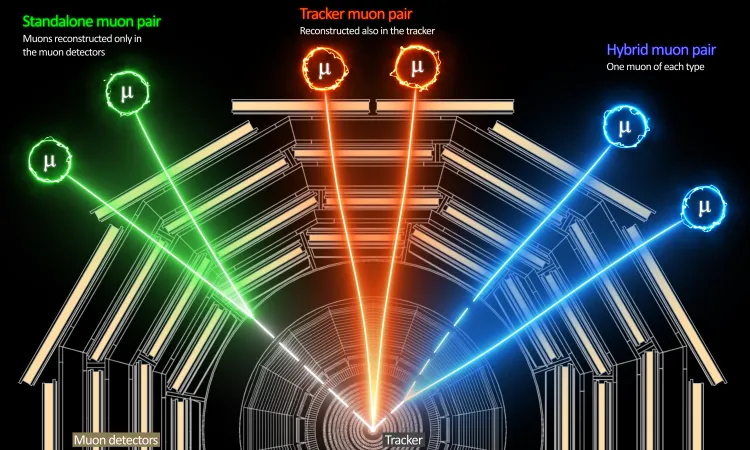
In a detector far, far away: searching for elusive long-lived travellers by tracing pairs of muons
A search for long-lived particles decaying into two muons has been performed by the CMS collaboration. Many scenarios of beyond standard model physics envisage such a possibility, whereby the exotic particles, travel before decaying, a considerable distance which can range from few microns to several kilometres depending on detailed properties. The striking experimental signature of…
-
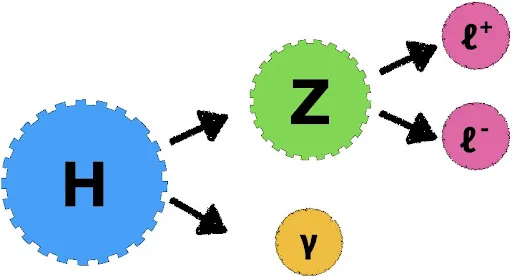
A possible new decay mode of the Higgs boson
CMS looked for a relatively rare decay mode of the Higgs boson, viz., to a Z boson and a photon (H → Z𝛾 ). The Z was identified via its decays to electron and muon pairs (e+e- or 𝝁+ 𝝁-). The spectrum for the combined mass of the three particles (e+, e- and 𝛾 and…
-
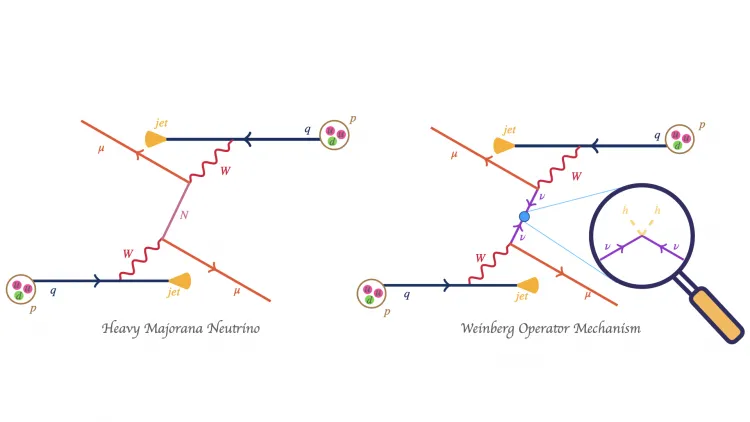
Two Ends of a Seesaw
Experiments have established that the neutrinos do have non-zero mass but extremely tiny, though in standard model they are treated as mass-less. This can be explained using theoretical ideas of Majorana and Weinberg. The testable prediction at the LHC is the production of 2 same-sign muons unaccompanied by neutrinos. Data collected by the CMS experiment…
-
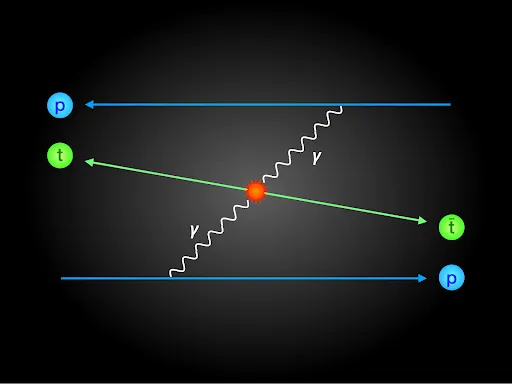
Detecting the creation of top quarks out of light
Ask someone what experiments at the CERN-LHC do, they will tell you: ‘You accelerate two protons to very high energy, smash them together and look in great detail at all particles created from the disintegration of the protons.’
-
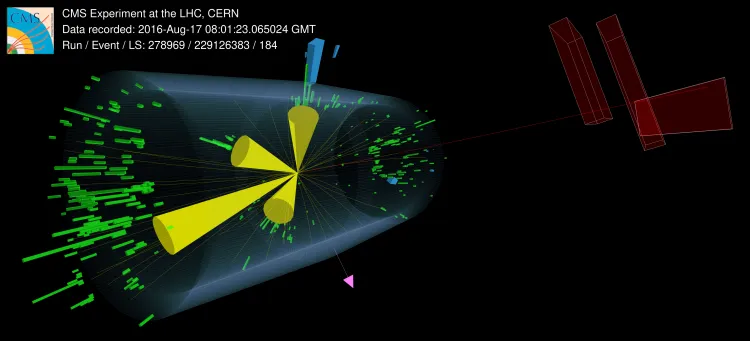
CMS Collaboration measures the mass of the top quark with unparalleled accuracy
The CMS collaboration has substantially improved the precision with which the top quark mass is measured. The latest result, a measurement of the top quark mass of 171.77 ± 0.38 GeV, was presented at CERN last week and estimates the value of the top quark mass with a precision of about 0.22%. The gain comes…