
Tag: Physics briefing
-
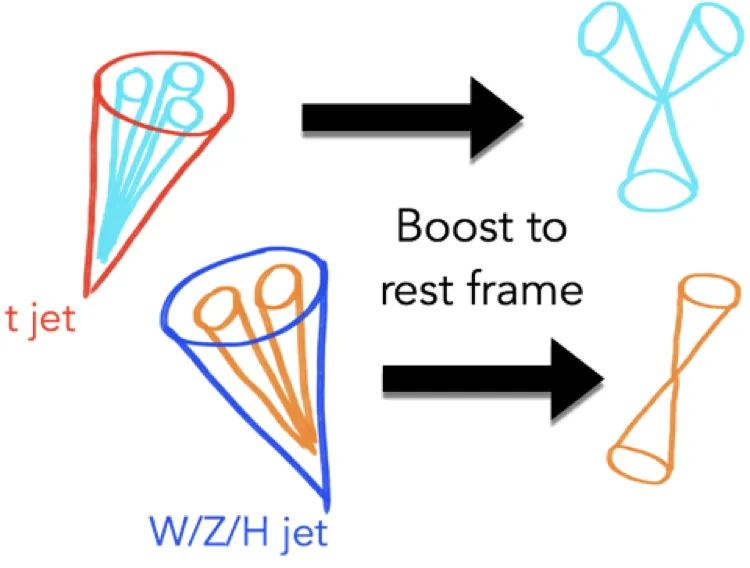
New for Moriond: Quarks: The Next Generation?
Since the discoveries of the third generation of quarks and leptons starting in the 1970s, physicists have asked the natural question “Can there be more generations?”.
-
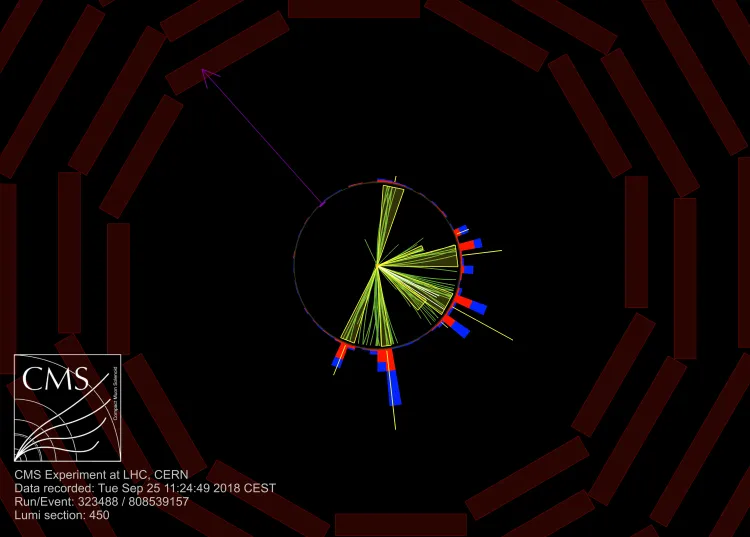
New for Moriond: Catching disappearing particles
Over the past century, physicists have developed a theory governing the fundamental interactions of elementary particles, known as the Standard Model of Particle Physics.
-
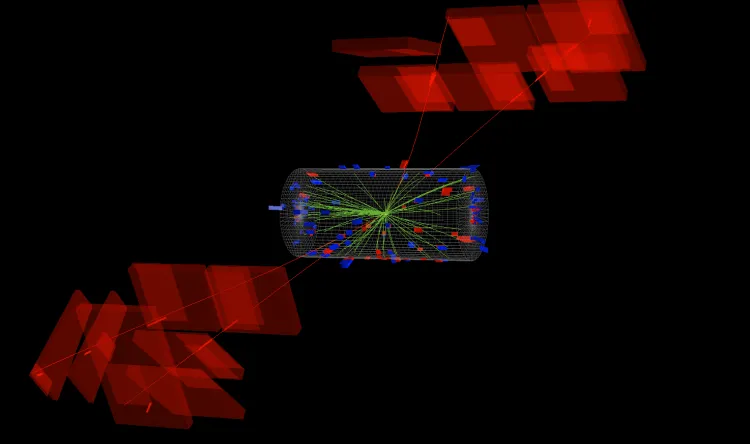
New for Moriond: Higgs does not yet show rare decays into quarkonium pairs
The Standard Model of particle physics asserts that the Higgs boson generates the mass of all fundamental particles.
-
New for Moriond: First measurement of the effect of virtual Higgs bosons on top quarks
After the discovery of the Higgs boson, CMS observed its interaction with some standard model particles like the bottom and top quark, the tau lepton, and the W and Z boson.
-
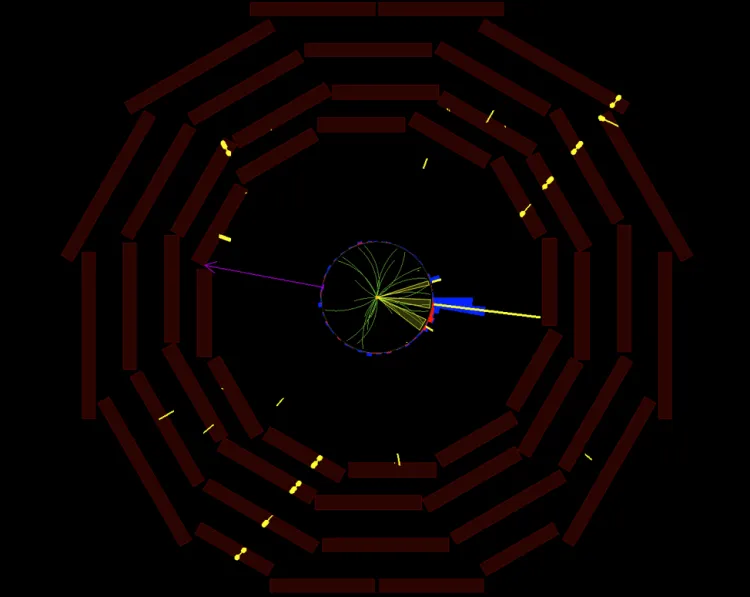
Delayed jets in CMS are just in time for Moriond
CMS searches for delayed jets
-
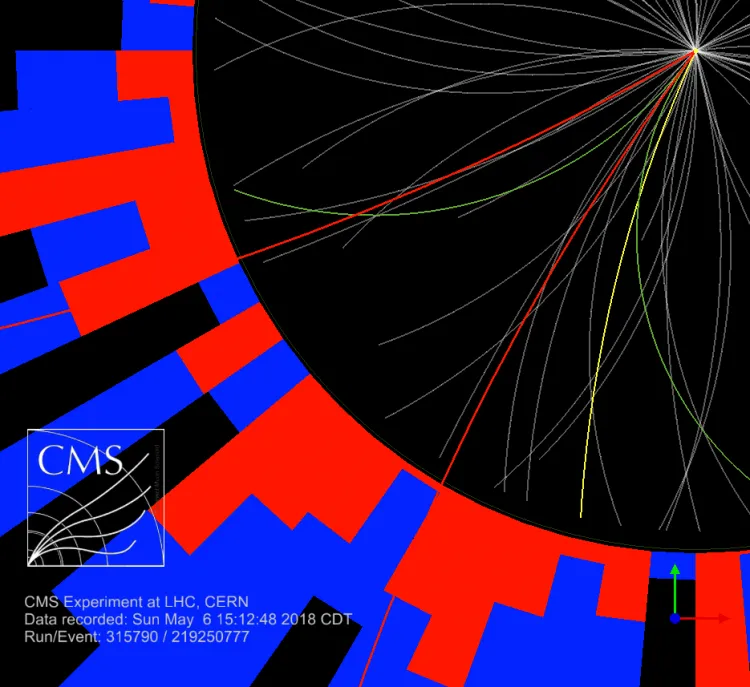
First measurement with the LHC Run 2 pp data collected in 2016, 2017 and 2018.
Observation of two excited Bc mesons and first Bc(2S) mass measurement using the LHC data collected in 2016, 2017 and 2018. In November 2018 the proton-proton running of the LHC Run 2 ended. The data collected in 2018 is the largest ever collected at the LHC. Just under three months after the final proton proton…
-
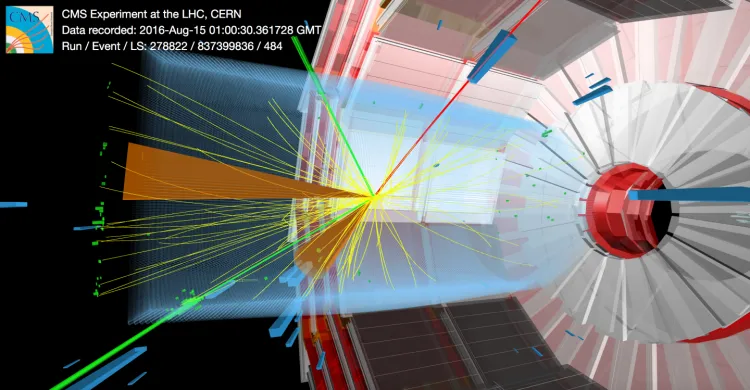
The CMS collaboration has observed a new production mechanism of top quarks
The top quark is the heaviest particle in the standard model, and since its discovery in 1995 at the Tevatron collider at Fermilab, its study has become prominent in furthering our understanding of fundamental physics.
-
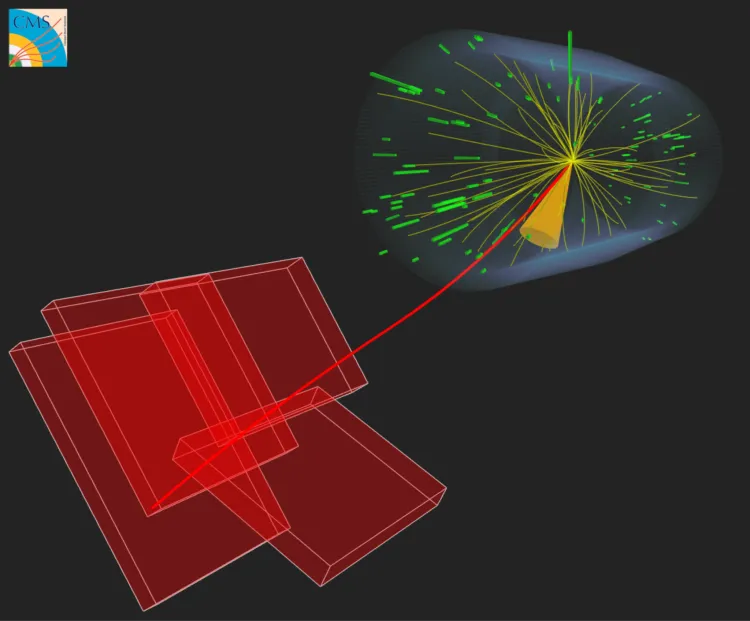
Opening up the tau cone in search for new particles
CMS sees evidence of the Upsilon meson decaying into two tau leptons for the first time at a hadron collider Beyond our best current understanding of particle physics, encapsulated in the standard model, various theoretical models predict the existence of additional particles–including new scalar bosons–which could help explain mysteries such as dark matter or the…