
Tag: Physics briefing
-
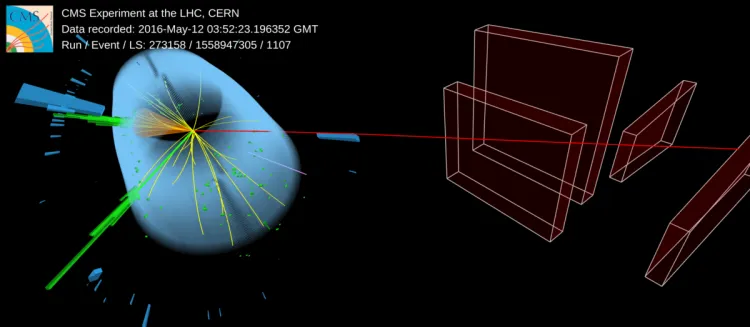
A close and complicated relationship: The top quark and the W boson intertwine
The CMS collaboration has examined for the first time the kinematic dependence of the production of a top quark and a W boson. This gives insight into the quantum interference of top quark production at the LHC and allows more accurate background predictions for searches for new particles.
-
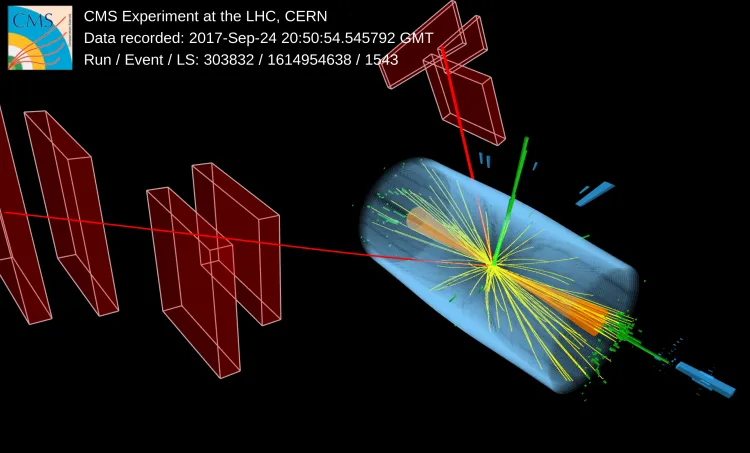
Probing the Standard Model with a boson-boson collider
To investigate when the Standard Model will start breaking down, the CMS Experiment looks at extremely rare collisions where the Large Hadron Collider is working as a boson-boson collider. This can teach us more about the nature of the Higgs boson and the possibility of new particles and forces at energies beyond directly reachable by…
-
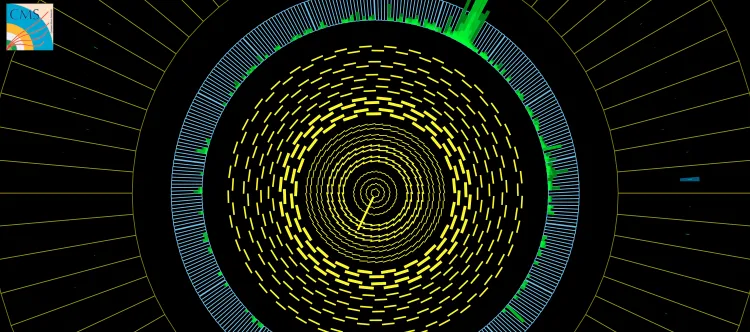
A disappearing act in CMS
New, undiscovered charged particles could be produced by the LHC, leaving tracks in CMS that look similar to tracks from Standard Model particles. If the new particle decays to other, unseen new particles inside the CMS tracker, a very striking signature would be observed: a ‘disappearing track’. CMS has carried out a new search for…
-
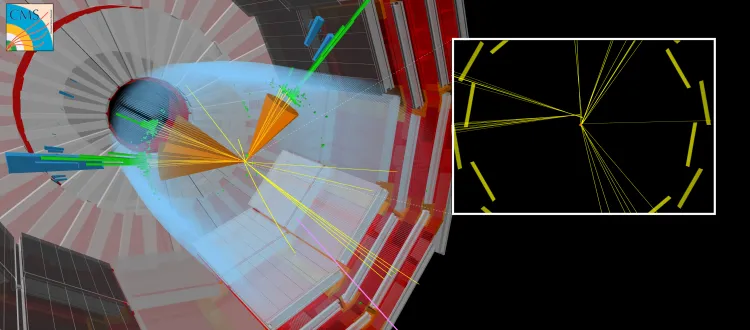
Using artificial intelligence to search for new exotic particles
Nowadays, artificial neural networks have an impact on many areas of our day-to-day lives. They are used for a wide variety of complex tasks, such as driving cars, performing speech recognition (for example, Siri, Cortana, Alexa), suggesting shopping items and trends, or improving visual effects in movies (e.g., animated characters such as Thanos from the…
-
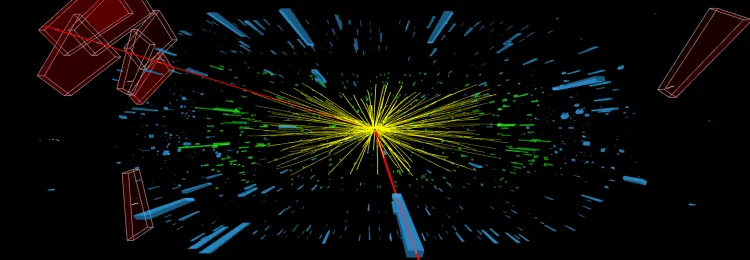
How CMS changes muons to taus to better catch the Higgs boson
At the LHC, protons do not collide one at a time.
-
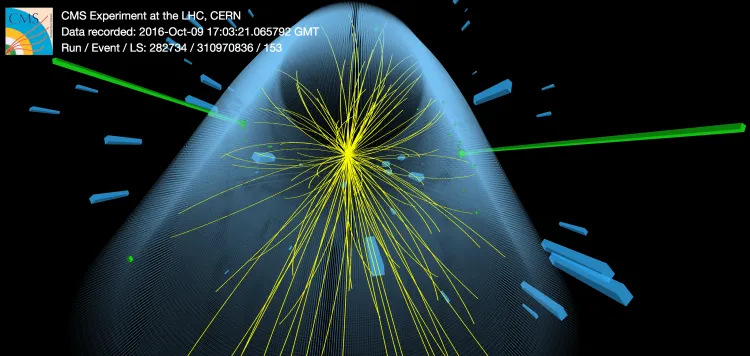
CMS precisely measures the mass of the Higgs boson
A new result by the CMS Collaboration narrows down the mass of the Higgs boson to a precision of 0.1%.
-
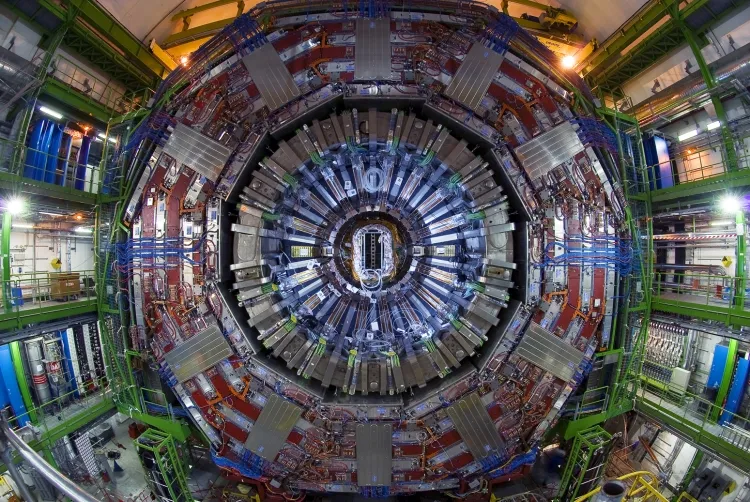
Three questions that the top quark can answer
For the first time, CMS physicists have measured the production rate of top quark pairs as a function of three experimental observables simultaneously. The new result helps to answer several fundamental questions, among which, the properties of gluons inside protons, the strength of the strong nuclear interaction, and how massive the top quark precisely is.
-
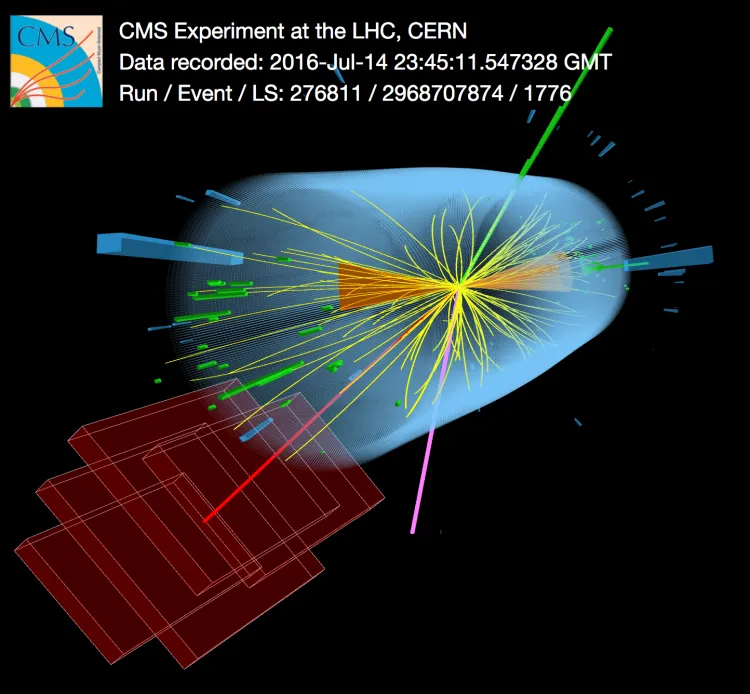
Watching the top quark mass run
For the first time, CMS physicists have investigated an effect called the “running” of the top quark mass, a fundamental quantum effect predicted by the Standard Model.
-
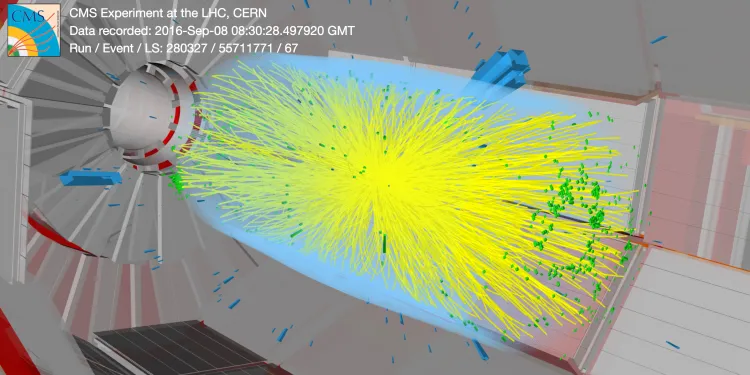
How CMS weeds out particles that pile up
When the CMS experiment records particle collision events, a large number of unwanted extra collisions overlap in the detector and hide the rare particle collision that is worthwhile studying. CMS physicists have developed a new method that gives improved precision for the study of collisions even when occurring together with 50 or more extra interactions.
-
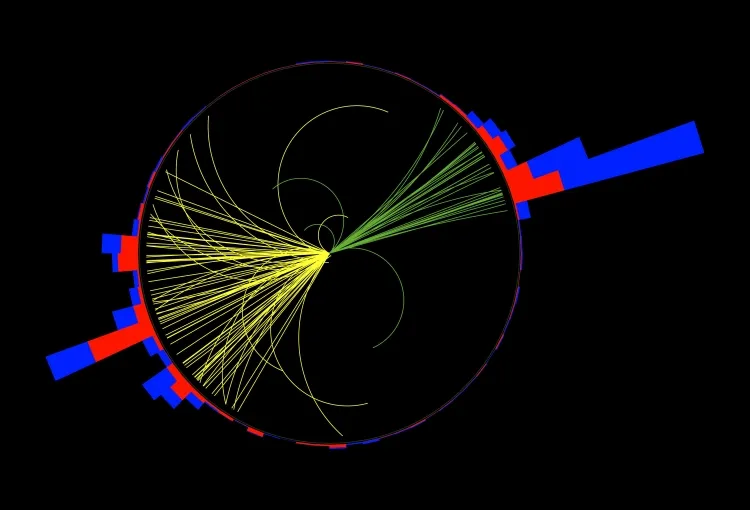
Machining jets
New algorithms from the Compact Muon Solenoid experiment use the ideas used in mobile phone facial recognition to better understand the collisions at the Large Hadron Collider.