
Category: Article
-
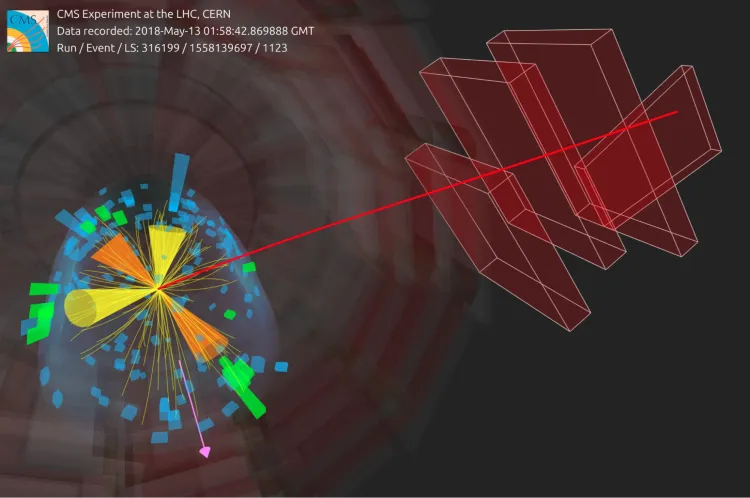
CMS observes another indication of a momentary union of the heaviest quarks, now in the lepton + jets final state
The CMS experiment provides the first confirmation of the excess observed in top quark-antiquark production that is consistent with the short-lived bound state – toponium – decaying to a lepton + jets final state.
-
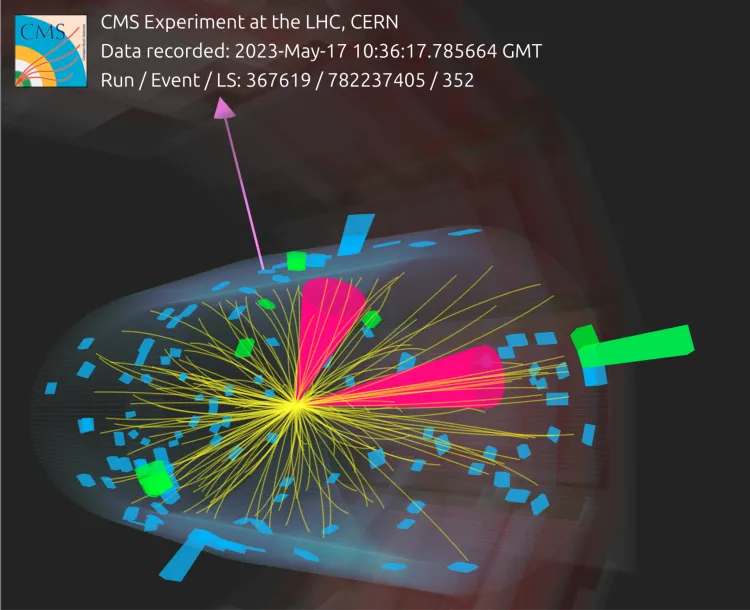
Does the Higgs look a little odd lately?
The CMS experiment has performed a new search for Charge-Parity violation in Higgs boson decays to tau leptons, shedding light on the origin of matter.
-
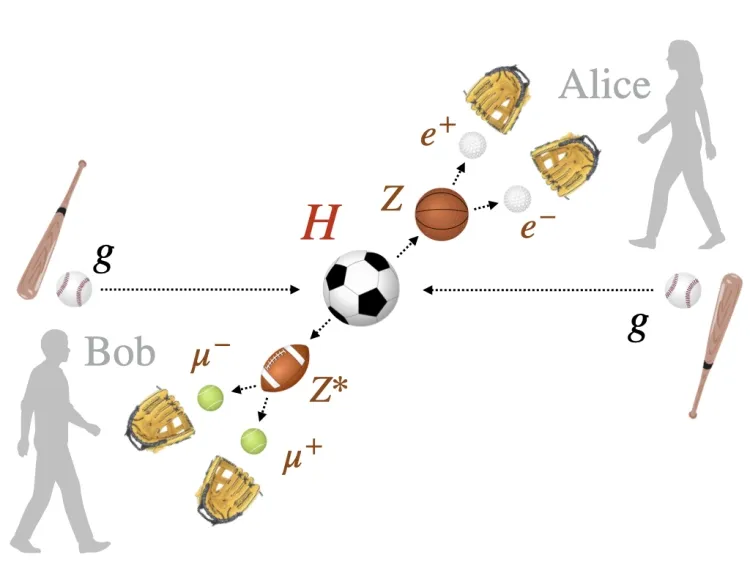
The tangled dance of Higgs boson decays
For the first time, the CMS experiment probes quantum entanglement in Higgs boson decays to a pair of Z bosons.
-
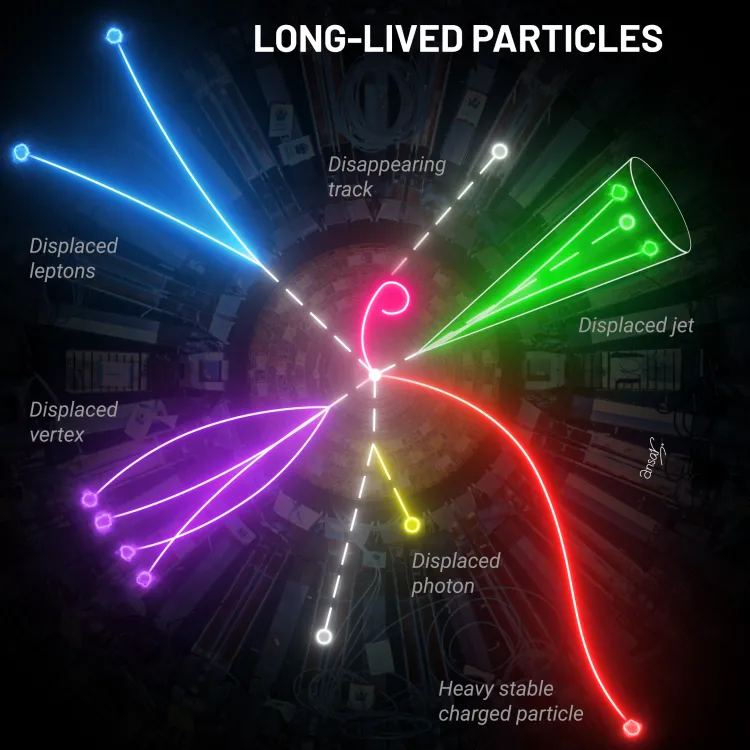
Unlocking the vault of new physics
In Run 3, CMS expanded its trigger program to enhance capturing long-lived particles that decay far away from the point of collision – broadening the search for physics beyond the Standard Model.
-
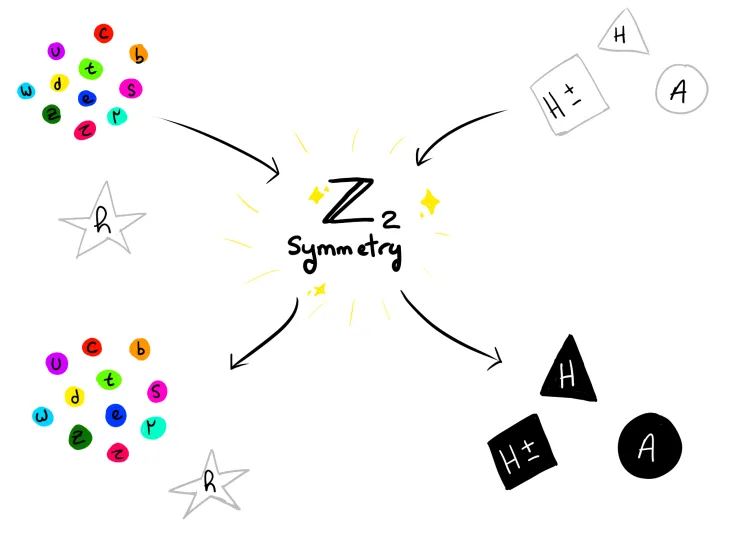
Double the doublet, shake well, break one, and keep the other intact: welcome, dark scalars!
For the first time ever, the CMS experiment has designed a dedicated analysis using parametrised machine learning to look for new dark particles that don’t socialize with Standard Model fermions, one of them being a favourite candidate in the search for dark matter.
-
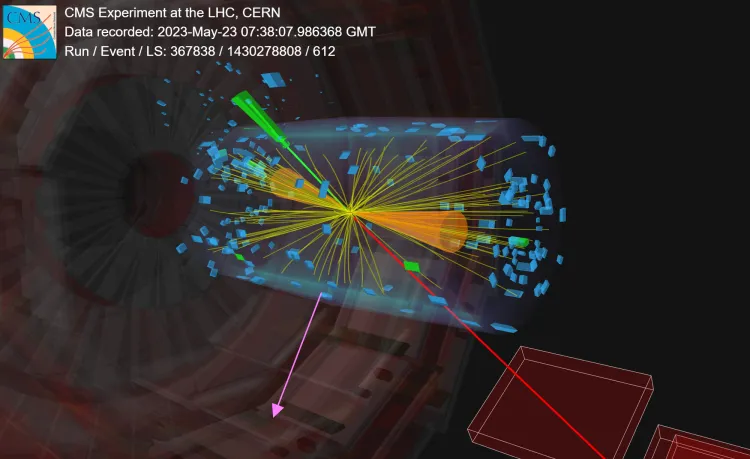
First measurements of vector boson scattering at 13.6 TeV
The CMS Collaboration reports the first measurements of the production of same-sign WW and WZ boson pairs in association with two jets at 13.6 TeV, using data collected during 2022–2024. One of the most powerful probes of the Higgs mechanism and the electroweak force is a rare process known as vector boson scattering (VBS).
-
CMS at Moriond 2026
The CMS Collaboration announces 38 new results for Moriond 2026. Here are the highlights of what we have presented so far.
-
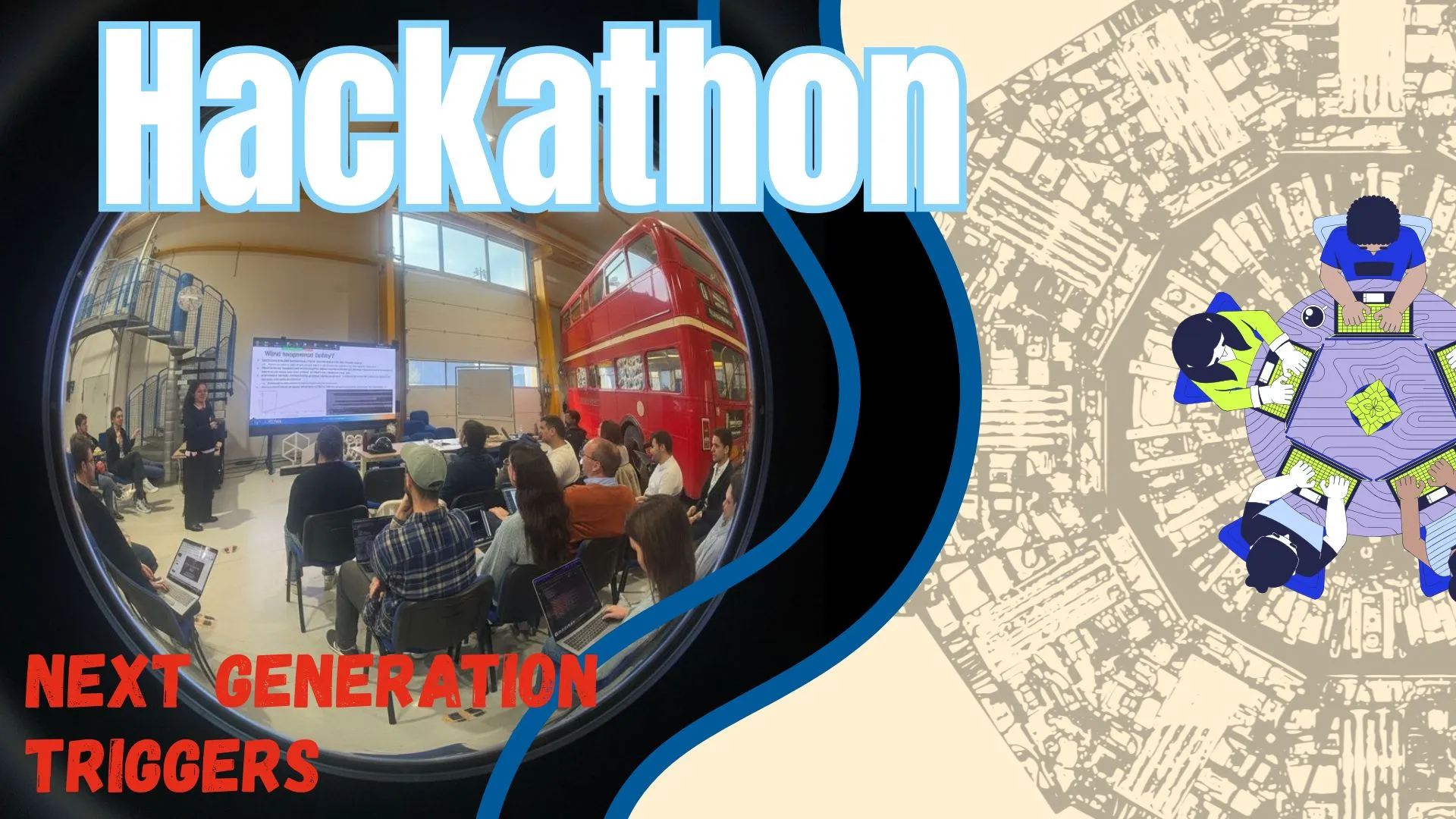
NERD in progress: Mastering HLT Calibration at the NGT Hackathon
Hello, I’m Jessica Prendi and I’m a 25-year-old PhD student in the CERN Doctoral Programme from ETH Zürich. I started my PhD last October and my main project here is Optimal Calibration at the High-Level Trigger (HLT).
-
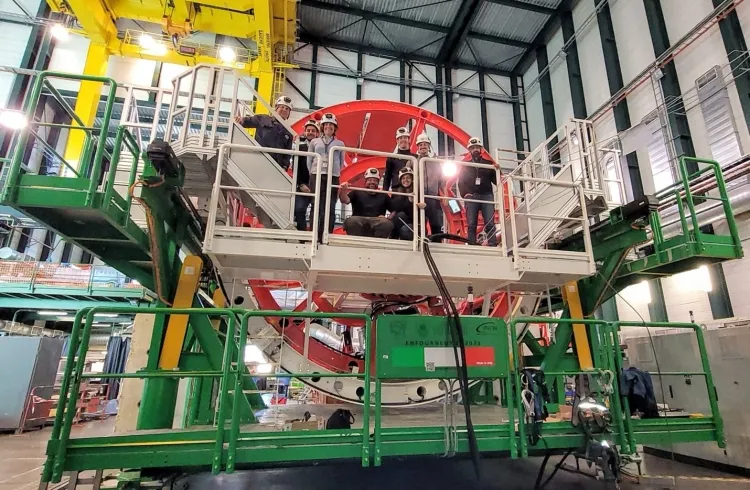
Handling Supermodules for Hi-Lumi CMS: How the ECAL team tested their Enfourneurs
The Electromagnetic Calorimeter (ECAL) group has tested the second enfourneur (pictured above), a highly specialized instrument that allows the insertion and extraction of key components of the CMS detector at CERN, the ECAL ‘supermodules’.
-
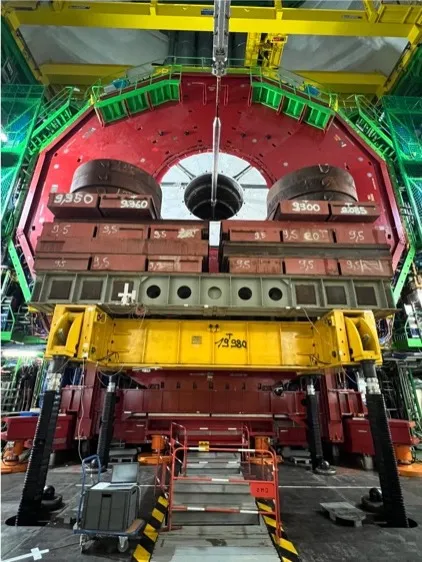
Load Testing over 365 Tonnes on ‘Spindles’ in Preparation for Hi-Lumi CMS
CMS successfully carried out key tests for the lifting system needed in the construction of Hi Lumi CMS during the end of year stop 2025/2026. Four thin legs emerge from the floor of the CMS cavern to lift incredibly heavy parts of the CMS detector.