
Tag: Physics briefing
-
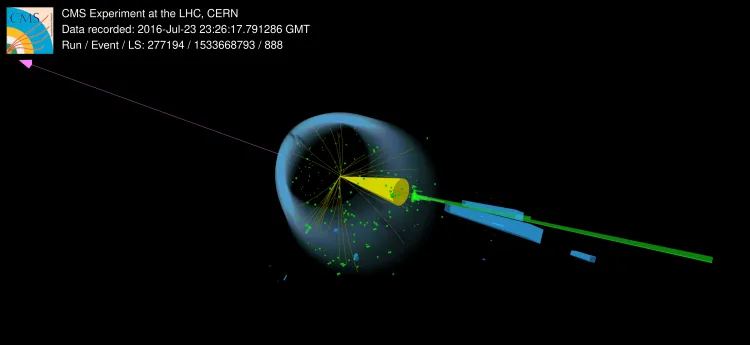
A tale of two colliders and the unrivalled precision on the Z invisible width
The most powerful particle collider in the world, the Large Hadron Collider (LHC), was built in the 27 km tunnel originally excavated for the highest energy electron-positron collider ever built, LEP.
-
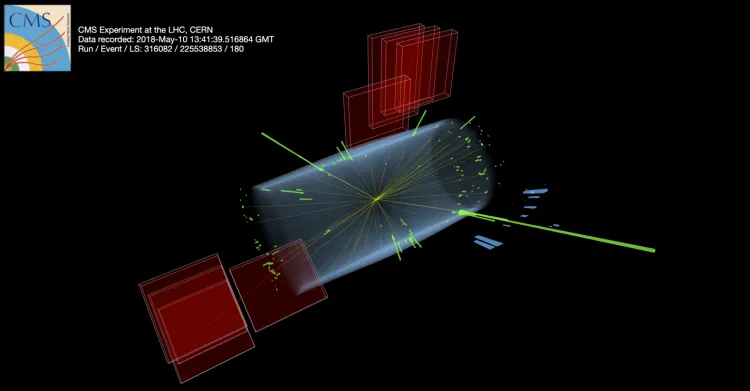
Using the golden decay channel to understand the production of the Higgs boson
Using the golden decay channel to understand the production of the Higgs boson The standard model of particle physics is currently the best way to describe interactions of fundamental particles that make up our Universe.
-
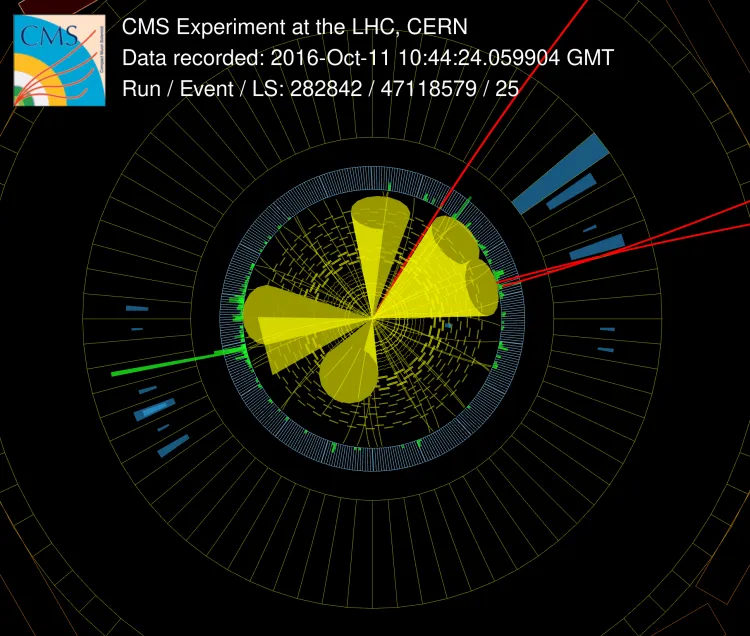
What does the decay of a bottom quark look like?
What does the decay of a bottom quark look like?
-
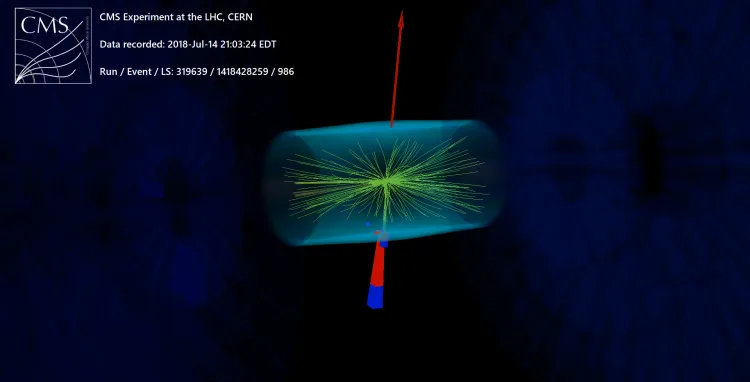
A shot in the dark: Can jets recoil against Dark Matter?
A shot in the dark: Can jets recoil against Dark Matter?
-
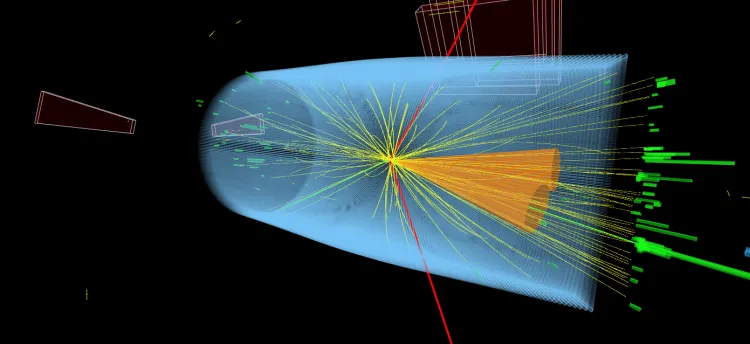
Using machine learning to improve the detection of new physics in the interactions of the top quark
Using machine learning to improve the detection of new physics in the interactions of the top quark Although our theory describing the interactions between fundamental particles is exceptionally successful, it has weaknesses.
-
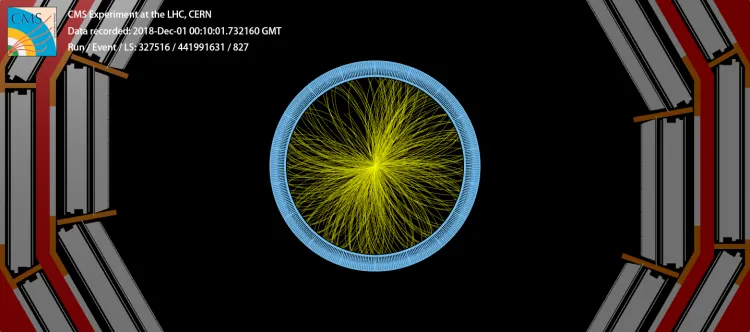
Exploring the physics processes inside the hottest matter in the universe
Quarks are elementary particles in the Standard Model and the building blocks of the protons and neutrons in atoms.
-
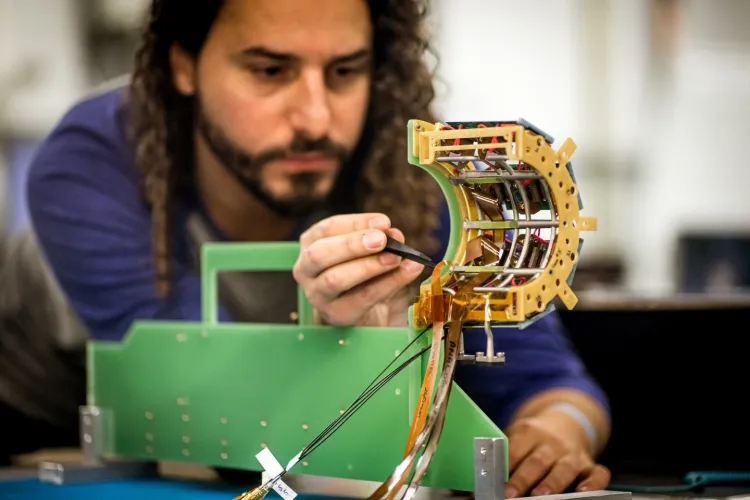
Illuminating! Counting LHC collisions with CMS
In the LHC, groups of 100 billion protons collide 25 million times every second.
-
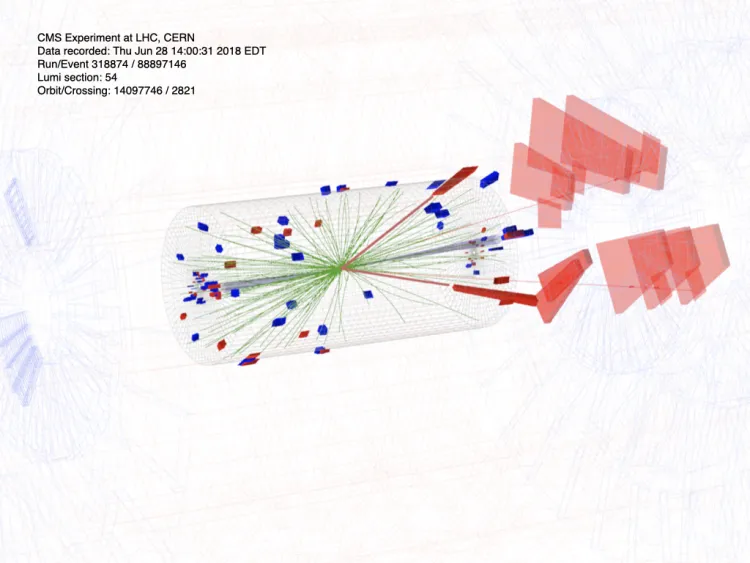
Scrutinizing production and decay kinematics of the Higgs boson using its golden decay channel
The CMS collaboration has submitted a paper with a new, precise analysis of the data enriched in the Higgs boson decays to four leptons.
-
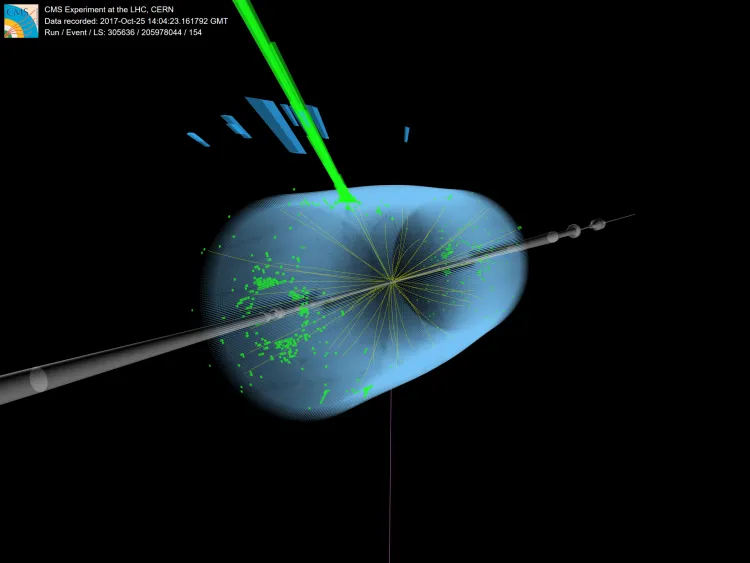
Search for New Physics with one charged lepton and missing energy
Experimental evidence from the last half-century has established the standard model as a foundational theory of particle physics.
-
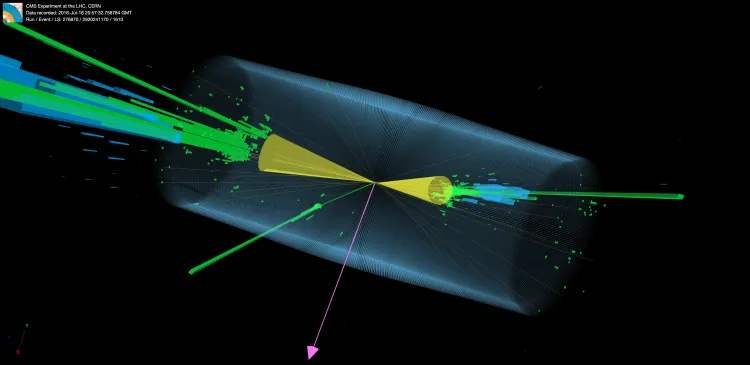
One, two, three, W bosons bloom in the spring
The Standard Model of the fundamental particles describes the W and Z bosons as the mediator particles of the weak force, one of the four known fundamental forces responsible for the phenomenon of radioactivity and an essential ingredient to our Sun’s thermonuclear process.