
Tag: Physics briefing
-
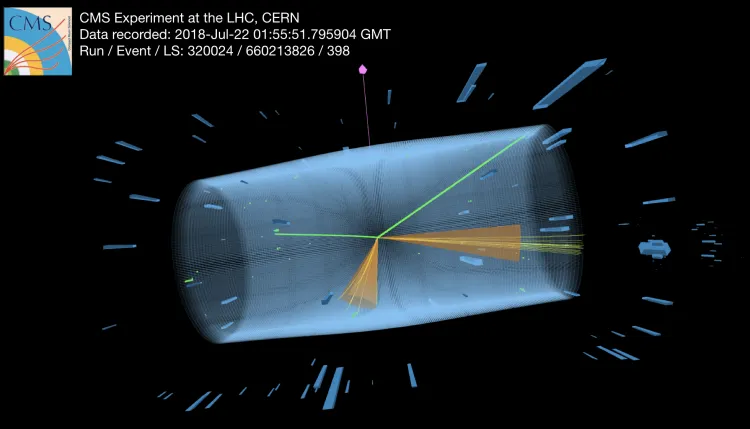
Low-energy leptons for high-energy physics
Since the LHC first began colliding protons over ten years ago, CMS physicists have hoped to find evidence for one of the most popular and expansive theories of New Physics — Supersymmetry.
-
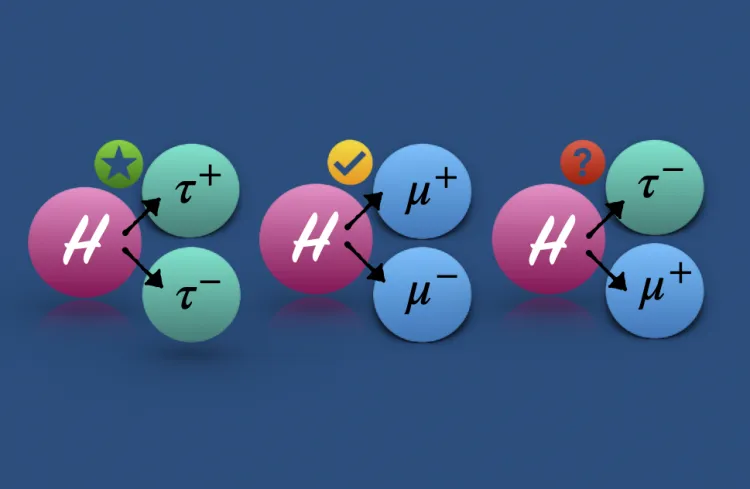
“To be, or not to be conserved, that is the question”: Lepton flavor in Higgs boson decays
The term ‘flavor’ was introduced by Murray Gell-Mann and his student Harald Fritzsch to describe the different types of quarks known at the time – up, down, and strange – the list of quark flavors grew to six.
-
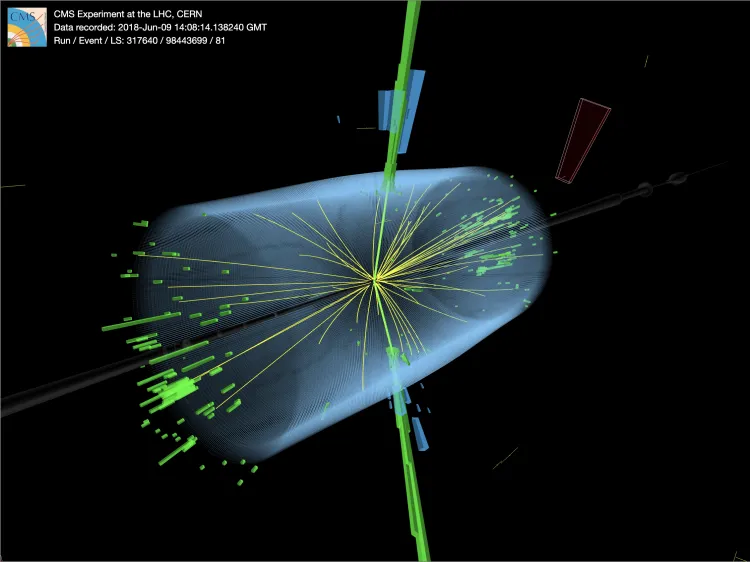
Searching for new physics with very high energy lepton pairs
Are there more fundamental particles than the ones we currently know?
-
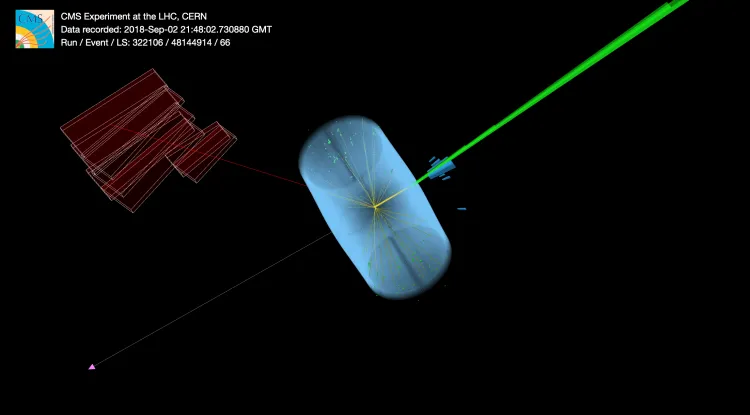
Searching for a hidden signal
The CMS Collaboration has released the results of a new analysis that looks for the subtle influence of “new physics” in the production of a W boson and photon pair.
-
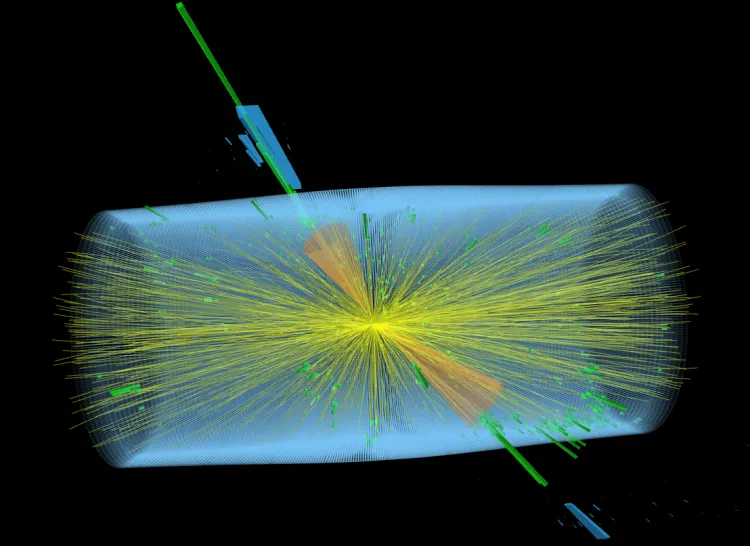
Jetting through a droplet of matter from the early universe
High energy heavy-ion collisions provide a unique opportunity to study one of the four forces of nature, the strong force, under extreme conditions.
-
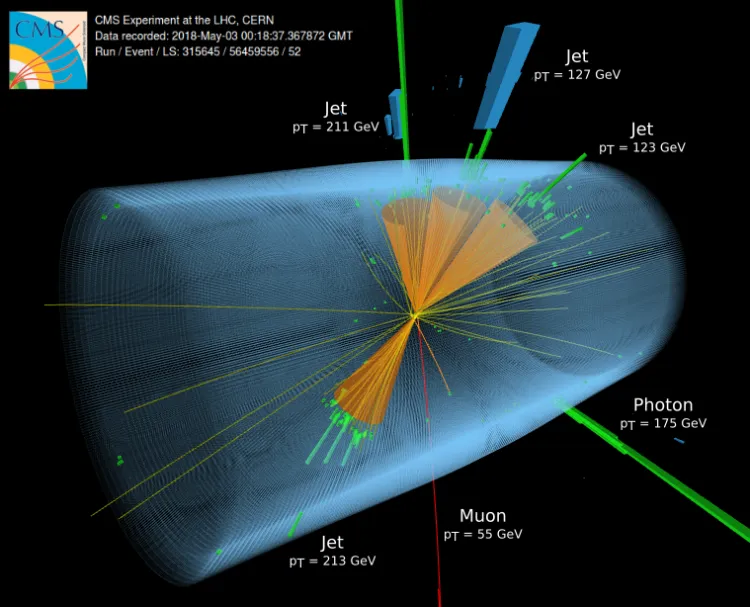
The top quarks’ energetic light
Electromagnetic interactions govern everyday life: You see an object when particles of light deposit energy on the retinas in your eyes.
-
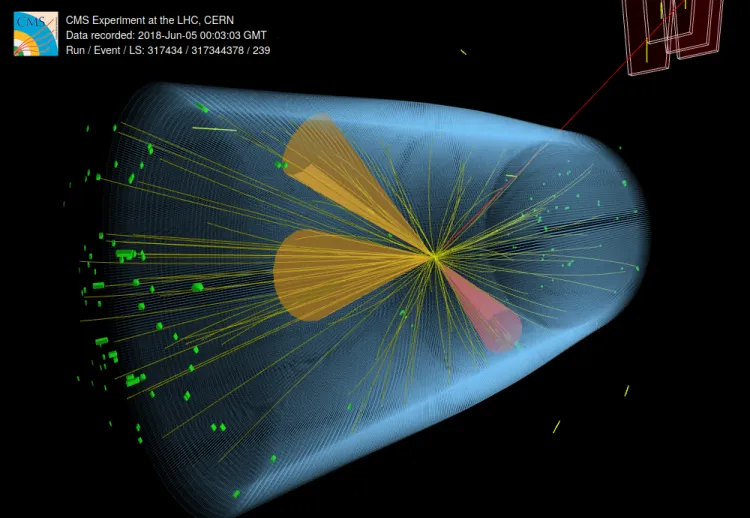
How many Higgs bosons are there?
In the Standard Model of particle physics, at least one Higgs boson is needed to explain fundamental particles’ masses.
-
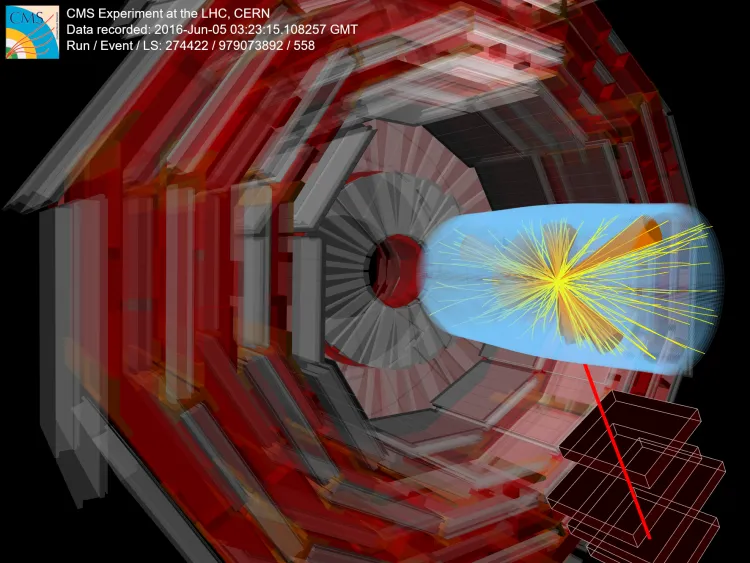
Under the Radar: Searching for Stealthy New Particles
The standard model of particle physics encapsulates our current knowledge of elementary particles and their interactions.
-
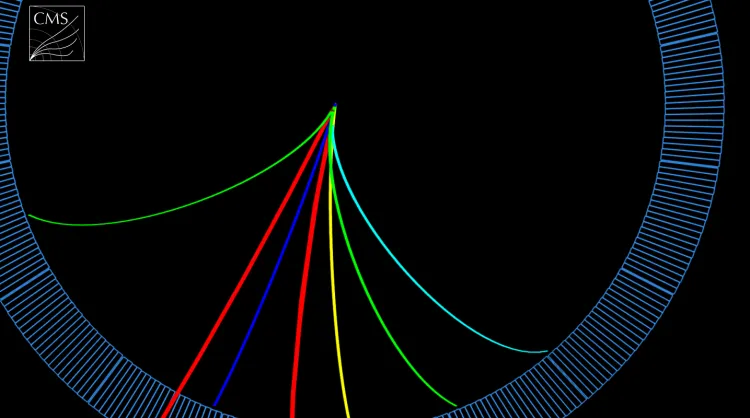
Observation of a new excited beautiful strange baryon at the CMS experiment
Quantum Chromodynamics (QCD) is the part of the Standard Model of Particle Physics that describes the strong interaction.
-
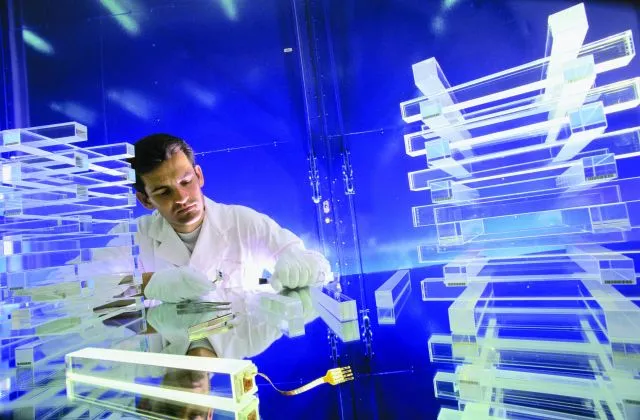
Finding electrons and photons with the CMS detector
Fundamental particles are the most basic building blocks of the universe.