
Category: Article
-
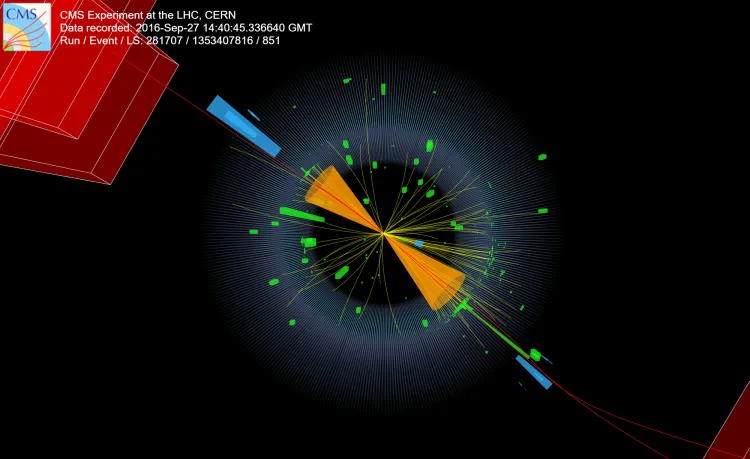
Quarks running for freedom: Probing the strong force at high precision
The CMS experiment achieves the most precise determination of the strength of the strong nuclear force using the rates of production of jets at several centre-of-mass energies.
-
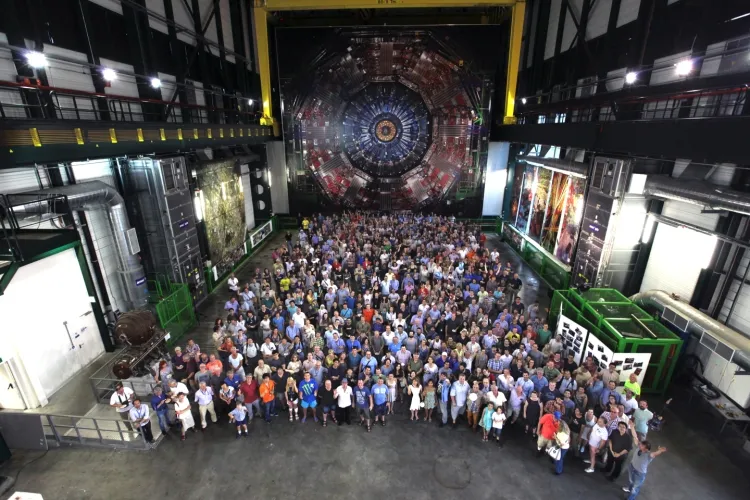
CMS Collaboration awarded $1M for its contribution to fundamental physics
On Saturday 5th April Patty McBride, former CMS Spokesperson, received the 2025 Breakthrough Prize in Fundamental Physics on behalf of the CMS Collaboration.
-
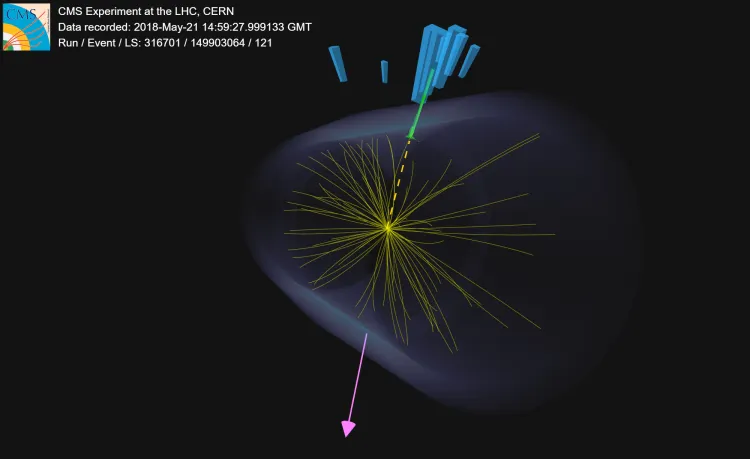
Beyond light: Probing dark matter and extra dimensions with CMS
By studying events with only a single energetic photon, the CMS experiment places some of the most stringent constraints to date on dark matter models and theories predicting extra dimensions of space.
-
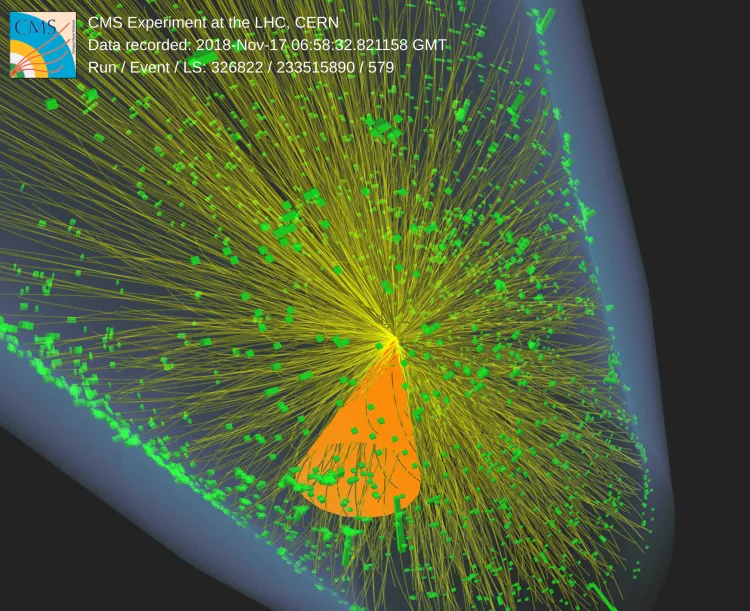
Looking for early vacuum-like emissions in jets in heavy ion collisions
CMS explores the early stages of jet evolution in heavy-ion collisions When heavy ions such as lead (Pb) collide in the LHC, a new state of matter called the quark-gluon plasma (QGP) is formed.
-
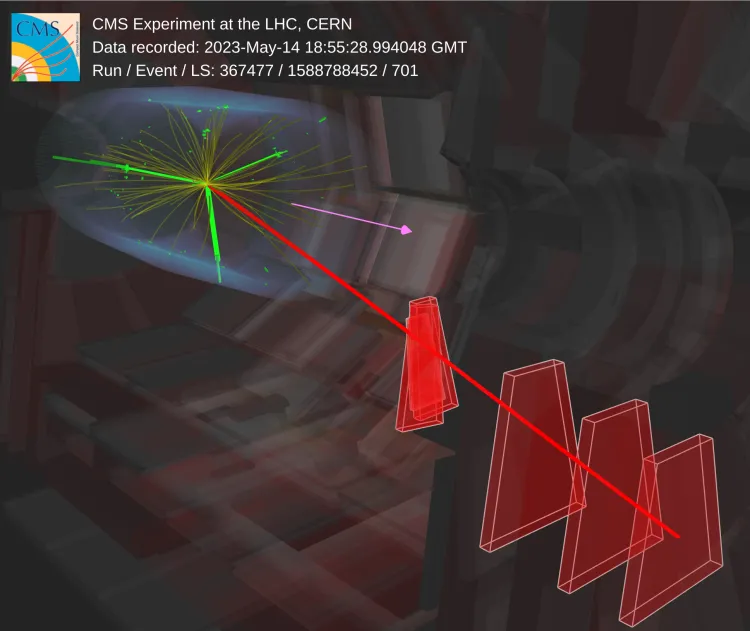
Probing interactions among trios of heavy vector bosons at record energy
CMS presents the most precise measurement of WWZ production to date by combining Run 2 data with more recent Run 3 data.
-
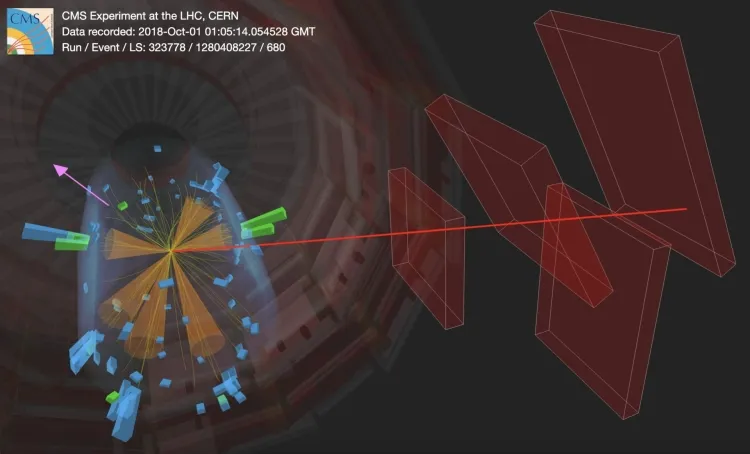
Topping up the charming Higgs
The CMS experiment presents the first-ever search for a Higgs boson decaying to charm quarks when the Higgs boson is produced along with two top quarks.
-
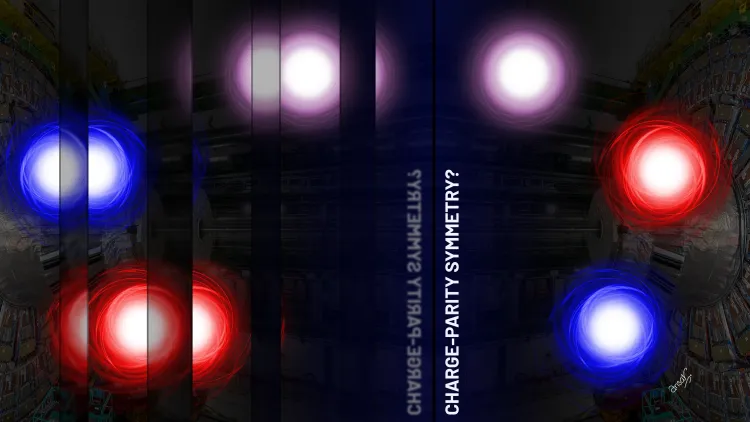
Broken mirrors: Do top quarks and Z bosons defy charge-inversion and reflection symmetry?
For the first time, the CMS experiment has employed physics-informed machine learning to observe whether the laws of physics still hold true when top quarks and Z bosons are replaced with their antiparticles and space is reflected.
-
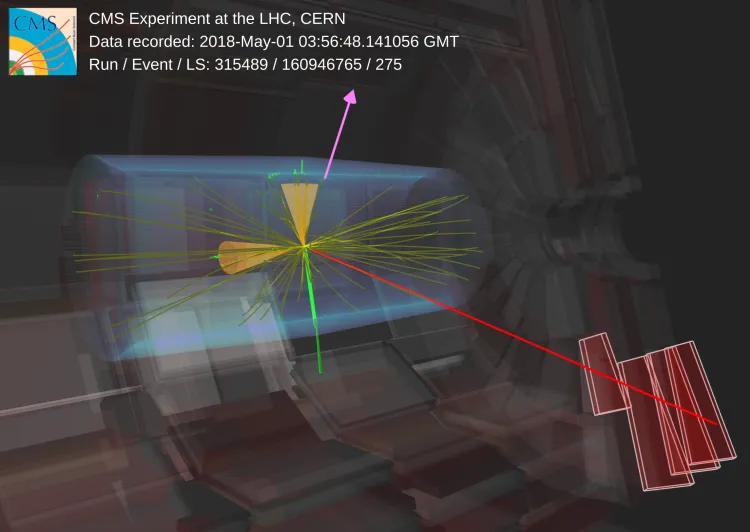
It takes two: CMS observes signs of attraction between top quark pairs
An excess in data hints at the existence of a top quark-antiquark quasi-bound state, called “toponium”.
-

Don’t call it toponium
A large and unexpected excess of top quark pairs has the physics community excited, but the interpretation is still up for debate.
-
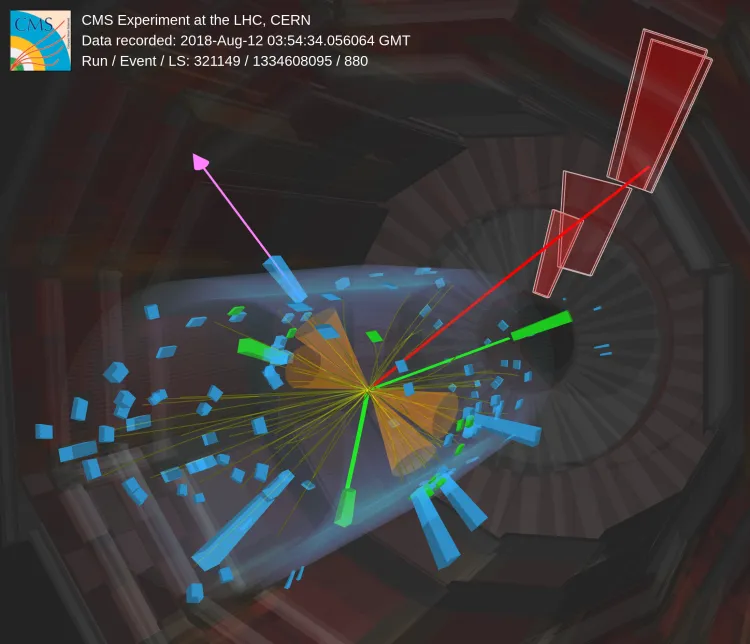
The flavour of new physics
The CMS Collaboration investigates whether physics plays favorites with quarks.