Category: Article
-
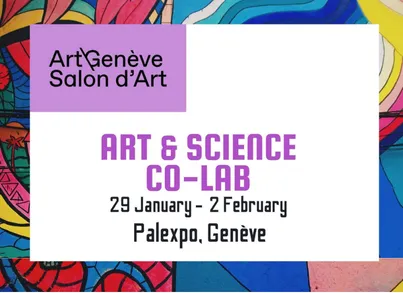
Art & Science Co-Lab at Art Genève!
Art & Science Co-Lab at Art Genève 2025: A Meeting Point for Creativity and Innovation The Art & Science Co-Lab invites guests, participants, and volunteers to engage in this collaborative initiative and explore new perspectives at the intersection of art and science.
-
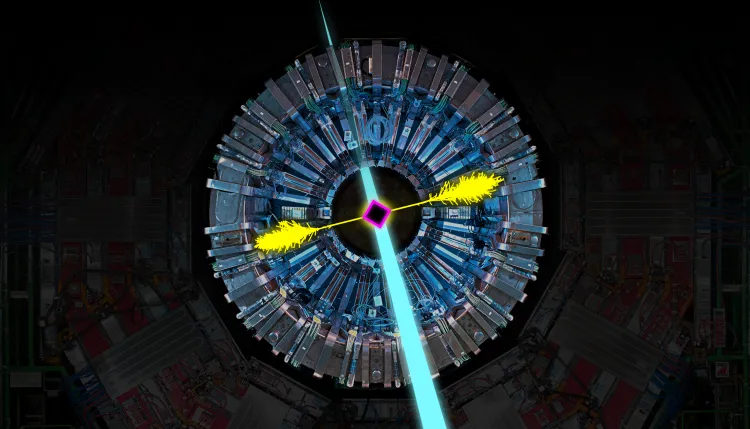
The “Large Photon Collider”: CMS observes scattering of light by light at the LHC
CMS scientists discover some of the rarest collisions that the LHC can produce – such as the scattering of light by light – and learn more about the quantum nature of electromagnetism, search for new particles, and much more.
-
CMS Wrapped: A Year in Review
Welcome to our look back at 2024 – and what a year it has been!
-
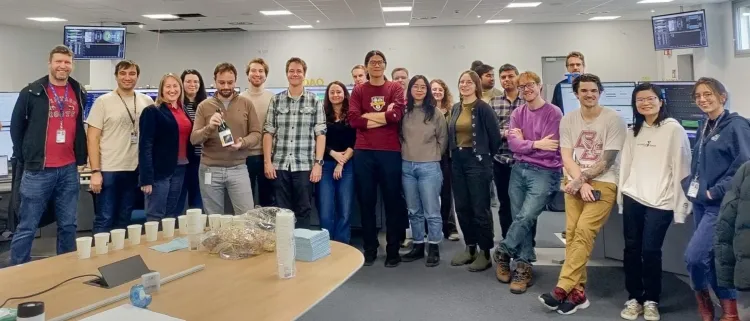
New record: 2024 has been the year with the most recorded data by CMS!
The heavy ion Run has just concluded, marking the start of the extended year-end technical stop (EYETS).
-
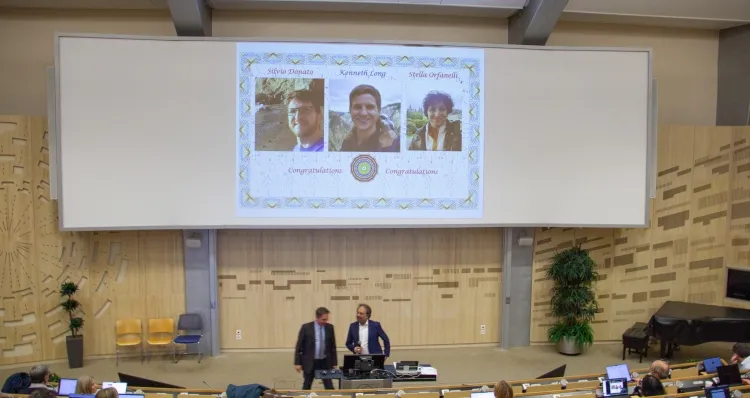
CMS Young Researcher Prize 2024 – The Winners
The CMS Collaboration announced the 2024 Young Researcher Prize winners during the opening plenary of December’s CMS Week: Silvio Donato, Kenneth Long, and Stella Orfanelli.
-
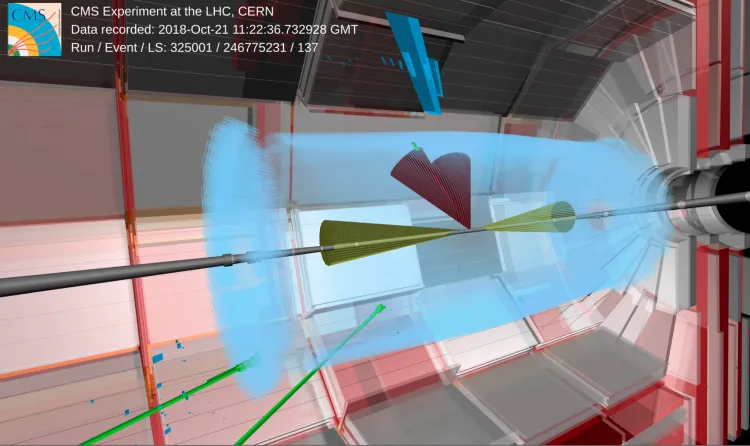
A tale of two Higgs: The quest for production of Higgs boson pairs at CMS
In a recent result, the CMS experiment has combined a comprehensive set of searches for the production of not one but two Higgs bosons – the result is a significant step towards observation of this elusive process, and constitutes a legacy of the Run 2 data taking era at the LHC.
-
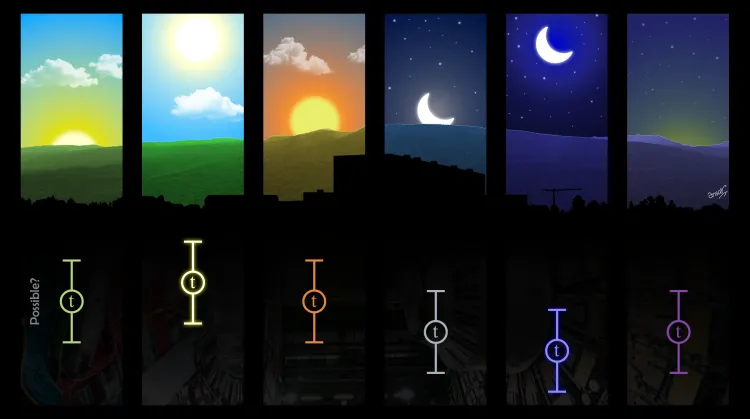
Clocking nature’s heaviest elementary particle: Do top quarks play by Einstein’s rules the whole day and night?
In a first measurement of its kind at the LHC, the CMS experiment tests whether top quarks adhere to Einstein’s special theory of relativity, and improves the bounds on noncompliance by up to a factor of one hundred with respect to previous results.
-
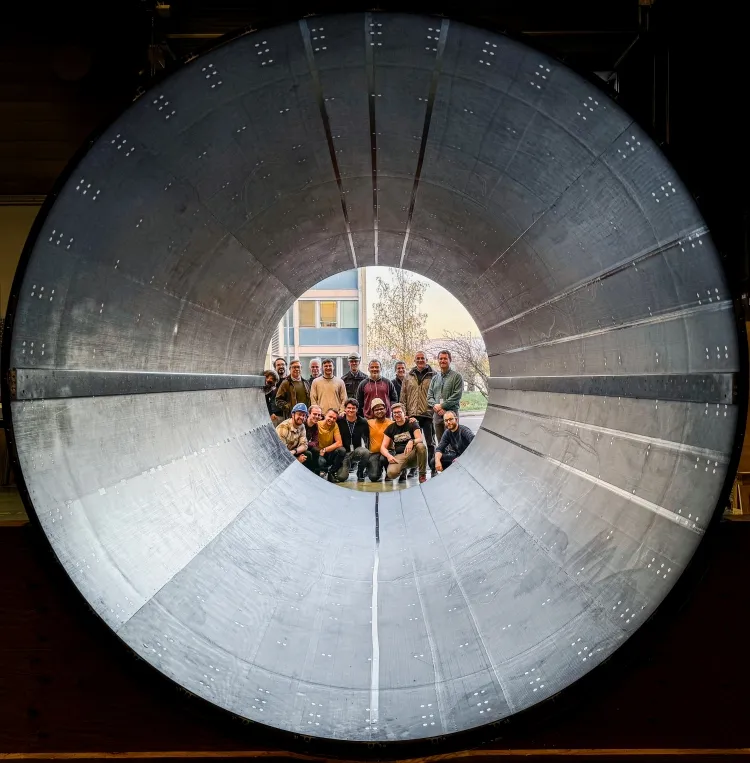
The BTST, a key piece of the Upgraded CMS Detector, arrives at CERN
Above: Part of the BTST team during the unboxing of the tube.
-
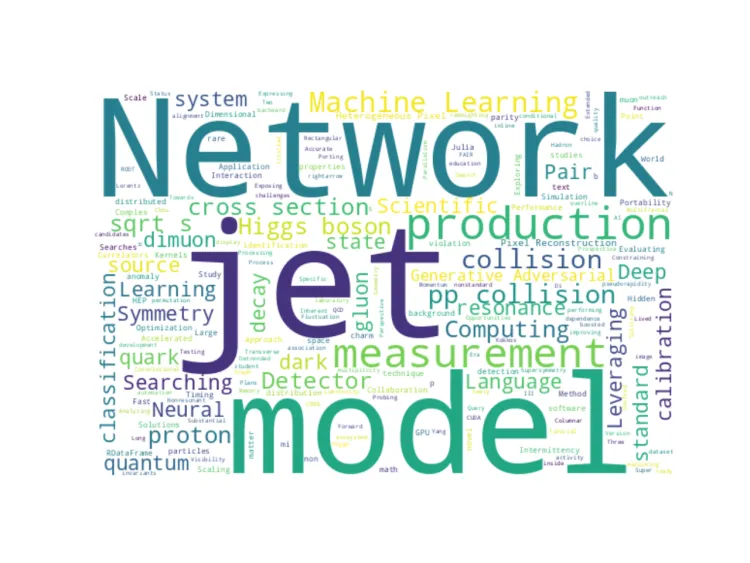
CMS celebrates a decade of Open Data
In November 2014, CMS made history by releasing its first batch of open data, comprising approximately 27 terabytes of proton-proton collision data collected in 2010 at a 7 TeV center-of-mass energy.
-
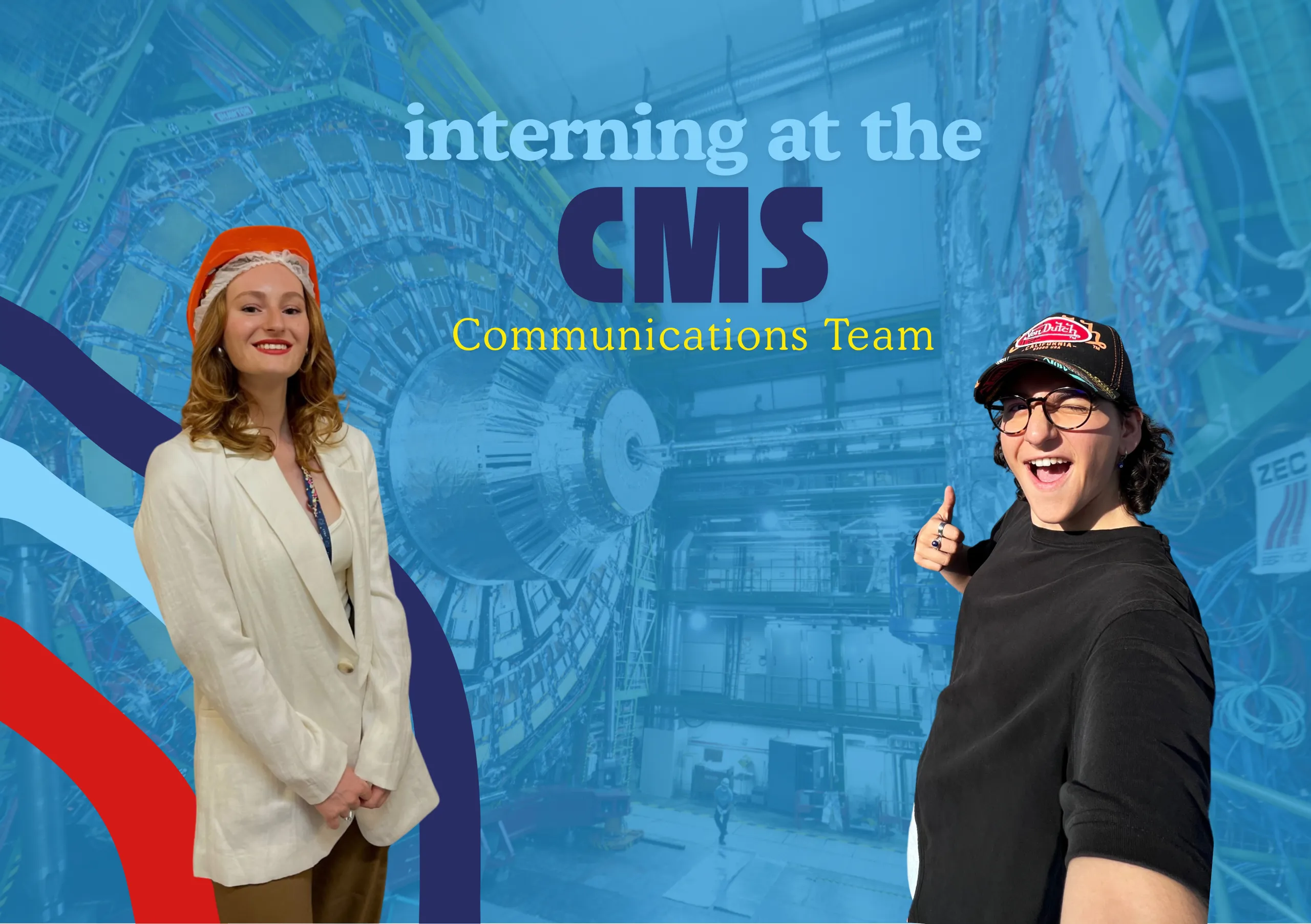
Interning at the CMS Communications Team? Unexpected yet exciting path!