Category: Article
-
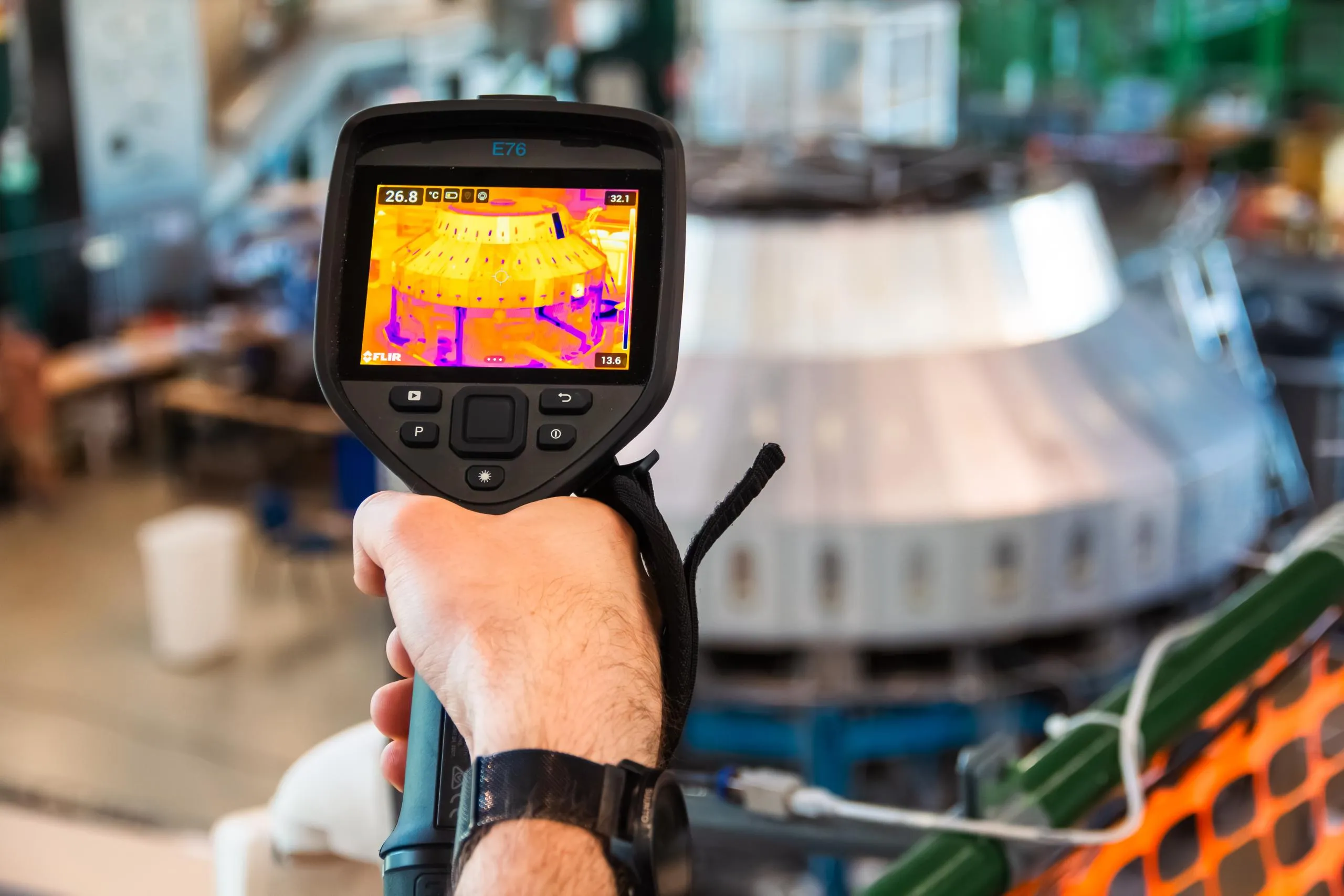
HGCAL keeps its cool in major testing milestone
One of the largest structures of CMS’s future High Granularity Calorimeter (HGCAL) has successfully completed a demanding series of cold tests, marking an important milestone on the road to the High-Luminosity LHC and the next era of particle physics research.
-
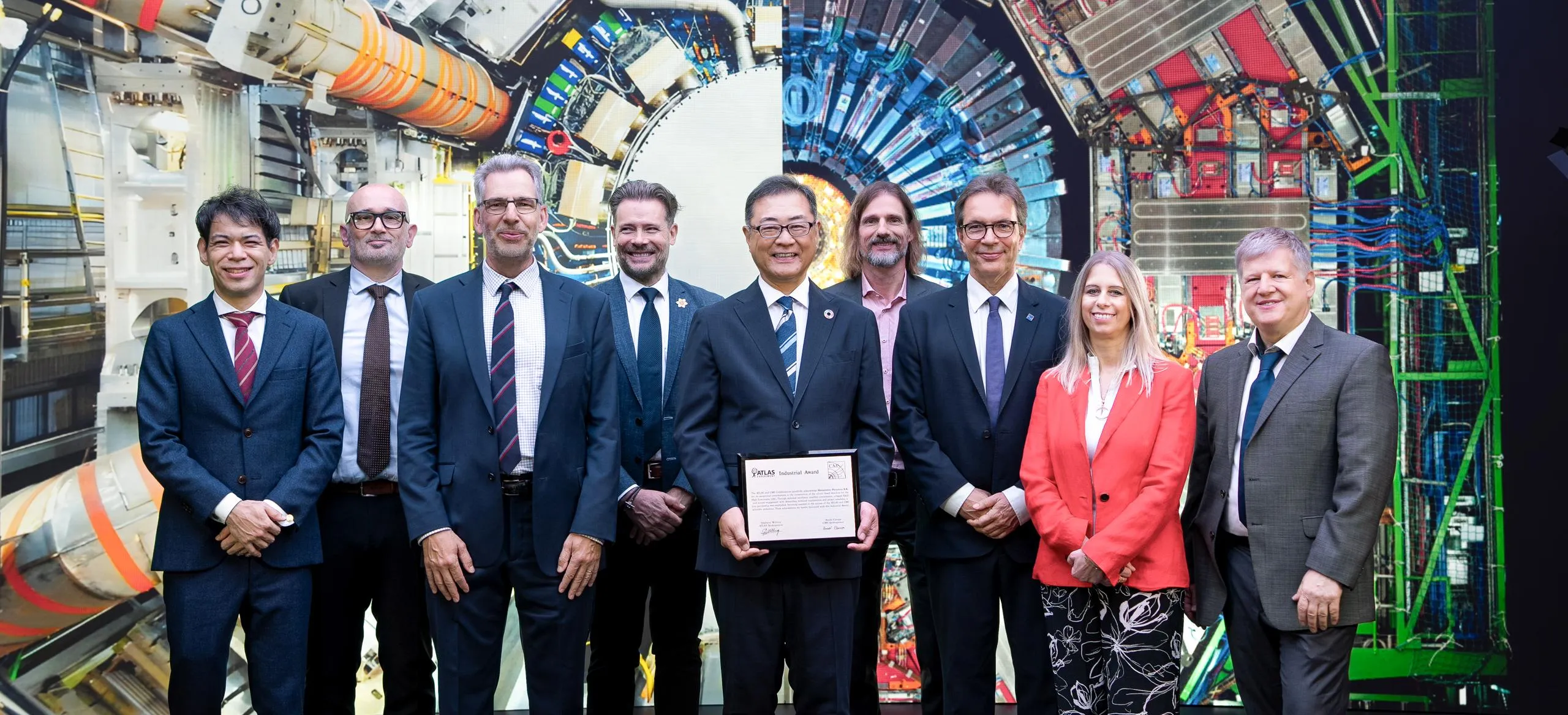
CMS and ATLAS recognise longstanding industrial partner Hamamatsu Photonics K.K.
Hamamatsu Photonics K.K.
-
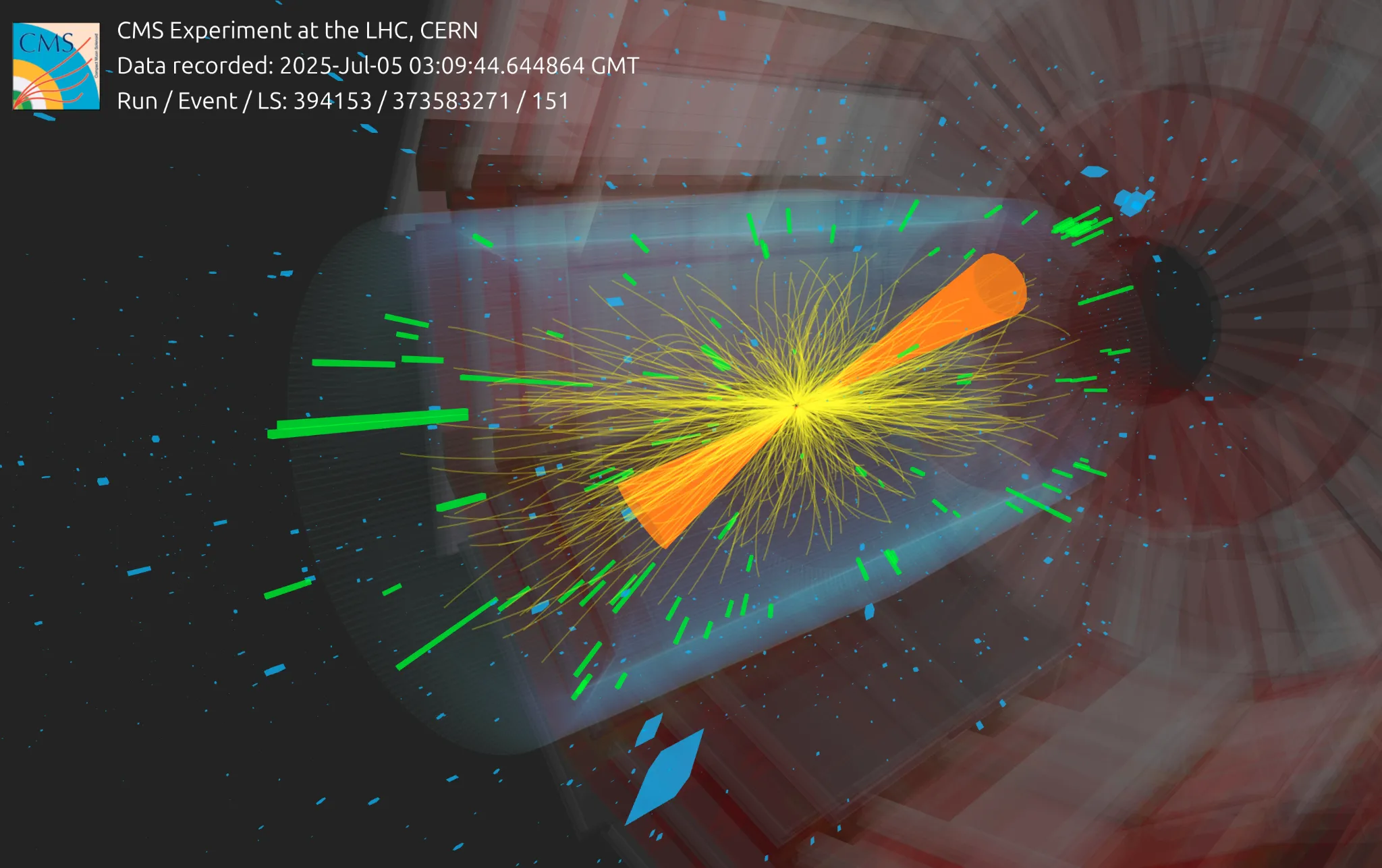
CMS maps the directional patterns of high-momentum particles in light-ion collisions
As high-transverse momentum particles punch through the plasma formed from light ions, the CMS experiment sees a possible imprint from the initial shape of the collisions For the first time, CMS has observed both suppression of high transverse momentum (pT) particles and anisotropy in their azimuthal distributions in a small collision system, which together represent…
-
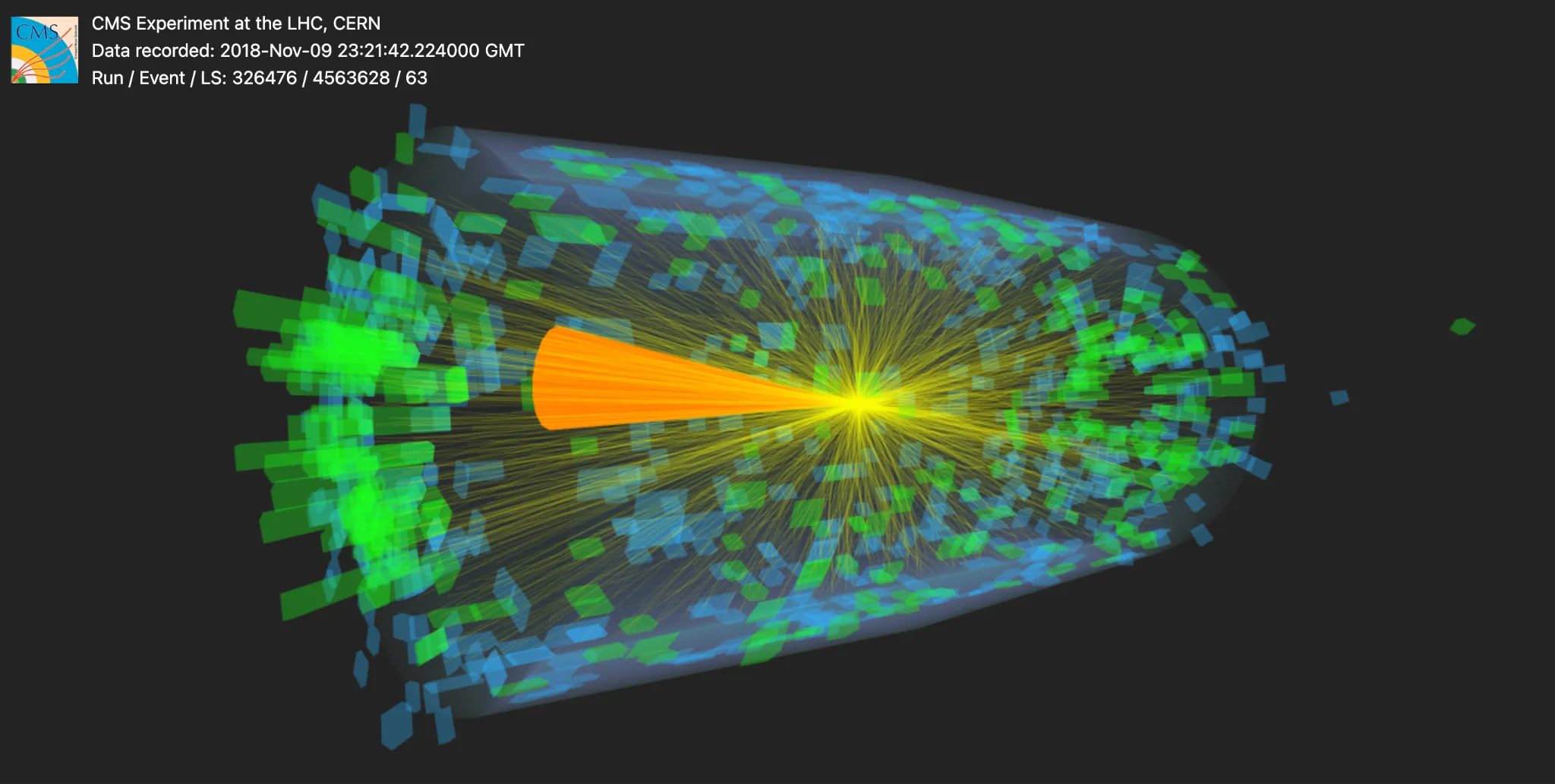
Probing the charm-quark dead cone in the quark-gluon plasma
CMS investigates charm-quark jets in heavy-ion collisions and finds no evidence of additional radiation inside the dead cone When lead ions collide at the Large Hadron Collider, they create an extreme state of matter known as the quark-gluon plasma (QGP), a hot and dense medium similar to the one that filled the Universe shortly after…
-
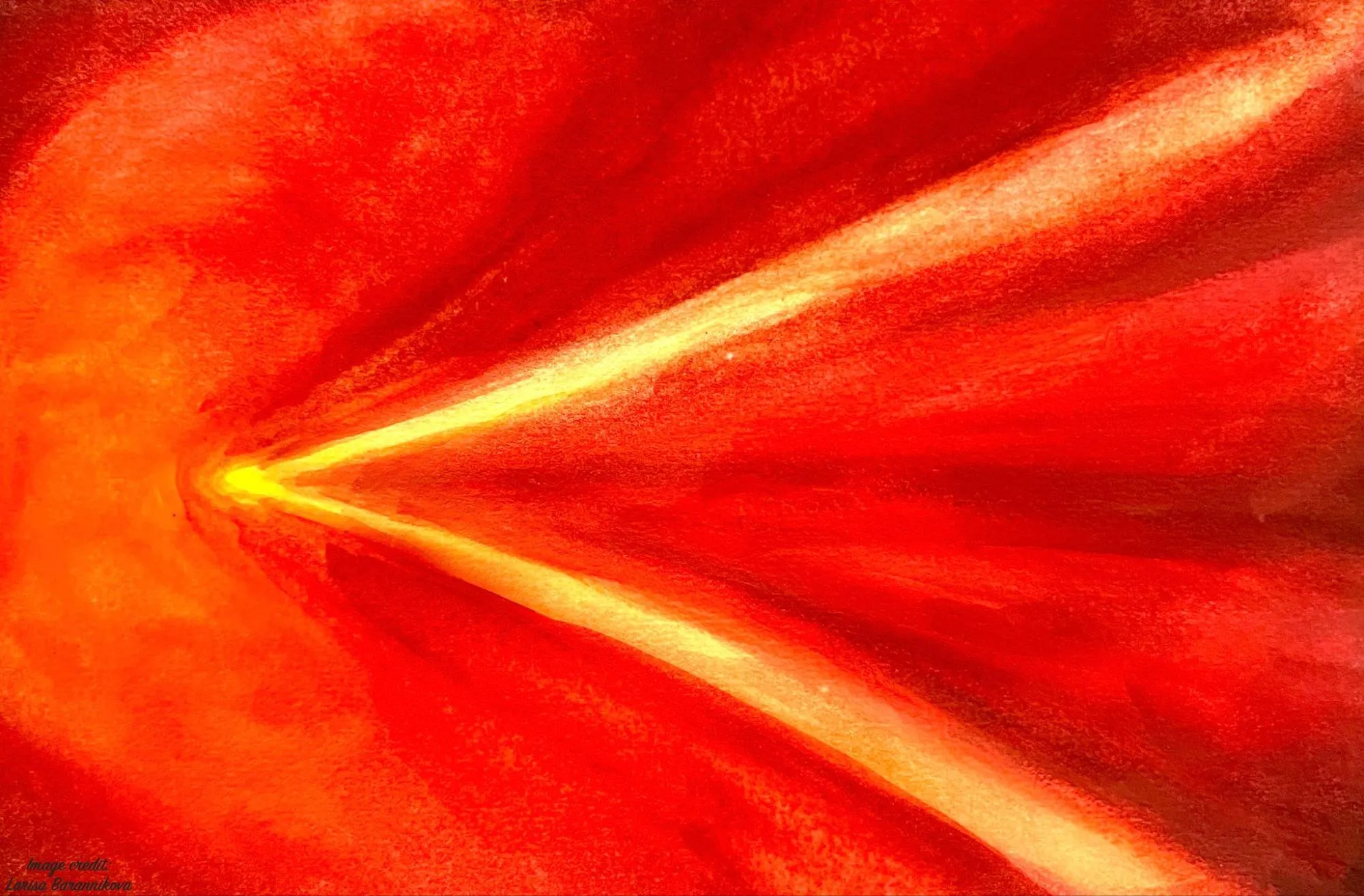
In the wake of partons
The CMS experiment reports the first observation of a “wake” created by a fast-moving parton in quark-gluon plasma.
-
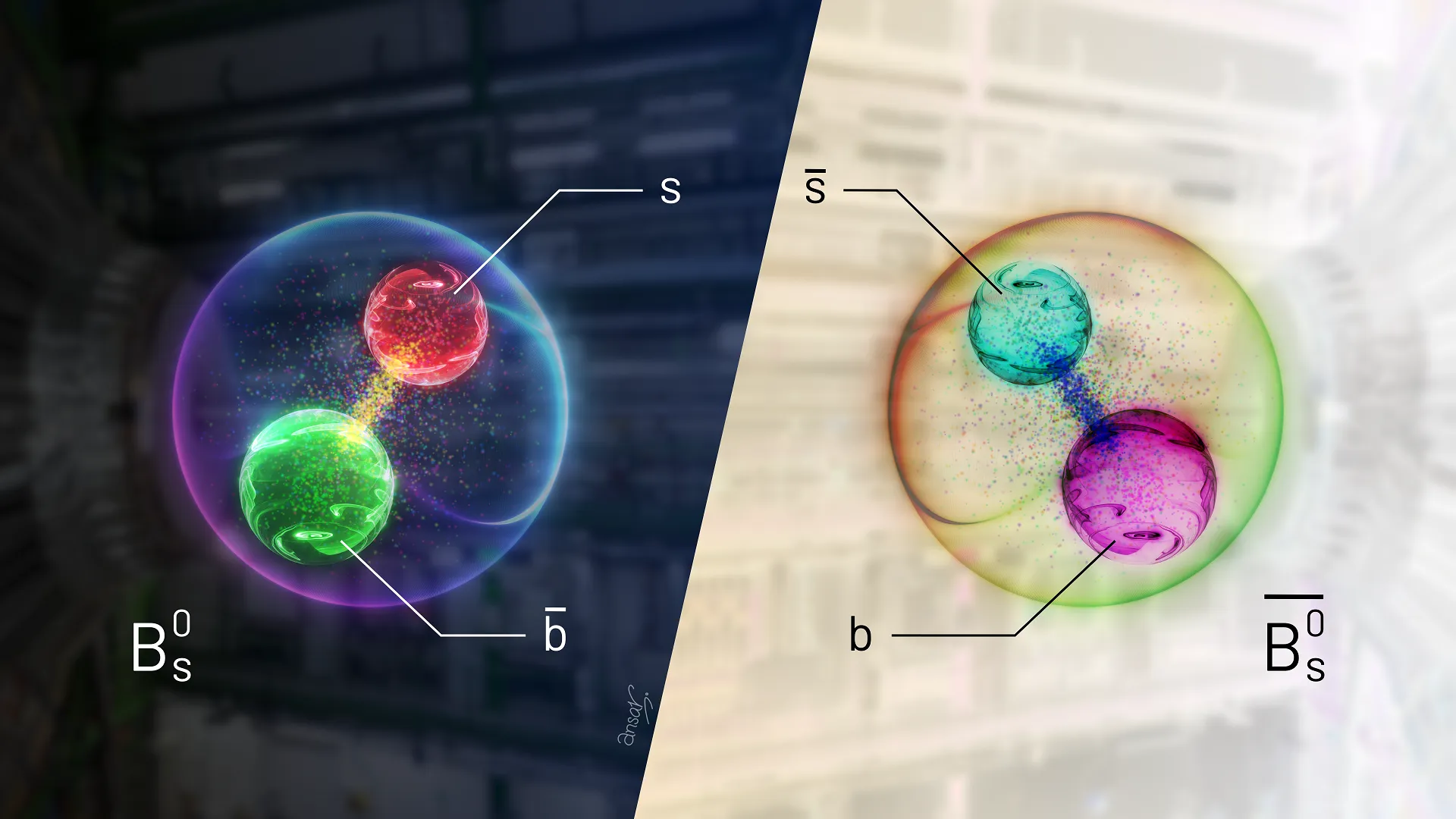
Where did all the antimatter go? CMS investigates using B mesons
The CMS experiment uses its largest sample of B mesons to date to perform a high-precision test of subtle differences between matter and antimatter.
-
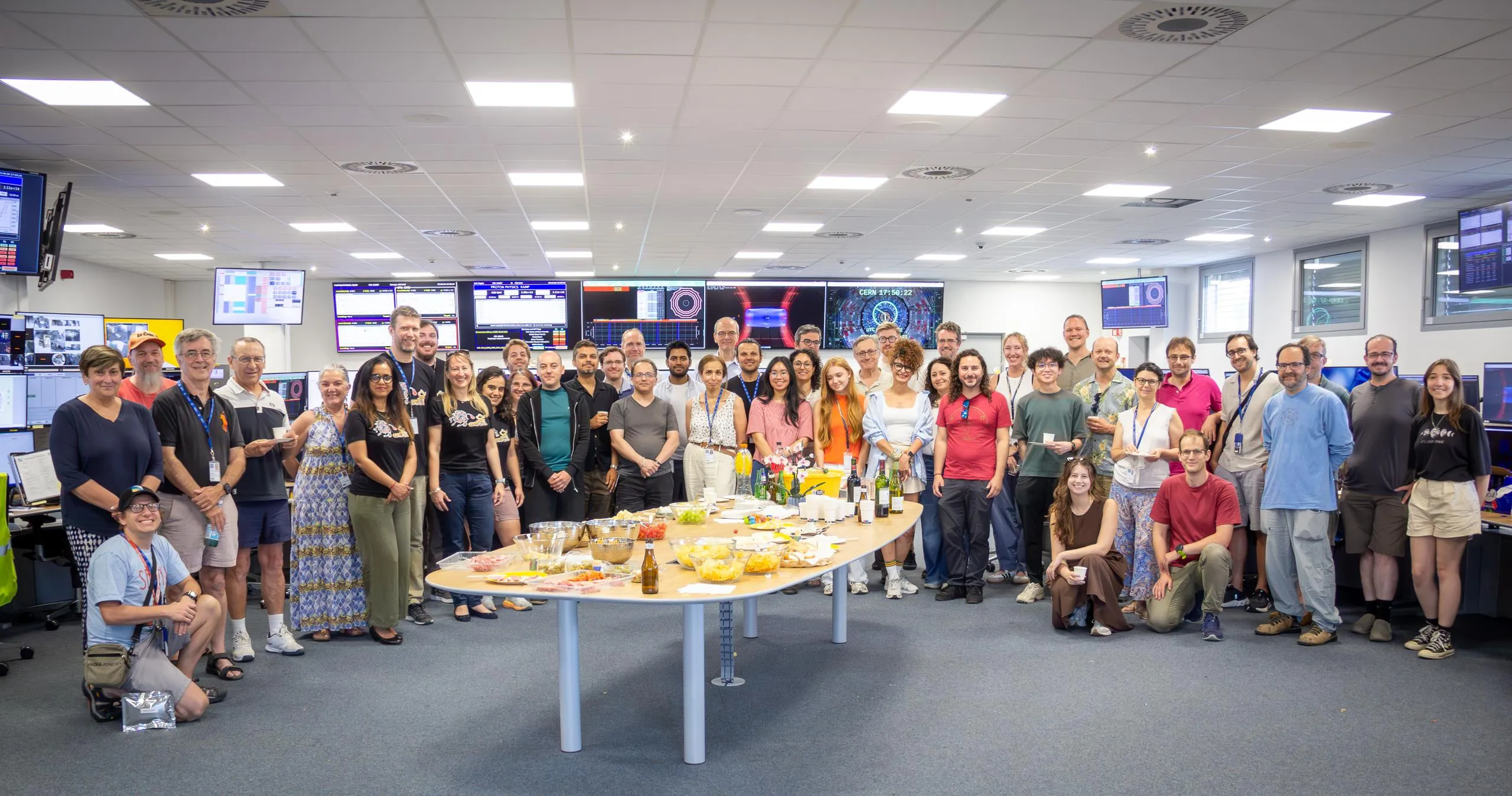
The End of Run 3
29th of June 2026 saw the end of the LHC Run 3, and the end of the LHC as we know it!
-
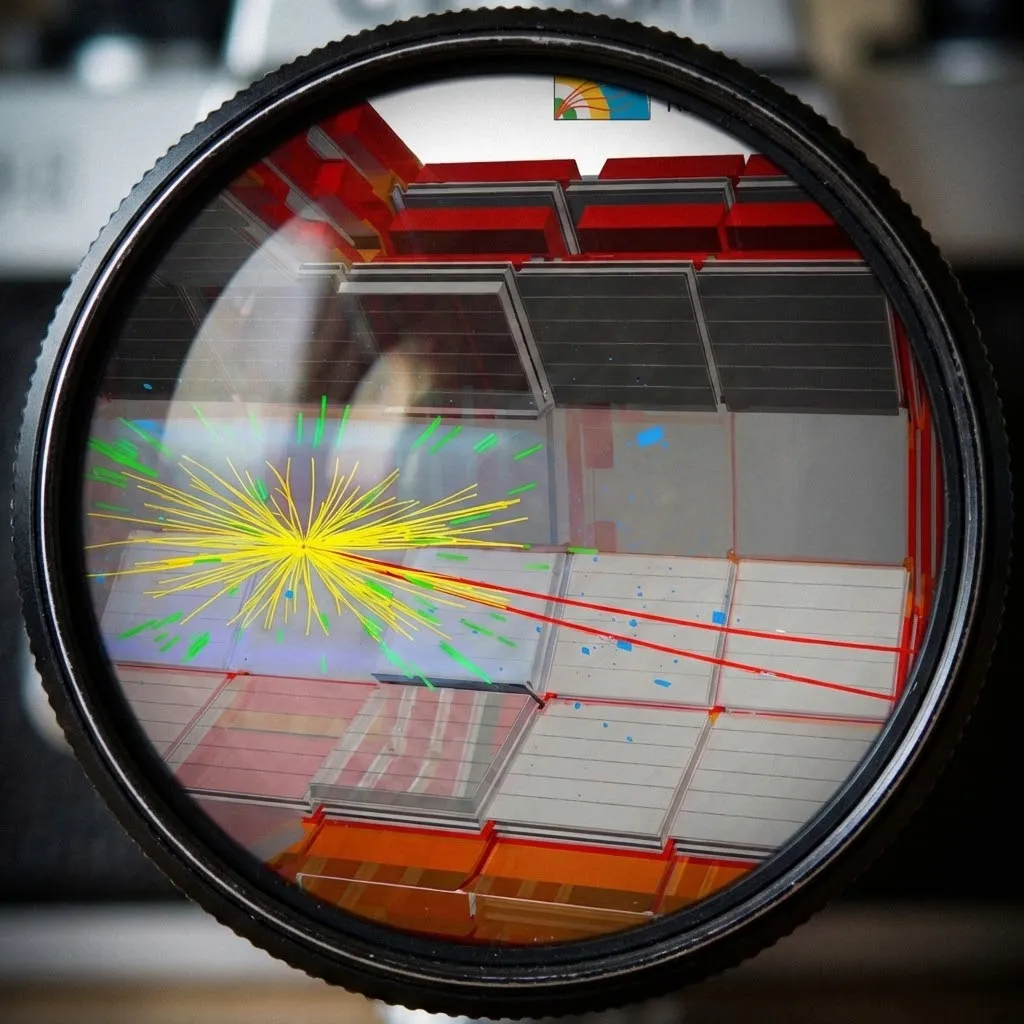
ϒ mesons in light-ion collisions
The CMS experiment presents the first measurement of ϒ mesons – bound states of a bottom quark-antiquark pair – in oxygen-oxygen and neon-neon collisions, and strongly indicates that their production is suppressed owing to quark-gluon plasma droplets formed in such light-ion collisions.
-
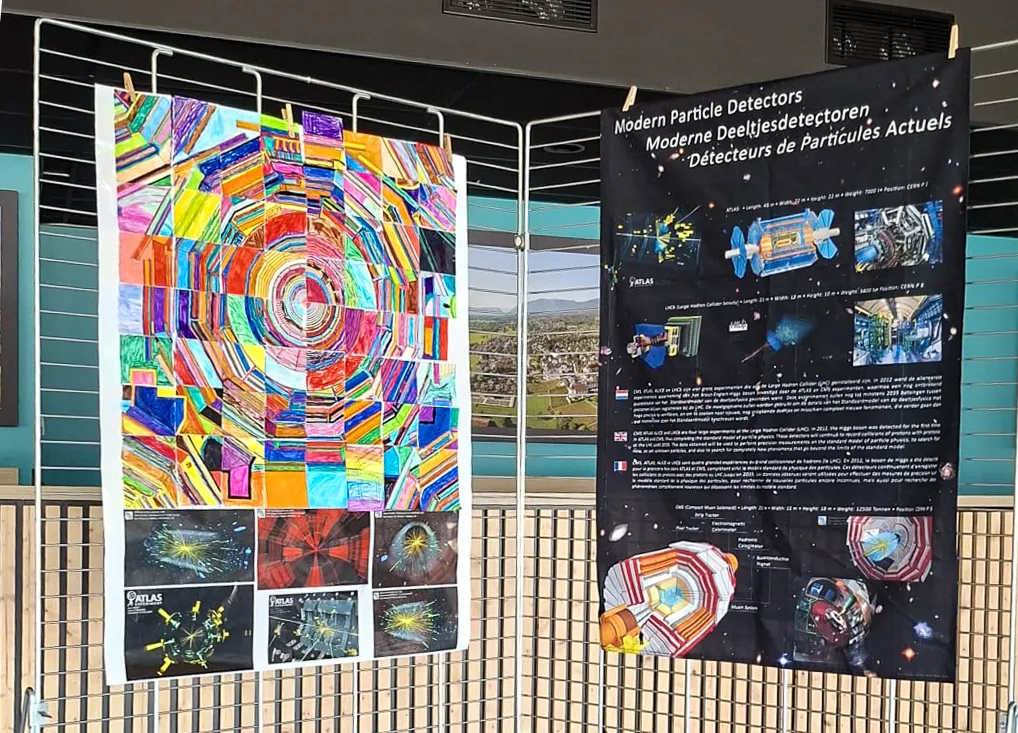
Science and Art at School 2026
Science & Art @ School returns with an action packed programme for schools local to CERN!
-
CMS Labs Around The World!
CMS has more than 6,000 members, with institutions across 50+ countries, the CMS Collaboration is a truly global effort.