What's inside quarks? CMS looks deeper
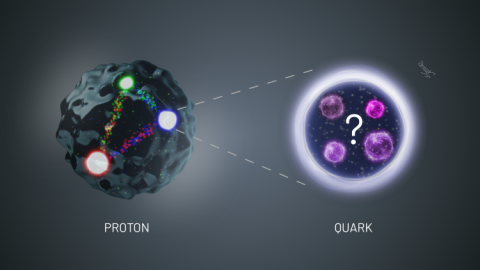
CMS probes the inside of quarks down to distances of 10–20 m – smaller than ever before – searching for potential more fundamental building blocks within them.

CMS probes the inside of quarks down to distances of 10–20 m – smaller than ever before – searching for potential more fundamental building blocks within them.

Freya Blekman elected to Royal Holland Society of Sciences and Humanities
DESY lead scientist, CMS communications leader, and University of Hamburg professor invited into prestigious Dutch national academy based on her research and science communication work.
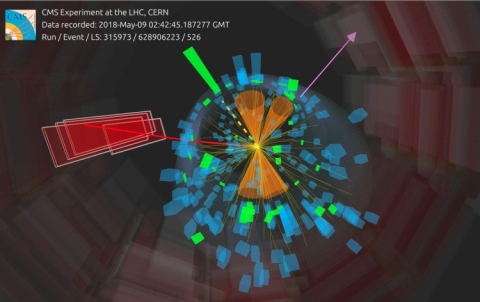
The CMS Collaboration has completed the most precise measurement to date of top-quark production in association with a photon
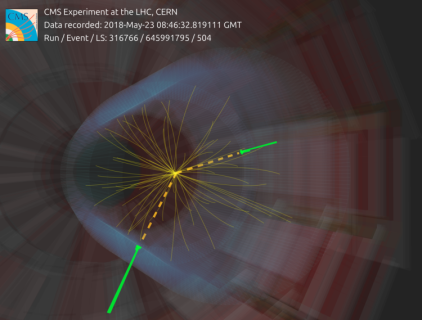
The CMS experiment reports a new measurement of the Higgs boson mass in the decay into two photons, improving the precision of this result over earlier measurements by refining detector calibration and new analysis techniques.
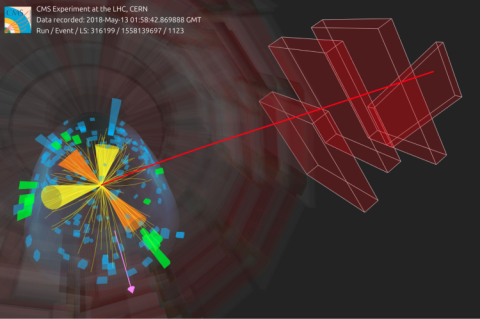
The CMS experiment provides the first confirmation of the excess observed in top quark-antiquark production that is consistent with the short-lived bound state – toponium – decaying to a lepton + jets final state.
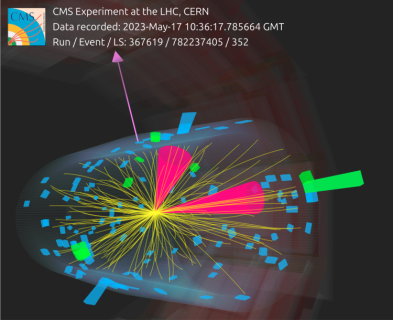
The CMS experiment has performed a new search for Charge-Parity violation in Higgs boson decays to tau leptons, shedding light on the origin of matter.
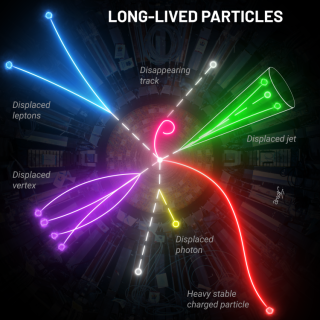
In Run 3, CMS expanded its trigger program to enhance capturing long-lived particles that decay far away from the point of collision – broadening the search for physics beyond the Standard Model.