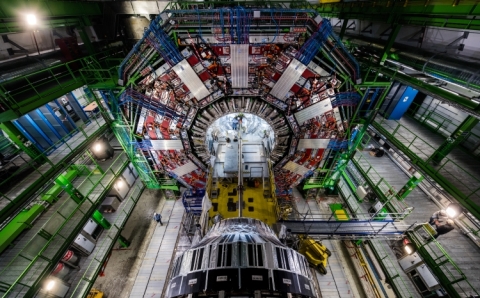
CERN’s most ambitious emergency response exercise to date took place on 13 November at LHC Point 5, with the involvement of French, Swiss and CERNois safety and rescue teams
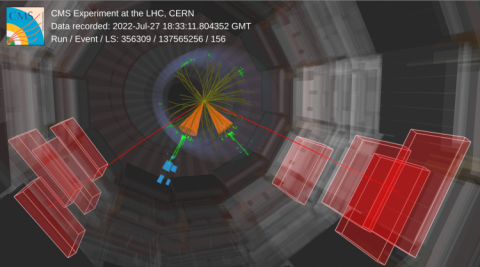
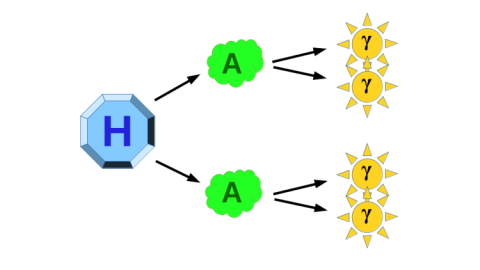
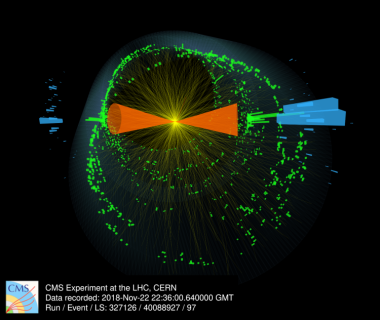
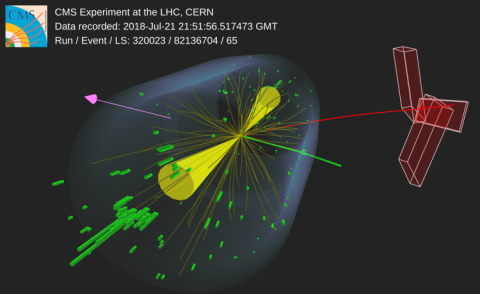
The Higgs boson, once the sought-after holy grail of particle physics, has now been with us for almost a decade. By now physicists are able to use the Higgs boson itself as a tool for the next discovery beyond the standard model. Interestingly, not one, but two Higgs bosons produced w
Apart from the “World Wide Web,” three Ws may also have a different interpretation in the LHC era. The standard model of particle physics is a mathematical construct that connects three of the four fundamental forces of nature and classifies all known elementary particles.
After the Higgs boson discovery in the year 2012, the standard model of particle physics offers a complete and consistent description of elementary particle interactions that, despite the many attempts, has not been falsified by experimental evidence to date. Nevertheless, several hints indicate that a new more comprehensive theory that includes and extends it may exist, for example justifying the indirect evidence of dark matter, naturally giving non-null mass to neutrinos, explaining the apparent excess of matter over antimatter in the universe. As it happened for classical mechanics with respect to relativity and quantum physics, the differences between the standard model and a new theory are likely to arise at large energies, unreachable by current experimental facilities.
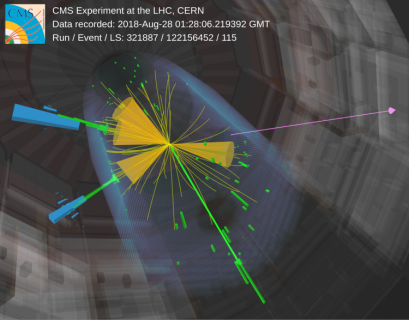
As physicists seek the elusive particles that may reveal a new understanding of the universe’s inner workings, one intriguing possibility is the conceivable existence of new particles that live in a shadow universe, called the “dark sector.” The dark sector is assumed to communicate with
After long months of preparations, the Beam Radiation, Instrumentation, and Luminosity (BRIL) group has completed the installation of three instruments dedicated to the measurement of luminosity and beam conditions: t