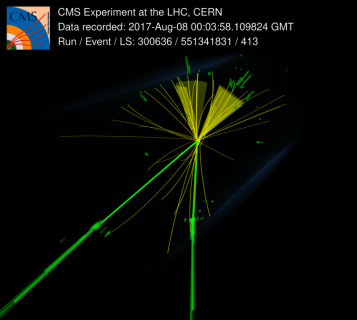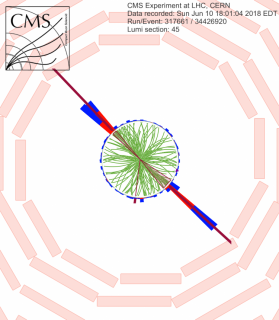
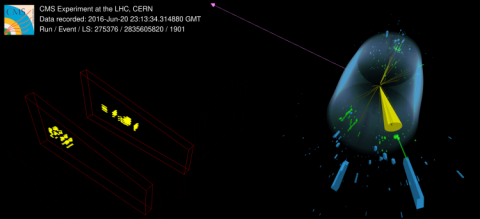
As physicists seek the elusive particles that may reveal a new understanding of the universe’s inner workings, one intriguing possibility is the conceivable existence of new particles that live in a shadow universe, called the “dark sector.” The dark sector is assumed to communicate with
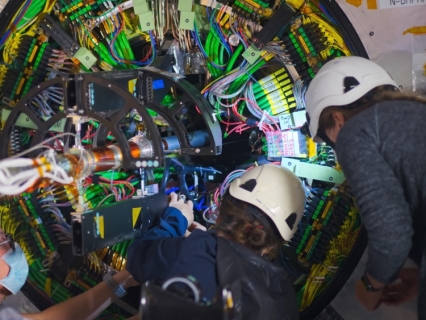
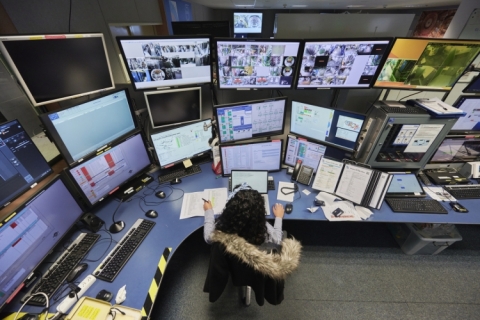
The Installation of the BRIL Luminometers: Preparing for a bright Run 3
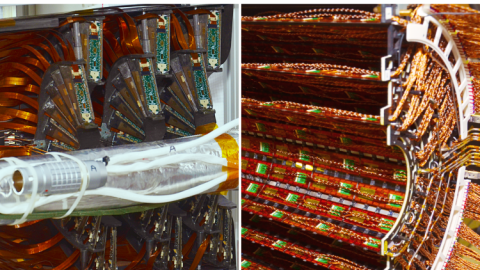
After long months of preparations, the Beam Radiation, Instrumentation, and Luminosity (BRIL) group has completed the installation of three instruments dedicated to the measurement of luminosity and beam conditions: t
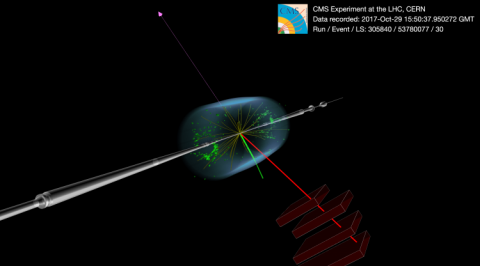
Live long and prosper: Searching for the long-lived relatives of the Higgs boson
A recent result from CMS searches for long-lived particles through the so-called “Higgs portal” in ways never done before.
CMS Pixel Tracker installation
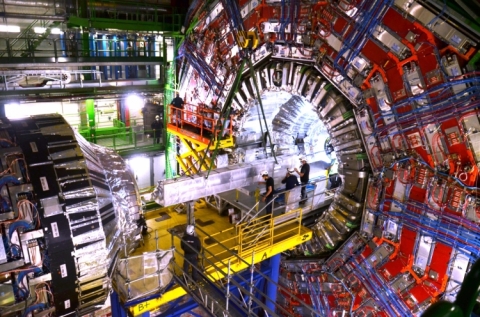
After more than two years with lots of delicate work the Pixel Tracker has been successfully installed at the centre of the CMS detector and it is now ready for commissioning.
Any more Higgses we should know about?
This year marked the ninth anniversary of the discovery of the Higgs boson; the Standard Model particle linked to the mystery of creating the mass of all the other fundamental particles through the so-called Higgs mechanism.
The Four Beauties in the Tale of two Higgses
The interaction of the Higgs boson with its own field leads to its mass generation.
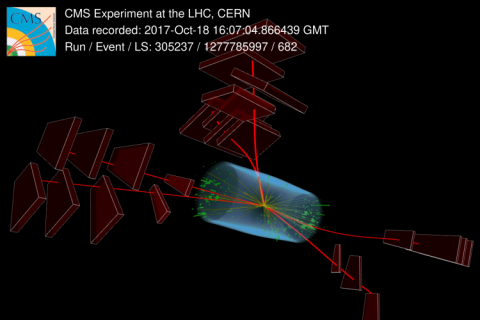
Trio of J/ψ particles in one go
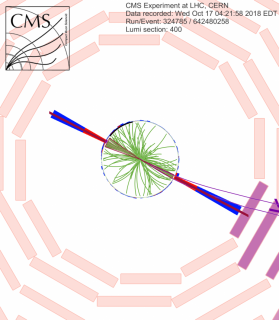
High-energy particle accelerators are unique tools to study the structure of matter at the shortest distances. The most powerful accelerator today is the CERN Large Hadron Collider (LHC) that has so far collided beams of protons up to center-of-mass energies of 13 TeV.
Jets-of-all-trades: constraining Standard Model and Beyond
For the first time, CMS physicists extract the fundamental parameters of QCD together with constraints on the New Physics.