The CMS Collaboration has released the results of a new analysis that looks for the subtle influence of “new physics” in the production of a W boson and photon pair.

The CMS Collaboration has released the results of a new analysis that looks for the subtle influence of “new physics” in the production of a W boson and photon pair.
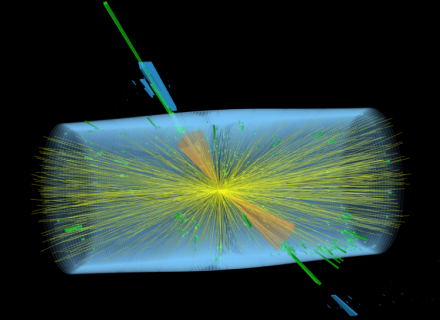
High energy heavy-ion collisions provide a unique opportunity to study one of the four forces of nature, the strong force, under extreme conditions.
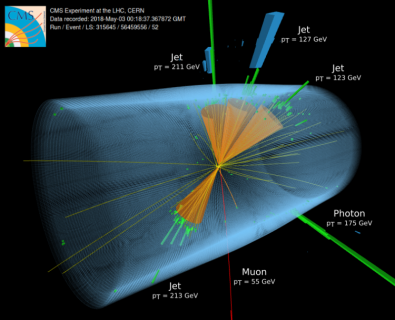
Electromagnetic interactions govern everyday life: You see an object when particles of light deposit energy on the retinas in your eyes. Our sense of touch results from the exchange of the same particles, the photons, between the atoms in our skin and the objects we touch.
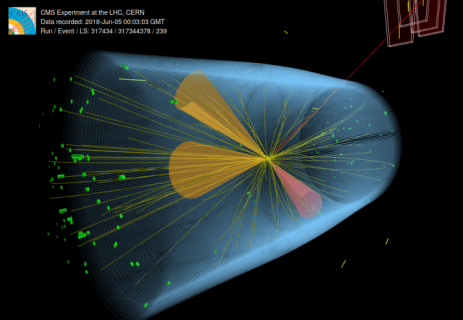
In the Standard Model of particle physics, at least one Higgs boson
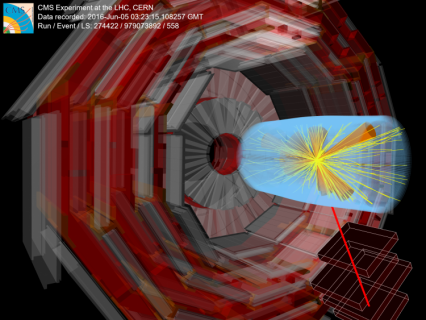
The standard model of particle physics encapsulates our current know
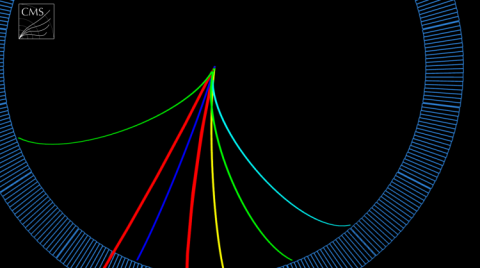
Quantum Chromodynamics (QCD) is the part of the Standard Model of Particle Physics that describes the strong interaction.
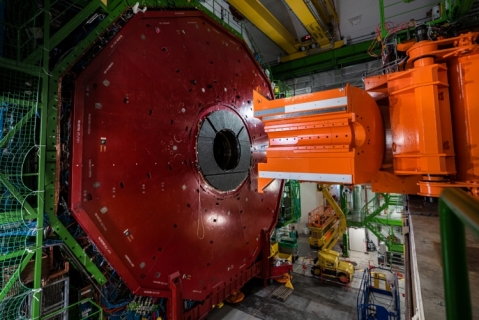
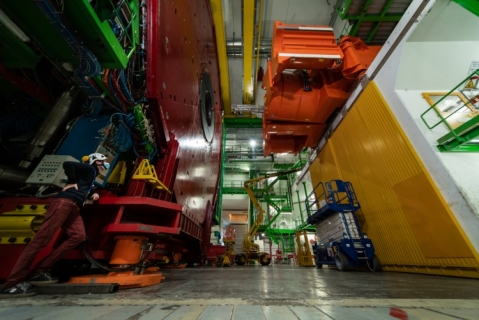
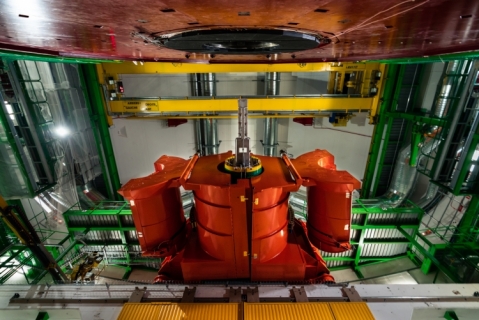
As for any other instrument, the CMS experiment needs a “quiet” environment to take data, with the lowest level of background noise. In the CMS detector, background noise is mainly due to energetic particles generated at high eta (i.e.